

France has one of the most extensive transport networks in Europe, from high speed trains that link major cities in hours to dense metro, tram and bus systems in urban areas. For travelers, this is good news, but the sheer number of options, tickets and passes can feel confusing at first glance. With recent changes to fares and rules in and around Paris, a clear overview is more useful than ever. This guide explains how to move around France smoothly, what to expect from each mode of transport, and how to choose the right options for your itinerary and budget.
Understanding the Big Picture: How Transport Works in France
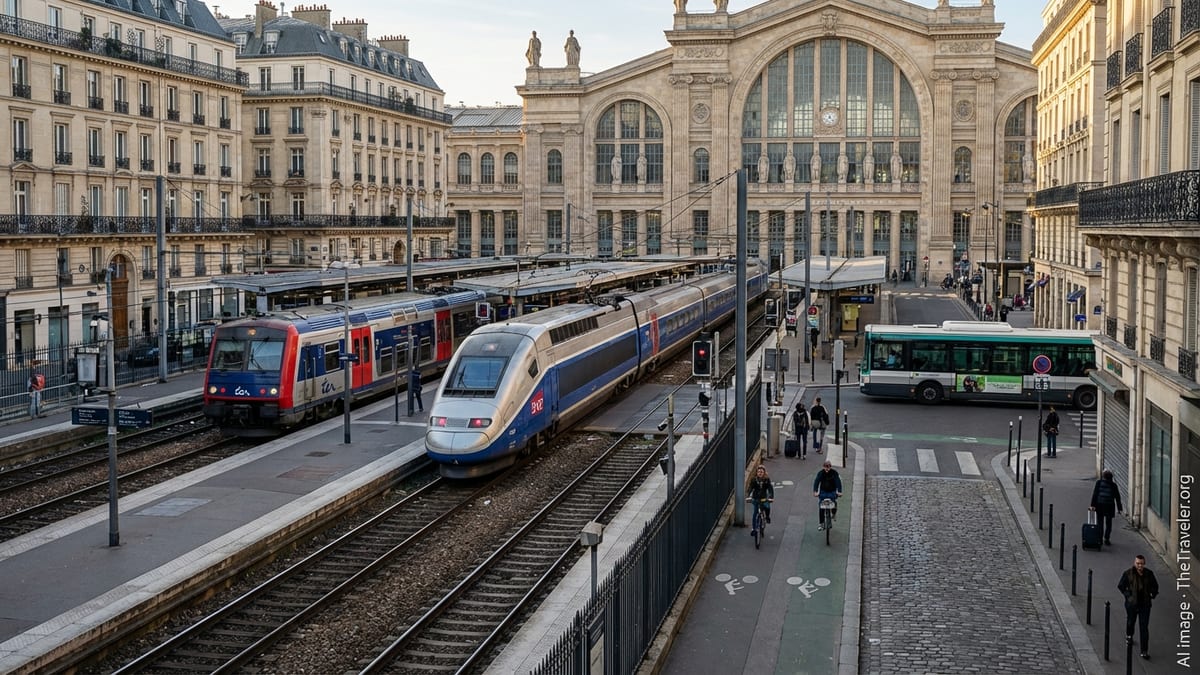
France is built around rail. The national rail operator runs long distance high speed services between major cities, slightly slower intercity trains and regional services branded TER that reach smaller towns and rural areas. Most visitors will rely heavily on trains for medium and long distances, then connect to local networks of metro, tram, bus or taxi once they arrive in a city. Major hubs such as Paris, Lyon, Marseille, Bordeaux and Lille have well integrated stations where mainline trains connect directly with urban transport.
On top of the classic national operator, a growing number of low cost brands run on the same tracks using a different pricing model. They offer fewer frills and sometimes use secondary stations but can be significantly cheaper if you book early. Night trains have started to reappear on a few long routes, especially from Paris to the south and some neighboring countries, which can save time and the cost of a hotel night if the schedule fits your plans.
Within cities, public transport is usually dense, frequent and reliable, particularly in Paris and other large urban areas. Paris alone has a metro network with more than a dozen lines, several RER express lines that cross the wider region, trams and hundreds of bus routes. Other major cities such as Lyon, Marseille, Toulouse, Bordeaux, Strasbourg, Lille and Nice have combinations of metro or tram plus buses. Outside cities, buses connect villages to nearby towns, but frequencies can be limited, especially on weekends and public holidays, so advance planning is essential.
For shorter hops or more flexible travel, taxis and app based ridesharing services are widely available in cities and around airports, although they may be less present in rural areas. Car rental remains a practical choice if you want to explore wine regions, small villages or coastal areas with limited public transport, but you will need to factor in tolls, fuel prices, parking rules and low emission zones in some cities. Increasingly, visitors also use shared bikes and e scooters for short urban trips, especially on new protected cycle lanes that have appeared in many French cities.
Trains: High Speed Links and Regional Connections
For crossing the country quickly, the high speed train network is often the best option. Trains on core routes such as Paris to Lyon, Marseille, Bordeaux, Lille and Strasbourg can cruise at high speed for long stretches, making journeys that would take many hours by car possible in just two to three hours by rail. These trains usually require advance seat reservations and prices vary widely depending on demand, day of the week and how early you book. Buying tickets well ahead of time typically gives you access to the lowest fares, especially on popular weekend and holiday departures.
Alongside the flagship high speed services, low cost variants run on selected lines under different brand names. They may use secondary stations on the outskirts of cities, offer fewer onboard services and have stricter rules on exchanges and refunds, in return for lower ticket prices. For travelers on a budget who are flexible on departure time and do not mind a slightly longer trip or a station outside the historic center, these trains can be excellent value. It is worth checking both the main and low cost options when you compare schedules and fares.
For shorter or medium distances between regions and within regions, conventional intercity and TER regional trains fill in the gaps. Intercity trains often link major cities not served by high speed lines, while TER trains connect smaller towns and rural communities to regional hubs. These services usually have fixed prices, often with reductions for off peak times or passes, and do not always require seat reservations. While they may be slower, they offer flexibility, frequent stops, and views of the countryside that you miss on the high speed lines that bypass smaller communities.
Travelers should also be aware of seasonal variations and occasional disruption. During peak holiday periods in July and August, trains can sell out on popular routes, so advance booking is advisable. At other times of year, especially outside school holidays, you may find good last minute deals. France also experiences transport strikes from time to time, sometimes announced only a few days in advance. When planning key connections such as flights or important events, allow time buffers and consider earlier trains to reduce the impact of any disruption.
Getting Around Paris and the Île de France Region
Greater Paris has one of the densest public transport networks in the world, and in 2025 the fare system was simplified for both residents and visitors. Paper tickets that once dominated the metro are being phased out in favor of contactless cards and phone based tickets. The old t plus ticket has been replaced by two main options for occasional travelers: a flat fare ticket for metro, train and RER lines, and another flat fare ticket for buses and trams. Each type of ticket is valid across the entire region for its respective modes, with transfers allowed within certain time limits, but you need one of each if you change between rail and surface transport.
These tickets are typically loaded onto a contactless card such as Navigo Easy or directly onto a smartphone or smartwatch through official apps and wallets. The same system supports tourist products such as Paris region day passes and airport tickets, which now exist alongside classic weekly and monthly passes used by commuters. A key change for visitors is the introduction of a single fare for rail trips between central Paris and the two main airports in the region. Rather than separate products for each airport, there is now one airport ticket valid on specified routes, priced at a level that remains competitive with road based transfers.
For travelers planning intense sightseeing over a short period, daily passes that cover all metro, RER, tram and bus lines within the region can be cost effective, especially since they allow unlimited trips within a day. For longer stays, weekly passes loaded on a personal Navigo card often offer the best balance of cost and convenience, particularly if your travel dates align with the fixed Monday to Sunday validity period. Some passes cover airports while others do not, so it is important to verify whether your chosen product includes airport links or if you will need a separate ticket for that leg.
Navigation on the network is straightforward once you understand a few basics. Metro lines are numbered, RER lines are lettered and trams carry both numbers and the letter T. In stations, follow signs for the line number and terminus direction, not for intermediate stops. Real time displays show the destination and waiting time for the next trains. Trains and ticket gates are almost entirely smoke free and alcohol free, and you should keep your ticket or pass until you have fully exited the system, since ticket inspections can take place both on board and in station corridors. During busy periods such as rush hours and major events, allow extra time for queues and slower circulation in crowded corridors.
Urban Transport Beyond Paris: Metros, Trams and Buses
Although Paris dominates the conversation, many other French cities have impressive public transport systems that make it easy to explore without a car. Lyon and Marseille both have metro networks supported by trams and buses, while Toulouse, Lille and Rennes use a mix of metro or automatic light metro lines with trams or buses. Cities such as Bordeaux, Strasbourg, Montpellier and Nice have invested heavily in modern tram systems that often run through pedestrianized historic centers, offering convenient and scenic access to key sights, shopping streets and waterfronts.
Ticketing in these cities is usually simpler than in Paris but still increasingly digital. Most networks offer single tickets, day passes and sometimes multi day passes that cover buses and trams, with discounts for groups or families in some cases. Tickets are typically available from vending machines at main stops, on smartphone apps and at kiosks. Validation rules vary slightly, but as a general rule you must validate your ticket when you board or enter a platform and keep it with you until the end of your journey. Inspectors conduct spot checks and fines can be steep for traveling without a valid ticket, even if you are a tourist unfamiliar with the system.
In recent years, many French cities have created or extended low emission zones in their centers, encouraging visitors to arrive by train and use public transport, bicycles or walking once in town. Trams often run through these zones, connecting park and ride facilities on the outskirts with central districts. Some cities offer integrated tickets that include park and ride parking plus tram or bus travel for all occupants of a car, which can be an economical compromise if you are arriving by car but wish to avoid driving and parking in narrow historic streets.
In smaller towns and rural areas, buses and occasional regional trains play a more modest but still important role. Frequencies can be low, especially on weekends and public holidays, and some routes may run only on school days. Timetables are increasingly available through national and regional journey planners, but you should check schedules closely and plan around them, rather than assuming that a bus will be available whenever you wish to travel. In very rural areas, you may find on demand services that require advance reservation by phone or online, which can be valuable for reaching trailheads, vineyards or villages not served by regular buses.
Airports, Domestic Flights and Long Distance Buses
France is well connected internationally by air, with Paris Charles de Gaulle and Paris Orly as the main gateways for long haul flights and a network of regional airports such as Nice, Lyon, Marseille, Toulouse, Bordeaux and Nantes handling European traffic. From these airports, onward travel into the city typically combines rail, tram, dedicated airport buses and taxis, with integration into urban networks steadily improving. In the Paris region, for example, a driverless metro line now reaches Orly, offering a predictable alternative to road traffic at busy times, while rail links from Charles de Gaulle connect into both regional and central Paris stations.
Domestic flights within France have declined somewhat on routes where high speed trains offer competitive journey times, but they still exist on longer or less connected routes, particularly to and from Corsica and some Atlantic or Mediterranean airports. When choosing between train and plane for domestic travel, consider not only the scheduled time but also transfer times to and from airports, security and check in buffers, and the environmental impact of your choice. For routes served by high speed trains in three hours or less, many travelers now prefer rail for comfort and lower carbon emissions.
Long distance buses, including both national and international operators, provide another option, often at lower prices than trains, especially when booked in advance. They connect major cities and some medium sized towns and can be useful where rail coverage is limited or indirect. However, journeys can be significantly longer than equivalent train trips, and road traffic can add unpredictability, especially around large cities at peak hours or during holiday crossover weekends. Buses can be a good fit for budget travelers who are flexible on time, or as a fallback when rail services are disrupted.
Airport transfers deserve special attention in your planning because they often involve extra cost and time. In Paris, the single airport rail ticket and dedicated passes simplify choices, but you still need to decide between fast trains, metro connections and road options such as taxis or rideshares. In regional cities, check whether a tram or train runs directly from the airport to the center, which is often faster and cheaper than a taxi. In smaller airports where public transport is limited or infrequent, pre booking a shuttle or being prepared to use a taxi can avoid long waits, especially in the evening or on Sundays.
Taxis, Rideshares, Biking and Walking
Taxis in France are regulated and metered, with official vehicles displaying a light on the roof and a visible license number. In cities and at airports, official taxi ranks are clearly marked, and it is wise to use them rather than accepting unsolicited offers from drivers in terminals or on the street. Fares are set within legal frameworks that vary slightly by region but always include a base charge plus a per kilometer rate and supplements at night, on Sundays and public holidays, or for extra luggage. It is not customary to tip heavily, but rounding up to the nearest euro or leaving a modest extra amount for good service is appreciated.
App based ride hailing services operate legally in most French cities and can be a convenient alternative, especially for travelers used to booking cars from their phones. Prices fluctuate with demand and can sometimes undercut taxis, although late at night or during busy events they may be higher. In some places you will also encounter long distance carpooling and shared ride platforms that match drivers and passengers for intercity trips at agreed prices. These services can be economical and sociable, but you should always check user reviews, safety policies and meeting locations carefully.
In recent years, major French cities have invested heavily in cycling infrastructure. Paris, Lyon, Bordeaux, Strasbourg and others now offer large networks of dedicated or protected bike lanes, as well as self service bike hire schemes with docking stations or free floating bikes and e bikes. These systems are generally accessible via smartphone apps or payment terminals and can be an enjoyable way to cover short distances, especially along rivers or through parks. Helmets are not mandatory for adults but are strongly recommended, and you should be prepared for mixed traffic conditions in some areas despite the growth of cycling infrastructure.
Electric scooters, both shared and privately owned, have become more common, although regulations vary by city and have tightened in response to safety concerns. Speed limits, age limits and rules on where scooters may circulate or be parked are enforced more strictly than a few years ago. For many visitors, however, walking remains the most pleasant way to explore compact historic centers, seaside promenades and market streets. French cities often have pedestrianized zones, especially around old town areas, where cars are restricted and pavements are wide. Combining walking with public transport is usually the simplest and most relaxing way to experience the atmosphere of French cities and towns.
Driving, Car Rental and Low Emission Zones
Renting a car is a popular choice for travelers exploring wine regions such as Burgundy or Bordeaux, the countryside of Provence, the Dordogne, Brittany or Normandy, and alpine areas where villages and trailheads are spread out. The French road network is extensive and generally in good condition, with motorways linking major cities and smaller departmental and local roads weaving through rural landscapes. Motorways are usually toll roads, with charges varying by distance and region. Toll booths accept cards and cash, and some companies offer electronic tags that allow you to pass through dedicated lanes without stopping fully, with charges billed later.
Driving rules are broadly similar to those in other continental European countries. You drive on the right, overtake on the left and must carry certain safety equipment in the car such as a reflective vest and warning triangle. Speed limits vary by road type and weather conditions, with lower limits applying in rain or poor visibility. Alcohol limits for drivers are stricter than in some other countries and are enforced by roadside checks, especially on weekends and holiday periods. Seat belts are compulsory for all occupants, and child seats are required for younger passengers according to height and age rules.
In recent years, environmental regulations have added a layer of complexity for drivers entering many French cities. Low emission zones known as ZFE now exist in a growing number of urban areas, and vehicles must display a Crit Air sticker that indicates their pollution category. The strictness of rules and the categories allowed vary by city and are gradually tightening, with some cities now restricting older petrol and diesel vehicles at certain times of day or banning them altogether from core zones. Fines apply if you drive without the required sticker in a regulated area, whether your car is registered in France or abroad.
Parking can also be challenging and costly in historic centers. Many cities encourage drivers to use park and ride facilities on the outskirts, linked to tram or bus lines, or to book spaces in underground car parks rather than trying to find free on street parking. Some central districts are pedestrianized or limited to residents and deliveries during certain hours. When renting a car, it is wise to choose a vehicle size suited to narrow streets and tight parking spaces rather than the largest model available. Before confirming accommodation, check whether it includes parking or is close to public parking areas, especially in popular coastal or mountain resorts in peak season.
Tickets, Passes and Smart Ways to Save
With so many modes of transport, choosing the right ticket or pass can make a noticeable difference to your budget. On long distance trains, the main levers are booking early, being flexible on departure times and comparing standard and low cost brands. Non flexible tickets are usually cheaper but come with strict conditions on changes and refunds, while semi flexible or fully flexible tickets cost more but allow changes if your plans are not fixed. Youth, senior and family discounts exist on many routes, and railcards can be worthwhile for longer trips or repeated visits, although they may be less attractive for a short holiday.
In urban transport, day and multi day passes often pay off if you plan more than a handful of trips per day. In Greater Paris, for example, the move to flat fares for rail and surface networks combined with daily caps has made contactless pay as you go options more attractive for some visitors, while others still benefit from classic day or weekly passes. New tourist oriented products bundle unlimited travel on local networks with discounts at museums or attractions, which can be convenient if you plan to visit several included sites, though you should compare the implied cost of transport alone with standard tickets to see if the bundle genuinely saves money.
Families and small groups can sometimes save by sharing rechargeable cards. Some contactless cards allow multiple tickets or passes to be loaded and validated separately for each traveler, while others are strictly personal and cannot be shared. Rules differ by product, so always check whether a pass is nominative, requires a name and photo, or is anonymous and shareable. Inspectors may ask to see identification that matches a named pass, especially on weekly or monthly products that offer large discounts compared with single tickets.
Finally, remember that public transport, taxis and car rental prices can all rise during major events and peak holiday periods. Accommodation near main stations or in central districts may also be more expensive at these times. If your schedule is flexible, traveling slightly outside peak dates, choosing midweek arrivals and departures and avoiding the busiest holiday crossover weekends can help you find better fares and enjoy less crowded trains and roads. Using national or regional journey planners before you travel, then cross checking details on local apps once you arrive, will help you spot the most economical and convenient options for each leg of your journey.
The Takeaway
France rewards travelers who embrace its trains, metros, trams and buses. The country has invested heavily in rail and urban transport, and recent fare simplifications in the Paris region are designed to make networks easier to understand for both residents and visitors. High speed trains shrink the distances between major cities, while regional services and local buses connect you to smaller towns, wine regions and coastlines that would be cumbersome to reach by air.
For most itineraries, a mix of long distance trains and local public transport will be the most efficient and sustainable way to get around, with taxis, rideshares, bikes or rental cars filling in specific gaps. Taking a little time before your trip to learn how new ticketing systems work, to check low emission zone rules if you plan to drive, and to compare passes against pay as you go options will pay off in smoother connections and fewer surprises. With some preparation, France’s transport network becomes not just a way to move between sights, but an integral part of the experience, from gliding into Paris by train to hopping on a tram through medieval streets or cycling along a riverside path.
FAQ
Q1. Do I need to book French trains in advance or can I just turn up?
For high speed and most long distance trains, advance booking is strongly recommended, especially on busy routes and weekends. Regional TER services usually have fixed prices and more flexibility, so you can often buy on the day, but seats are still subject to availability on very popular lines.
Q2. What is the best way to get from Paris airports into the city?
In most cases, rail or metro links offer the best balance of price and reliability, with a single region wide airport ticket simplifying the choice. Taxis and rideshares are more expensive but can be worthwhile late at night, with heavy luggage or if you are staying far from a rail station.
Q3. Is public transport safe in France for solo travelers and at night?
Public transport is generally safe, with security staff and cameras on many networks, but petty theft such as pickpocketing can occur in crowded areas. Keep valuables secure, avoid empty train cars late at night, and follow the same basic precautions you would in any major European city.
Q4. Are tickets and passes usable on both metro and buses in French cities?
In most cities, the same ticket or pass covers metro, tram and bus networks, though there can be exceptions and special airport or express services with separate fares. In the Paris region, recent changes created separate flat fares for rail and surface networks, so you may need different tickets if you switch between them unless you use an integrated pass.
Q5. Can I use contactless bank cards directly on French public transport?
Contactless bank card payment is being rolled out but is not yet universal across all networks. In Paris and some other large cities you can tap a bank card or phone on certain validators, but elsewhere you may still need to buy and load tickets onto a local card, paper ticket or app.
Q6. Do I need a Crit Air sticker to drive a rental car in cities?
Low emission zones in many French cities require vehicles to display a Crit Air sticker that shows their pollution category. Rental companies often manage this for cars registered in France, but if you drive your own vehicle, especially from abroad, you should arrange the sticker in advance and check local rules for the cities you plan to enter.
Q7. Is it difficult to drive in France compared with other European countries?
Driving in France is straightforward for anyone used to right hand traffic, with clear road signage and good quality roads. The main challenges are toll motorways, stricter speed enforcement, parking constraints in historic centers and adapting to low emission zones, so planning routes and parking in advance helps a lot.
Q8. How accessible is public transport for travelers with limited mobility?
Accessibility has improved, with many trams, newer metro lines and mainline trains offering step free access and priority seating, but older infrastructure can still present obstacles. Major stations tend to have elevators or ramps, while some older metro stations and small rural stops may have stairs only, so it is worth checking specific routes in advance.
Q9. Are long distance buses in France comfortable and reliable?
Long distance buses generally offer comfortable seats, air conditioning and Wi Fi on many routes, and operators must comply with safety regulations. Journeys, however, are slower and more vulnerable to traffic than trains, so allow extra time and treat buses as a budget friendly alternative rather than the fastest option.
Q10. What is the most cost effective way to travel around France for two weeks?
If your itinerary focuses on major cities, a mix of advance purchase high speed train tickets and local public transport passes usually offers the best value. If you plan to spend much of your time in rural areas, a short period of car rental combined with trains to and from your entry and exit cities can be more efficient, provided you factor in tolls, fuel and parking costs.