


More news on this day
A nationwide strike over wages, public spending and the 2027 budget is rippling across France today, disrupting rail services, schools and parts of the aviation network as tens of thousands join marches in major cities, prompting significant headaches for domestic and international travelers.
Get the latest news straight to your inbox!
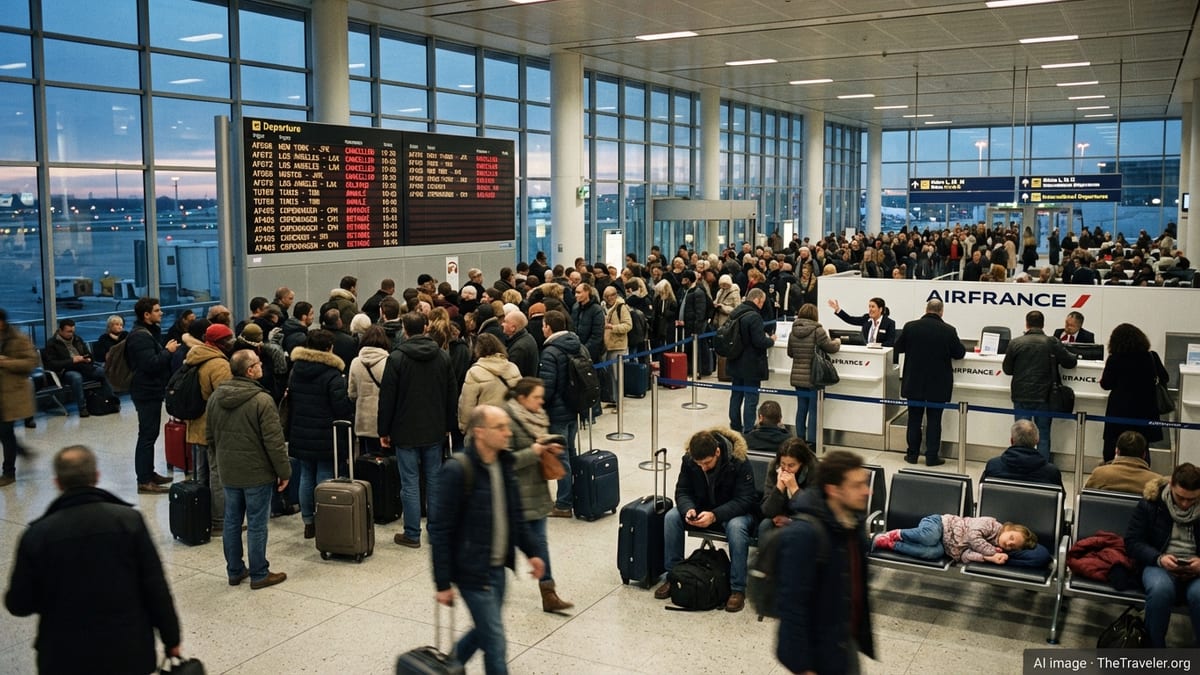
Rail services curtailed as unions target national network
Publicly available information from France’s national rail operator shows that train travel is bearing the brunt of the November 5 industrial action, with SNCF warning of reduced frequencies on high speed TGV, Intercités and many regional TER routes. Real time updates on official journey planners on Thursday morning indicate that services on some key intercity axes are operating on roughly half their usual timetable, while certain secondary routes have only a limited number of departures.
In the Paris region, Transilien notices report disrupted traffic on several suburban lines and parts of the RER network, although basic peak hour services are being maintained. The RER B, which links central Paris with both Charles de Gaulle and Orly airports, is among the most affected routes, with cancellations and longer intervals between trains forcing airport-bound passengers onto slower alternatives or road transport.
Union strike calls compiled by independent strike monitoring services show that SNCF rail unions have joined a broader cross sector mobilization backed by major confederations including CFDT, CGT, FO, Unsa and FSU. The coordinated action follows weeks of demonstrations over the cost of living and public sector funding, and comes on the heels of large student led protests that spread nationwide earlier in the autumn.
Travel advisories aimed at overseas visitors recommend that anyone planning long distance rail journeys in France on November 5 reconfirm departures on the day of travel, consider earlier or later trains where available, and be prepared for crowded services. Many non refundable tickets are being covered by special commercial measures on affected routes, allowing exchanges or refunds in line with rail operator policies published this week.
Urban transport, schools and public services under pressure
The impact of the strike on city transport has been uneven, with the Paris network less affected than many travelers feared. Coverage from French media notes that RATP, which operates the capital’s metro, most buses and tram lines, is providing almost normal service on most routes, with no broad based strike notice in place, though isolated disruptions and occasional crowding are reported at interchange hubs linked to rail marches.
Outside the capital, however, regional bus and tram systems are reporting patchier coverage, particularly where local transport staff have responded to national union calls. Travelers in cities such as Marseille, Lyon, Bordeaux and Toulouse are being advised to allow extra time for journeys and to check individual line status on the day, as reduced peak services and cancellations coincide with protest marches in city centers.
According to national and regional coverage, education is another sector heavily touched by the mobilization, with teachers and school staff joining walkouts to protest funding levels and wage policies. While many schools remain open, parents in several regions have been informed of partial closures or reduced timetables, a factor that can indirectly affect travel as families adjust commutes and childcare plans.
Public administration and health services are also covered by strike notices, although hospitals and emergency care are maintaining essential operations. Government guidance referenced in domestic reporting suggests that some non urgent appointments and administrative services may be postponed, but widespread closures of tourist facing offices, such as city tourism desks, have not been reported as of Thursday morning.
Flights mostly operating but schedules remain fragile
For air travelers, the picture is mixed but less severe than on some previous French strike days. An overview of notices from France’s civil aviation authorities and airport operators ahead of November 5 indicated that, unlike earlier actions this year, there was no blanket requirement for airlines to preemptively cancel a fixed share of flights at Paris Charles de Gaulle or Orly. Instead, travelers are being warned of potential last minute timetable adjustments if air traffic controllers or ground staff join the protests in larger numbers.
Specialist aviation trackers report that, in the comparable national strike of late September, regulators instructed airlines to cut up to 25 percent of services at Marseille Provence and around 5 percent at Paris Charles de Gaulle. For the current action, publicly available flight boards on Thursday show scattered cancellations and modest delays across several French airports rather than a system wide shutdown, though the situation remains subject to change throughout the day.
Several travel information outlets advise passengers transiting through France to monitor their booking apps closely and to build generous layover times, especially when connecting between air and rail. With RER B disruptions limiting the reliability of the direct train link to Charles de Gaulle, airport operators have been highlighting dedicated coach services and alternative rail routes via the mainline network where possible.
Travel insurers that cover strike related delays typically require written proof from carriers or operators, and consumer guides are reminding passengers to retain boarding passes and disruption notifications. For many leisure travelers, however, the main challenge on November 5 is not outright cancellation but the cumulative effect of small delays, crowded terminals and longer transfers between airports and city centers.
Mass protests reshape city centers and travel patterns
Reports from national and international media describe large demonstrations in Paris, Marseille, Lyon, Toulouse and other cities, as unions, student groups and civil society organizations converge on central squares and boulevards. March routes published in advance highlight symbolic locations such as Place de la République in Paris and central waterfront areas in Marseille, creating localized no go zones for vehicles and significant diversions for buses, taxis and ride hailing services.
Local authorities have issued notices warning of temporary road closures, parking restrictions and short term security cordons around major marches. Travelers arriving by car or coach into large cities are encountering slower than usual traffic on ring roads and access routes, particularly near station districts where rail walkouts and street protests intersect.
Travel advisories compiled for international visitors emphasize that, while demonstrations are largely peaceful, isolated clashes and property damage have accompanied some previous protest days in October. Visitors are generally encouraged to avoid joining crowds, to keep an eye on local news in their destination city, and to favor walking routes that steer clear of announced march itineraries and police cordons.
Tourism promotion agencies acknowledge that the strike is creating short term disruption but underline that most museums, attractions and restaurants remain open, except where staff have individually joined the protests. Many major sights in Paris and other cities are reachable on foot from central accommodation, which can mitigate the impact of local transport interruptions for travelers willing to adjust plans and timings.
What travelers can do now and in the coming days
With the November 5 strike framed by unions as part of a longer campaign over wages and the 2027 budget, labor analysts cited in French coverage note the possibility of further protest calls in the weeks ahead. For travelers planning winter trips to France, this raises the prospect of additional isolated strike days rather than a continuous shutdown, but it reinforces the importance of flexible planning.
Travel planners specializing in France are recommending that visitors keep high value activities, such as prepaid long distance excursions or time critical same day connections, away from widely publicized strike dates whenever possible. Where dates cannot be changed, booking fully refundable or exchangeable tickets on trains and flights can offer extra protection against last minute timetable changes.
For those already in the country, official transport apps and real time journey planners remain the most practical tools for navigating the disruptions, alongside hotel front desks and local tourism offices that can suggest walking routes or alternative modes such as bikes and scooters. Many travelers caught in earlier autumn protest days reported that, while journeys took longer and required more improvisation, most were still able to reach their destinations by combining reduced public transport with taxis or on foot.
There is no firm indication yet of how many additional national strike days might be called after November 5, but union statements and recent protest calendars point to continued tension over living costs and public services. For now, the day of action is a reminder that travel in France remains closely connected to the country’s vibrant culture of street protest, and that a degree of flexibility and situational awareness is essential for anyone moving through its cities and transport hubs.