


More news on this day
A prominent U.S. lawmaker is urging the State Department to issue a tougher travel warning for China, arguing that recent cases of Americans held under opaque security laws justify elevating the country’s advisory to the “Reconsider Travel” level.
Get the latest news straight to your inbox!
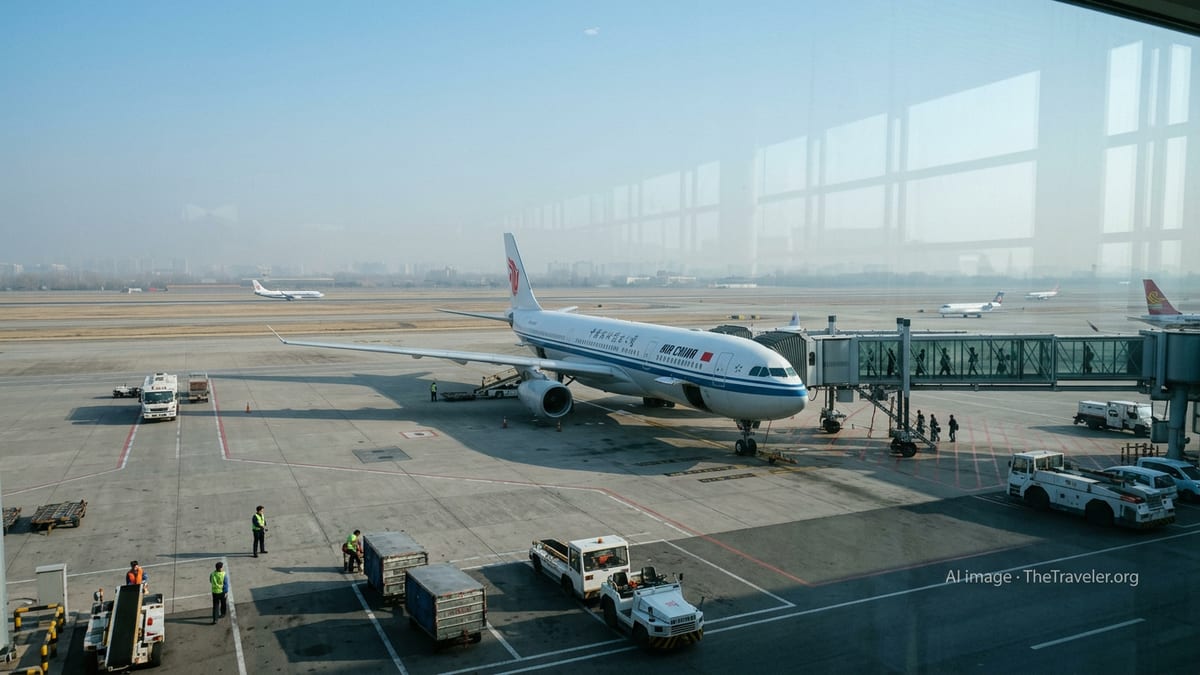
Call to Raise China to Level 3 on U.S. Advisory Scale
Publicly available documents show that Representative Young Kim of California, who chairs the House Foreign Affairs Subcommittee on East Asia and the Pacific, has asked Secretary of State Marco Rubio to upgrade the U.S. travel advisory for mainland China. In a letter dated October 29, 2026, Kim contends that the current Level 2 rating of “Exercise Increased Caution” does not reflect the severity of risks now described in the State Department’s written guidance.
According to summaries released by her office and secondary coverage, Kim is pressing for China to be moved to Level 3 on the four-tier advisory scale, which instructs Americans to “Reconsider Travel.” Her argument centers on what she characterizes as a pattern of wrongful detentions, expanded national security laws and the use of exit bans that can prevent travelers from leaving the country for extended periods.
The letter follows an October 19, 2026 update to the State Department’s China advisory, which kept the overall rating at Level 2 while significantly revising the narrative text. The revised advisory now highlights risks associated with broad counterespionage and data-security rules, as well as the possibility that ordinary academic, business or research activity may be interpreted as a security concern.
Kim’s move adds congressional pressure at a time when the advisory’s language and level are increasingly being scrutinized by frequent travelers, business groups and universities with programs in China, who are trying to assess how seriously to treat the warning in their planning.
Wrongful Detention Indicator and Notable U.S. Cases
In mid-October the State Department added a specific “wrongful detention” risk indicator to its China advisory, placing mainland China among the destinations where officials believe Americans could be detained without transparent legal process. Publicly available information indicates that the indicator is intended to flag situations in which detentions appear to be politically motivated or inconsistent with international standards.
Coverage of the updated advisory notes that it calls out several categories of travelers as facing heightened scrutiny. These include U.S. citizens of Chinese heritage, individuals involved in commercial disputes, people with current or prior links to U.S. law enforcement, the military or intelligence agencies, and those traveling on U.S. government funded programs. The text also references the use of exit bans that can bar departure for months or years, sometimes without formal charges.
According to rights advocacy groups and news reports, the cases of two U.S. scholars have become focal points in this debate. Seismologist Youlin Chen was detained at a Beijing airport in November 2024 while attempting to return to the United States, and political scientist Min Zin was taken into custody in Yunnan province in 2026 after traveling to an academic conference. Publicly available information indicates that both have been designated as wrongfully detained by the U.S. government.
Supporters of a tougher advisory argue that such examples show how routine professional engagement can escalate into prolonged detention under broadly worded national security provisions. They contend that making these cases more visible on official travel pages, as Kim has urged, would better inform travelers who might otherwise assume that risks are limited to high profile activists or individuals engaged in sensitive work.
Congressional Resolution Seeks Broader Policy Shift
The push for a tougher warning is not limited to a single letter. A House resolution introduced in the current Congress, identified in public records as H.Res. 1549, proposes a formal condemnation of what it describes as a pattern of wrongful detentions of U.S. nationals in China. The measure urges the State Department to reassess its China travel advisory in light of these cases and to review whether China meets the criteria for a higher-risk designation.
Information compiled by legislative trackers shows that the resolution specifically cites the detentions of Chen and Min Zin, calling for their immediate release. It also encourages the executive branch to weigh additional travel related warnings or designations that might deter nonessential trips by Americans who could be vulnerable under China’s legal framework.
Although such House resolutions are nonbinding and do not by themselves change policy, they can shape expectations for the State Department and signal congressional priorities to U.S. allies and partners. Observers of U.S. China relations note that the measure fits into a wider shift in Washington toward more cautious engagement with Beijing, particularly on issues involving personal security, data access and law enforcement cooperation.
Any decision to raise China’s advisory level would also be read in Beijing as a political message, potentially prompting criticism that Washington is politicizing travel guidance. Analysts following the issue suggest that policymakers must weigh the security benefits of a stronger warning against the risk of further straining already tense bilateral ties.
What the Current Advisory Means for Travelers
As of early November 2026, the State Department’s official travel-advisories list continues to show mainland China at Level 2, “Exercise Increased Caution,” with additional tags highlighting other risks. The advisory cites arbitrary enforcement of local laws, wrongful detention and the use of exit bans as key concerns. It emphasizes that Chinese authorities have wide latitude under national security and counterespionage statutes when deciding whom to question, detain or restrict from leaving.
Publicly accessible guidance for travelers underscores that border officials may search electronic devices, review social media activity and ask detailed questions about employment and affiliations. The advisory notes that travelers who have ties to sensitive sectors, work with U.S. government agencies, or are involved in legal or commercial disputes may face especially close examination.
Travel industry reporting indicates that, despite the Level 2 rating, some multinational companies and academic institutions have already introduced additional internal controls for trips to China. These can include senior-level review of proposed travel, restrictions on carrying work laptops or confidential materials, and mandatory briefings on digital security and local laws. For individual tourists, such measures may be less formal, but the official language encourages careful review of the risks before booking nonessential travel.
Should the advisory be raised to Level 3, American travelers could see stronger institutional reactions, such as stricter corporate approval processes, scaled back study-abroad offerings and potential changes to travel insurance coverage. However, even without a formal upgrade, the sharper wording and wrongful detention label are already prompting many organizations to revisit their risk assessments.
Implications for U.S. China Travel and Policy Debates
The campaign for a tougher China warning comes at a moment when U.S. China relations are under close scrutiny, including ahead of high-profile diplomatic engagements and trade discussions. Lawmakers pressing for an upgrade frame the travel advisory as part of a broader effort to confront what they view as coercive practices by Beijing, from economic pressure to transnational repression.
For the travel sector, the debate adds a layer of uncertainty to a market that had only recently begun to reopen after prolonged pandemic-era restrictions. Airlines, tour operators and conference organizers must now factor evolving political and security dynamics into decisions about schedules, routes and programming, even as demand from some business travelers and diaspora communities remains strong.
Prospective visitors to China are being advised in public information campaigns to pay close attention to the advisory’s text, not only its numerical level. Risk experts point to practical steps such as limiting sensitive data on devices, understanding local expectations around speech and online activity, and having contingency plans if a passport is taken or an exit ban imposed.
Whether or not the State Department ultimately moves China to Level 3, the recent updates and congressional pressure signal a more cautious U.S. stance on travel to the country. For Americans considering trips in the months ahead, the emerging message from Washington is that engagement with China increasingly carries legal and political complications that must be weighed alongside the traditional attractions of one of the world’s most visited destinations.