


More news on this day
Passengers traveling through Frankfurt Airport are facing renewed disruption as long haul services operated by Lufthansa, United Airlines and Swiss International Air Lines experience cancellations and extended delays on key routes to Tokyo, Chicago, London, Geneva and other major destinations.
Get the latest news straight to your inbox!
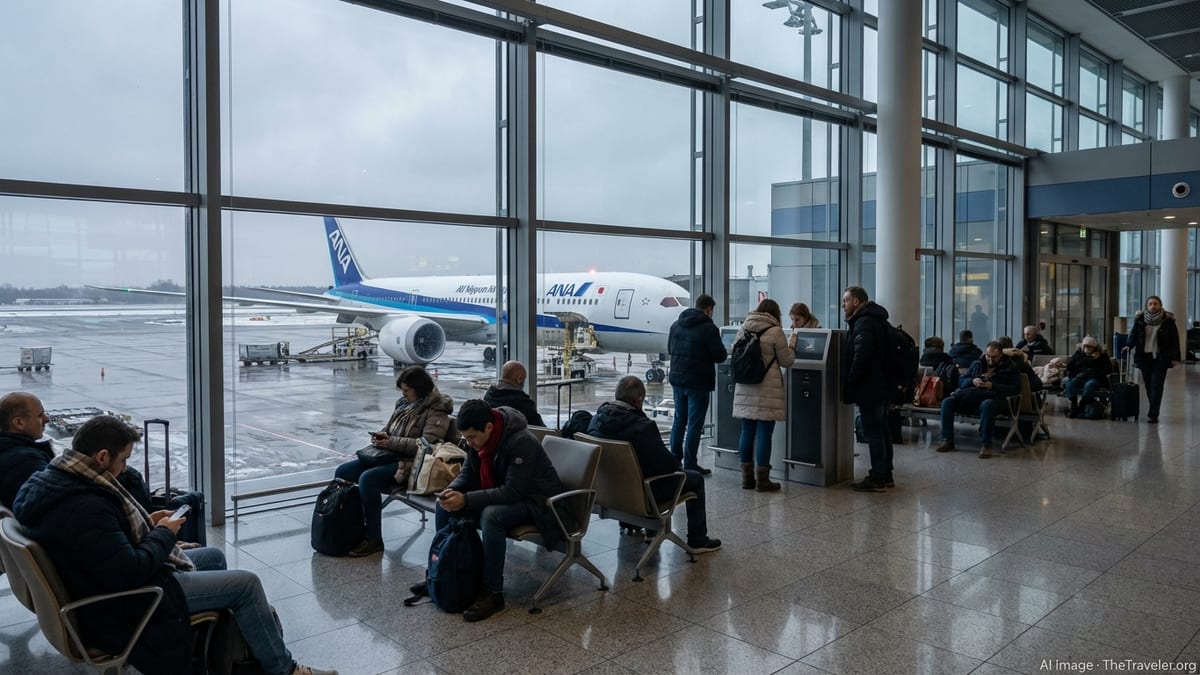
Fresh Wave Of Disruptions At Germany’s Busiest Hub
Frankfurt Airport, a primary gateway for intercontinental travel in Europe, has entered another period of operational strain as summer traffic builds. Publicly available flight-tracking data and schedule updates show a series of grounded or heavily delayed services affecting departures to North America, Asia and within Europe. Travelers booked on services linking Frankfurt with cities such as Tokyo, Chicago, London and Geneva report same-day cancellations, rolling delays and last-minute rebookings.
The renewed disruption follows a turbulent first half of 2026 for Germany’s aviation sector. Lufthansa, the dominant carrier at Frankfurt, has been adjusting its summer timetable, trimming frequencies on certain routes and consolidating others via alternative hubs. These structural changes have coincided with episodes of severe weather, capacity constraints and isolated technical incidents, complicating operations at an already busy airport.
Consumer-facing aviation platforms show that individual Lufthansa and codeshare services operated with United Airlines and Swiss International Air Lines have been periodically withdrawn from sale or removed from near-term schedules, creating uncertainty for travelers who booked months in advance. On social media and online travel forums, passengers describe missed connections, overnight airport stays and difficulties securing clear information on revised itineraries.
Long Haul Links To Tokyo And Chicago Under Pressure
Frankfurt’s role as a transcontinental hub means disruption quickly spreads beyond Germany. Long haul connections to Tokyo and Chicago are among the most closely watched, as they serve both business and leisure travelers and act as key transfer points for journeys deeper into Asia and North America. Live schedule boards and booking engines indicate that selected departures on these routes have been cancelled or downgraded in recent days, including services marketed by Lufthansa and codeshare partners.
For Chicago-bound traffic, travelers report that some Frankfurt departures have been removed at short notice, with passengers rebooked onto later flights or rerouted via other European gateways. These changes are occurring alongside ongoing schedule adjustments introduced by Lufthansa across its North American network for the current summer season. While many flights continue to operate, the pattern of isolated cancellations and tight connection windows is creating anxiety for passengers with onward domestic connections in the United States.
On the Asia side, Frankfurt to Tokyo services remain a crucial bridge for European travelers heading to Japan as well as for Japanese visitors connecting through Germany. According to published coverage and schedule tools, selected frequencies have been thinned out as part of wider network restructuring. For travelers, that has translated into fewer alternative options when a flight is disrupted, making any cancellation more consequential than in previous high-capacity seasons.
London, Geneva And Intra-European Connections Affected
The impact is not limited to long haul routes. Frankfurt’s dense web of short haul links to cities such as London and Geneva has also seen irregular operations. Flight-status platforms tracking Lufthansa and partner services show individual daily departures between Frankfurt and London Heathrow, as well as between Frankfurt and Geneva, being cancelled or rescheduled around peak travel days. These changes sit on top of longer-term adjustments in the Lufthansa Group’s European network, including frequency reductions and the suspension of some secondary routes.
Reports from travelers indicate that even when flights to major European hubs are still operating, the knock-on effect of delays elsewhere in the system can lead to missed connections. Passengers transiting Frankfurt on their way to London or Geneva describe queuing bottlenecks, tight connection times and gate changes that leave little margin for disruption. As a result, an isolated cancellation on one leg can cascade into itinerary changes across multiple countries.
Network restructuring within the Lufthansa Group, including the consolidation of certain regional routes and the discontinuation of others, is further compressing available capacity. This means that when a Frankfurt to London or Frankfurt to Geneva service is grounded, alternative same-day options may already be heavily booked, pushing some travelers into overnight stays or multi-stop routings that significantly extend total travel time.
Underlying Causes: Operational Incidents And Structural Constraints
The latest wave of disruption comes against a backdrop of both acute incidents and structural challenges. Earlier in June, published reports detailed a nose landing gear collapse involving a Lufthansa-operated Boeing 787 at a Frankfurt gate prior to boarding for a long haul departure to Los Angeles. The incident led to the cancellation of that flight and temporarily removed a widebody aircraft from service, adding pressure to long haul scheduling at a time of high demand.
Separately, Lufthansa has been implementing a series of summer schedule adjustments, including the suspension or consolidation of certain European routes and the discontinuation of some short domestic links from Frankfurt. Official timetable notices and industry analyses describe these moves as part of efforts to stabilize operations and align capacity with available aircraft and crew resources.
Travel industry commentary also points to previous labor actions by cockpit and cabin staff earlier in the year, as well as the broader impact of cost pressures and higher fuel prices across European aviation. While strikes are not currently at the forefront of the disruptions reported in late June, the residual effects of earlier cancellations and rebookings continue to be felt in the form of congested flights and limited spare capacity for accommodating new irregularities.
What Travelers Through Frankfurt Can Expect Now
For passengers scheduled to travel through Frankfurt in the coming days, the operational picture remains fluid. Data from flight-status aggregators suggests that while the majority of flights on any given day still depart as planned, the rate of late-notice cancellations and significant delays is elevated compared with more stable periods. This is especially noticeable on busy connecting flows linking Germany with North America and Asia, where aircraft utilization is tight and recovery options are limited.
Consumer advocates and travel analysts generally recommend that passengers monitor their bookings closely, using both airline apps and independent flight-tracking services to verify departure times and gate information. Given the recent experience at Frankfurt, travelers making tight connections are increasingly advised to allow additional buffer time where possible, particularly on itineraries involving non-Schengen transfers that require extra border or security checks.
Publicly available guidance on European Union air passenger rights reminds travelers that, under certain conditions, those affected by cancellations or long delays may be entitled to care, assistance and in some cases financial compensation. The applicability of these rules depends on the precise cause of each disruption and whether it falls within the operating airline’s control. With a mix of technical, operational and weather-related factors contributing to the current situation, outcomes may vary from case to case.
As airlines across the Lufthansa Group, along with partners such as United Airlines and Swiss International Air Lines, work to manage schedules through the peak summer period, travelers across Germany face an environment where flexibility and real-time information are increasingly important. For those connecting through Frankfurt on journeys to Tokyo, Chicago, London, Geneva and other hubs, planning for potential disruption has become a prudent part of any 2026 itinerary.