


More news on this day
Emergency crews in Bensalem Township, Pennsylvania, responded Tuesday afternoon to a multi-car freight train derailment near the Neshaminy Falls area, an incident captured in dramatic aerial and bystander video that showed railcars scattered alongside the tracks and prompted temporary shelter-in-place and evacuation orders.
Get the latest news straight to your inbox!
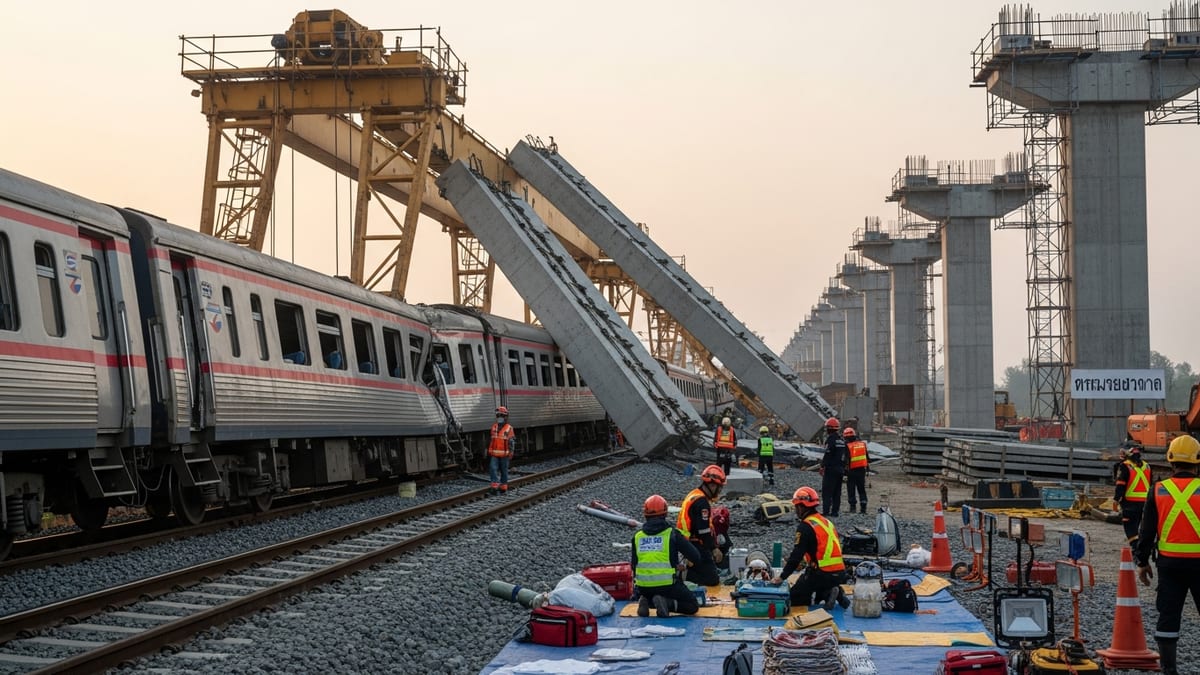
Derailment near Neshaminy Falls disrupts busy corridor
Publicly available information indicates the derailment happened shortly after 2 p.m. on Tuesday, June 30, between Street Road and Neshaminy Falls station in Bensalem, a Bucks County suburb northeast of Philadelphia. Reports describe between 10 and 16 freight cars leaving the tracks, with several cars ending up on their sides in a tangled line of metal and debris.
Television helicopter footage circulated by regional outlets showed long stretches of freight cars jackknifed along the right-of-way, with some containers and tank-style cars visibly displaced from the tracks. The line runs close to residential neighborhoods and commercial areas, increasing concern as images of the derailment spread across social and traditional media.
Regional coverage notes that the tracks involved carry freight traffic and run near, but separate from, commuter rail infrastructure serving Philadelphia. The proximity to the West Trenton Line led to precautionary service suspensions on passenger routes operating nearby, creating additional disruption for late-afternoon travelers.
Early reports do not indicate any injuries among train crew or people in the surrounding area. The visual scale of the derailment, however, combined with the presence of tank cars in the train consist, led to a rapid expansion of the emergency response.
Hazmat teams deployed amid initial concerns over train cargo
According to published coverage, Bensalem police, fire, emergency medical services and hazardous materials teams converged on the corridor within minutes of the first reports. Initial information suggested that some of the derailed cars were carrying hazardous materials, prompting responders to establish a wide safety perimeter until the contents of each car could be evaluated.
Local television video showed hazmat trucks and specialized equipment staged along access roads leading into the rail corridor, with crews moving methodically between derailed cars. The priority through the afternoon centered on identifying any potential leaks, monitoring air quality and confirming whether tank cars remained intact after leaving the rails.
By early evening, regional outlets including 6abc reported that inspections of the affected freight cars found no evidence of hazardous material leaks. Publicly available updates indicate that while certain cars contained regulated substances, containment systems appeared to have held, significantly reducing the risk of a wider environmental or public health emergency.
With the hazmat assessment shifting from emergency containment to documentation and monitoring, attention turned to stabilizing the derailed equipment and planning the complex recovery operation that will be required to clear the line.
Shelter-in-place and evacuation orders briefly affect nearby residents
As images of derailed tank cars emerged, Bensalem Township issued precautionary instructions for residents in the immediate vicinity of the tracks. Initial messages urged people to shelter in place, stay indoors and avoid the area while crews assessed the situation. Some businesses and homes closest to the derailment site were then evacuated as a further precaution.
Video from the scene showed police vehicles blocking key access points, with traffic diverted away from the rail corridor and nearby intersections. For a period on Tuesday afternoon, travelers encountered significant congestion on roads feeding toward Street Road and the Neshaminy Falls area, as drivers attempted to navigate around closures and emergency staging areas.
As hazmat teams worked through their inspections and found no leaks, reports indicate that evacuation and shelter-in-place orders were gradually lifted. Residents were allowed to return, although local coverage advised people to continue avoiding the immediate crash site and to expect a sustained presence of emergency vehicles, rail investigators and heavy equipment.
The incident unfolded during a spell of summer heat across the region, and some residents sharing images and video online expressed relief that the derailment did not escalate into a longer-term hazardous materials event requiring extended outdoor restrictions.
Video coverage shows scale of derailment and complex recovery
Aerial footage from local television, including Chopper 6 and other news helicopters, quickly became central to public understanding of the derailment. The video showed a line of freight cars, some upright and some overturned, stretching along a curve of track bordered by trees, light industrial sites and backyards. Several cars appeared crumpled or accordion-like, underscoring the force of the derailment.
Ground-level video shared by bystanders captured long trains of emergency vehicles converging on the scene and thick dust kicked up around the rail bed in the immediate aftermath. The combination of helicopter and smartphone video offered a near-continuous visual record of the emergency response as it expanded through the afternoon.
The images also hinted at the logistical challenge now facing the freight operator and rail contractors. Specialized cranes and heavy-duty equipment will be needed to lift derailed cars back onto the tracks or onto flatbed trailers, a process that can take many hours or days, depending on the extent of track damage and the condition of the rolling stock.
For travelers and commuters in the Bensalem area, the video evidence reinforced expectations that rail and nearby road disruptions may continue while crews rebuild damaged sections of track, inspect signaling systems and clear debris from the right-of-way.
Rail safety concerns resurface along busy Northeast routes
The Bensalem derailment adds to a series of high-profile freight incidents in recent years that have drawn increased scrutiny to rail safety, particularly where tracks run close to homes, schools and commercial corridors. Although initial findings in this case point to an incident without injuries or hazardous leaks, images of toppled tank cars reignite public questions about the risks that accompany freight movements through densely populated suburbs.
Advocacy groups and transportation analysts have previously highlighted the concentration of freight traffic along key Northeast rail arteries, where aging infrastructure intersects with newer safety technologies. Events like the Bensalem derailment are likely to fuel renewed interest in track maintenance practices, train inspection regimes and the routing of hazardous materials around major population centers.
For travelers who rely on nearby commuter rail lines and regional roadways, the incident serves as a reminder of how quickly a freight disruption can cascade into broader transport delays. Service interruptions on adjacent passenger routes, even when they do not share the same tracks, can ripple across schedules as dispatchers reroute trains and adjust operations around an active emergency scene.
Investigators are expected to focus in the coming days on the condition of the track, the placement of cars within the train and any operational factors that may have contributed to the derailment. While those findings will arrive later, Tuesday’s dramatic video and the expansive emergency response have already ensured that the Bensalem derailment will feature prominently in ongoing conversations about rail safety and infrastructure investment along the busy corridor.