


More news on this day
Evacuation and shelter-in-place directives were lifted Tuesday evening in the Feasterville area of Bensalem Township, Pennsylvania, after a freight train derailment prompted a large emergency and hazmat response near a busy commuter corridor north of Philadelphia.
Get the latest news straight to your inbox!
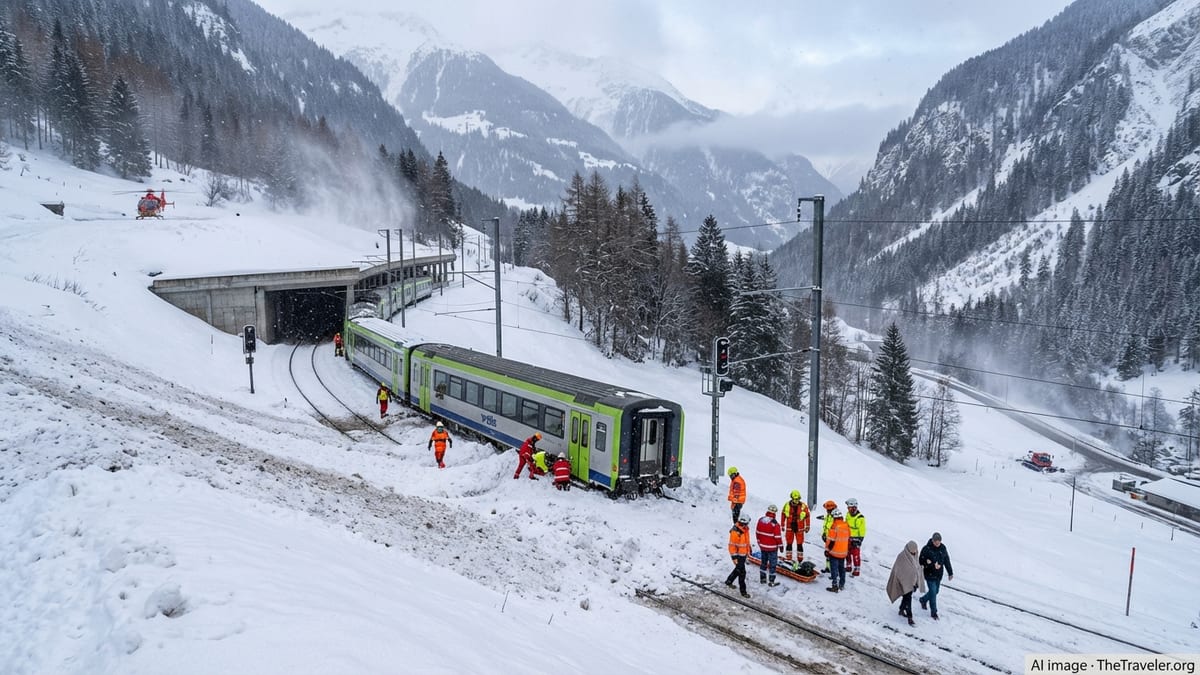
Freight cars leave tracks near Neshaminy Falls station
Publicly available information shows that a freight train derailed on Tuesday, June 30, between Street Road and the Neshaminy Falls train station, near Feasterville in Bucks County. Initial reports from local outlets described between five and ten freight cars leaving the tracks, with several cars strewn along the rail line.
The derailment occurred in a densely developed stretch of Bensalem Township that borders residential neighborhoods, shopping areas and major roadways used by commuters traveling between Philadelphia and the northern suburbs. The location is part of a key rail corridor that runs parallel to passenger services, heightening concern among local residents as images of the damaged freight cars circulated on regional news and social media.
According to published coverage, emergency calls began coming in shortly after 2 p.m. Eastern time, indicating a significant incident along the tracks. Within minutes, local police, fire crews, emergency medical services and hazardous materials teams converged on the scene, setting up staging areas and closing nearby streets as a precaution.
Rail activity through the immediate area was halted while responders assessed the situation and began a detailed inspection of the derailed cars. Commuters were advised to expect delays and to avoid traveling close to the affected stretch of track while operations were underway.
Shelter-in-place and evacuation orders follow hazmat concerns
Out of an abundance of caution, officials in Bensalem Township issued a shelter-in-place directive for residents and businesses near the derailment site. Reports indicate that the order initially covered roughly a one-mile radius around the affected tracks, reflecting early concerns that some of the derailed cars might be carrying hazardous materials.
Local news outlets describe how people in homes and commercial properties closest to the scene were asked either to remain indoors with windows closed or, in some cases, to leave the immediate vicinity while hazmat specialists carried out air monitoring and visual inspections. These measures, while disruptive, are consistent with standard safety protocols used in rail incidents where cargo details are not immediately confirmed.
According to regional media reports, authorities worked to determine the contents of the derailed cars as quickly as possible. The involvement of specialized hazmat teams underscored initial fears that toxic or flammable cargo could have been compromised, a concern that has become more prominent nationally following several high-profile freight incidents involving chemicals in recent years.
For nearby residents and visitors, the combination of emergency vehicle activity, blocked roads and official alerts created a tense afternoon. Travelers heading to and from shopping centers and residential developments around Feasterville reported detours and traffic backups as access routes were restricted.
Hazmat assessment finds no leaks, orders lifted
By late afternoon, publicly available statements from local agencies and media coverage indicated that hazmat personnel had completed key portions of their assessment. Reports from regional broadcasters state that monitoring around the site did not detect hazardous material leaks from the derailed freight cars.
With no evidence of contamination in the surrounding area, the earlier shelter-in-place and evacuation orders were lifted. Residents who had left their homes or workplaces were allowed to return, and businesses within the precautionary zone were informed that they could resume normal operations.
Emergency managers emphasized through public messaging that there was no ongoing threat to the wider community once the site had been secured and the cargo verified. Although some road restrictions and rail disruptions were expected to continue while recovery crews worked to re-rail or remove damaged cars, the change in guidance marked a significant shift from immediate life-safety measures to longer-term cleanup and repair.
The lifting of the orders was a key moment for travelers and commuters in the area, many of whom rely on the surrounding road network and nearby rail services for daily movement between Bucks County and central Philadelphia. Local coverage notes that people were encouraged to stay tuned to transit alerts and traffic reports for updates on residual delays.
Impact on travel and nearby communities
The derailment and subsequent safety measures had an immediate effect on mobility across this section of Bucks County. The rail corridor near Neshaminy Falls station sits close to major arteries that connect Feasterville, Bensalem and other northeastern suburbs, and those routes experienced congestion as vehicles were diverted away from the incident zone.
Travelers heading to shopping centers, medical appointments and workplaces in the vicinity encountered closures around segments of Street Road and nearby intersections. According to local traffic reports, some drivers faced extended travel times as police directed vehicles to alternate routes while emergency operations remained active.
Passenger rail users also experienced delays, as freight activity in the corridor affected scheduling and prompted cautionary speed restrictions in the broader area. Regional media indicated that transportation agencies were coordinating with the freight operator to restore normal service, though the timeline for full resumption of typical rail patterns was not immediately clear.
For nearby neighborhoods and hotels that serve visitors to Bucks County, the event served as a reminder of the close proximity between residential and commercial zones and heavy rail infrastructure in this part of the Philadelphia metropolitan region. Many properties back directly onto rail lines or sit within a short distance of crossings and stations.
Ongoing investigation and broader safety context
As of Tuesday evening, the exact cause of the Feasterville-area derailment had not been publicly identified. Early speculation shared in local discussions has referenced the potential role of track conditions and summer heat, but official investigations by rail and safety agencies typically take weeks or months to reach definitive conclusions.
According to summaries in regional and national coverage, investigators will likely review crew reports, train speed data, track inspections and maintenance records, as well as the configuration and loading of the freight consist. The incident will be added to a growing list of rail events that have prompted renewed scrutiny of freight operations running through populated corridors.
For travelers and local residents, the Feasterville derailment adds to a broader conversation about how communities coexist with heavy rail lines that carry both routine goods and, at times, hazardous materials. Planning discussions in many regions increasingly focus on emergency preparedness, communication systems and clear evacuation or shelter protocols for neighborhoods adjacent to critical infrastructure.
While Tuesday’s incident concluded without reported leaks of dangerous cargo, it highlighted how quickly a transportation disruption can ripple through a busy suburban environment. For visitors heading through Bucks County and the greater Philadelphia area, the episode underscores the value of monitoring local advisories, especially when traveling near rail corridors where conditions can change rapidly in the event of an accident.