


More news on this day
Rail travel plans across southern Kyushu have been thrown into disarray after a freight train derailed in the region, disrupting key routes relied on by both residents and visitors at the height of Japan’s summer holiday season.
Get the latest news straight to your inbox!
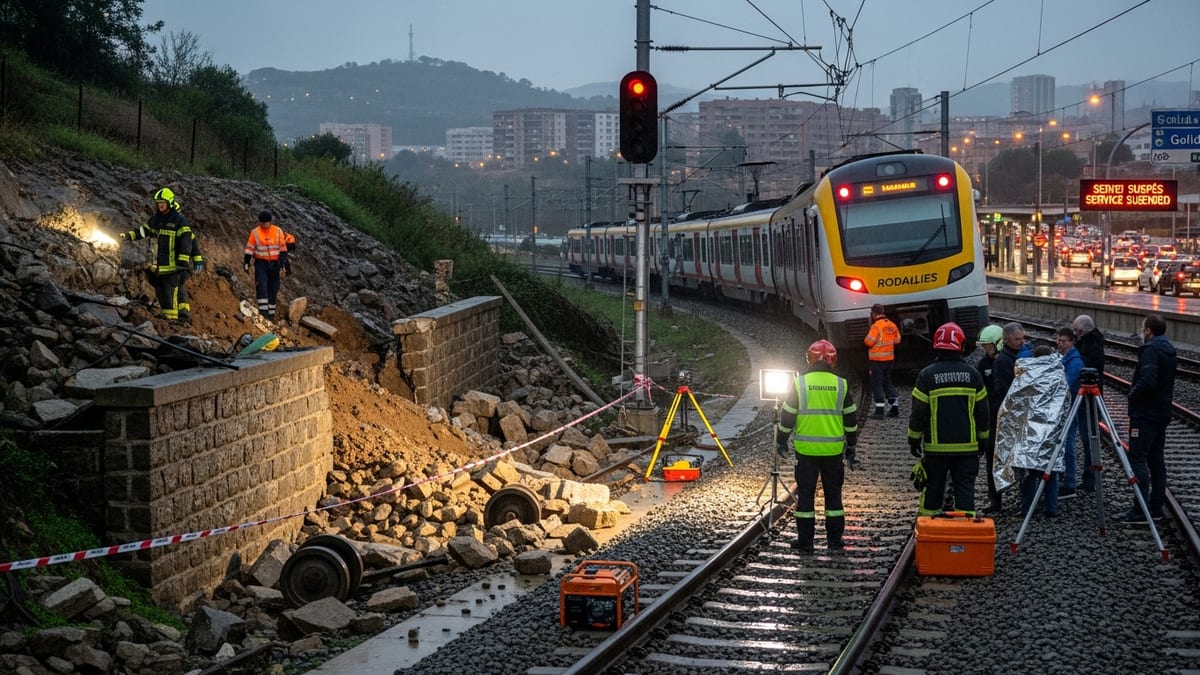
Derailment Adds Strain to Quake Hit Rail Network
The derailment occurred on Japan Freight Railway Company infrastructure in southern Kyushu, affecting tracks that form part of the wider Kagoshima area rail network. Publicly available information points to the incident taking place close to existing freight facilities that connect with passenger services, intensifying disruption on lines already under pressure from recent seismic activity in Kumamoto and surrounding prefectures.
Initial reports describe freight wagons leaving the tracks and damaging adjacent infrastructure, prompting an immediate halt to services across the affected section. While detailed technical findings are still being compiled, images and video shared by Japanese media outlets show derailed container cars tilted or overturned beside the line, with track crews and heavy machinery working to clear debris.
The disruption has been compounded by a series of strong earthquakes that struck Kyushu in late July, leading to temporary suspensions on parts of the Kyushu Shinkansen and conventional lines while inspections were carried out. For travelers heading to destinations such as Kagoshima, Ibusuki and other points in South Kyushu, the derailment represents an additional complication in an already fragile transport environment.
Japan’s rail safety framework requires detailed post accident investigation, and past derailment reports in the Kagoshima region show a strong emphasis on track condition, wheel profiles and operating speeds in curves. A similar level of scrutiny is expected this time, although for passengers and tourism operators the most immediate concern is how long it will take to restore reliable services.
Impact on Domestic and International Travelers
South Kyushu is a key destination for both domestic tourists and international visitors attracted by hot springs, coastal scenery and access to island gateways. The main north south rail axis through Kumamoto and Kagoshima is a critical part of how many travelers move between Fukuoka, Kumamoto and Kagoshima, often combining Shinkansen services with local trains or buses.
With the freight derailment disrupting tracks that also feed into passenger routes, travelers are experiencing cancellations, reduced frequencies and longer journey times. Some services are being turned back short of their usual terminus, requiring passengers to transfer to buses or alternative local lines where available. For visitors on tightly timed itineraries, this can mean missed connections and reshuffled hotel stays.
According to published coverage and timetable updates, services on the Kagoshima Main Line and connecting routes are operating with delays and periodic suspensions while inspections and repairs proceed. Even where trains are still running, on board announcements and station displays are advising passengers to expect sudden changes, which can be challenging for non Japanese speakers navigating the network for the first time.
Travelers using rail passes may need to adjust their expectations about how far they can realistically travel in a single day across South Kyushu. Routes that previously allowed for easy day trips to hot spring towns or coastal resorts may now require additional planning time, or in some cases a switch to highway buses or rental cars, which can be scarce during peak periods.
Service Suspensions, Bus Bridges and Alternative Routes
In response to the derailment and the wider impact of recent earthquakes, operators in Kyushu are relying on a mix of temporary service suspensions, bus bridges and rerouted trains. Publicly available information from JR Kyushu indicates that bus substitution has become a familiar tool on the Hisatsu Line and related corridors in recent years, and similar measures are now being used again where tracks are blocked or subject to intensive inspection.
On sections where the line is fully closed, dedicated buses are running between key stations to maintain at least a basic level of connectivity for communities and tourists. However, journey times are typically longer than by rail and capacity can be limited, particularly at weekends and around national holidays, so passengers are being encouraged through public guidance to travel earlier in the day and allow generous transfer windows.
Some travelers are opting to bypass the most affected areas entirely by staying on the Kyushu Shinkansen between Fukuoka and Kagoshima Chuo, then using local services that remain operational toward Ibusuki, Makurazaki or other coastal towns. Others are shifting to alternative sightseeing routes, focusing on areas such as Nagasaki or northern Kyushu where rail operations are closer to normal.
For visitors with pre booked scenic and excursion trains in Kyushu, recent experience suggests that operators may suspend or reroute certain tourist oriented services when freight or infrastructure incidents restrict capacity. Checking status on the morning of departure and having a flexible backup plan is advisable, especially while repair work from the derailment continues.
Tourism Businesses Adjust to Another Shock
The derailment and associated rail disruptions are the latest in a series of shocks for tourism businesses in southern Kyushu. Over the past several years the region has contended with heavy rain events, landslide damage on mountain lines and earlier earthquake related interruptions, each of which has temporarily cut rail access to onsen towns and rural attractions.
Local hotels, guesthouses and tour operators have become increasingly adept at rearranging transfers, advising guests on alternative routes and coordinating with bus companies when trains are not running. According to regional business coverage, some properties now routinely include transport advisories in reservation emails, highlighting possible bottlenecks and suggesting backup options such as airport limousine buses or shared taxis from major stations.
While the current derailment centers on freight operations, the knock on effects on passenger services are likely to be felt in booking patterns. Travelers who had planned rail intensive itineraries may postpone trips or shorten stays, while those already in the region might choose to extend visits in a single base city rather than moving every night to a new destination along the line.
Tourism organizations in Kyushu have responded to past disruptions by promoting flexible, hub based travel, encouraging visitors to use cities such as Kagoshima as bases for day trips using whatever combination of rail and road transport is available at the time. A similar message is emerging again as the network absorbs the impact of the latest derailment.
Practical Advice for Visitors Headed to South Kyushu
Travelers with upcoming plans in South Kyushu are advised, based on current public information, to monitor rail status closely in the days before departure and each morning during their trip. Operator websites, station displays and local news outlets provide the most up to date view of which segments are running and where delays or suspensions are concentrated.
Building additional time into itineraries is important. Those transferring between Shinkansen services and local lines in Kumamoto or Kagoshima should leave larger buffers than usual, and where possible avoid booking last train connections to remote areas that could be affected by ongoing repair work or sudden inspections.
Holding a prepaid IC card as well as any long distance rail pass can make it easier to switch between trains and buses at short notice. Many bus operators in Kyushu accept major IC cards, allowing travelers to board quickly when a rail segment is unexpectedly substituted by road transport.
Finally, visitors may want to prioritize experiences that are less dependent on precise train timings, such as spending a full day in Kagoshima city, exploring nearby hot springs reachable by frequent local services, or focusing on one or two regions rather than attempting to see all of Kyushu in a single trip. As the freight derailment and earthquake related checks continue to ripple through the network, a slower, more flexible approach can help ensure that journeys in South Kyushu remain rewarding despite the disruption.