


More news on this day
Passengers across the United Arab Emirates are facing renewed disruption as Emirates, Flydubai, Etihad Airways and Air Arabia cancel nearly a dozen flights across major hubs, stranding travelers and affecting links to cities including Addis Ababa, Riyadh, Islamabad and Colombo.
Get the latest news straight to your inbox!
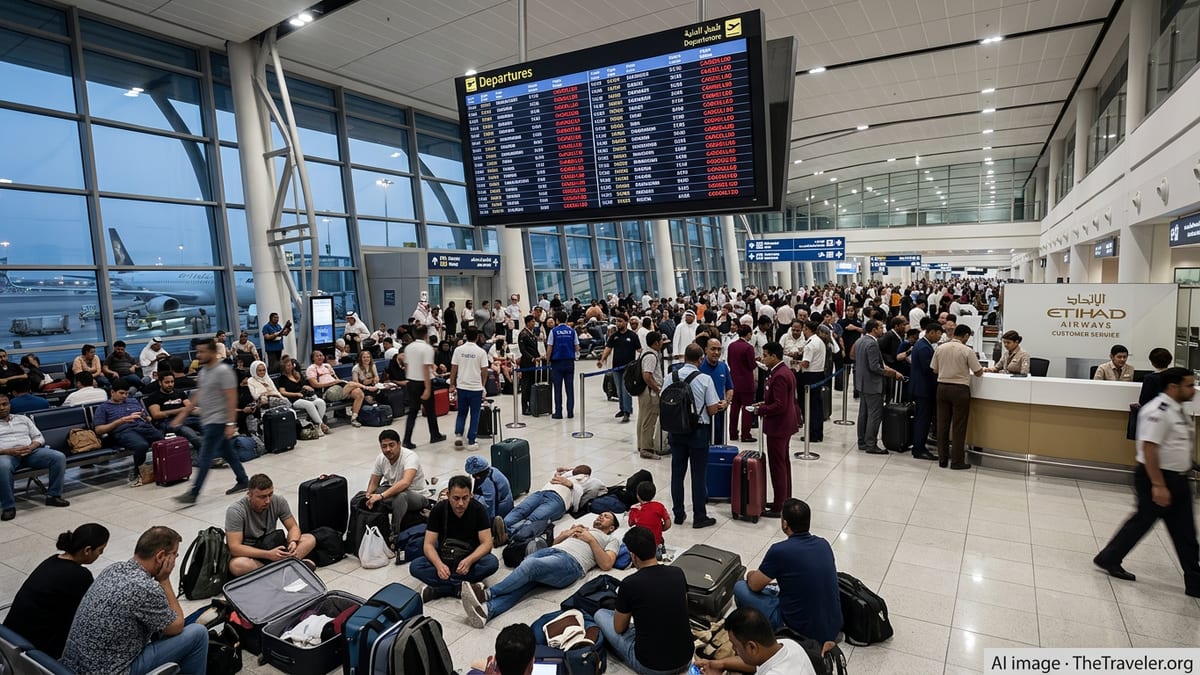
New Cancellations Hit Key Routes Out of Dubai, Abu Dhabi and Sharjah
Operational data compiled from airline status pages and recent aviation coverage indicates that a fresh cluster of cancellations has emerged across the UAE’s biggest airports, building on several weeks of irregular schedules following regional airspace volatility. Emirates, Flydubai, Etihad Airways and Air Arabia have all scrubbed additional services in recent days, particularly on short and medium haul routes connecting the Gulf to Africa and South Asia.
Published reports tracking UAE operations describe at least seven cancellations in the past 48 hours alone, with further disruptions taking the tally close to a dozen when combined with same-day service cuts and aircraft rotations adjusted at short notice. These changes are concentrated at Dubai International, Abu Dhabi’s Zayed International Airport and Sharjah Airport, where carriers have been juggling altered routings and crew availability.
Routes linking the UAE to Addis Ababa, Riyadh, Islamabad, Colombo, Peshawar and other regional hubs are among those most affected. While some flights have been completely cancelled, others have been retimed or temporarily downgauged, creating a patchwork of schedule changes that can be difficult for passengers to track in real time.
Airlines continue to publish advisories urging travelers to verify their flight status before heading to the airport, noting that schedules remain subject to last minute adjustment as conditions evolve. Publicly available information shows that certain services are operating with extended flight times due to rerouting, even when not cancelled outright.
Stranded Passengers Face Missed Connections and Lengthy Rebookings
The latest round of cancellations is compounding the impact on passengers who rely on the UAE as a transit hub between Europe, Asia and Africa. Social media posts and traveler forums are filled with accounts of missed onward connections, overnight holds in Dubai and Abu Dhabi, and uncertainty over when replacement flights will depart.
Travelers on affected services to Islamabad and other Pakistani cities report repeated rolling cancellations and rebookings, sometimes within hours of departure. Similar experiences are emerging from those scheduled to fly between the UAE and Addis Ababa or Colombo, where limited alternative capacity makes same-day rerouting challenging.
Standard rebooking and refund options remain in place, but the uneven spread of cancellations means some travelers are being moved several days forward, particularly on heavily booked routes. According to publicly available airline guidance, passengers whose flights are cancelled are generally being offered the choice of a later departure or a refund, but the practical outcome often depends on seat availability on alternative services.
For those already in transit, the disruption can be especially difficult. With many itineraries built around tight connections in Dubai or Abu Dhabi, a single cancellation can unravel multi leg journeys, forcing extended stays airside or emergency hotel stays arranged at short notice.
Regional Airspace Tensions Keep Schedules Fragile
The cancellations come against the backdrop of a turbulent year for aviation in the Gulf, following repeated missile and drone incidents and intermittent airspace restrictions that have periodically closed or constrained UAE airports. Earlier in 2026, Dubai International and other regional hubs experienced full or partial shutdowns, prompting mass suspensions of flights and a lengthy process of phased resumptions.
Industry analysis notes that while core operations at Emirates, Flydubai, Etihad Airways and Air Arabia have largely resumed, network stability remains vulnerable to sudden changes in airspace permissions, security alerts and congestion in neighboring flight corridors. Rerouted traffic around sensitive areas has increased flying times and tightened aircraft and crew rotations, leaving less margin when fresh disruptions arise.
Recent scheduling data and aviation commentary also highlight the continued use of circuitous routings on some Middle East and South Asia sectors, especially those overflying or skirting conflict zones. Even modest delays on these longer routes can ripple through the day’s schedule, increasing the likelihood that late night or lower demand services are cancelled to reset operations.
Analysts suggest that the clustering of cancellations across multiple carriers on similar days points to shared constraints in regional airspace and airport capacity rather than isolated airline specific issues. This is especially visible on high frequency links such as Riyadh, where even small changes in slot availability can force multiple operators to thin out schedules simultaneously.
Airlines Balance Network Recovery With Operational Risk
In their public updates, UAE based airlines have framed the ongoing adjustments as part of a broader effort to rebuild networks carefully while maintaining safety margins and operational resilience. Flight status tools show progressive increases in the number of destinations served since early March, yet also confirm that certain routes remain at reduced frequencies or subject to ad hoc cancellations.
Emirates has restored a substantial portion of its long haul network but continues to warn that flights to and from Dubai have not fully normalized, urging customers to monitor email notifications and online status pages closely. Etihad Airways has been operating a more limited schedule from Abu Dhabi, with earlier statements emphasizing that the situation is dynamic and that services may change at short notice.
Low cost carriers Flydubai and Air Arabia, which anchor much of the region’s point to point traffic, appear to be particularly exposed on thinner routes where there is less slack in aircraft utilization. Reports indicate that these airlines have occasionally consolidated flights or temporarily suspended certain city pairs when operational pressures spike.
Aviation observers note that the four carriers are also coordinating with airport operators and regulators as they navigate the balance between restoring connectivity and avoiding large scale on the day cancellations. This coordination, while helping to keep core corridors open, can result in repeated timetable changes for secondary destinations such as Addis Ababa or Colombo.
What Travelers Through UAE Hubs Should Expect Next
With regional conditions still in flux, travel specialists advise that passengers planning to transit through the UAE in the coming days should build extra flexibility into their itineraries. This includes allowing longer connection times, avoiding last flight of the day options on critical legs where possible and remaining prepared for same day changes.
Publicly available guidance from airlines operating in the UAE consistently encourages travelers to check flight status on official channels before departure, update contact details in bookings to receive alerts, and consider travel insurance policies that include disruption coverage. For those whose plans are highly time sensitive, some experts suggest exploring alternative routings via less affected hubs where viable.
Despite the latest wave of cancellations, flight tracking data shows that the majority of scheduled services at Dubai, Abu Dhabi and Sharjah are still operating, albeit with occasional delays. The challenge for travelers lies less in the overall capacity on offer and more in the unpredictability of individual flight outcomes on certain corridors.
As the summer travel season approaches, industry watchers will be monitoring whether carriers can stabilize their schedules and reduce the frequency of last minute cancellations. For now, passengers heading to or through the UAE, particularly on routes to Addis Ababa, Riyadh, Islamabad, Colombo and neighboring cities, may need to plan for an added layer of uncertainty in their journeys.