


More news on this day
Kuwait’s hard‑won recovery in air travel is facing renewed turbulence as Kuwait Airways and several other carriers scrap or reschedule more than 65 flights, disrupting links to key cities including London, New York, Dubai, Doha, Paris, Amsterdam, Delhi, Mumbai and Bangkok.
Get the latest news straight to your inbox!
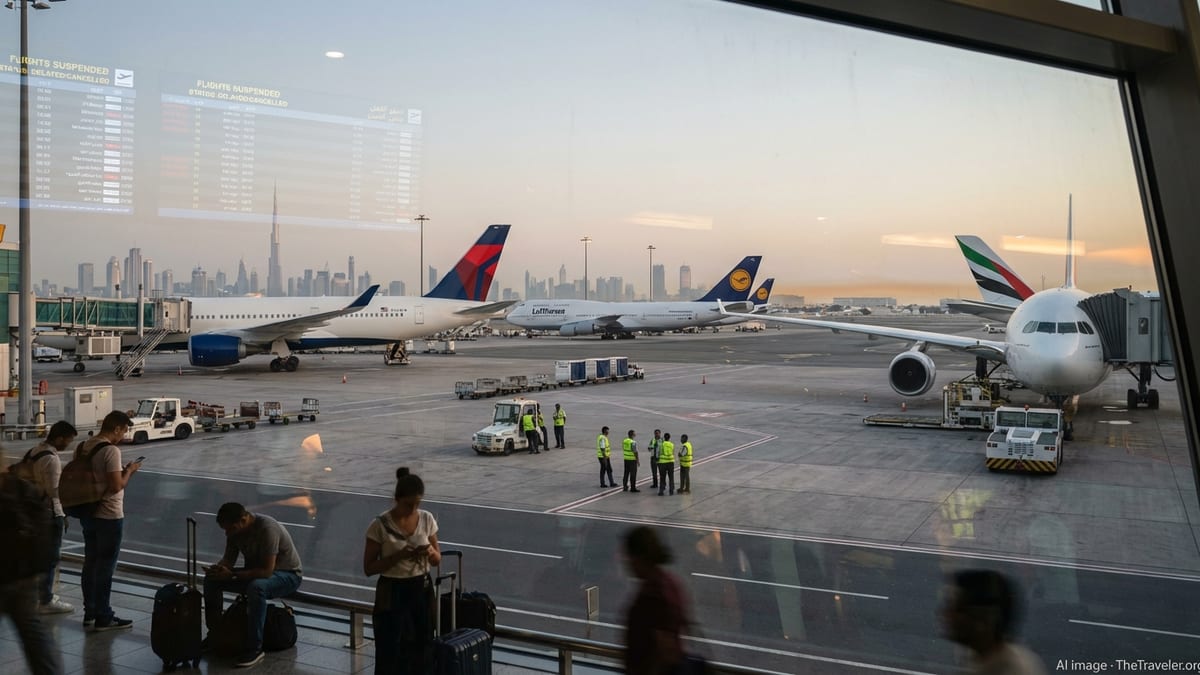
Fresh Wave of Cancellations Hits Key Long‑Haul Routes
Publicly available departure boards and aviation‑tracking data show a sharp uptick in cancellations and heavily delayed services at Kuwait International Airport in recent days, with Kuwait Airways accounting for the largest share of disrupted flights. Services on flagship routes to London and New York, alongside busy regional and Asian destinations such as Dubai, Doha, Delhi, Mumbai and Bangkok, feature prominently among those withdrawn or retimed.
Travel‑tracking blogs and passenger forums indicate that more than 65 flights involving Kuwait Airways and partner or codeshare airlines have been pulled from schedules or shifted to less convenient time slots within a short window. That figure spans both outbound services from Kuwait and inbound legs operated by foreign carriers that rely on Kuwait as a transit or feeder hub.
The renewed disruption comes just weeks after Kuwait reopened its airspace and began a phased restoration of traffic following a near two‑month shutdown triggered by regional tensions. While the airport had gradually ramped up operations through May, the latest cancellations underline how fragile that recovery remains, particularly on long‑haul corridors that connect Kuwait to Europe, North America and Southeast Asia.
Industry observers note that the pattern of disruption is not limited to a single geography. In addition to headline routes to London Heathrow and New York’s John F. Kennedy Airport, affected services include flights to Paris, Amsterdam and other European gateways, as well as high‑demand connections into South Asia and the Gulf that feed onward traffic for both business and leisure travelers.
Operational Limits and Scheduling Bottlenecks Weigh on Kuwait Airways
Kuwait Airways has been rebuilding its network under restricted operating hours and capacity constraints at Kuwait International Airport. According to recent local press coverage, the carrier has outlined plans to reach more than 700 weekly flights in June across dozens of destinations, but current daily operations remain partially curtailed, with flights concentrated into specific time bands.
These compressed operating windows appear to be creating knock‑on scheduling bottlenecks, particularly on overnight and early‑morning rotations that historically underpinned Kuwait Airways’ connectivity to Europe and North America. Travel blogs and passenger reports describe instances where outbound segments to cities such as London or Delhi have been cancelled or shifted, while corresponding return legs remain listed as “confirmed,” complicating itinerary planning.
Airline industry analysts suggest that repositioning aircraft and crews after the extended airspace closure has added further strain. The need to revalidate traffic rights and slot timings for services returning from temporary bases such as Dammam, combined with crew‑duty limitations, has reportedly pushed Kuwait Airways to consolidate frequencies on some routes while suspending or thinning out others at short notice.
Kuwait Airways has publicly emphasized its intention to restore connectivity and maintain competitive fares, while also processing a large backlog of refunds from tickets cancelled since the initial airport shutdown in late February. However, the surge of new disruption is again testing those commitments, with many passengers now facing a second round of rebookings or refund requests within just a few months.
Passengers Confront Uncertainty, Rising Costs and Limited Alternatives
Travel forums and social media posts from Kuwait‑based and international passengers describe mounting frustration over last‑minute changes, conflicting information between booking platforms and airline websites, and difficulty securing timely customer service responses. Some travelers report that only one leg of a multi‑segment journey has been cancelled, leaving them unsure whether to wait for potential reaccommodation or seek a full refund and start over.
Others highlight steep fare increases on remaining services operated by Gulf competitors and regional carriers. With capacity still constrained on many Kuwait‑linked routes, available seats to and from popular summer destinations such as London, Istanbul, Bangkok and South Asian cities are pricing significantly higher than earlier in the year, according to online fare trackers.
For residents and expatriate workers with fixed holiday windows, school breaks or urgent family travel, the timing of the latest wave of cancellations is particularly disruptive. Travelers with upcoming trips are widely being advised, through consumer travel advisories and blog coverage, to monitor their booking status daily, allow extra time at the airport, and consider contingency plans such as alternative routings via neighboring hubs.
Reports also suggest that some foreign airlines serving Kuwait are trimming frequencies or temporarily suspending select rotations while demand patterns and operational certainty remain unclear. This further limits rebooking options for passengers whose original flights on Kuwait Airways or its partners have been scrapped, increasing reliance on indirect itineraries via Doha, Riyadh or Dubai where seats are still available.
Airport Recovery Meets Regional Volatility
Kuwait International Airport’s latest scheduling turmoil is unfolding against the backdrop of a broader regional aviation crisis. Earlier this year, drone and missile activity linked to the Iran conflict prompted Kuwait to close its airspace and suspend commercial traffic, forcing airlines such as Kuwait Airways and Jazeera Airways to operate limited lifeline services from alternative airports, including Dammam in Saudi Arabia.
Published reports from regional outlets indicate that airspace reopened in late April, with the airport adopting a phased resumption of flights under tightened security and operational controls. Local carriers have since worked to reconnect Kuwait to primary markets such as London, Istanbul, Mumbai and Delhi, while gradually adding routes to Gulf and Asian destinations as regulatory approvals and operational conditions allowed.
Yet the combination of lingering security considerations, infrastructure checks and resource constraints appears to be tempering the pace of normalization. While some terminals are once again busy during peak daytime hours, overnight operations remain curtailed, and certain long‑haul routes continue to operate at reduced frequency compared with pre‑closure schedules.
Travel analysts note that Kuwait is not alone in facing a bumpy restart. Other Gulf and Levant hubs have also reported uneven flight patterns as airlines recalibrate their networks in response to shifting risk assessments, supply‑chain pressures and crew availability. In Kuwait’s case, the national carrier’s central role in providing both point‑to‑point and connecting services magnifies the impact whenever its schedules are thinned or disrupted.
What Travelers Should Expect in the Coming Weeks
Based on current schedules published by Kuwait Airways and independent timetable aggregators, the airline intends to ramp up operations into June, adding frequencies to a mix of regional and long‑haul destinations while maintaining its presence on key trunk routes such as London, New York, Dubai, Doha, Paris, Amsterdam, Delhi, Mumbai and Bangkok. However, recent days have underscored that these plans remain subject to change as operational realities evolve.
Consumer advocates and travel commentators are advising passengers booked to or through Kuwait in the next several weeks to remain flexible. Recommendations include maintaining up‑to‑date contact details within airline bookings, closely monitoring flight status via airline apps and airport information screens, and avoiding non‑refundable ground arrangements where possible until flight operations stabilize.
For those yet to purchase tickets, experts suggest considering itineraries that include onward connections via multiple hubs, rather than relying solely on a single Kuwait transit, to preserve options if one leg of the journey is altered or cancelled. Travelers with complex, multi‑city plans may also benefit from booking through agents or platforms that provide active disruption support and clearer refund pathways.
While Kuwait’s aviation sector has demonstrated resilience in reopening after a prolonged shutdown, the latest cluster of more than 65 cancellations signals that the road back to stable, predictable connectivity is far from complete. For now, those headed to or through Kuwait will need to plan with caution, build in extra time, and brace for the possibility that their route to London, New York, Dubai, Doha, Paris, Amsterdam, Delhi, Mumbai, Bangkok or beyond may still change at short notice.