


More news on this day
Travelers moving through Las Vegas on April 14 are facing a fresh wave of flight disruption, as publicly available flight-tracking data and aviation reports indicate that Frontier Airlines and Spirit Airlines have grounded at least five services at Harry Reid International Airport, triggering rolling delays and missed connections on routes touching Houston, Denver, Atlanta, Albuquerque and additional U.S. cities.
Get the latest news straight to your inbox!
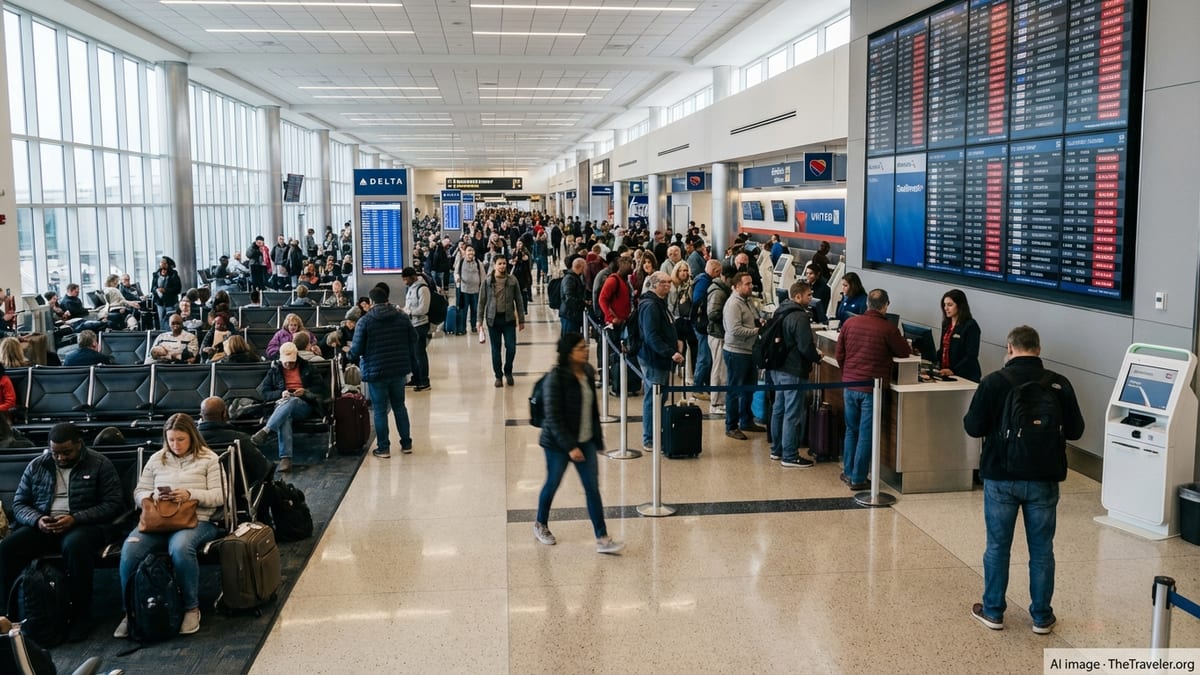
Las Vegas Departures Stall As Five Flights Are Grounded
Operational data compiled from airline schedules and real-time tracking platforms on April 14 show Frontier and Spirit halting five departures tied to Harry Reid International Airport, with a mix of outright cancellations and extended ground holds. The affected flights are concentrated in the busy late-morning and afternoon departure banks, when Las Vegas traffic to major domestic hubs typically peaks.
The grounded services are part of a broader pattern of schedule strain that has emerged across the U.S. in mid-April, as carriers navigate congested hubs, tight crew rotations and residual weather issues in other parts of the network. While Harry Reid is not currently reporting a systemic airfield closure, status boards and airline channels indicate a disproportionate share of disruption centered on low-cost operators, particularly Frontier and Spirit.
These interruptions are compounding pressure on already busy gate areas at Terminal 3, where both carriers operate a dense pattern of short- and medium-haul flights. Passengers connecting onward to other cities are especially exposed, as relatively low daily frequencies on some leisure routes make same-day reaccommodation difficult once a flight is pulled from the schedule.
The disruption comes at a sensitive moment in the spring travel calendar, with Las Vegas drawing convention traffic, major sports events and weekend leisure visitors, all of which rely heavily on narrow scheduling windows and price-sensitive fares offered by ultra-low-cost carriers.
Ripple Effects Reach Houston, Denver, Atlanta and Albuquerque
Although the initial disruption is centered on Harry Reid, network data and published coverage of nationwide operations indicate that the knock-on effects are spreading quickly to other cities. Frontier and Spirit both run tight point-to-point and focus-city models through airports such as Denver, Houston, Atlanta and, to a lesser extent, Albuquerque. When one aircraft is grounded or delayed in Las Vegas, rotations later in the day on other routes can be pushed back or consolidated.
Denver, which serves as Frontier’s primary hub, is particularly vulnerable to this kind of cascade. A single delayed arrival from Las Vegas can trigger outbound delays to multiple secondary markets, especially when the aircraft is scheduled to turn around in under an hour. Travelers connecting through Denver on itineraries that begin or end in Las Vegas, Houston or Albuquerque are already reporting longer-than-expected waits and gate changes as airlines attempt to reset their schedules.
Atlanta and Houston, key nodes in Spirit’s expanding network, are also feeling the strain. Publicly available schedule adjustments for April show Spirit trimming and retiming some services as the carrier responds to broader capacity reductions filed for the late spring and summer period. Against that backdrop, a fresh cluster of delays tied to Las Vegas creates additional stress on crew assignments and aircraft availability into these southern hubs.
Albuquerque, which relies on a relatively small number of daily low-cost departures, faces a different kind of exposure. When even one flight to or from Las Vegas is pulled, local travelers may find that there is no alternative same-day option on the same carrier, forcing them to accept lengthy rebookings, overnight stays or ground transport to larger airports.
Part of a Wider Pattern of Mid-April Air Travel Strain
The latest turbulence at Harry Reid aligns with a broader pattern of mid-April disruption that has been visible across several major U.S. airports. Recent aviation and travel industry reports highlight heavy delay and cancellation totals at hubs including Dallas Fort Worth, Phoenix, Orlando and Los Angeles, with low-cost carriers frequently among the hardest hit in percentage terms.
In this environment, operational slack is limited. When early flights run late because of congestion or weather elsewhere in the system, carriers that rely on high aircraft utilization have less room to absorb additional setbacks. Frontier and Spirit, which both schedule dense aircraft rotations to keep costs low, are particularly susceptible to having an isolated issue at one airport ripple outward through multiple cities before the day is over.
Analysts who track airline performance note that these strains are emerging just as U.S. passenger volumes remain strong and advance bookings point to a busy late spring and early summer. That dynamic raises the risk that relatively small disruptions, like the grounding of five flights in Las Vegas on April 14, can have outsized effects on travelers across a wide geographic footprint.
Historical patterns also show that once an operating day begins with significant delays, full recovery can be elusive until late at night or even into the following day. With several of the impacted flights at Harry Reid tied to onward rotations, travelers on morning and afternoon departures elsewhere in the country may continue to feel consequences well after the original Las Vegas issues are resolved.
Passengers Face Long Queues, Tight Rebookings and Limited Alternatives
For passengers, the immediate reality of this disruption is visible in long customer-service lines, crowded gate areas and frequent changes to departure times. With five grounded flights reducing capacity out of Las Vegas at short notice, remaining departures on Frontier and Spirit are filling quickly, narrowing rebooking options for those whose original itineraries have been canceled or heavily delayed.
Some travelers are turning to larger network carriers for last-minute alternatives, but publicly available fare data indicate that walk-up tickets on major routes from Las Vegas to cities such as Houston, Denver and Atlanta can be significantly more expensive than advance-purchase low-cost fares. This cost gap is forcing many passengers to weigh whether to wait for the next available low-cost option or pay a premium to salvage their schedules.
At secondary destinations like Albuquerque, where overall seat capacity is more limited, the disruption is amplifying concerns about reliability on ultra-low-cost carriers. Travelers who rely on these airlines for occasional leisure trips or visits to friends and family face the prospect of extended delays if the next available flight is not until the following day, particularly on lightly served routes.
Travel planning experts routinely recommend that passengers build extra buffer time into itineraries involving tight connections, especially when flying through capacity-constrained hubs or using carriers with limited daily frequencies. The unfolding situation at Harry Reid illustrates how quickly those buffers can be consumed when multiple flights on the same airline pair are grounded or delayed in close succession.
What Today’s Disruption Means for Upcoming Spring and Summer Travel
The Las Vegas disruptions involving Frontier and Spirit arrive as both airlines are fine-tuning schedules for the peak spring and summer seasons. Public filing data show that Spirit has already outlined notable capacity reductions on some international routes for the coming months, while Frontier has been pruning frequencies and retiming certain domestic flights, including services touching Las Vegas and other western markets.
These adjustments may help align capacity with demand and staffing, but they also reduce the number of backup options available when irregular operations occur. With fewer daily flights on some routes, individual cancellations like those observed on April 14 in Las Vegas can have a greater impact on travelers who need flexibility.
For airports, the episode underscores ongoing challenges in managing high volumes of low-cost traffic alongside legacy carriers. Harry Reid International has reported strong passenger growth tied to tourism and convention business, and its role as a leisure gateway means that even short-lived disruptions can translate into significant knock-on effects for hotels, event organizers and local transportation providers.
As airlines, airports and regulators continue to evaluate performance data from this period, today’s multi-airline disruption at Las Vegas is likely to feature prominently in discussions about resilience and contingency planning. For travelers planning trips in the weeks ahead, it serves as a reminder to monitor flight status closely, consider earlier departures when connections are involved and prepare backup plans in case their chosen route becomes part of the next wave of schedule turmoil.