


More news on this day
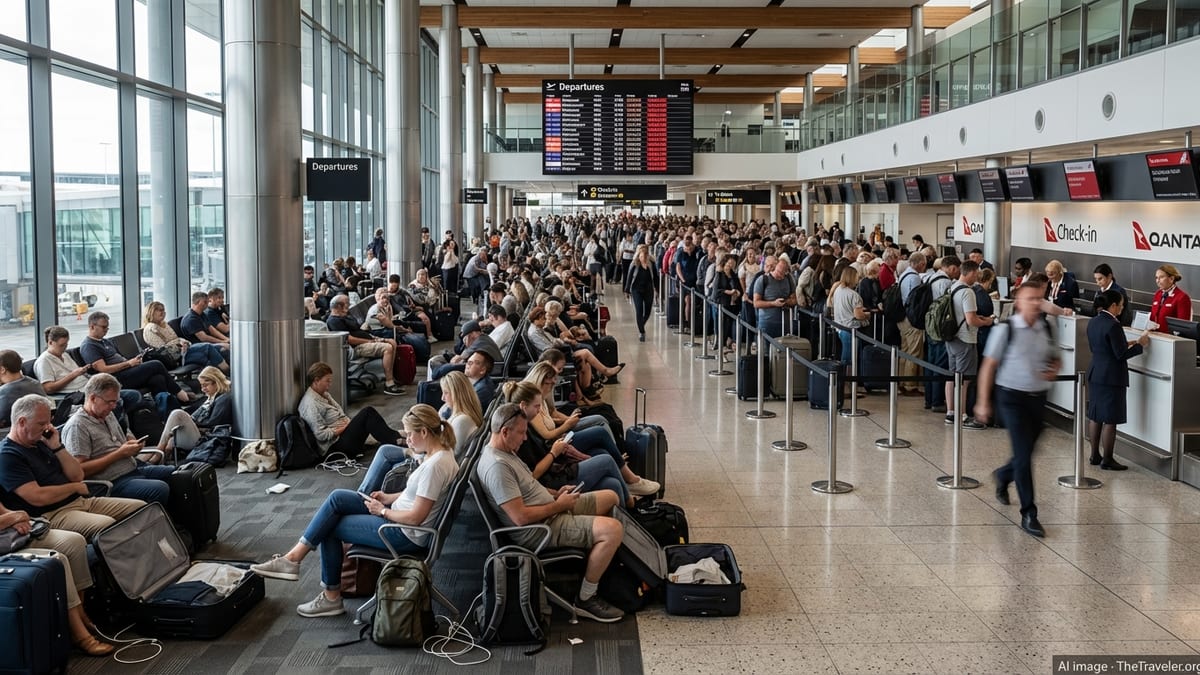
Thousands of airline passengers across Australia and New Zealand are facing major disruption after a new wave of flight cancellations and delays hit key hubs including Melbourne, Sydney, Auckland and Wellington, snarling domestic and trans-Tasman schedules at the start of the week.
Get the latest news straight to your inbox!
Systemwide Disruption Across Major Hubs
Industry tracking data for Tuesday, 14 April indicates around 97 flight cancellations and 1,127 delays across Australia and New Zealand, affecting a mix of domestic and international services. The disruption is concentrated at the region’s busiest gateways, including Sydney and Melbourne in Australia and Auckland and Wellington in New Zealand, with flow-on effects reported at secondary airports such as Brisbane, Adelaide, Perth, Christchurch and Queenstown.
Publicly available performance tallies show that the cancellations and delays are spread across several carriers, including Jetstar, Qantas, Virgin Australia and Air New Zealand, along with smaller regional and international operators. While individual airlines have not released unified tallies for the day, aggregated tracking suggests that delays account for the vast majority of affected services, with cancellations representing a smaller but highly visible portion of the disruption.
Reports from airport departure boards and flight-tracking platforms describe heavily disrupted morning and evening “bank” periods, when large numbers of departures and arrivals are scheduled within tight timeframes. Once flights in those banks fall behind, subsequent rotations can also be thrown off, leaving aircraft and crews out of position and compounding the operational strain throughout the day.
Travel industry coverage notes that the latest bout of irregular operations follows several months of elevated disruption across Australian and New Zealand aviation, where on-time performance has regularly fallen below long-term averages. Domestic networks in both countries remain sensitive to bottlenecks at key hubs, particularly when external factors and staffing constraints collide.
Multiple Airlines Facing Operational Strain
Jetstar, Qantas, Virgin Australia and Air New Zealand are among the airlines most visible in the disruption, reflecting their dominant roles on key domestic and trans-Tasman routes. Flight data shows that these carriers operate the bulk of services between Melbourne, Sydney, Brisbane and Perth, as well as trunk connections linking Auckland, Wellington, Christchurch and Queenstown with Australian capitals.
Performance statistics published by aviation analytics platforms in recent months have highlighted elevated delay and cancellation rates across several of these airlines, particularly during peak travel periods. Industry observers note that the current pattern, in which all major players are affected to varying degrees, points to systemwide pressure rather than an isolated issue at a single carrier.
Publicly available information from airline customer advisories indicates that most operators are relying on standard disruption management procedures, including rebooking passengers on later flights, arranging alternative routings where possible and, in some cases, offering refunds or travel credits. However, high load factors on many routes limit the immediate availability of spare seats, especially on popular trans-Tasman and east coast city-pair services.
Analysts cited in recent aviation coverage have previously warned that lean scheduling of aircraft and crew across the region leaves limited buffer to absorb unexpected shocks. When multiple carriers are running tight programs, a disruption that might once have been contained to a handful of flights can now ripple across the network more quickly.
Weather, Staffing and Infrastructure Under Scrutiny
While a single clear cause for the latest spike in cancellations and delays has not emerged, industry reporting points to a familiar mix of contributing factors. Short-notice weather changes around Sydney and Melbourne, including low cloud, wind shifts and patchy rain, have the potential to slow runway operations and reduce arrival and departure rates, creating backlogs that then feed into the broader network.
Air traffic management capacity also remains a point of discussion. Previous episodes of widespread disruption in Australia have been linked in part to constraints within national air navigation services, where staffing levels and sector configurations can limit the number of flights that can be safely handled during busy periods. When those constraints coincide with heavy schedules, even minor operational hiccups can quickly lead to longer queues on the taxiways and in holding patterns.
In New Zealand, aviation on-time performance reports over recent months have documented variability on key routes linking Auckland, Wellington, Christchurch and Queenstown with Australian cities. Those reports show that performance can deteriorate sharply when weather, runway works or other local issues intersect with full schedules, suggesting that current airport infrastructure offers limited flexibility when conditions deteriorate or aircraft flow needs to be adjusted.
Airlines are also navigating a tight labour market. Industry analyses since the reopening of borders have consistently noted challenges in recruiting and retaining pilots, cabin crew, engineers and ground handlers. Even when schedules appear robust on paper, shortages in any of these areas can reduce an airline’s ability to recover from delays quickly, particularly late in the operating day.
Impact on Travellers Across the Tasman and Beyond
The immediate impact of the current disruption has been felt by passengers attempting to travel between Australia and New Zealand, as well as those using domestic flights to connect to long-haul services. Travel media reports describe instances of missed onward connections, extended layovers and overnight stays prompted by late-running or cancelled flights at Sydney, Melbourne and Auckland.
Publicly available guidance from airlines and airports encourages passengers to monitor flight status closely via official apps and departure boards, arrive earlier than usual for check-in when conditions are volatile and remain flexible about routing options. Some carriers are allowing affected travellers to change to alternative services without change fees, although fare differences can still apply depending on cabin and route availability.
Consumer advocacy commentary in both countries continues to focus on the adequacy and clarity of compensation rules for disrupted travellers. In New Zealand, recent enforcement actions and court decisions concerning airline handling of cancellations and delays have brought increased attention to passenger rights, while in Australia debate persists over whether current regulations and voluntary compensation policies provide sufficient protection when large numbers of flights are disrupted at once.
Travel insurers are also monitoring the situation. Policy documents typically distinguish between disruptions caused by weather or air traffic control decisions and those stemming from airline operational issues, with different entitlements applying in each case. As irregular operations become more frequent, passengers are being urged in media reports to review policy terms carefully before travel.
Outlook for the Remainder of the Week
Industry assessments suggest that the effects of 14 April’s disruption could linger for several days, as airlines reposition aircraft and crews and attempt to clear backlogs of displaced passengers. When cancellations and lengthy delays occur during peak morning and evening banks, recovery can require multiple schedule cycles, particularly on longer domestic and trans-Tasman routes.
Travel sector analysis notes that Sydney’s role as a primary gateway means any sustained capacity reduction there tends to reverberate across both Australian domestic and New Zealand-bound networks. Similar dynamics apply in Melbourne and Auckland, where aircraft often operate tightly timed rotations that link several cities in sequence.
For now, publicly accessible airline schedules show that carriers intend to operate near-normal timetables over the coming days, albeit with the caveat that further adjustments remain possible if weather, air traffic capacity or staffing issues resurface. Aviation commentators indicate that passengers booked to travel through Sydney, Melbourne, Auckland or Wellington this week should allow additional time, keep contact details up to date with their airline and be prepared for schedule changes at short notice.
As the busy southern autumn travel period continues, the latest wave of cancellations and delays underlines the fragility of aviation networks in Australia and New Zealand when multiple pressure points converge. Industry observers are watching closely to see whether on-time performance stabilises or whether a pattern of recurring disruption becomes an entrenched feature of regional air travel.