


Grand Cayman looks small on a map, but choosing where to base yourself can shape your entire trip. Most visitors end up deciding between George Town, the compact capital and cruise hub, and Seven Mile Beach, the island’s famous sweep of white sand and resorts. Both are minutes apart by car, yet offer very different moods, price points and daily rhythms. This guide compares them side by side so you can decide which base fits your style, budget and priorities.
Get the latest updates straight to your inbox!
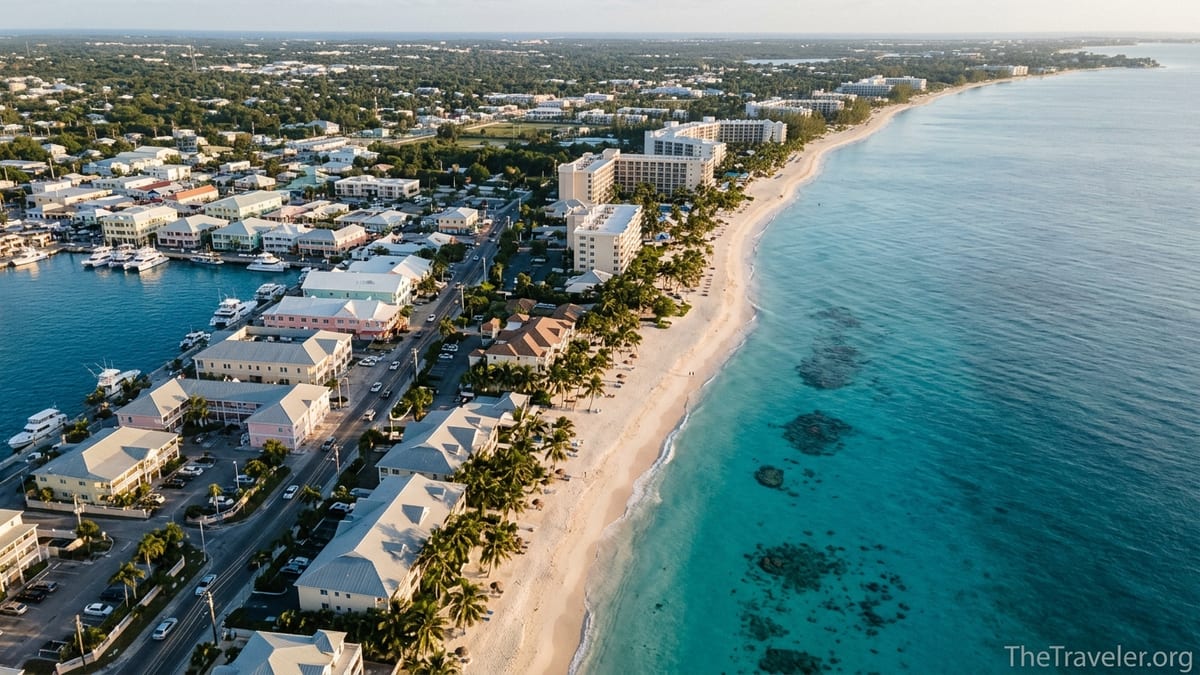
Overview: Two Very Different Bases Just Minutes Apart
George Town and Seven Mile Beach sit along Grand Cayman’s western shore, only about a 10 to 15 minute drive apart, but the feel in each area is distinct. George Town is the administrative and financial capital, home to government buildings, banks and a compact waterfront where cruise tenders arrive at three piers. On cruise days the streets around the harbor fill with jewelry stores, duty free boutiques and day trippers browsing for souvenirs.
Seven Mile Beach starts just north of town and runs in a long crescent toward West Bay. It is the island’s main resort strip, lined with hotels, condos and beach bars spread along a shoreline that regularly appears on world “best beaches” lists. The sand here is pale and fine, the water typically calm thanks to prevailing easterly trade winds that leave the west coast sheltered most days.
In practical terms, George Town suits travelers who want to walk to shops, casual eateries and ferry docks, and who do not mind that there is no long, continuous natural beach in the center of town. Seven Mile Beach, by contrast, is ideal if you picture mornings on a soft sandy shoreline, easy snorkeling from the hotel, and evenings at beachfront restaurants, with most everyday services a short taxi or bus ride away.
Because the island is compact, you can easily stay in one area and visit the other. Public minibuses run the main road between George Town and Seven Mile Beach for a low flat fare, and taxis are plentiful if more expensive. The key question is not whether you can reach both, but which neighborhood you want to wake up in every day.
Beaches and Water: Sand vs Sea Walls
If daily beach time is central to your trip, Seven Mile Beach is almost always the better base. The core stretch between larger resorts such as The Westin Grand Cayman and The Ritz Carlton typically offers wide, gently sloping sand and clear, turquoise water. On calm days you can wade out far over soft sand, which is especially helpful for families with children or less confident swimmers. At the quieter north end, around Cemetery Beach in West Bay, a reef sits offshore, making it one of the island’s better beach-access snorkel sites.
South along the Seven Mile corridor, some properties have seen erosion narrow the beach in front of them at different times of year, but the overall experience is still that of a classic Caribbean resort coast: rows of loungers, palms for shade and easy access to paddleboards, kayaks and other water sports. Hotels at this end often build small rock walls or breakwaters to protect swimming areas, which can have the bonus of creating kid-friendly lagoons and sometimes sheltering small fish for casual snorkeling.
George Town’s immediate waterfront is more fragmented. The shoreline around the cruise piers is largely developed as a working harbor, with docks, tender boats and seawalls. You can certainly see the water and catch sea breezes while you shop or eat, but there is no long sandy beach right in front of the main commercial streets. For real swimming from town you walk or taxi a short distance to small coves such as Smith’s Barcadere south of the center, a rocky pocket cove with clear water and decent snorkeling when seas are calm.
For visitors staying mostly without a car, this difference matters. At a Seven Mile Beach resort you step from your room to sand in minutes. In George Town, you plan specific beach outings, even if they are just a quick taxi up the road. Travelers who come primarily to dive or take boat trips may not mind George Town’s lack of a true town beach, but for classic “fly and flop” beach holidays, Seven Mile remains the more straightforward choice.
Snorkeling, Diving and On-the-Water Experiences
Seven Mile Beach gives you the greatest variety of water experiences directly from your base. Several of Grand Cayman’s well known shore snorkeling spots sit along or just off the Seven Mile corridor. Cemetery Beach at the far north, the reef off Governors Beach, and small artificial grottos in front of some condo complexes all allow you to swim out to reef structures where you may see parrotfish, rays and the occasional turtle. Conditions are usually calm enough on the west coast that beginner snorkelers can ease into the water without strong surf.
Many of the island’s dive operators maintain shops or pickup points along Seven Mile Beach, and boats heading to sites like the Kittiwake shipwreck or North Wall often depart from docks here. It is common to book a two-tank morning dive that includes hotel pickup, so staying on Seven Mile slightly reduces your early-morning logistics. If you prefer snorkeling tours to Stingray City sandbar or bioluminescence trips in North Sound, operators will usually offer shuttle service from both Seven Mile and George Town, but departure marinas north of town are a bit closer to Seven Mile hotels.
George Town has its own water advantages. Several shore dive sites with easy ladder entry sit just outside the center, attached to small dive shops or waterfront bars. Divers who like to grab a tank and step straight into deep water will appreciate being near these sites. Cruise passengers often choose George Town based snorkeling excursions that depart from the tender piers, so if you are in town for a short stay or arriving by ship you can join group tours without leaving the harbor area by road.
If snorkeling is your absolute priority and you prefer to swim out from shore rather than join boats, a stay at the quieter northern end of Seven Mile or at a condo near established reef patches gives you the best mix of marine life and low effort. If you plan to dive every day using local operators, either base works, but Seven Mile has a slight edge simply because so many dive operations and training centers cluster there.
Restaurants, Nightlife and Everyday Convenience
Dining and nightlife differ more in atmosphere than in sheer choice between the two areas. George Town’s waterfront streets are lined with casual cafes, ice cream shops, rum bars and lunch spots that cater heavily to cruise passengers during the day. You will find recognizable names serving coffee, quick sandwiches and gelato steps from the harbor, along with local-style eateries selling jerk chicken, patties and fresh juices. In the evening, when ships have left, the mood is quieter and more local, with a handful of restaurants and bars drawing residents for after-work drinks.
Seven Mile Beach, in contrast, feels more like a self-contained resort corridor. Many hotels have multiple restaurants on site, from poolside grills to upscale dining rooms with tasting menus. Independent spots are scattered along the main road and inside small plazas, so within a 5 to 10 minute walk of most larger resorts you can usually reach at least a couple of different dinner options, a bar and a convenience store. Prices on Grand Cayman tend to be high island-wide, but menus along Seven Mile often skew pricier than in George Town because they target resort guests.
For groceries and everyday errands, both areas are practical. Large supermarkets sit a short drive from the airport between George Town and Seven Mile, and smaller markets and liquor stores dot the main road. If you stay in a condo with a kitchen, being somewhere on the Seven Mile corridor often feels easiest because you can walk or make a very short drive for supplies while still being right on the beach. If you choose a business hotel in George Town, you will likely rely more on taxis or public buses to reach bigger supermarkets unless you rent a car.
Nightlife is relatively low-key throughout Grand Cayman. Along Seven Mile Beach, beach bars and hotel lounges host live music and happy hours several nights a week, especially in high season, and you will find more sunset cocktail spots than late-night clubs. George Town stays livelier earlier in the day when ships are in port and shops open late morning through afternoon; after dark the scene is smaller but can still include waterfront bars, occasional live bands and events at venues along the harbor. Travelers looking for bright lights and a party strip will not find it in either area, but those who value easy walks from dinner to a quiet beachfront drink may prefer Seven Mile.
Shopping, Culture and Cruise-Day Priorities
George Town is the clear winner for shopping and cultural sights. The compact streets behind the cruise docks concentrate most of Grand Cayman’s duty free shops. Here you can browse luxury watches, jewelry, perfumes and designer sunglasses without local sales tax, alongside souvenir stores selling T-shirts, beachwear and Cayman rum cakes. Because cruise schedules bring regular waves of passengers, many stores open only on ship days and focus their promotions around those peak hours.
Beyond pure retail, George Town also holds museums and historical sites that help you understand the islands beyond the beach. Small attractions in or near the center showcase local seafaring history, Caymanian culture and marine conservation, often in air-conditioned galleries that make for a welcome break from midday heat. The streets themselves, with pastel commercial buildings, government offices and local banks, give a sense of daily island life that you do not see inside resort compounds.
Seven Mile Beach has shopping but on a different scale. Modern plazas along the main road house boutiques selling swimwear, resort clothing, beach gear and home decor. You will find jewelers and galleries, but not in the same dense, cruise-centric format as George Town. Many visitors staying on Seven Mile make at least one dedicated trip into George Town to shop for bigger-ticket duty free items, then return to their quieter resort base once they have what they need.
For cruise passengers deciding where to spend limited hours ashore, George Town’s proximity to the tender piers is decisive. It makes sense to browse shops, have lunch with a harbor view and take a short taxi or bus ride to a nearby beach for a couple of hours. Guests staying on the island in hotels, however, often reverse the logic, commuting into George Town for a morning of shopping or a walking tour and then heading back toward Seven Mile or other beaches for the afternoon.
Hotels, Condos and Budget Considerations
Accommodation types cluster differently in each area. Seven Mile Beach is dominated by full-service resorts and condominium complexes, many of them directly on the sand. High-end properties stretch along the central section, with well known brand names offering lagoon-style pools, beach service, kids clubs and spas. At the same time, there are many independently managed condos and smaller hotels where you can book one or two-bedroom units with kitchens, especially toward the quieter northern end of the beach.
Because this strip is Grand Cayman’s most desirable and heavily marketed coastline, nightly rates along Seven Mile often sit at the top end of the island’s price spectrum, particularly in winter high season and around school holidays. It is common for even midrange beachfront rooms to price higher than inland hotels in George Town. Travelers looking to lower per-night costs sometimes stay one or two rows back from the water in smaller hotels on the main road, or they choose older condo buildings where decor may be simpler but access to the same sand is just a short walk through a garden.
George Town has fewer classic beachfront resorts but offers a handful of business-style hotels, smaller inns and guesthouses, some within walking distance of the harbor and government quarter. These often appeal to visitors combining work and leisure, or to those who plan to be out diving or exploring most days and prefer to allocate less of the budget to on-site resort facilities. Without a continuous town beach, hotels here tend to market proximity to offices, shops and restaurants rather than sea views.
For families or groups, the choice often comes down to whether you value space over immediate beach access. A multi-bedroom condo on Seven Mile might cost more per night than several hotel rooms in George Town, but having a kitchen and direct access to a pool and beach can reduce restaurant spending and make lazy days easier. Conversely, a shorter stay focused on diving or business meetings may justify a simpler George Town hotel if you expect to be away from the property most of the time.
Getting Around, Transport and Overall Vibe
Grand Cayman’s main road connects the airport, George Town and the Seven Mile corridor in a simple arc, so distances are short. From the airport it is just a few minutes’ drive to George Town and only slightly longer to the central portion of Seven Mile Beach. Many visitors rely on taxis for airport transfers and short hops between areas. Fares are set by zone, but it is wise to confirm the price with the driver before setting off and clarify whether the rate is per ride or per person.
Public minibuses serve the same corridor at a fraction of the cost. These small buses follow numbered routes, and those running between George Town and West Bay pass along Seven Mile Beach. You can usually flag them from designated stops or wave from the roadside, paying a modest fixed fare in local currency when you disembark. Buses run most days until early evening, which works well for daytime outings but may be less convenient for late dinners or nightcaps.
The overall mood in each area reflects how people move through it. George Town feels busiest during cruise ship days and business hours, with streets filling as tenders deposit passengers into the main shopping district and locals go about their workday. After mid-afternoon, particularly on days without ships, the center can grow noticeably quieter, with more of a small-town harbor feel.
Seven Mile Beach, by contrast, spreads its activity gently along the shoreline. Mornings are for beach walkers and runners, late mornings and afternoons for swimmers and families by the water, and evenings for sunset gatherings at beach bars. Because hotels, restaurants and condos are intermixed along several kilometers of coast, there is rarely a single crowded focal point, though sections opposite major resorts often feel livelier. Travelers who dislike crowds often prefer the northern end closer to West Bay, where properties are more spaced out.
Which Base Fits You Best?
If your top priority is walking out to a wide sandy beach every day, swimming in calm water and having easy access to snorkeling and resort amenities without arranging transport, Seven Mile Beach is usually the better base. Couples on a romantic break, families with children who will spend hours in the sand, and travelers planning several boat excursions often find it simplest to stay along this corridor and treat George Town as a half-day trip for shopping and sightseeing.
On the other hand, if you are arriving primarily by cruise ship and only have a day on the island, you will naturally spend most of your time in and around George Town. For land-based stays, George Town also makes sense if you value shorter walks to offices, banks and government services, or if you enjoy browsing duty free stores and museums more than sitting on the beach. Travelers comfortable renting a car may find that staying in town and driving to beaches around the island, including Seven Mile, keeps accommodation costs lower while still giving access to top coastal spots.
Budget and style preferences matter too. Seven Mile Beach excels at polished resort experiences, from well established luxury hotels to organized kids clubs and full-service spas. George Town tends to feel more functional and local, with simpler hotels and guesthouses geared toward business and short stays. If you prefer to be surrounded by other vacationers and beach bars, Seven Mile fits that mood; if you prefer a quieter base that feels more like a working Caribbean capital, George Town may appeal.
In reality, many visitors blend both: spending a week on Seven Mile and planning one or two visits to George Town, or staying in town for a few nights before or after a resort stay. Because transport times are short, you are never locked out of what the other area offers. The decision is less about access and more about the background rhythm you want for your Grand Cayman days.
FAQ
Q1. Is Seven Mile Beach really seven miles long?
It is commonly called Seven Mile Beach, but the actual length is a bit shorter. The name has stuck over time as a convenient way to describe the long continuous curve of sand.
Q2. Can I walk from George Town to Seven Mile Beach?
It is technically walkable, but the distance from the harbor to the main resort stretch is several kilometers along a busy road. Most visitors prefer a short taxi or public minibus ride instead.
Q3. Which area is better if I do not plan to rent a car?
For a classic beach holiday without a car, Seven Mile Beach is usually more convenient because you can walk from most hotels to the sand, restaurants and small shops in minutes.
Q4. Is George Town noisy when cruise ships are in port?
On busy cruise days the streets around the harbor can feel crowded, with more traffic, music and sales pitches. Away from the immediate pier area, noise drops noticeably, especially after ships depart in the afternoon.
Q5. Are there affordable food options near Seven Mile Beach?
Yes. While many resort restaurants are upscale, you will also find casual burger spots, pizza, takeaway counters and local-style cafes in small plazas and along the main road.
Q6. Where should I stay if snorkeling is my main focus?
Consider the quieter northern end of Seven Mile Beach near established reef patches, or a condo along the corridor where you can easily swim out from shore and also join boat trips.
Q7. Is George Town safe to walk around at night?
Central George Town is generally considered safe, especially along main streets and the waterfront, though visitors should use normal urban common sense and avoid poorly lit side areas late at night.
Q8. How long should I plan to spend in George Town if I stay on Seven Mile Beach?
Many visitors find that a half day to full day is enough for browsing duty free shops, visiting a museum or two, and enjoying a waterfront lunch before returning to the beach.
Q9. Do hotels in George Town have beach access?
Most central George Town hotels focus on harbor or city views rather than sandy beaches. To swim from shore you usually travel a short distance to small coves or to the Seven Mile corridor.
Q10. When is the best time of year to visit for calm beach conditions?
Conditions vary, but the west coast around Seven Mile Beach is often calm during the drier, cooler months from roughly December through April, outside of any passing storms.