


Walk into any beach shop in Hawaii, Florida, or the Mediterranean today and you will see walls of colorful full-face snorkel masks beside the classic mask-and-snorkel sets. The promise is tempting, especially for beginners: just pull it on, breathe normally, and enjoy a wide panoramic view. But behind the sleek design there are real safety questions, fit issues, and performance limits that every traveler should understand before packing one for their next island vacation.
Get the latest updates straight to your inbox!
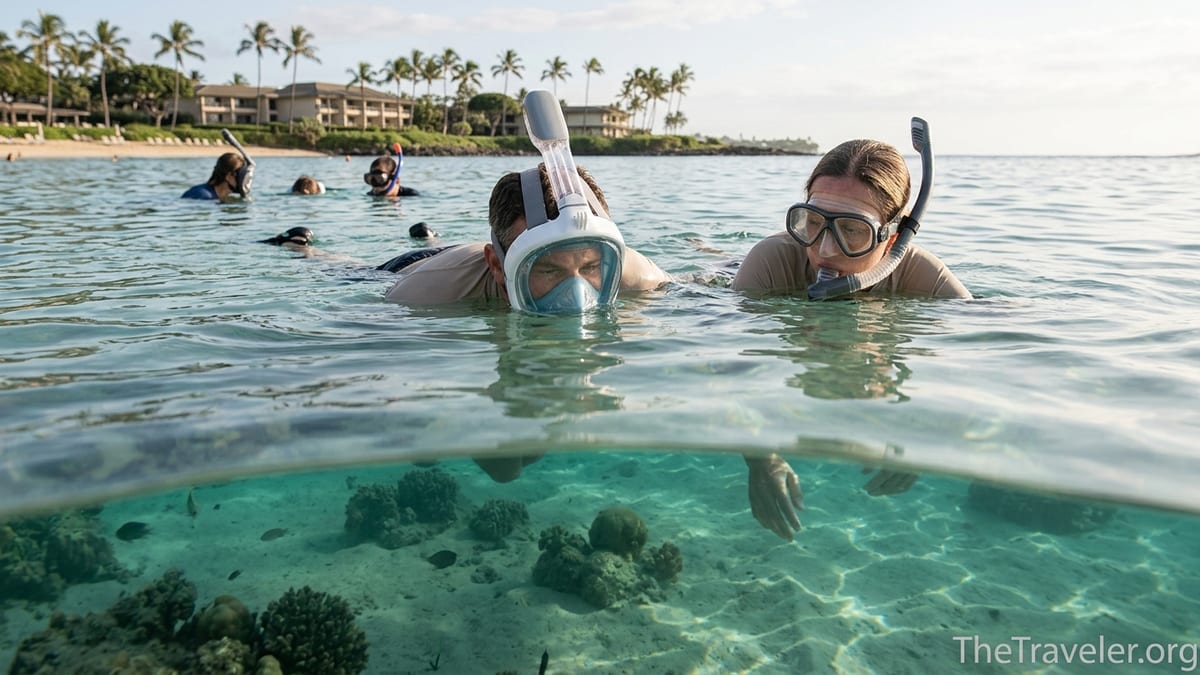
How Full-Face Snorkel Masks Actually Work
Full-face snorkel masks combine the mask and snorkel into a single rigid shell that covers your eyes, nose, mouth, and often your cheeks and forehead. Instead of biting on a mouthpiece, you breathe in and out through a snorkel tube fixed to the top of the mask. Inside, plastic partitions and valves try to separate fresh air coming in from exhaled air going out, directing your breath through different channels across the lens and toward a one-way exhaust system near the top or sides.
At a resort beach in Cancun or Maui, you will usually see popular models like the Tribord or Subea Easybreath sold at big-box sports chains, or higher-end masks such as the Ocean Reef Aria QR+ and WildHorn Seaview 180 V3 marketed online. These better known brands invest in internal airflow design and testing, which can include laboratory measurements of how much carbon dioxide builds up inside the mask while a person swims at different speeds. Studies by research groups and organizations like Divers Alert Network have found that performance varies widely between models and that some designs are more efficient at venting exhaled air than others.
By contrast, inexpensive unbranded masks commonly sold on online marketplaces or in discount tourist shops often copy the outer look of well known masks but skip much of the engineering and quality control. Travelers who buy these cheaper masks for a weekend in the Bahamas may have no information about airflow resistance, carbon dioxide levels, or any independent testing. Because there is still no universal performance standard for recreational full-face masks, two products that look almost identical on the shelf can behave very differently in the water.
Comfort, Fit and Fogging in Real-World Use
Comfort is the main reason many casual snorkelers reach for a full-face mask. For someone who struggles to keep water out of their nose or hates clenching a mouthpiece, being able to breathe through both nose and mouth feels natural and less intimidating. On a calm lagoon tour in Bora Bora, for example, first-time snorkelers often report feeling more relaxed during the first 10 or 15 minutes when they use a full-face mask compared with a basic rental mask and J-style snorkel.
The tradeoff is that the mask relies on a very large silicone skirt sealing tightly around your entire face. If the shape does not match your facial structure, the mask can leak or press uncomfortably against your forehead or jaw. Travelers with beards, prominent cheekbones, or very small faces often find that it is harder to get a consistent seal with a full-face design. Some models come in several sizes, but they still offer fewer fit options than traditional masks, which are available from many brands in dozens of skirt and frame shapes.
Most modern full-face masks advertise anti-fog technology by routing incoming air across the lens and coating the inside with a factory treatment. In gentle conditions this can work reasonably well. A traveler doing a quiet reef float off Key Largo may experience less fog in a new, good-quality full-face mask than in an old, scratched rental mask. However, as the mask ages, coatings wear off and micro-scratches accumulate. Sweat, sunscreen, and tiny salt crystals also build up. Without frequent rinsing and cleaning, any mask, including full-face designs, will eventually fog. Many experienced snorkelers still rely on classic techniques such as a dedicated defog solution or a baby-shampoo mix, which are easier to apply inside a traditional mask than inside a deep full-face shell.
Weight and bulk matter too. A full-face mask takes up far more space in a suitcase than a low-profile mask and a simple snorkel that can fold or detach. On trips that involve multiple flights in island regions such as French Polynesia or Indonesia where carry-on limits are tight, many frequent snorkelers leave full-face masks at home and pack a compact traditional setup instead.
Breathing, CO₂ Buildup and Safety Concerns
The main safety concern with full-face snorkel masks is not that they are inherently dangerous, but that poorly designed or misused masks can make it harder for your body to get rid of carbon dioxide that you exhale. Laboratory studies comparing full-face masks with standard snorkels have found that some full-face models increase the effort required to breathe and allow more exhaled carbon dioxide to remain in the mask volume. In testing, this has led to more frequent mild drops in blood oxygen levels and higher carbon dioxide levels than when volunteers used a regular snorkel and mask under the same conditions.
In practice, this means that a traveler who swims hard against a current over a reef in Hawaii or Thailand, wearing a high-resistance full-face mask, could feel dizzy, confused, or extremely short of breath sooner than expected. These symptoms can be subtle and easy to dismiss as simple fatigue, especially for older snorkelers or visitors who are not strong swimmers. Health authorities in places with many snorkeling tourists, such as Hawaii, have investigated whether certain gear types, including some full-face masks, might contribute to fatalities, though the data are complex and drowning incidents also involve factors such as heart disease, panic, and ocean conditions.
Another issue is that full-face masks can be difficult to remove quickly in an emergency. With a traditional setup, you can spit out the snorkel and lift the mask off in a single motion. With a full-face design, you may need to find side straps or a buckle at the back of your head. For a panicking beginner caught in a wave surge off Oahu or in sudden chop in the Caribbean, that extra time and complexity can matter. Dive guides in several destinations report that they no longer allow full-face masks on their boat tours because they prefer guests to use gear they can clear and remove more easily.
Quality matters especially for these safety factors. Premium masks such as the Ocean Reef Aria series and the WildHorn Seaview 180 V3 promote dual-channel airflow and independent tests that show acceptable carbon dioxide levels at typical snorkeling workloads. Budget knockoffs sold under unknown brand names at resort kiosks may not have undergone any rigorous testing. Since travelers usually cannot measure airflow resistance or internal gas levels themselves, the safest approach is to choose established brands with transparent information and still respect the inherent limits of full-face designs.
Beginner Appeal vs What Experienced Snorkelers Use
Walk along a busy beach in Waikiki, the Gold Coast, or the Costa Brava and you will notice a pattern. Many first-time snorkelers and casual tourists wear full-face masks, often purchased online in bright colors or rented from beach vendors. In contrast, most local guides, instructors, and serious snorkelers use traditional masks paired with separate snorkels. This difference reflects how expectations change with experience.
For a nervous beginner, the ability to breathe through the nose and keep the entire face dry can make that first step into the water feel less frightening. Someone who has never put their face in the ocean before, or who has a mild gag reflex with a mouthpiece, might get through their first 20 minutes above shallow coral at Hanauma Bay only because they borrowed a full-face mask from a friend. For that narrow scenario, a high-quality full-face mask used calmly in flat water, close to shore and with a buddy nearby, can be reasonably helpful.
However, once people snorkel more than a few times, they tend to outgrow the limits of full-face designs. Full-face masks are not suitable for duck diving below the surface to see turtles or rays up close, because equalizing pressure on your ears requires pinching your nose. They are also awkward in light surf, where a wave catching the top of the snorkel tube can rapidly flood the internal space. On traveler forums and snorkeling communities, many users describe starting with an all-in-one mask during a first trip to places like Cozumel, then switching to a low-volume traditional mask and a dry-top snorkel for later trips when they wanted to swim farther and dive deeper.
Experienced snorkelers also value flexibility. With a separate mask and snorkel, you can choose different styles of snorkels, such as a simple J-tube for minimal resistance or a dry-top snorkel that blocks water in choppy seas. You can also upgrade your mask to prescription lenses if you are nearsighted, or to a frameless design for better peripheral vision. These options simply do not exist, or are far more limited, with most full-face masks, which come as a fixed system.
When Travelers Should Avoid Full-Face Masks
Despite their popularity, there are clear situations where travelers are better off avoiding full-face snorkel masks. Any snorkeling that involves exertion, such as swimming across a channel, fighting current around a headland, or exploring a large reef system far from shore, is safer with a traditional low-resistance snorkel and mask. This is why liveaboard boats in destinations such as the Red Sea or the Maldives typically supply classic sets and often discourage full-face models entirely.
People with certain medical conditions should also be cautious. If you have a history of respiratory or heart problems, such as asthma, chronic obstructive pulmonary disease, or coronary artery disease, the added breathing resistance of some full-face masks could increase strain. Since snorkeling is often done in warm, sunny conditions that already challenge the body, working harder to breathe is not advisable. Many local operators in Hawaii, Australia, and the Caribbean now ask guests about medical history during safety briefings and recommend standard gear for anyone with known health issues.
Travelers should avoid using full-face masks where surf, swell, or boat traffic add complexity. On a windy afternoon in Maui’s Ka’anapali Beach or on an exposed bay in the Canary Islands, waves can suddenly increase. If a snorkeler wearing a full-face mask is pushed toward rocks or a reef ledge, the bulky mask can make it harder to protect the face during a fall, and removing it while tumbled in whitewater is more complicated than pulling off a normal mask. Guides who work in these environments often insist that guests wear simple masks and snorkels paired with buoyancy aids, such as snorkeling vests.
Finally, rental quality is a serious concern. Some tour operators and beach vendors maintain their full-face masks poorly, with worn-out valves, stiffened silicone skirts, and scratched lenses. A traveler picking up one of these masks for a half-day tour off a cruise ship in the Caribbean has no way to know how many seasons of use it has seen. If you are going to rely on a full-face design at all, it is safer to buy your own from a reputable manufacturer and inspect it carefully before each trip.
Safer and More Flexible Alternatives
For most travelers, a well-fitted traditional mask and a separate snorkel remain the safer and more versatile choice. A good silicone mask from recognized brands such as Cressi, Scubapro, TUSA, Mares, or Atomic typically costs between about 40 and 90 US dollars, depending on region and style. A comfortable snorkel adds another 20 to 40 dollars. Many local dive shops in coastal cities and vacation hubs offer package deals where you buy a mask and fins, and they include a snorkel at a discount or even for free.
One of the biggest advantages of this classic setup is the ability to customize. Travelers who need vision correction can ask a dive shop in places like Honolulu, Sydney, or Miami to install prescription lenses in a standard mask or sell them a mask with interchangeable diopter lenses off the shelf. Someone sensitive to jaw fatigue can choose a snorkel with a soft, orthodontic mouthpiece and a flexible lower section that allows the tube to hang comfortably when not in use. Snorkelers who want the easiest possible breathing can pick a simple, large-bore J snorkel with few valves, while those worried about surface splashes may prefer a dry-top design that closes automatically when submerged.
For nervous beginners, pairing a traditional mask and snorkel with a proper flotation aid often solves the same confidence problem that drives people toward full-face masks. Many snorkel tour operators in Hawaii, the Bahamas, and Mexico now issue inflatable snorkeling vests or foam noodles so that guests can focus on relaxed breathing without worrying about staying afloat. Practicing first in a hotel pool or a shallow, sheltered lagoon, such as those in many Caribbean resorts, helps new snorkelers get used to clearing a snorkel and lifting a mask away from their face calmly if needed.
Even travelers who already own a full-face mask can benefit from packing a simple backup mask and snorkel. In several destinations, such as marine parks in Australia or guided excursions on the Great Barrier Reef, crew may ask guests with full-face masks to switch to standard gear on board, explaining that their emergency procedures and training are based on the more common equipment. Having your own familiar basic set avoids relying on ill-fitting rentals and lets you adapt quickly to local rules.
Buyer Guide: Choosing, Testing and Traveling With Snorkel Gear
If you still decide to buy a full-face mask, focus on reputable brands that publish at least some information on testing and design. Models like the Ocean Reef Aria QR+ and the WildHorn Seaview 180 V3 are typically priced in the 60 to 100 US dollar range and come in several sizes with better quality control than very cheap copies. Look for clear sizing charts, solid-feeling strap systems, and multi-channel airflow descriptions rather than vague marketing terms. Avoid rock-bottom prices and no-name brands in street stalls or tourist markets, where quality and after-sales support are uncertain.
Whether you choose a full-face or traditional setup, always test your gear before relying on it in open water. In a hotel pool in Phuket or a calm lagoon in Aruba, first put the mask on without using the straps and inhale gently through your nose. A good mask should stay on your face briefly just from suction. If it falls away immediately, the skirt shape is not a match. For full-face masks, check that you can breathe in and out without feeling like you are dragging air through a clogged filter. If you feel resistance while just floating calmly, that mask is a poor choice for any kind of exertion.
Maintenance is equally important. Rinse masks and snorkels in fresh water after every use and allow them to dry out of direct sun to avoid damaging silicone parts. Inspect purge valves on snorkels and the internal valves of full-face masks regularly. If any valve is warped, cracked, or stiff, replace the part or retire the mask. Carrying a basic defog solution or small bottle of baby shampoo in your beach bag lets you treat the inside of a traditional mask before each session, which is both more reliable and easier than relying on permanent anti-fog coatings.
For packing, many travelers use a hard-sided mask box or padded case kept in their carry-on, especially on multi-leg trips through hubs like Los Angeles or Singapore where checked bags may be handled roughly. Full-face masks often come with their own mesh bags, but these do not protect the large lens from being crushed in crowded suitcases. If luggage space is tight, prioritizing a compact high-quality traditional mask and snorkel leaves more room for fins, a lightweight rash guard, and reef-safe sunscreen.
The Takeaway
Full-face snorkel masks have changed the look of beaches worldwide, offering an appealing shortcut for many first-time snorkelers who want an easy, panoramic way to see tropical fish. Used carefully, in calm shallow water and chosen from reputable brands, they can be enjoyable for short, low-effort sessions close to shore. Yet they come with real compromises in breathing resistance, emergency removal, and flexibility that become more obvious as you venture farther from the beach or try to develop your skills.
For most travelers planning a snorkeling trip to places like Hawaii, the Caribbean, the Red Sea, or Southeast Asia, the safer long-term investment remains a well-fitted traditional mask and a separate snorkel, ideally selected and adjusted at a proper dive shop. This classic combination offers better options for vision correction, easier clearing, safer use in rough water, and the ability to duck dive and explore more freely. If you already own a full-face mask, understand its limits, choose gentle conditions, and always snorkel with a buddy and a flotation aid.
Snorkeling should be relaxing, not a test of equipment. With a bit of research, a few minutes of pool practice, and a thoughtful gear choice, you can spend your precious vacation time drifting over reefs with quiet confidence, instead of wrestling with fogging lenses or shortness of breath. Whatever mask you choose, respecting the ocean, your own fitness, and the capabilities of your equipment will do more for your safety and enjoyment than any single piece of gear.
FAQ
Q1. Are full-face snorkel masks safe for beginners on vacation?
They can be reasonably safe in calm, shallow water if you choose a reputable brand, use the correct size, move slowly, and always snorkel with a buddy and a flotation aid. However, a well-fitted traditional mask and snorkel remains the safer and more flexible option as your skills grow.
Q2. Why do some tour operators ban or discourage full-face masks?
Many guides prefer equipment they know guests can clear and remove quickly in an emergency. They also worry about the higher breathing resistance and potential carbon dioxide buildup found in some full-face designs, especially when people swim hard or panic in waves.
Q3. Can I use a full-face mask for duck diving or skin diving below the surface?
Full-face masks are designed for surface snorkeling only. Because you cannot pinch your nose inside the mask, you cannot equalize your ears properly when you dive down, which makes them unsuitable and potentially unsafe for duck diving or deeper skin diving.
Q4. How can I tell if a snorkel mask fits me correctly?
Place the mask gently on your face without using the straps and inhale slightly through your nose. A good fit will create enough suction for the mask to stay in place for a moment. If it falls away immediately or pinches painfully, try a different size or shape.
Q5. What should people with glasses or poor eyesight do for snorkeling?
Most full-face masks do not offer true prescription lenses. A better solution is to buy a traditional mask that can accept corrective lenses, either custom ground by a dive shop or with off-the-shelf diopter lenses matched to your prescription.
Q6. Do anti-fog coatings on full-face masks really work?
Factory anti-fog treatments can help when the mask is new, but they wear off with use and cleaning. Over time, any mask can fog. Using a dedicated defog solution or a diluted baby-shampoo mix inside a well-cleaned traditional mask is usually more reliable.
Q7. Is it worth bringing my own snorkel gear instead of renting?
Yes, especially for frequent travelers. Owning a mask and snorkel that you know fits and seals well is more hygienic and often safer than relying on worn rental gear. It also lets you practice in a pool or at a local beach before your trip.
Q8. How much should I budget for a good mask and snorkel set?
In many markets a quality silicone mask from a recognized brand costs around 40 to 90 US dollars, and a comfortable snorkel adds roughly 20 to 40 dollars. Full-face masks from reputable manufacturers usually fall in a similar total price range.
Q9. Are cheap full-face masks from online marketplaces a bad idea?
Ultra-cheap, no-name full-face masks are risky because you typically have no information about airflow design, testing, or material quality. Spending more for a model from an established manufacturer, or choosing a traditional mask and snorkel instead, is a safer choice for most travelers.
Q10. What safety checks should I do before snorkeling with any mask?
Inspect the silicone skirt and straps for cracks, confirm that valves move freely, test the seal on your face, and practice clearing and removing the mask calmly in shallow water or a pool. Never snorkel alone, and stay within your comfort zone regarding currents, waves, and swim distance.