


At some point in planning a big trip, many travelers hit the same fork in the road: book a small-group tour with a company like G Adventures or plan everything independently. One promises built-in logistics, local guides and instant travel buddies. The other offers total freedom, flexible budgets and the satisfaction of building your own route. The right choice is rarely absolute. It depends on where you are going, how you like to move, your appetite for risk and how much time you have to plan. This guide walks through concrete, real-world scenarios to help you decide when a G Adventures tour makes sense and when you are better off organizing the journey yourself.
Get the latest updates straight to your inbox!
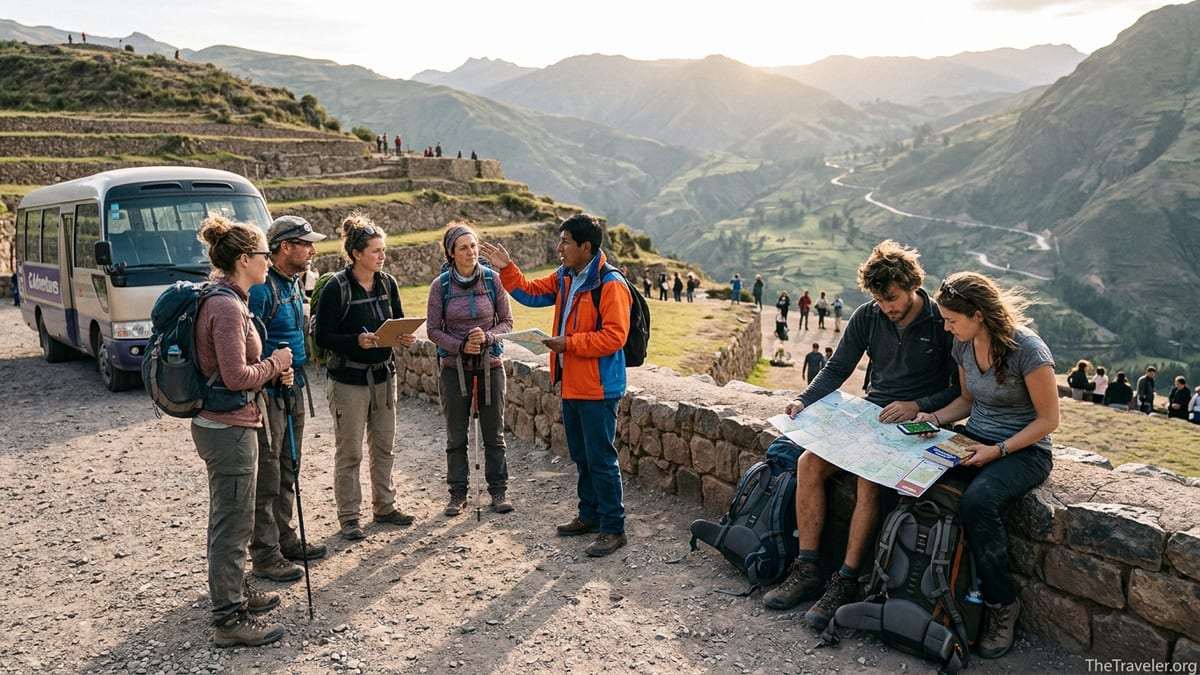
What G Adventures Actually Offers (In Real Life)
G Adventures is one of the largest small-group adventure operators in the world, running trips in more than 100 countries with groups that typically cap out around 12 to 16 travelers. Tours are categorized by style, from “18-to-Thirtysomethings” hostel-based trips through South America, to more comfortable “Classic” itineraries, to higher-end National Geographic Journeys. A typical tour bundles accommodation, most on-the-ground transport, some activities and an English-speaking local guide, which the company calls a Chief Experience Officer. International flights are almost never included, so you still book your own way to the starting point.
To understand what this looks like in practice, consider a one-week G Adventures itinerary in Peru that runs from Cusco to Machu Picchu and back. At the time of writing, promotional prices for a seven-day Cusco and Sacred Valley trip start at a little over 600 US dollars per person for basic, hostel-style accommodation, down from regular prices closer to 750 dollars in the off-season. That price covers your bed for six nights, most transport, a guided visit to Machu Picchu and a handful of included tours, but not your flight to Peru, some meals, or optional add-ons like a Rainbow Mountain day hike.
On other continents, you see similar patterns. In Southeast Asia, a two-week Thailand and Vietnam G Adventures trip might range from about 1,300 to 2,000 dollars per person depending on style, season and current discounts. In Europe, eight-day itineraries in places like Morocco or the Balkans commonly sit in the 900 to 1,500 dollar band before flights. In each case, what you are really paying for is not luxury, but the convenience and reassurance of having a vetted route, pre-booked logistics and someone to step in when things go sideways.
Cost Comparison: G Adventures vs Planning It Yourself
Whether G Adventures is “worth it” financially depends heavily on destination and how you normally travel. Let us go back to that one-week Peru example. Independent travel budget research for 2025 and 2026 suggests a realistic mid-range budget in Peru for a week, excluding international flights, falls roughly between 700 and 1,800 dollars per person depending on your hotel choices, trains to Machu Picchu, and day tours. Backpackers squeezing costs can come closer to 500 dollars for the week, while comfort-focused visitors can easily reach 2,500 dollars or more when they layer in nicer hotels, premium trains and private guides.
If you replicated a typical G Adventures one-week Cusco and Machu Picchu itinerary on your own, you might spend about 15 to 25 dollars per night for dorm beds or 40 to 80 dollars for simple private rooms, 60 to 70 dollars for a standard train to Machu Picchu, 60 or so for entrance tickets, plus local buses, airport transfers and a couple of day trips in the Sacred Valley. With careful booking, a solo traveler could keep that week around 700 to 1,000 dollars all-in on a basic but comfortable plan. That is in the same range as or slightly higher than a discounted basic G Adventures tour price, but on a tour you give up some flexibility and still need to add some meals and extras.
In more expensive regions like Scandinavia or Japan, however, G Adventures can end up cheaper than what many travelers assemble independently. In Norway, for example, a few nights of mid-range hotels combined with long-distance trains and fjord cruises can quickly climb past 250 to 400 dollars per day per person. Bundled small-group itineraries occasionally secure better group rates on transport and accommodation than an individual can find close to departure. Conversely, in countries with extensive backpacker networks such as Thailand, Vietnam or Mexico, a budget-savvy traveler staying in hostels, riding buses and using local tour operators will almost always beat the per-day cost of a branded small-group tour.
Time, Effort and Stress: Who Handles the Logistics?
One of the strongest arguments for G Adventures is saved time and reduced stress. If you are a full-time professional trying to plan a two-week trip to Peru or Namibia around an already packed life, the idea of piecing together domestic flights, park permits, train tickets and trustworthy guides can feel overwhelming. A tour simplifies that: you select a departure date, pay a deposit and a few weeks later you receive a detailed day-by-day itinerary: where you will sleep, what time you depart, what meals are included, and which optional experiences you can add.
Imagine a couple with demanding jobs in New York planning a two-week vacation in Peru in October. To plan independently, they need to research the best month to hike the Inca Trail, secure permits months in advance, book a domestic Lima to Cusco flight timed with international arrivals, find reliable Machu Picchu ticket sellers, choose from dozens of trek operators and decide how to split their time between the Sacred Valley, Lake Titicaca and maybe the Amazon. With G Adventures, they might look at three Peru itineraries, compare start dates, and then spend an evening discussing which one fits their style before booking.
On the flip side, independent planning rewards travelers who enjoy the research process. If you like browsing guesthouse reviews, tweaking routes, and finding that small family-run tour operator in Ollantaytambo who offers a private Sacred Valley day trip for the same price as a big-bus group tour, DIY planning feels satisfying rather than stressful. For a long backpacking trip where your schedule is open-ended, the fixed dates and pre-set pacing of a packaged tour can feel needlessly restrictive.
Safety, Support and the Value of a Group
Safety is another major factor in the G Adventures versus DIY debate, particularly for solo travelers and those visiting more challenging destinations. Many first-time solo travelers choose a small-group tour for their first big trip abroad specifically because they are nervous about being on their own. A structured group provides an instant network of companions and someone to call if problems arise. Travelers’ accounts from recent G Adventures trips in places like Peru, Morocco and Jordan often highlight how reassuring it was to have a local guide when navigating night markets, dealing with lost luggage or understanding how much to tip.
For example, a solo female traveler from the United States might feel uneasy navigating overnight buses and unfamiliar neighborhoods in a language she does not speak. On a G Adventures trip in Peru, she is met at the airport, transferred to a pre-booked hotel and has a guide on hand for practical questions such as using ATMs safely, choosing reputable street food stalls and avoiding common scams. If a nationwide transport strike suddenly affects trains to Machu Picchu, the company’s local operations team works behind the scenes with the guide to reshuffle the itinerary, rather than leaving her to negotiate alternative arrangements alone.
Independent travelers can, of course, stay safe too, especially in countries with solid infrastructure and tourism services. In Western Europe, Japan, Canada and New Zealand, public transport is easy to navigate, crime levels in tourist areas are generally low, and accommodation standards are reliable. Here, seasoned travelers may find little extra safety value in joining a group. In contrast, for overland trips that cross remote borders, journeys involving rough infrastructure, or destinations with frequent protests or weather disruptions, the backup of a professionally supported tour can make a real difference when something goes wrong.
Flexibility, Freedom and Travel Style
The most commonly cited downside of G Adventures and similar operators is the loss of flexibility. Tours run on a fixed itinerary that has been optimized for the “average” traveler. If you discover a mountain village in the Sacred Valley that you love, you probably cannot add an extra day there without leaving the group. If the schedule lists a 6 a.m. departure, you will be on that bus or van at dawn with everyone else. There is limited room for last-minute decisions, chance encounters that change your route, or following local recommendations that would send you dramatically off-plan.
Independent travel offers near-total control. If you land in Cusco and realize that you suffer from altitude more than expected, you can rearrange your itinerary to spend an extra two days acclimatizing before hiking. If a fellow traveler in your hostel tells you about a lesser-known hike outside Arequipa, you can swap your plans. The trade-off is that you must spend time sorting out extra nights and tickets and accept that last-minute bookings are sometimes more expensive or sold out.
Think about your tolerance for compromise. On a 12-person G Adventures group in Vietnam, not everyone will share your preferred wake-up time, your ideal restaurant type or your interest in museums. Group dinners might skew toward the middle ground rather than the ultra-local spots you would pick alone. Some travelers enjoy this social aspect and like having new friends to share meals and train rides with. Others find group dynamics tiring and would rather shape each day around their own energy levels and interests.
Real-World Scenarios: When a G Adventures Tour Makes Sense
Certain travel situations tilt strongly toward choosing G Adventures. One common example is complex multi-country overland routes. Consider a traveler who wants to go from Kenya to Tanzania and maybe into Zanzibar in 10 to 12 days. Doing that independently requires researching park fees, booking local safari operators, figuring out cross-border buses or private transfers, and understanding seasonal wildlife patterns. Joining a small-group safari and overland trip handles all of that while still keeping group sizes relatively small and accommodation standards decent but not overly luxurious.
Another scenario in which G Adventures shines is when permits or safe access are limited. Classic hikes such as the Inca Trail require permits that often sell out months in advance, and rules can change from year to year. A reputable operator builds these logistics into the tour price, bundles porters and camping equipment, and keeps up with the latest regulations. For a traveler trying to slot an Inca Trail trek into a narrow vacation window, booking through an established company can avert the risk that a critical permit is no longer available.
Finally, if you are truly squeezed for planning time and would rather trade some money for mental bandwidth, a small-group tour can be a smart choice even in relatively easy destinations. A family with teenagers who only have two weeks in August to see a slice of Italy and Croatia, for instance, may find it easier to book a G Adventures itinerary that balances cities, beaches and small towns rather than building everything from scratch in the busiest travel month of the year.
Real-World Scenarios: When You Should Plan It Yourself
On the other hand, independent travel is usually the better option in destinations that are logistically simple and heavily traveled. Western Europe, North America, much of Southeast Asia and popular parts of Latin America all have extensive transport networks and accommodation options that make DIY planning straightforward. If you are planning a week in Lisbon and Porto, for example, it is hard to justify the per-day cost of a tour when booking your own trains and guesthouses is a matter of a few clicks.
Budget is another strong reason to go independent, especially for longer trips. A backpacker with three months in South America who tries to string together back-to-back G Adventures tours will end up paying several times more than someone who travels by public bus, books hostels directly and purchases individual day tours as needed. Over a long trip, the money saved by traveling independently can amount to several thousand dollars, enough to fund an extra month on the road or upgrades to occasional splurge experiences such as a luxury Amazon lodge.
Independent planning is also ideal for travelers with very specific interests. A dedicated hiker who wants to tackle less famous trails in the Peruvian Andes, for instance, may be frustrated by group itineraries that include museum visits and shopping stops to appeal to a wider audience. By planning your own trip, you can build an itinerary that strings together only the hikes, regions and accommodations that matter to you, even if they are off the standard circuit for large tour companies.
The Takeaway
Choosing between G Adventures and planning a trip yourself is ultimately about matching the tool to the job. G Adventures works well when you have limited time to plan, are visiting somewhere logistically complex, feel uneasy about safety or language barriers, or simply want the camaraderie of a small group with a local guide to smooth the way. In those contexts, the price premium over fully independent travel can buy real value in the form of saved time, reduced stress and professional backup when things do not go to plan.
Planning a trip yourself makes more sense when you have time to research, are comfortable navigating new destinations, want maximum flexibility, or are traveling for many weeks or months on a tight budget. In these situations, DIY planning lets you fine-tune your route, capitalize on local deals and make spontaneous changes that are hard to incorporate into a fixed tour.
If you remain undecided, one practical compromise is to use a G Adventures tour for the trickiest portion of your trip and travel independently around it. For example, you could join a one-week Peru itinerary that covers Cusco and Machu Picchu with a local guide, then add your own slower week in Lima and the coast before or after. That way, you experience the reassurance of a structured tour where it matters most, while still enjoying the freedom of independent travel elsewhere.
FAQ
Q1. Is a G Adventures tour cheaper than planning the same trip myself?
In many budget-friendly countries, organizing everything yourself is often slightly cheaper, especially if you stay in hostels and use public transport. In more expensive or remote regions, the group rates G Adventures secures for accommodation and transport can bring the per-day cost close to, or occasionally below, what a time-pressed traveler would find independently, but you are rarely saving huge amounts purely on price.
Q2. How much extra time does DIY planning really take compared to booking a tour?
For a simple one-week city-based trip, you might only spend a few hours researching and booking flights, accommodation and a couple of day tours. For a more complex two-week itinerary involving multiple regions, internal flights and special permits, it is realistic to spend several evenings or weekends fine-tuning details. Booking with G Adventures compresses that research into choosing a trip style and departure date, at the cost of some flexibility.
Q3. Are G Adventures tours good for solo travelers?
Yes, they are particularly popular with solo travelers because you get a ready-made group and a local guide while still having some free time built into most days. You usually pay a bit more than if you shared a double room on a private trip, but the social aspect and practical support often outweigh the extra cost for people who do not want to travel alone.
Q4. How safe is it to skip a tour company and travel independently?
In destinations with strong tourism infrastructure and relatively low crime against visitors, such as Western Europe, Japan or Canada, independent travel is generally very safe if you follow common-sense precautions. In regions with more complex transport, language barriers or occasional political unrest, a reputable company like G Adventures can provide an extra layer of security and up-to-date local information that is harder to maintain on your own.
Q5. What hidden costs should I expect with G Adventures?
While headline prices include most core logistics, you almost always need to budget for some meals, drinks, optional excursions, tips for guides and drivers, and your international flights. Also factor in travel insurance, visas where required, and personal spending such as souvenirs. Reading the detailed trip notes carefully before booking is the best way to understand what is and is not included.
Q6. Can I arrive early or stay longer if I book a G Adventures tour?
Yes. Many travelers fly in a day or two early to adjust to the time zone and explore the starting city, then stay after the tour ends to relax or see additional sights. You book your flights independently, so you can add extra nights on either side and arrange your own accommodation, or in some cases book pre- and post-tour nights at the same hotels G Adventures uses.
Q7. How far in advance should I book a G Adventures trip?
For popular routes or trips that include permit-limited activities like the Inca Trail, booking several months ahead is wise to secure your preferred dates. For less crowded itineraries or shoulder-season departures, you can sometimes book closer to departure, but availability fluctuates and last-minute airfare might be more expensive, so planning at least a few months out is usually safer.
Q8. What kind of traveler is happiest planning everything independently?
Travelers who enjoy research, value spontaneity over structure and do not mind solving problems on the fly tend to thrive with DIY planning. If you like discovering local guesthouses, adjusting your route when you hear about new places, and controlling your daily pace down to what time you wake up and where you eat, independent travel will probably feel more rewarding than a fixed group tour.
Q9. Can I mix a G Adventures tour with independent travel on the same trip?
Absolutely. Many people build a hybrid itinerary, using a tour for a logistically complex or remote section, then traveling independently before or after. For instance, you might join a one-week small-group trip in Peru that includes Machu Picchu and the Sacred Valley, then spend a separate week you have planned yourself exploring coastal towns or enjoying slower days in Lima.
Q10. How do I decide between G Adventures and another small-group operator?
Compare itineraries, group sizes, accommodation styles and what is included, then look at recent traveler reviews for each company. G Adventures is well established worldwide, but in some regions local or regional operators or other international brands might offer a better match for your preferred comfort level, activity intensity or travel dates. The best choice is the one whose style and practical details align with how you like to travel.