


More news on this day
The United Arab Emirates and its Gulf neighbors are advancing a coordinated push to make tourism across the Gulf Cooperation Council safer and easier to navigate, as work accelerates on common safety standards, shared digital systems and a Schengen-style visa that would eventually let visitors move between the six states on a single authorization.
Get the latest news straight to your inbox!
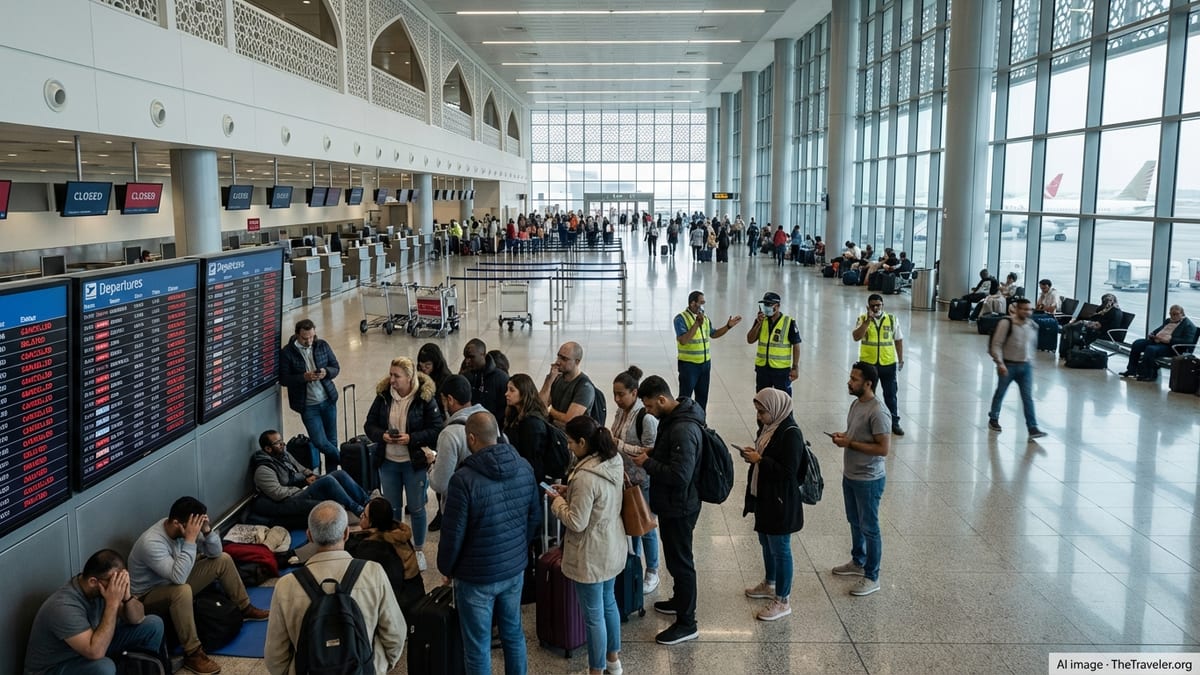
Extraordinary GCC meeting puts visitor safety in the spotlight
A recent extraordinary meeting of tourism ministers from the Gulf Cooperation Council signaled a renewed focus on visitor safety and crisis preparedness across the bloc. A joint statement issued after the April 7, 2026 videoconference highlighted that the tourism sector is being closely monitored in light of regional developments, with ministers stressing that the safety of visitors remains a steadfast priority.
Publicly available information from the GCC Secretariat indicates that the ministers agreed to intensify coordination on risk assessment, emergency planning and communication protocols so that responses to any disruption are aligned across borders rather than handled in isolation. The language of the statement emphasizes joint action, suggesting that future measures will be framed as regional rather than purely national initiatives.
Coverage from regional outlets around the same meeting notes that officials reviewed recent operational steps taken in individual countries to maintain service continuity and public safety during periods of heightened tension. The discussion pointed toward developing common response templates, so that hotels, tour operators and transport providers across Saudi Arabia, the UAE, Qatar, Bahrain, Oman and Kuwait receive consistent guidance when incidents occur.
For travelers, these moves are beginning to translate into more visible security coordination at airports, hotels and major attractions. Industry reports describe closer information-sharing between tourism, interior and civil aviation authorities in the six states, aimed at providing faster alerts, more harmonized security checks and clearer instructions in the event of flight diversions, protests or other unexpected events.
Unified GCC tourist visa edges closer to reality
Alongside safety coordination, the most significant change on the horizon for visitors is the planned GCC unified tourist visa. According to recent migration and travel briefings, the six Gulf states have agreed in principle on a Schengen-style system that would allow eligible travelers to visit multiple GCC countries on a single visa, instead of applying separately to each destination.
Background documentation from legal and immigration analysts indicates that the framework for this visa was formally endorsed in 2023 and refined through 2024 and 2025, with 2026 identified as the target launch year for the first operational phase. The scheme is expected to start with a pilot involving the UAE and Bahrain before being extended to Saudi Arabia, Qatar, Oman and Kuwait once technical systems and border procedures are fully tested.
Specialist travel outlets describe the vision as a regional tourism area where visitors could, for example, land in Dubai, continue to Muscat and Doha, then connect on to Riyadh, Manama or Kuwait City without having to secure fresh permissions at each border. The visa would broadly mirror the Schengen concept in Europe, with a defined stay limit across the zone and shared databases to manage entries, exits and compliance.
Officials have not yet published detailed pricing, eligibility or biometric rules, but commentary from Gulf-focused consultants suggests that the visa will likely use an online application portal, with data shared between member states in real time. That data backbone is viewed as central to both security vetting and a smoother arrival experience, allowing checks to be completed in advance rather than entirely at the border.
Digital platforms and data-sharing at the core of new safety regime
The emerging travel architecture in the Gulf is increasingly digital. Reports from policy forums and industry conferences point to work on a shared information platform that would connect immigration, tourism and security databases across the six GCC countries. The goal is to verify travelers more efficiently while reducing bottlenecks at airports and land crossings.
Briefings from business councils and law firms tracking the project suggest that the unified tourist visa will sit on top of this infrastructure. A single application would feed into a common risk engine, which assesses data against national and regional watch lists. Once cleared, the traveler’s authorization could be read by border systems in any participating GCC state, much like existing electronic travel authorizations in other regions.
This same digital backbone is expected to support coordinated safety messaging. Publicly available information shows that ministers have discussed standardizing how alerts are issued during weather events, health incidents or security concerns, ensuring that visitors receive consistent travel advice whether they are in Saudi Arabia, the UAE, Qatar, Bahrain, Oman or Kuwait.
For airlines, hotels and tour operators, the integration effort means preparing for new data requirements and potentially updated check-in procedures. Industry commentary indicates that carriers serving multiple Gulf hubs are already planning for system upgrades, while destination management companies are watching closely for guidance on how to align their own customer-verification processes with the forthcoming regional standards.
Record arrivals raise pressure to coordinate rules
The drive to streamline travel and bolster safety comes as the Gulf’s tourism numbers reach new highs. GCC statistics released in early 2025 showed that the six member states collectively welcomed more than 68 million international visitors in 2023, generating over 110 billion dollars in tourism revenue. The figures reflected a rapid rebound from the pandemic period and underlined the sector’s importance to economic diversification plans across the region.
At the same time, separate industry research has consistently ranked several GCC countries among the safest destinations globally, with Qatar, the UAE and Oman often appearing near the top of international safety indices. Analysts argue that maintaining and communicating that safety reputation is central to the Gulf’s competitive positioning against other long-haul hubs in Europe and Asia.
The combination of rising visitor volumes and high safety expectations is one reason regional policymakers are moving toward shared standards. Reports from economic and tourism think tanks suggest that fragmented rules for visas, health declarations and security checks can deter travelers from planning multi-country itineraries, even within a relatively compact region like the Gulf.
By contrast, a more unified system could encourage visitors to extend stays and explore beyond a single gateway city. Projections cited in regional tourism outlooks describe scenarios in which a common visa and harmonized safety rules help disperse demand from established hubs to emerging destinations in Saudi Arabia, Oman and Bahrain, supporting investment in new resorts, heritage attractions and eco-tourism projects.
What travelers should watch in the next two years
For now, individual entry rules for the United Arab Emirates, Saudi Arabia, Qatar, Bahrain, Oman and Kuwait remain in force, and travelers still need to check each country’s visa and safety advisories separately. However, anyone planning trips to the region in late 2025 and 2026 may find that the rollout of new systems begins to reshape itineraries.
Travel industry coverage indicates that the pilot phase of the unified visa and one-stop travel platform is expected to begin toward the end of 2025, initially affecting routes between the UAE and Bahrain. If tests proceed smoothly, the scheme is forecast to expand to the other four GCC states, with various observers pointing to 2026 as the year when multi-country travel starts to feel noticeably more integrated for visitors.
Prospective travelers are being advised by airlines, tour operators and visa specialists to monitor updates from Gulf governments and tourism boards on application procedures, eligible nationalities and any transition rules between existing visas and the new unified authorization. Because timelines can shift as systems are tested, published commentary stresses the importance of confirming requirements close to the date of departure rather than relying on earlier assumptions.
In parallel, visitors can expect to see continued emphasis on visible safety measures across the Gulf, from upgraded surveillance and crowd-management tools at major events to more structured emergency communication in hotels and public spaces. Taken together, the combination of a shared safety agenda and a move toward frictionless travel suggests that GCC tourism is entering a new phase, with the UAE, Saudi Arabia, Qatar, Bahrain, Oman and Kuwait positioning themselves as a single, interconnected destination for global travelers.