


More news on this day
Travelers planning trips to or through Kuwait City continue to face major disruption, as Kuwait International Airport remains closed to regular passenger flights despite persistent rumors of an imminent restart of operations.
Get the latest news straight to your inbox!
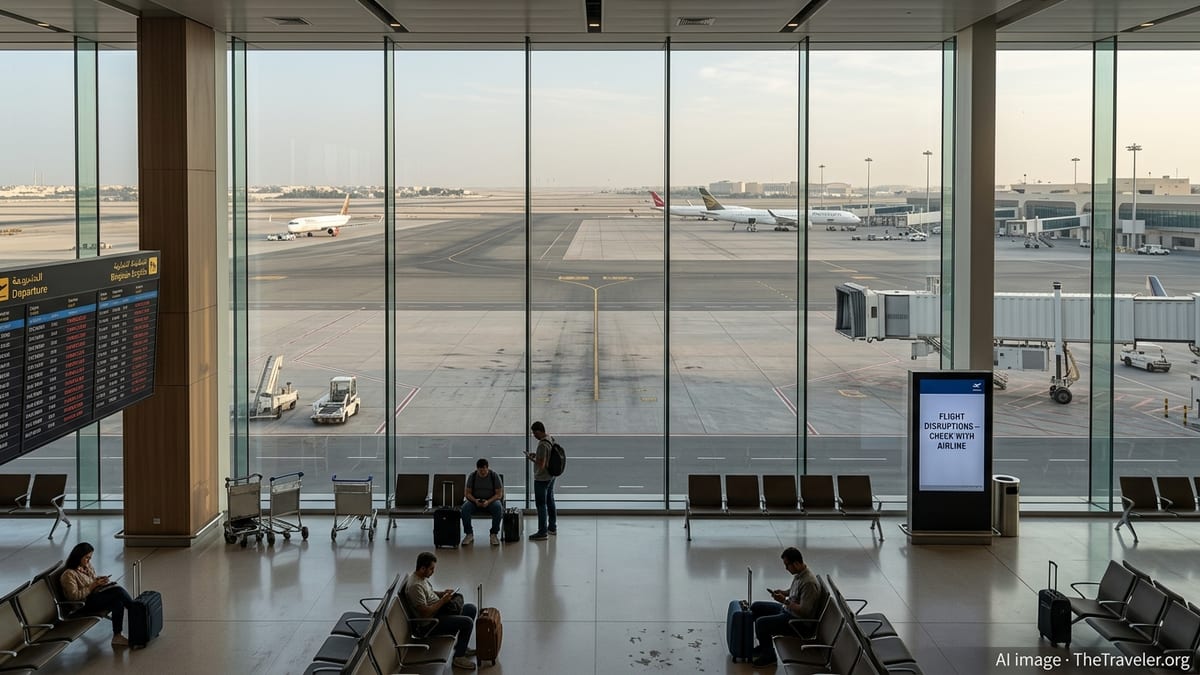
Airport Closure Extends Into Seventh Week
Kuwait International Airport has been shut to civilian passenger traffic since February 28, 2026, following a sharp escalation in regional conflict linked to the Iran war and subsequent strikes on Kuwaiti targets. Publicly available information shows that the country’s airspace remains closed to most commercial movements, with flight tracking platforms indicating no regular passenger operations at the main airport.
Reports from regional aviation trackers and logistics advisories describe the closure as one of the most prolonged in the Gulf in recent years, stretching beyond six weeks and affecting tens of thousands of journeys. While limited military and special operations flights have been noted in industry briefings, there is no indication that standard commercial schedules have resumed at Kuwait International Airport.
The decision to maintain the closure is closely tied to continued security concerns. Recent histories of the conflict highlight repeated missile and drone incidents around Kuwait City, including strikes that have damaged airport infrastructure and nearby fuel storage, reinforcing caution over reopening to civilian traffic.
Travel industry analysts say the shutdown is reverberating across airline networks, cargo flows, and regional connectivity, especially for routes linking South and Southeast Asia with Europe that previously relied on Kuwait as a convenient transit point.
Authorities Reject Rumors of Flight Resumption
In recent days, Kuwait’s aviation regulators have publicly pushed back against a wave of social media posts and informal messages suggesting that flights at Kuwait International Airport were about to restart. According to published coverage in local and regional outlets, the Directorate General of Civil Aviation has stated that no official approval has been issued for a resumption of operations.
One widely shared message, attributed online to a Gulf carrier, claimed that services from Kuwait City would soon return. Subsequent reporting indicates that this claim was rejected as inaccurate, with aviation officials emphasizing that any genuine change to the airport’s status would be communicated through formal announcements rather than unverified channels.
Travel and tourism publications note that the sustained closure and the need for repeated clarifications reflect the high level of public anxiety among residents, expatriate workers, and international visitors waiting for a path back into or out of Kuwait. Airlines, meanwhile, continue to update schedules on a rolling basis, often extending cancellations in line with government restrictions.
The firm rebuttal of resumption rumors underlines that, as of mid-April 2026, Kuwait City remains effectively cut off from the global commercial air network, even as some neighboring hubs begin to scale back earlier restrictions.
Middle East Tensions Keep Airspace on High Alert
The continued shutdown of Kuwait International Airport is unfolding against a backdrop of sustained regional tension. Open-source reporting on the 2026 Iran conflict describes a pattern of missile and drone activity involving targets in Kuwait and other Gulf states, with several incidents occurring close to civilian infrastructure.
Analysts tracking the conflict say that, despite announcements of temporary ceasefires, the risk environment around key transport assets remains volatile. In Kuwait’s case, documented strikes on or near airport facilities and fuel depots have raised particular concerns about the safety of passenger operations, encouraging a conservative approach to reopening plans.
Across the wider region, several major airports have moved toward partial recovery, with limited schedules or phased returns announced from hubs in the United Arab Emirates and Bahrain. However, security advisories issued at the end of March and into April continue to classify Kuwait’s aviation status as severely disrupted, reflecting the country’s proximity to recent military activity.
Travel risk assessments circulated to corporate clients highlight that airspace closures, route diversions, and last-minute schedule changes can be expected to persist as long as the broader conflict remains unresolved. Kuwait’s extended closure is viewed as one of the clearest examples of how front-line security concerns are shaping aviation decisions.
Impact on Travelers and Alternative Routing Options
For travelers, the continuing suspension of flights at Kuwait International Airport has translated into cancelled trips, complex rebookings, and mounting uncertainty. Online forums and passenger reports describe cases of residents stranded abroad, expatriate workers unable to return to their jobs, and visitors forced to rearrange long-planned itineraries.
Several Gulf and Asian carriers have adjusted their networks by rerouting services through alternative hubs. Public schedules and corporate advisories show that some flights originally planned to transit Kuwait have been shifted to airports in Saudi Arabia, with passengers bused onward by road, in some cases requiring several hours of overland travel to reach Kuwait City.
Travel advisories issued by airlines and logistics providers typically recommend that anyone holding tickets to or from Kuwait City monitor carrier updates closely, consider flexible rebooking options, and be prepared for prolonged disruptions. Some carriers are offering refunds or free date changes for itineraries touching Kuwait in the coming weeks, reflecting the lack of a clear reopening date.
Tour operators and destination management companies serving the Gulf region are also revising their products. Package tours that previously combined Kuwait City with neighboring regional highlights have, in many cases, removed the Kuwaiti capital from near-term offerings, directing clients instead toward cities where commercial air links are gradually returning.
What Travelers Should Expect in the Coming Weeks
Looking ahead, industry commentary suggests that any eventual reopening of Kuwait International Airport is likely to be gradual rather than sudden. Based on patterns observed at other regional hubs, analysts anticipate a phased restart, beginning with limited flights and tight capacity controls before scaling up to a fuller schedule.
Security conditions will remain the key variable. As regional monitoring groups continue to track missile and drone activity across the Gulf, aviation planners are expected to prioritize risk assessments, coordination with neighboring airspace authorities, and the integrity of airport infrastructure before restoring regular passenger operations in Kuwait.
For now, travelers are advised by publicly available guidance to avoid planning nonessential itineraries that rely on Kuwait City as a primary point of entry, exit, or transit. Those who must travel to or from Kuwait are being encouraged to explore alternative routings through other Gulf or regional hubs, accepting longer journey times and the possibility of further changes at short notice.
With no firm timeline yet indicated in open reporting, the travel landscape around Kuwait City remains highly uncertain. The ongoing closure of Kuwait International Airport, combined with the repeated refutation of premature reopening claims, is likely to shape business, leisure, and expatriate travel plans for at least the near term.