


More news on this day
Saudi Arabia has moved to shore up confidence among international visitors caught up in regional airspace disruptions, introducing temporary visa relief and emergency support measures as Russia joins a growing bloc of countries publicly emphasizing traveler security.
Get the latest news straight to your inbox!
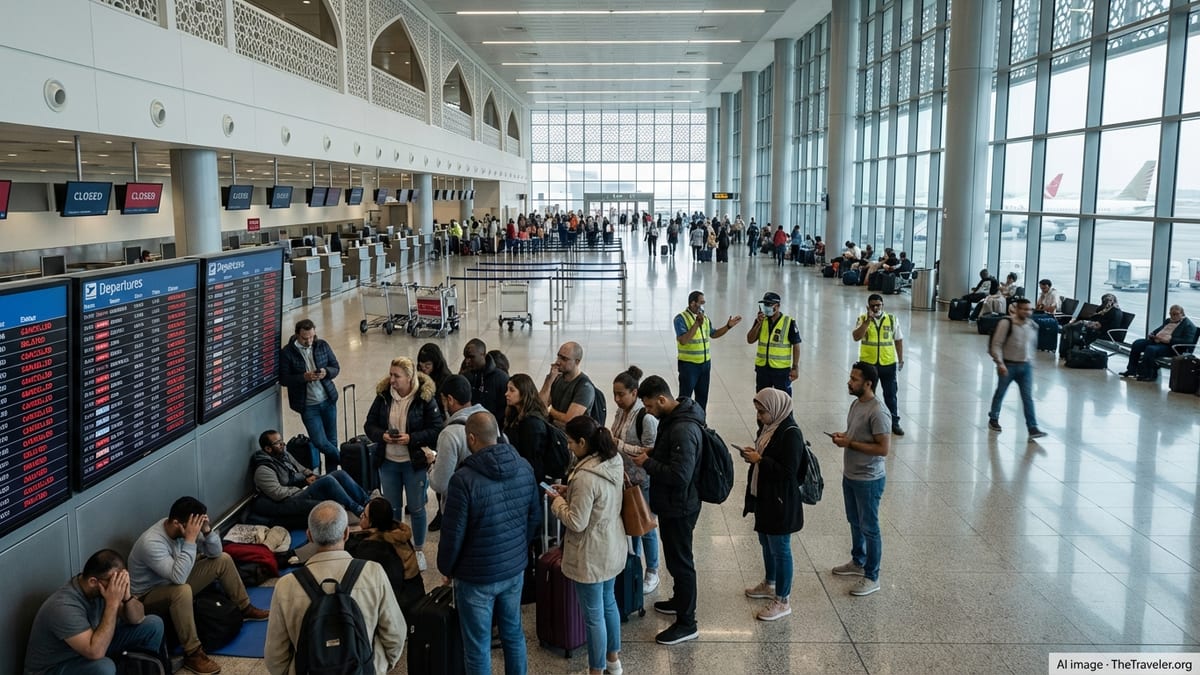
Saudi Arabia Rolls Out Visa Extensions and Fee Waivers
Publicly available government and industry advisories indicate that Saudi Arabia has introduced time-limited concessions for visitors whose stay has been disrupted by recent instability in Middle East airspace. The measures are aimed at tourists, business travelers and other short-term visitors whose visas expired or are close to expiring while they remain in the kingdom.
An immigration alert summarizing the policy explains that holders of visit visas that expired from late February 2026 can either extend their status on request or depart directly through international ports without facing standard overstay penalties. The extension route requires payment of normal statutory fees, but the option to leave the country without fines is being presented as a significant relief for travelers whose onward journeys were cancelled or rerouted.
The move builds on earlier efforts to simplify visit visa extensions through digital platforms, but observers note that the current concessions are more generous than routine procedures. The initiative is being described in regional coverage as part of a broader attempt to prevent well-intentioned visitors from falling into irregular status as airlines and governments adjust to evolving security conditions.
Travel analysts say the combination of fee waivers for direct departure and facilitated extensions sends an important signal to airlines and tourism partners that the kingdom is intent on avoiding mass immigration violations by stranded passengers.
Round-the-Clock Helpline for Stranded Visitors
Alongside the visa concessions, Saudi Arabia’s passport and civil affairs authorities have highlighted emergency telephone and online channels for people whose documents have expired or whose travel plans have been disrupted. Local media coverage has pointed in particular to a nationwide hotline that can be used by holders of expired or soon-to-expire visas seeking guidance on their legal status and next steps.
Reports describe the helpline as operating around the clock to triage cases ranging from missed exit deadlines to confusion over extension eligibility. Callers are being directed to clarify whether they should pursue an in-country extension through official platforms or use the penalty-free departure option now available at airports and other ports of exit.
While experiences may vary, travel advisors say the visibility of a 24-hour contact point is notable in a context where visitors often struggle to interpret shifting entry and stay rules during periods of regional turbulence. The emphasis on continuous availability is being framed in the Saudi press as a practical component of the country’s tourism ambitions and its wider economic diversification plans.
Industry observers suggest that the helpline, together with the temporary visa waivers, may help limit reputational damage from images of stranded travelers and long queues at immigration counters, which have at times emerged from other hubs during previous security crises.
Russia Joins International Coalition on Traveler Security
Against this backdrop, Russia has been cited in recent travel trade coverage as joining a growing list of countries affirming their commitment to protect the rights and safety of citizens currently traveling or transiting through affected routes. The list already includes Turkey, Switzerland, the United Kingdom, Italy, Germany and Ireland, reflecting a spread of European and Eurasian states with significant numbers of nationals using Gulf gateways.
According to a widely circulated report in the tourism sector, Russian authorities have aligned themselves with partner governments in emphasizing consular assistance and coordination for travelers impacted by airspace closures and rerouted flights. The narrative positions Russia alongside European counterparts that have been issuing updated travel advisories, pressing airlines for clearer communication and encouraging affected citizens to register with consular services.
This emerging coalition does not take the form of a single formal pact, but rather a convergence of national measures and public messaging around traveler welfare. Analysts note that the symbolism of Russia being named alongside long-established European tourism markets underlines how widely the current disruptions are being felt and how many governments see reputational risk in being perceived as passive.
Security risk mapping produced by private-sector providers continues to rate several parts of the wider region as elevated or high risk for sudden operational changes. In that setting, visible coordination among source countries and destination hubs is being interpreted by the travel trade as an effort to reassure both travelers and airlines that contingency planning is in place.
Growing International Pressure to Protect Visitors’ Status
The Saudi visa concessions are unfolding alongside similar moves in other jurisdictions handling large numbers of stranded passengers. For example, immigration directives in South Africa have temporarily relaxed rules for airline crews and travelers whose visas were expiring while Middle East and Gulf airspace remained constrained, allowing them to extend stays or regularize their status without facing routine penalties.
Such steps are being interpreted by migration specialists as part of a broader trend in which governments seek to avoid criminalizing travelers who are unable to comply with immigration timelines for reasons beyond their control. Visa overstays that once might have drawn fines or future-entry bans are, in some cases, being treated with greater flexibility when directly linked to large-scale aviation disruption.
Within this landscape, travel risk consultancies have urged airlines, tour operators and corporate travel managers to proactively inform clients about evolving grace periods, helplines and extension options. The concern is that inconsistent or outdated information could leave passengers unaware of temporary protections and more vulnerable to administrative problems once those concessions expire.
Observers also underline that while the current measures are framed as exceptional and time-bound, they may set precedents for how destination countries respond to future crises, particularly as climate events, geopolitical tensions and cyber incidents create more frequent shocks to global mobility.
Implications for Tourists, Pilgrims and the Travel Industry
For individual travelers, the latest developments in Saudi Arabia mean that those whose plans have been derailed by cancellations or reroutings have clearer pathways to remain compliant with local immigration law. Tourists and pilgrims whose visas expired after the designated cut-off date may be able to extend their stay digitally or depart without penalties, provided they act before current deadlines noted in official advisories.
Travel planners recommend that visitors retain documentation of cancelled flights or rebooking notices, as well as any communication received from airlines or tour operators, in case they need to demonstrate that overstays were tied to circumstances outside their control. While the visa waivers and helpline exist to simplify matters, procedures can still vary according to visa type, nationality and the precise timing of entry and exit.
For the broader travel ecosystem, Saudi Arabia’s response, paired with the coordinated messaging from Russia and a roster of European partners, sends an important signal that traveler protection is becoming a central pillar of crisis management. Destination marketing campaigns increasingly compete not only on attractions and infrastructure but also on perceptions of fairness and predictability when itineraries fall apart.
Industry commentaries suggest that how effectively these temporary measures are implemented will influence future booking decisions, especially for multi-leg itineraries that transit high-risk airspace. If visitors experience the current waiver and helpline systems as accessible and transparent, it may strengthen Saudi Arabia’s position as a resilient hub. If not, pressure could grow on carriers and tour operators to route clients through alternative gateways perceived as offering smoother support when disruptions strike.