


More news on this day
Malaysia is set to host the Asia Pacific Aviation Safety Seminar in Kuala Lumpur in 2027, positioning the country at the center of regional efforts to develop next-generation safety solutions for a rapidly evolving aviation landscape.
Get the latest news straight to your inbox!
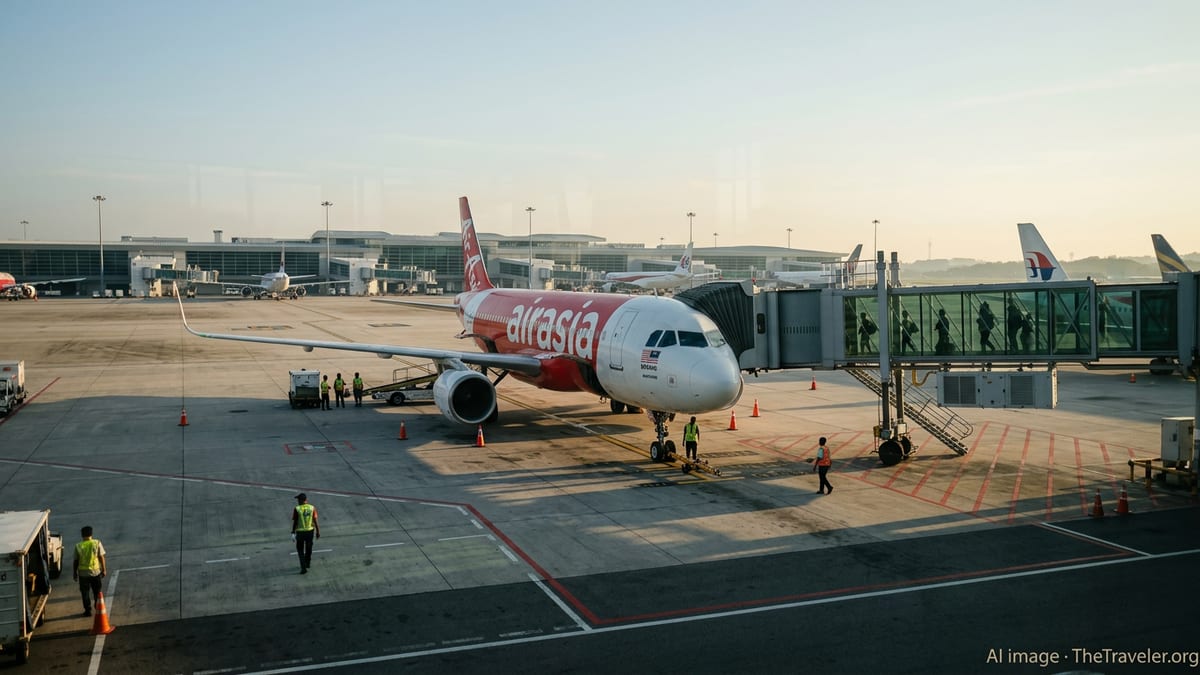
Kuala Lumpur Emerges as Regional Safety Hub
Publicly available information on the Asia Pacific Aviation Safety Seminar, widely known as APASS, indicates that the event has grown into one of the region’s most influential safety forums, bringing together airlines, regulators, manufacturers and service providers from across Asia Pacific. With the 2027 edition now slated for Kuala Lumpur, Malaysia is expected to play a central role in shaping discussions around operational resilience and emerging risk.
The choice of Kuala Lumpur builds on the city’s established role as host to a number of aviation and safety gatherings in recent years, including regional turboprop safety conferences and airline association meetings that focused on safety culture, technology adoption and regulatory harmonisation. That track record, combined with Malaysia’s strategic location on key Asia Pacific air corridors, is seen as reinforcing its appeal as a neutral platform for cross-border dialogue.
Reports indicate that the 2027 seminar will again be convened under the umbrella of the Association of Asia Pacific Airlines, whose secretariat is headquartered in Kuala Lumpur, alongside international partners and safety organisations. The event is expected to attract hundreds of delegates from full-service and low-cost carriers, air navigation service providers, airport operators, training organisations and technology firms.
Industry observers note that hosting APASS 2027 could also support Malaysia’s broader ambition to strengthen its role in the global aviation ecosystem, from maintenance and training to safety oversight. The seminar is likely to generate a short-term boost for the capital’s conference and hospitality sectors while also reinforcing its longer-term positioning as a regional aviation hub.
Focus on Next-Generation Safety Technologies
Early indications from industry briefings and previous APASS agendas suggest that the 2027 edition in Kuala Lumpur will place particular emphasis on technology-driven safety solutions. Topics are expected to include enhanced flight data monitoring, predictive analytics, and the use of artificial intelligence to detect precursors to incidents before they escalate into serious events.
Recent academic work on the application of machine learning and deep temporal models to aviation safety data has highlighted how large volumes of operational information can be transformed into practical decision support tools for airlines and regulators. These approaches, which seek to explain patterns behind incidents and near misses, are increasingly viewed as critical to managing complex, high-density airspace.
Cybersecurity is also anticipated to be a core theme at APASS 2027. Studies published in 2026 on airport and aviation cyber risks underline the growing vulnerability of digital systems that underpin everything from passenger processing to air traffic management. Organisers are expected to frame sessions around modern defence models, including zero trust architectures and supply chain risk management, in response to increasingly sophisticated cyber threats.
In the aircraft domain, APASS has historically offered a platform for manufacturers and operators to share safety occurrence data, including comparative analyses of different fleets and configurations. By 2027, delegates are likely to have access to more granular datasets and tools, enabling deeper exploration of how design, maintenance and human factors intersect in both traditional and next-generation aircraft.
Human Factors, Training and Safety Culture Under Scrutiny
Alongside new technologies, APASS 2027 in Kuala Lumpur is expected to devote significant attention to human performance, training and organisational culture. Previous Asia Pacific safety events have consistently underscored that flight crew, cabin crew, maintenance personnel and air traffic controllers remain the final line of defence in complex operations, regardless of automation levels.
Research on situation awareness in aviation environments continues to show how workload, interface design and communication practices influence decision-making in both cockpit and control room settings. Seminar sessions are likely to explore practical ways of embedding these insights into training syllabi and recurrent checks, particularly as new entrants join the profession amid ongoing pilot and technician shortages in parts of the region.
Delegates are also expected to examine how safety management systems can evolve to capture subtle indicators of organisational stress, including fatigue, staffing gaps and supply chain disruptions. Many Asia Pacific airlines have moved toward more proactive reporting cultures in recent years, and APASS 2027 is anticipated to showcase case studies on how confidential reporting, just culture principles and data integration can be translated into measurably lower risk.
The seminar’s agenda is likely to pay special attention to regional turboprop and regional jet operators, which play a critical role in connecting remote communities but often face unique operational and infrastructure challenges. Discussions are expected to address tailored training, performance-based navigation in challenging terrain and runway safety enhancements at smaller aerodromes.
Regulatory Cooperation and Data-Driven Oversight
Observers expect APASS 2027 in Kuala Lumpur to underline the importance of regulatory cooperation and the alignment of safety standards across a diverse Asia Pacific region. The International Civil Aviation Organization’s focus on leaving no state behind has helped frame previous seminars, and that principle is likely to feature strongly in 2027 as regulators work to close capacity gaps.
Many authorities in the region are investing in data-driven oversight tools that combine traditional audits with continuous monitoring of operational data and safety indicators. At APASS 2027, panels are anticipated to examine how regulators and industry can share information more effectively while respecting confidentiality and commercial sensitivities.
Cross-border initiatives such as common training frameworks, joint safety campaigns and mutual recognition of certain approvals are expected to be on the discussion table. In a region characterised by rapid traffic growth, complex weather patterns and a mix of mature and developing markets, harmonised approaches can help prevent fragmentation and support consistent safety outcomes.
The Kuala Lumpur seminar is also likely to highlight partnerships between states, airlines and multilateral bodies on emerging risks, including drone integration, spaceflight operations interacting with civil airspace and climate-related disruptions. As Asia Pacific moves toward ever-busier skies, APASS 2027 is being framed as an opportunity to align regulatory strategies with the technological and operational realities of the coming decade.
Economic Impact and Long-Term Opportunities for Malaysia
From an economic standpoint, APASS 2027 is expected to draw a substantial influx of delegates, exhibitors and international media to Kuala Lumpur. Local tourism and business travel stakeholders anticipate that the event will fill hotels, conference centers and restaurants, while also generating demand for local transport, event production and technical services.
Beyond the immediate visitor spend, analysts point to the longer-term potential benefits of hosting a high-profile aviation safety seminar. Malaysia’s aviation sector, which encompasses national and regional carriers, maintenance and repair organisations, training academies and emerging technology firms, could use the platform to showcase capabilities and attract new partnerships.
Participation by global manufacturers, software providers and safety consultancies at APASS 2027 may also create opportunities for new joint ventures, pilot projects and research collaborations anchored in Malaysia. Such initiatives could support the development of specialist skills in data analytics, cybersecurity, human factors and systems engineering within the local workforce.
For Kuala Lumpur, the 2027 seminar reinforces a trajectory that has seen the city host a series of aviation-focused conferences and summits in recent years. If APASS continues to rotate within the region, a successful edition in Malaysia could strengthen the country’s case to host future technical workshops and high-level dialogues, further embedding it in the architecture of Asia Pacific aviation safety governance.