


Alaska’s tidewater glaciers are among the most dramatic sights in North American travel, but the ways to see them vary widely. From weeklong Inside Passage cruises to nimble expedition ships and focused day trips out of Seward, Whittier or Juneau, each style of glacier cruise delivers a different blend of scenery, comfort, cost and time commitment. Understanding those differences is the key to choosing the right route, boat and budget for your own Alaska adventure.
Get the latest updates straight to your inbox!
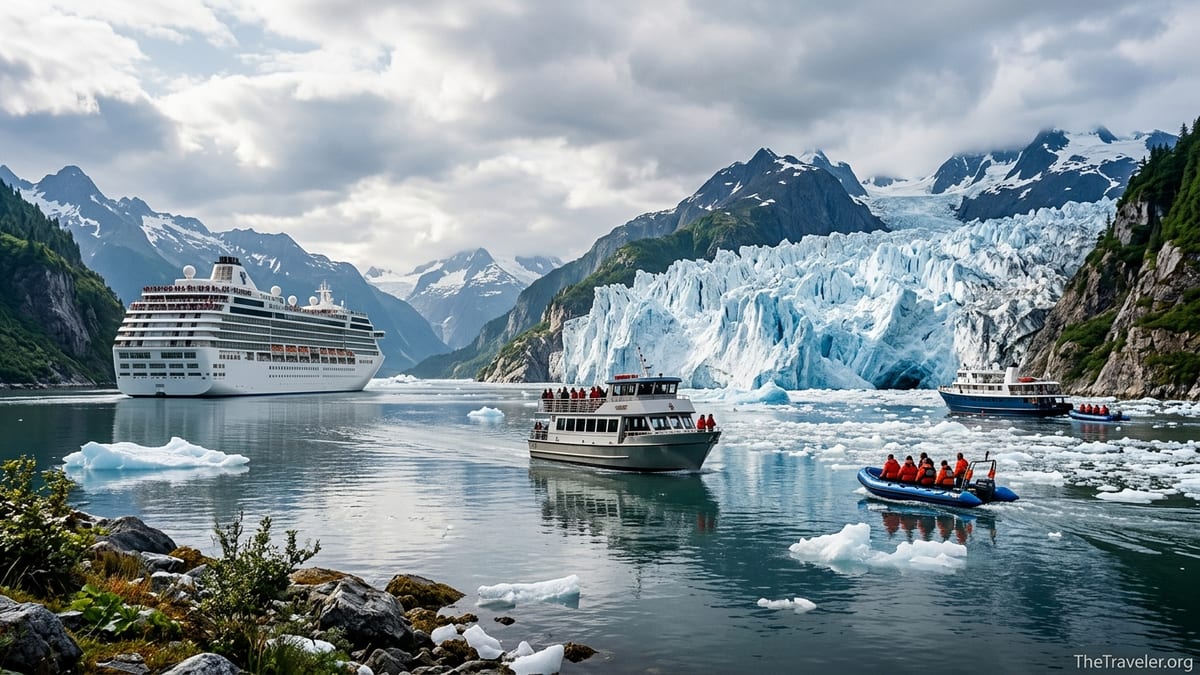
The Three Main Types of Alaska Glacier Cruise Experiences
For most travelers, Alaska glacier cruises fall into three broad categories. First are large multi-day ocean cruises that include one or two major glacier days as part of a wider Inside Passage or Gulf of Alaska itinerary. These are the classic seven-night sailings round-trip from Seattle or Vancouver, or one-way between Southcentral Alaska ports such as Whittier or Seward and Vancouver, that may spend a day in Glacier Bay National Park or scenic cruising at Hubbard Glacier or another tidewater glacier. Typical routes run May through September, with many ships offering one dedicated glacier day among several port calls in towns like Juneau, Skagway and Ketchikan.
The second category is small-ship expedition cruises. These vessels usually carry a few dozen to a few hundred guests, operate at slower speeds and spend more time in narrow fjords and wilderness bays. They frequently add inflatable boats or small landing craft to get closer to ice and coastline, or to facilitate shore landings where docks do not exist. Expedition itineraries in Alaska often run seven to fourteen nights, focusing on Southeast Alaska, Prince William Sound or cross-Gulf routes that link multiple glacier areas while minimizing time in big ports.
The third major option is day cruises from coastal towns, especially Seward for Kenai Fjords National Park, Whittier for Prince William Sound, and Juneau for fjords such as Tracy Arm or Endicott Arm. These trips are designed primarily around one or more tidewater or valley glaciers and usually combine glacier viewing with marine wildlife watching. Operating seasons are shorter, typically from early May to early or mid-September, and departures range from half-day outings of about five hours to full days of eight hours or more on the water.
All three categories can deliver memorable glacier encounters. The choice depends largely on whether you want a cruise-centric vacation, an in-depth wilderness trip or a focused day of glacier and wildlife viewing attached to a broader land itinerary in Alaska.
Large-Ship Inside Passage Cruises: Glacier Days within a Bigger Itinerary
On a mainstream ocean cruise, glacier viewing is usually one part of a larger package that includes multiple port days and sea days. Common starting and ending points include Seattle and Vancouver for round-trip Inside Passage itineraries, and Whittier, Seward or Vancouver for one-way Gulf of Alaska sailings. Many seven-night cruises include either Glacier Bay National Park or a comparable scenic day at Hubbard Glacier or another major tidewater glacier, often with the ship spending several hours slowly approaching, turning and lingering in front of the ice face before departing.
As of a September 2026 review of Alaska cruise pricing, typical base cruise-only fares for a seven-night big-ship Alaska itinerary range roughly from about 1,200 to 4,500 US dollars per person, depending on cabin type, date and line, with balcony cabins and peak July departures toward the higher end. These prices usually include accommodation, meals on board and access to most entertainment, but not shore excursions, gratuities or specialty dining. Travelers should expect popular excursions, including helicopter glacier landings or small-boat glacier tours, to add significantly to the overall budget.
In terms of glacier proximity, big ships must observe strict distance and speed regulations around tidewater glaciers, including national park rules in places like Glacier Bay. Captains often hold the ship at a safe viewing distance that can feel quite close to the face when conditions allow, but the exact approach varies day by day with ice conditions, weather, traffic and wildlife considerations. Travelers should view any promotional photography as representative rather than guaranteed; calving events, flying ice and fog are all unpredictable.
Large-ship cruises work well for travelers who want a comfortable, relatively stable platform with extensive onboard amenities and the ability to see a highlight reel of Alaska in one week. They are less ideal if your primary goal is to linger near multiple glaciers or to spend long stretches in remote coves away from other vessels.
Small-Ship Expedition Cruises: More Time with Ice and Wilderness
Small-ship expedition cruises narrow the focus to scenery, glaciers and wildlife, often at a higher per-day cost but with more included experiences. Common starting and ending ports include Juneau, Sitka and Ketchikan in Southeast Alaska, sometimes combined with cross-Gulf routes that use Whittier or Seward. Trip lengths typically range from seven to fourteen nights, with some itineraries adding pre- or post-cruise hotel nights and optional extensions to Denali National Park or the Kenai Peninsula.
While pricing varies widely, recent comparisons for the 2026 to 2027 seasons place many Alaska small-ship expeditions in a ballpark of roughly 6,000 to 15,000 US dollars per person for a week, usually on an almost all-inclusive basis. Fares frequently cover guided shore landings, daily small-boat excursions, lectures, gear such as rubber boots and sometimes soft drinks and alcoholic beverages. The trade-off is that cabins are smaller, entertainment is subdued and there may be fewer traditional resort-style amenities on board.
Expedition vessels generally have more flexibility to adjust their daily plans to weather, wildlife reports and ice conditions. Smaller boats and inflatable craft allow closer approaches to glacier faces when safe and permitted, or the option to explore brash ice fields that large ships must avoid. Even so, captains adhere to safety buffers that can be several hundred meters or more from the ice, depending on the glacier’s behavior, the presence of floating icebergs and visibility. Some days the ship may hold further back if calving activity sends large waves through the fjord.
This style of cruising suits travelers who prioritize time in nature over time in bigger ports, accept more motion and less predictability, and are willing to pay higher up-front fares in exchange for built-in excursions and deep glacier immersion.
Day Cruises from Seward: Kenai Fjords National Park
Seward is the main jumping-off point for Kenai Fjords National Park day cruises, which showcase tidewater glaciers such as Aialik or Northwestern Glacier along with sea cliffs, islands and open Gulf of Alaska waters. Operators typically run daily trips from early May through late September, with a core season where schedules are densest in June, July and August. Representative tours include a six-hour national park cruise, often marketed as a default full-day choice, and longer eight- to eight-and-a-half-hour routes that travel deeper into Northwestern Fjord or similar remote areas.
Recent 2026 season examples show six-hour Kenai Fjords glacier and wildlife cruises pricing around 260 to 280 US dollars per adult, including a simple lunch on board, while extended eight-hour Northwestern Fjord itineraries are often in the range of roughly 330 to 350 dollars. Shorter wildlife-focused trips that stay mostly within Resurrection Bay without reaching a tidewater glacier can cost somewhat less and last around four to five hours. These prices usually include national park access; Kenai Fjords has no separate park entrance fee for boat passengers.
On a typical day, Kenai Fjords vessels approach the face of a tidewater glacier as closely as the captain considers safe, which can vary significantly with sea ice, wind and swell entering from the Gulf. In ideal conditions, boats may idle within a few hundred yards of the ice, spending 20 to 40 minutes pivoting so different sides of the vessel have views. Heavy brash ice or larger bergs sometimes keep boats farther back, and captains may leave sooner if falling ice or changing weather creates riskier conditions.
Seward day cruises work especially well for independent travelers who are already planning land time on the Kenai Peninsula or arriving by the Alaska Railroad. They are also a smart add-on for cruise passengers ending or beginning one-way ocean itineraries in Seward, allowing a more intimate glacier experience than a big-ship scenic day alone.
Day Cruises from Whittier: Prince William Sound
From Whittier, about a ninety-minute drive or rail trip from Anchorage including the Anton Anderson Memorial Tunnel, day boats explore the sheltered waters of Prince William Sound. The region is known for its high concentration of tidewater and hanging glaciers spilling off the Chugach Mountains into deep fjords, often with relatively calm seas. Two common tour archetypes dominate the schedule: a longer multi-glacier cruise of about five to six hours, often branded around visiting dozens of glaciers, and a shorter glacier quest-style route of roughly three to four hours staying closer to Whittier.
Recent schedules for 2026 indicate that the flagship “26 glacier” style cruise operates from early May into mid-September, typically as a daytime departure of about five and a quarter hours on the water. Another glacier quest itinerary generally runs from mid-May to mid-September with slightly shorter durations. Many visitors book packaged day trips that bundle round-trip transportation from Anchorage or Girdwood with the cruise, while self-drivers time their arrival and departure around the hourly one-way tunnel schedule.
Pricing for Prince William Sound glacier day cruises in 2026 commonly falls in the approximate range of 190 to 260 US dollars per adult for cruise-only fares, with higher combined rates when rail or coach transfers are included. Operators frequently include reserved indoor seating, hot lunch or hearty snacks and complimentary hot drinks in the fare, reflecting the region’s cooler, maritime climate. Alcoholic beverages and some desserts are usually extra.
Because Prince William Sound is more sheltered than Kenai Fjords, seasickness is often less of a concern, though not entirely absent. Boats can sometimes approach tidewater glacier faces quite closely when ice conditions permit, yet captains still maintain a prudent distance to avoid ice impacts and surging waves after calving. For travelers prone to motion sickness who still want a strong glacier experience, Whittier’s cruises are an appealing compromise between stability and dramatic scenery.
Juneau Area Day Trips: Tracy Arm, Endicott Arm and Mendenhall
Juneau offers several ways to incorporate glaciers into a day on the water. Historically, one of the signature day cruises from Juneau has been a full-day journey into the Tracy Arm–Fords Terror Wilderness to view the twin Sawyer Glaciers. Typical itineraries depart Juneau in the morning, cruise several hours through narrow fjords, spend time near the glacier faces as conditions allow and then return in the evening. Current tour descriptions for 2026 list operating seasons from late May into early September, with trip durations of around eight to nine hours.
Prices for Juneau-based Tracy Arm or comparable Endicott Arm fjord cruises in 2026 often fall around 230 to 320 US dollars per adult, depending on vessel size and inclusions. These tours generally emphasize both towering fjord scenery and time near a tidewater glacier, though ice conditions can occasionally prevent boats from reaching the very end of the fjord. In recent seasons some large cruise lines have adjusted or reduced their own big-ship calls to Tracy Arm after landslide concerns, which makes dedicated small-boat day cruises from Juneau an even more important option for travelers intent on seeing that style of narrow fjord.
In addition to boat-based glacier trips, Juneau visitors often combine a fjord cruise with land-based glacier viewing at Mendenhall Glacier, reached by road from town. Many travelers experience Mendenhall from visitor center overlooks or short trails, looking across a proglacial lake toward the ice. Because the glacier has been retreating in recent years, views from certain trail endpoints change over time, and it is wise to confirm which trails are open and what to expect in the season of travel.
For those with limited time in port on a large cruise ship, an independent fjord day trip may not be feasible given all-day durations. In that case, shorter boat tours focused on whale watching combined with a quick visit to Mendenhall are more practical, though they provide less prolonged time in front of a tidewater glacier face.
Budget, Time, Seasickness and Comfort: Key Decision Factors
When comparing Alaska glacier cruise options, budget is often the starting point. As of late 2026, mainstream seven-night Inside Passage cruises that include one glacier day typically fall in the approximate range of 1,200 to 4,500 dollars per person for cruise-only fares, with inside cabins at the lower end and peak-season balconies at the higher end. Small-ship expedition cruises, by contrast, run closer to 6,000 to 15,000 dollars per person for a week but bundle guided activities and small-craft excursions that big ships sell as add-ons.
Day cruises are generally far less expensive on an absolute basis but add up for families. A representative six-hour Kenai Fjords glacier cruise with lunch might cost around 260 to 280 dollars per adult in 2026, while a similar-length Prince William Sound day cruise can be under or around 250 dollars. Juneau fjord day trips into Tracy Arm or Endicott Arm often price slightly higher, around 250 to 320 dollars. Children’s rates and periodic discounts can soften these figures, but travelers should still plan several hundred dollars for a day on the water, plus meals, tips and any transfers.
Time available is equally critical. If you have only a week for vacation and want an overview of Alaska, a big-ship Inside Passage cruise may be the most efficient option, especially if you prefer to unpack once and let the itinerary unfold. If you are already traveling independently in Alaska for 10 to 14 days or more, targeting one or two day cruises from Seward, Whittier or Juneau often delivers more concentrated glacier time without paying for a full expedition voyage.
Seasickness tolerance and comfort preferences should not be underestimated. Kenai Fjords routes often cross exposed Gulf of Alaska waters where swell can be significant, while Prince William Sound itineraries from Whittier generally enjoy calmer seas. Larger ocean ships feel more stable in moderate conditions but can still pitch and roll in rough weather. If you know you are sensitive, a Prince William Sound cruise or a more sheltered Inside Passage route, combined with proactive motion-sickness preparation, may be the best fit.
How Close Boats Get to Glaciers and What to Expect On Board
Many travelers imagine boats nudging right up to sheer walls of ice, but in reality, safety guidelines control how close any vessel can approach a tidewater glacier. Captains must account for underwater ice that can surface without warning, waves created by falling ice and the possibility of very large calving events. As a result, even small boats usually hold station at a respectful standoff distance, often hundreds of meters from the face, although this can feel impressively close in narrow fjords.
Approach distances are influenced by glacier behavior on that particular day, wind direction, visibility and the amount of brash ice the boat must navigate. On some days, heavy ice may force an earlier stop where the captain cannot safely push farther in; on others, clearer water permits a closer viewpoint. Travelers should understand that operators cannot guarantee a specific vantage point or a certain size or frequency of calving, and that staying further back is sometimes the safest and most responsible choice.
On board, amenities vary by cruise type. Large ocean ships offer extensive indoor lounges, multiple open decks, abundance of restrooms and heated viewing spaces, which makes glacier days comfortable even in cold wind and rain. Small-ship expeditions provide ample deck space and often heated indoor viewing salons, but space is more limited and movement between decks may involve exterior stairways exposed to the elements. Day cruise vessels from Seward, Whittier and Juneau typically feature at least one enclosed cabin with large windows, restrooms and open-air decks, with seating often assigned or at least sufficient for all passengers.
Food service also differs. Big-ship passengers can usually watch glacier approaches from buffet or dining room windows and then step outside. Expedition ships and day boats often serve simple hot meals, soups or sandwiches at scheduled times when the vessel is in transit rather than right at the glacier, so you can focus on viewing and photography when it matters most.
Booking, Inclusions and Extra Costs
For peak summer departures in late June, July and early August, planning ahead is important. Large-ship Alaska cruises that include Glacier Bay or Hubbard Glacier can start to sell out of preferred cabin categories many months to over a year in advance, particularly for popular lines and balcony cabins. Booking nine to twelve months ahead provides the best selection, although last-minute deals sometimes appear outside the busiest weeks.
Small-ship expedition cruises and popular day cruises, such as six-hour Kenai Fjords national park routes or Prince William Sound’s marquee glacier trips, also benefit from early reservations. For high-season Saturdays or holiday weekends, securing space at least three to six months in advance is wise, especially if your schedule is inflexible or you need specific rail connections from Anchorage. Shoulder-season departures in May or early September may offer more flexibility but carry a higher risk of colder or wetter weather.
Typical inclusions on day cruises vary by operator but commonly cover the boat tour itself, narration, indoor seating and basic beverages like coffee, tea and water. Many Seward and Whittier glacier cruises include a boxed or buffet-style lunch in the fare, while Juneau fjord day trips may provide snacks or optional lunch upgrades. Additional costs can include port parking fees in places like Seward, charges for transfers from train depots or hotels, alcoholic drinks, souvenir photos and customary gratuities for crew or naturalist guides.
When bundling transportation and cruises, such as rail plus the 26-glacier-style cruise from Anchorage to Whittier and back, packaged prices typically rise substantially compared with cruise-only fares but save logistical effort. Travelers should compare the cost of self-driving and paying tunnel tolls and parking against bundled coach or rail packages to see which fits their budget and comfort level.
Accessibility, Age Limits and Safety & Comfort Checklist
Accessibility on Alaska glacier cruises is generally good but not uniform. Large ocean ships are designed with elevators, accessible restrooms and a variety of indoor viewing venues, making them the most suitable option for travelers with mobility limitations. Many small-ship expedition vessels also provide indoor seating and restrooms but may have steep stairways, narrower doorways and more movement between decks, which can be challenging for some guests.
Day cruise boats from Seward, Whittier and Juneau typically offer indoor heated cabins with seating for all passengers, multiple restrooms and outdoor viewing decks reached by short stairways. Some operators designate specific decks or restrooms as wheelchair-friendly, though boarding ramps and marina infrastructure can limit full accessibility at very low or high tides. Age policies vary: certain longer or rougher-water cruises may set minimum ages, such as no children under three or five years old, while more sheltered routes are often open to all ages provided children are supervised.
Regardless of cruise type, preparing for safety and comfort is essential. Weather in Alaska’s coastal fjords can be windy, cool and wet even in July, and perceived temperature drops sharply when boats pick up speed. Dressing in layers with a warm hat and gloves, wearing a waterproof shell over insulating mid-layers and choosing closed-toe footwear with good grip will keep you comfortable on exposed decks. Many travelers appreciate hand warmers for long glacier viewing sessions.
Protecting cameras and phones from spray and rain is equally important. Simple measures, such as using weather-resistant cases, lens hoods, microfiber cloths and resealable plastic bags or dry pouches, make a big difference. Those prone to seasickness should talk with a medical professional in advance and consider motion-sickness preparations such as patches, over-the-counter medications or acupressure bands, starting them before boarding rather than waiting until symptoms appear. Carrying personal medications, a refillable water bottle and sunscreen rounds out a basic comfort checklist.
Representative Glacier Cruise Archetypes: Matching Trips to Priorities
Because operators, schedules and prices change regularly, travelers should always confirm current details directly with companies. That said, several common glacier cruise archetypes recur across Alaska and can help you narrow choices. One classic example is the six-hour Kenai Fjords tidewater glacier and wildlife cruise from Seward, which offers a strong chance of viewing at least one tidewater glacier plus open-ocean wildlife, at a mid-range day-cruise price and with a moderate exposure to swell.
A second archetype is the longer eight- to eight-and-a-half-hour Kenai Fjords or Northwestern Fjord itinerary, again from Seward, which pushes farther into wilderness, often visits multiple glacier faces and devotes a full day to the water. This style best suits travelers with robust sea legs and a high appetite for adventure who are comfortable sacrificing other same-day activities in town for extended time in the park.
A third is the five- to six-hour Prince William Sound glacier cruise from Whittier, focusing on calmer waters and a high density of glaciers in a compact radius. This archetype typically includes hot lunch and reserved indoor seating and works particularly well for families, multi-generational groups and anyone who prioritizes comfort and stability over open-ocean drama. Shorter three- to four-hour Prince William Sound routes provide a taste of glaciated scenery for travelers with tighter schedules or very young children.
Rounding out the set are the full-day Tracy Arm or Endicott Arm fjord cruises from Juneau, usually eight to nine hours including long stretches in narrow fjords, and the seven-night big-ship Inside Passage cruises that include one marquee glacier day as part of a broader itinerary. The Juneau day trips reward travelers who value intense fjord time, while the big-ship itineraries suit those seeking a balanced Alaska introduction with comfortable accommodations and varied ports. By comparing these archetypes against your budget, time, motion tolerance and desire for independent land time in places like Seward or Juneau, you can select the glacier cruise style that brings Alaska’s ice within reach in a way that feels right for you.