


More news on this day
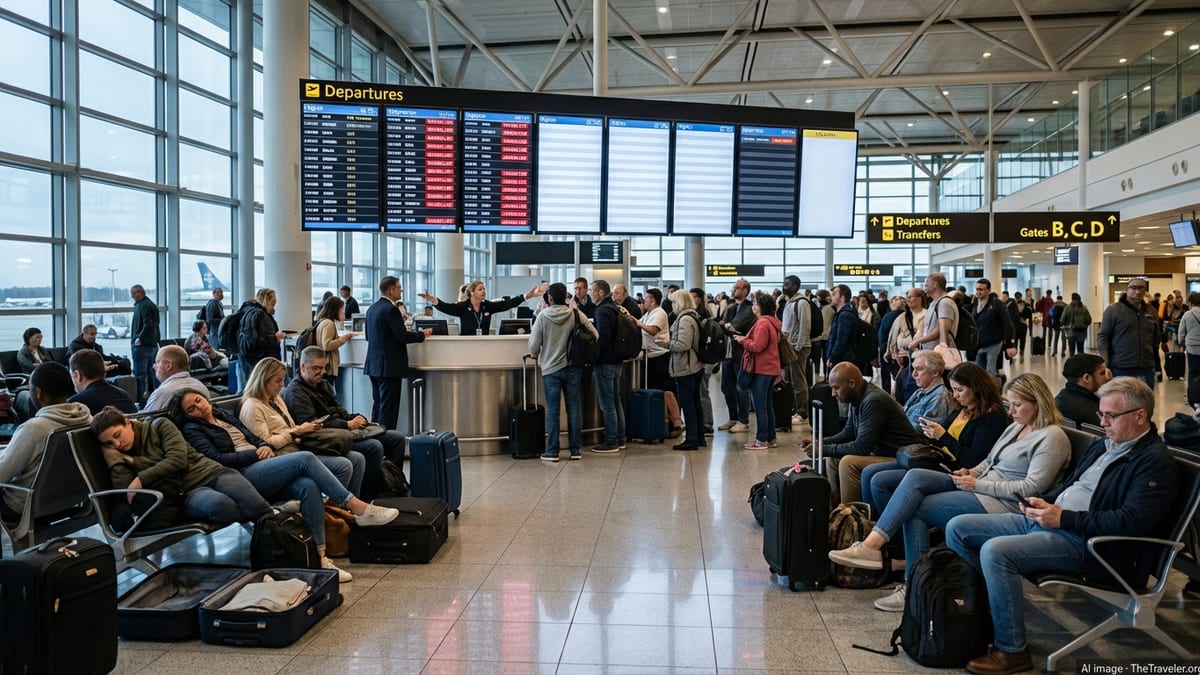
Renewed airspace closures and restrictions from the Middle East to North America are rippling across global aviation, leaving passengers to navigate last minute cancellations, diversions and evolving airline policies on refunds, rebooking and travel insurance.
Get the latest news straight to your inbox!
Conflict Zones and Closures Redraw Global Flight Paths
Recent conflict-related airspace restrictions in the Middle East have reshaped some of the world’s busiest long haul corridors between Europe, Asia and Africa. Following joint strikes on Iran in late February, published coverage shows that Iran, Israel and several Gulf states imposed temporary airspace closures or severe limitations, forcing carriers to abandon traditional routes over the region. Regional aviation advisories describe the simultaneous closure of multiple flight information regions as one of the most significant airspace disruptions in recent decades.
European and Middle Eastern network summaries indicate that traffic over the eastern Mediterranean and Persian Gulf dropped sharply in March as airlines diverted around conflict areas. Some carriers suspended services entirely to key hubs including Doha, Dubai, Abu Dhabi, Bahrain and Kuwait during the peak of the crisis, while others operated reduced schedules with extended routings. Industry data shows that Indian airlines alone canceled hundreds of flights in early March as they reworked services that normally rely on overflight permissions through the affected airspace.
By April, reports from regional airports suggested that operations were gradually recovering but far from normal. Dubai’s main hub returned to near regular departure volumes, though routings often remained longer and more fuel intensive due to continued avoidance of certain airspace blocks. Safety bulletins from European regulators continue to advise caution at all altitudes over parts of the Middle East, reflecting the persistent risk posed by air defense activity and missile launches.
These changes have lengthened flight times on many Europe–Asia and Africa–Asia routes, adding costs for airlines and uncertainty for passengers. Travellers have reported late rerouting, missed connections and unplanned overnight stays as carriers adjust day by day to evolving restrictions and military developments.
Temporary Flight Restrictions Spread Beyond Traditional Hotspots
While the Middle East remains the most visible flashpoint, temporary flight restrictions have been appearing more frequently in other regions as well. Network operations reports for North America and Europe highlight a growing patchwork of short notice closures tied to security incidents, high profile political events, military exercises and major public celebrations.
In the United States, publicly available aviation data shows a surge in restricted zones around major cities on specific dates, often lasting a few hours but disrupting tightly timed schedules. Recent examples include airspace shutdowns and operational pauses around Washington area airports for national celebrations and flyovers, as well as closures around regional airports to accommodate presidential visits. These actions typically affect a limited number of flights directly but can trigger knock on delays across already busy networks.
Security related measures have also created dramatic but short lived disruptions. In February, authorities briefly closed the airspace around El Paso International Airport after what later reports described as a serious drone related incident near the U.S.–Mexico border. A notice initially signaled a multi day shutdown before being quickly revised, but airlines had already begun issuing travel waivers, and passengers faced cancellations, diversions and lengthy delays.
Aviation agencies in Europe likewise report periodic closures and reroutings linked to military training activity and evolving security assessments around neighboring conflict zones. While these restrictions are often preplanned, their precise timing and geographic scope can change with limited warning, leaving airlines to update flight plans and passengers to adjust connections at short notice.
Knock On Disruptions: Delays, Cancellations and Longer Journeys
The immediate effect of airspace closures is the grounding or diversion of aircraft in the affected zones. However, operational reports from air navigation bodies and airport authorities show that the wider impact can extend for days, even after a specific restriction is lifted. Aircraft and crews end up out of position, airport gates and ground staff are overwhelmed by waves of disrupted passengers, and schedules require large scale rebalancing.
During the peak of the Middle East closures at the turn of March, network statistics from European coordination centers recorded a notable uptick in en route air traffic flow management delays. With popular high altitude corridors blocked, airlines funneled traffic through remaining routes, leading to congestion, level capping and metering in neighboring sectors. The result for travelers was a mix of outright cancellations, multi hour ground holds and longer in air flight times.
Similar patterns have appeared during recent weather and security disruptions in North America. Following major winter storms in March, for example, U.S. airports already struggling with staff shortages experienced days of rolling delays even as skies cleared. When combined with short term airspace restrictions around political events or security incidents, the system has had little spare capacity to absorb further shocks, leading to missed connections and overnight stranding for many travelers.
For long haul passengers, the practical consequence is often extended travel days and uncertain arrival times. Rerouted flights between Europe and Asia may add one to three hours of flying time when avoiding closed airspace, while last minute diversions can send aircraft to unexpected intermediate airports for refueling or crew changes. These operational necessities can complicate onward connections, hotel plans and time sensitive trips.
Airlines Revise Policies on Refunds, Rebooking and Waivers
As disruptions mount, airlines are issuing updated customer guidance on how they handle cancellations, major delays and significant reroutings caused by airspace closures. Public advisories from carriers in Europe, the Middle East and Asia in recent weeks show a broad trend toward temporary flexibility, particularly for travelers ticketed on routes directly over or into affected regions.
Several Gulf and Asian airlines have published waivers allowing passengers booked on flights through closed or high risk airspace to change travel dates without additional change fees, and in some cases without fare differences, within defined windows. Others are offering full refunds for itineraries canceled outright due to airspace restrictions, even on normally nonrefundable tickets. Travel alerts from multinational firms that track mobility risk note that policies can vary widely by airline and may change quickly as restrictions evolve.
European carriers have also updated their disruption pages to clarify when passengers qualify for rerouting versus refunds. Many state that if a schedule change or mandatory rerouting results in significantly longer travel times, missed same day connections or unexpected overnight stops, travelers can request alternative flights at no extra cost or opt for a refund of unused segments. For codeshare itineraries, responsibility typically falls to the operating carrier on each leg, which can complicate cases where different airlines apply different rules.
In North America, major airlines continue to rely on event specific travel waivers that relax change rules for limited periods. Recent examples tied to security related airspace restrictions and severe weather have allowed customers to rebook within a set window without penalties, provided they keep the same origin and destination. Once the waiver window closes, standard fare rules generally apply again, underscoring the importance of acting quickly when disruption notices appear.
Passenger Rights, Travel Insurance and Practical Steps
For travelers caught in the current wave of disruptions, understanding the interaction between passenger rights frameworks, airline policies and travel insurance is increasingly important. Public information from regulators and consumer groups emphasizes that protections differ sharply by region and by reason for disruption.
In the European Union and a number of other jurisdictions, passengers on flights departing from member states, or on EU carriers, may be entitled to care such as meals, hotel accommodation and communication assistance when significant delays or cancellations occur. Eligibility for cash compensation is more limited when the cause is classified as an extraordinary circumstance, a category that often includes airspace closures ordered for security, military or safety reasons. Even when compensation is not due, airlines are generally required to offer rerouting at the earliest opportunity or a refund.
In other regions, including much of Asia, the Middle East and North America, statutory passenger rights are narrower, and outcomes rely more heavily on individual airline contracts of carriage. Consumer advocates recommend that travelers review these terms and monitor airline travel alerts closely, as some carriers adopt more generous rebooking or voucher options during major disruptions than the minimum required by local law.
Travel insurance can help fill some of these gaps, but only under specific conditions. Policy wording from major insurers shows that coverage for war, civil unrest or government ordered airspace closures is often limited or excluded unless an enhanced “cancel for any reason” or specialty policy has been purchased. Where disruption is covered, benefits may include reimbursement for unused nonrefundable trip costs, additional accommodation and meal expenses, and alternative transport arrangements, subject to documentation and claim limits.
Practical guidance from aviation and consular advisories consistently urges travelers to build extra time into itineraries that transit known hot spots, register contact details with airlines and booking platforms, and keep essential items in carry on bags in case of unexpected overnight stays. With conflict related closures, security incidents and ceremonial restrictions all converging on an already stretched global network, flexibility and real time information remain central to getting passengers where they need to go.