


More news on this day
An Emirates Airbus A380 service from Dubai to Shanghai turned into a lengthy overnight ordeal for hundreds of passengers after the superjumbo diverted to Hangzhou and remained on the tarmac for more than 10 hours in stifling conditions.
Get the latest news straight to your inbox!
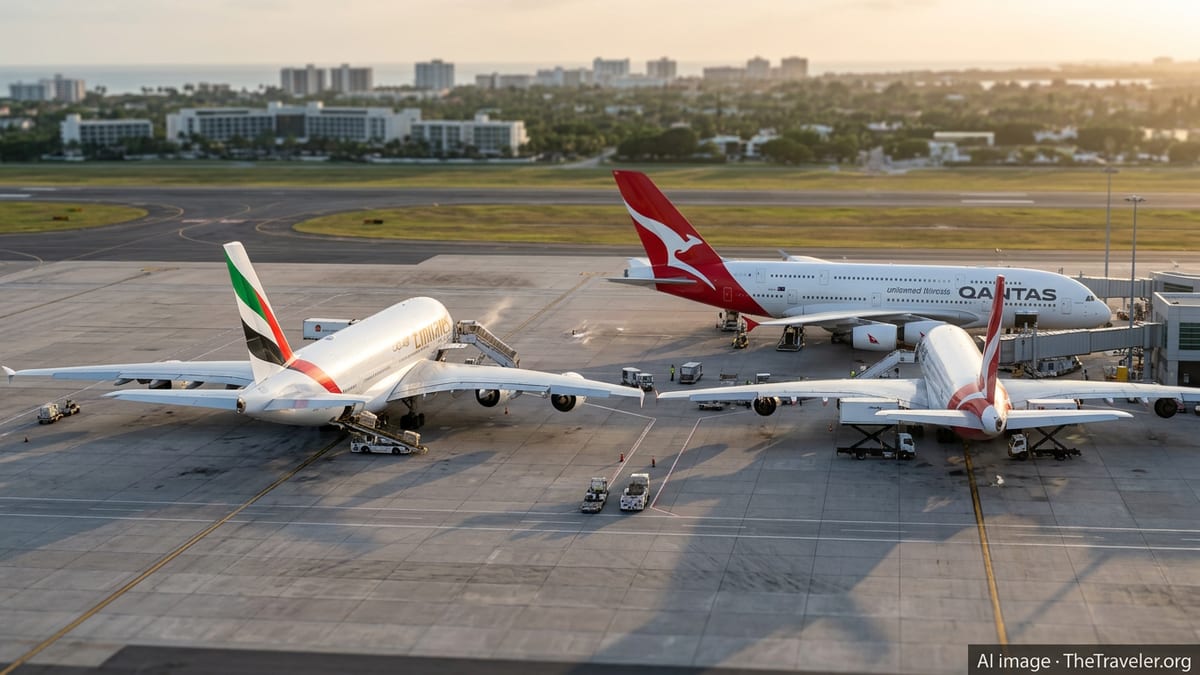
Weather Diversion Ends in Overnight Tarmac Delay
According to publicly available flight data and Chinese media reports, Emirates flight EK302 departed Dubai on July 22, 2026, bound for Shanghai Pudong when severe thunderstorms near its destination forced the widebody aircraft to divert. The Airbus A380, carrying 373 passengers, landed at Hangzhou Xiaoshan International Airport at approximately 21:00 local time.
What began as a standard weather diversion soon escalated into a protracted delay. Reports indicate the aircraft was parked on a remote cargo apron rather than a passenger gate, limiting access to airbridges and standard ground-handling services. Passengers were informed that the aircraft would wait for weather and slot improvements in Shanghai, with the aim of continuing the journey once conditions allowed.
Instead, the aircraft remained stationary overnight at Hangzhou. By the time passengers were finally allowed to disembark the next morning, many had spent well over 10 hours on board after landing, pushing the total travel time since departure from Dubai into a grueling, day-long experience for some travelers connecting onward in China.
Reports of Heat, Fainting and Medical Responses
Chinese news outlets and social media posts describe increasingly difficult conditions on board as the hours passed. Coverage from several domestic platforms indicates that the A380’s air conditioning system did not function normally while the aircraft sat on the ground, leaving the cabin hot and stuffy in the midsummer humidity.
Passengers reported that at least several people felt unwell in the crowded cabin, with some accounts referring to fainting and symptoms consistent with heat stress. Local media coverage notes that ambulances were called to the aircraft more than once to assist affected travelers, highlighting the strain of being confined in a packed aircraft without adequate cooling for such a long period.
Video clips and images circulated widely in Chinese-language media appear to show dimly lit aisles, passengers using hand fans and wet towels, and children lying on seats to try to rest. While those materials could not be independently verified by international outlets, they were consistent with descriptions carried by multiple Chinese news organizations and regional travel industry reports.
Operational Constraints at Hangzhou and the A380 Factor
The incident has drawn attention to the particular operational challenges presented by the Airbus A380, the world’s largest passenger aircraft. Although Hangzhou Xiaoshan is a major airport, it does not routinely host Emirates A380 services on its scheduled routes. Local aviation commentary points out that the airline’s regular flights to Hangzhou are typically operated with smaller Airbus A350 aircraft.
Because of that difference, publicly available commentary from Chinese aviation analysts suggests that Hangzhou may not have had a full complement of A380-qualified ground crew and equipment immediately available during the late-night diversion. Items such as high-capacity air-conditioning units, compatible passenger stairs or dual-level jet bridges, and sufficiently trained staff can be harder to deploy at short notice for an unscheduled superjumbo arrival.
Reports also indicate that deplaning the passengers and processing them into China would have triggered additional immigration and customs procedures, potentially requiring visas or special authorizations for transit passengers who were only ticketed to Shanghai. Industry specialists quoted in Chinese media argue that the combination of immigration constraints, ground-handling limitations and crew duty-time considerations likely contributed to the decision to keep travelers on the aircraft while options were assessed.
Emirates Issues Apology as Flight Ultimately Canceled
Emirates has publicly acknowledged the disruption and issued an apology in Chinese and English-language statements following extensive coverage of the episode. The airline confirmed that the Dubai to Shanghai service diverted to Hangzhou because of adverse weather near Shanghai and that passengers remained on board for an extended period before being allowed to disembark.
According to summaries of the airline’s statement carried by regional business media, the onward segment to Shanghai was ultimately canceled. Passengers were taken off the aircraft in Hangzhou after daybreak and provided with accommodation and meals while new travel arrangements were organized. The carrier indicated that affected customers would be rebooked on later flights once operations and weather allowed.
The apology has not entirely quelled criticism, particularly on Chinese social platforms where many users questioned why it took so long to let people leave the hot cabin. Observers in the region note that the incident risks affecting perceptions of Emirates in one of the world’s most competitive long-haul markets, where service standards and operational reliability are closely scrutinized by both travelers and regulators.
Broader Questions on Passenger Rights and Tarmac Delays
The Hangzhou diversion has revived debate over passenger protections during lengthy tarmac delays, especially on international services operated by foreign airlines. While jurisdictions such as the United States have explicit rules limiting how long passengers can be kept on board without an opportunity to deplane, long-haul diversions in other regions often fall into a patchwork of local airport policies, immigration rules and carrier procedures.
Travel-law commentators in Asia note that there is no globally uniform standard for handling situations in which a large, fully loaded long-haul aircraft diverts to an airport that is not prepared to process its passengers. In practice, decisions about keeping travelers on board versus allowing them to disembark can hinge on complex assessments that weigh health, safety, border control and cost considerations.
For airlines operating very large aircraft such as the A380 into fast-growing markets like China, the Hangzhou episode highlights the operational risk when disruption occurs far from regular hubs. Aviation analysts point out that as carriers continue to restore and expand long-haul networks, contingency planning for diversions, access to suitable infrastructure and clear communication with passengers will remain essential to prevent an unexpected weather diversion from turning into a headline-grabbing ordeal.