


More news on this day
Days after Typhoon Noul swept past Hong Kong, air travellers were still grappling with flight disruptions on Monday, with some passengers stranded at Hong Kong International Airport as airlines worked through a significant weekend backlog.
Get the latest news straight to your inbox!
Slow recovery after weekend of mass cancellations
According to publicly available information from the Airport Authority and local media, Typhoon Noul triggered the cancellation of hundreds of flights over the weekend as strong winds and heavy rain lashed the city. The storm prompted one of Hong Kong’s highest tropical cyclone warning signals, forcing airlines to suspend or sharply reduce services at the height of the bad weather.
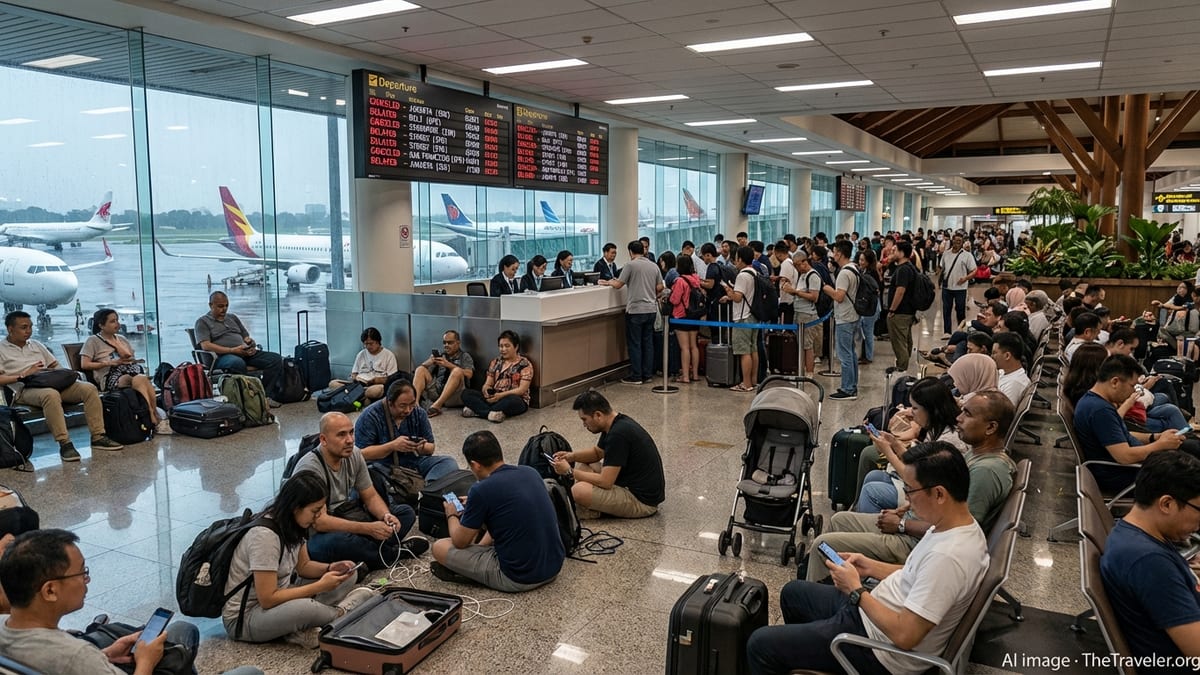
Reports indicate that about 2,000 passengers were left stuck at Hong Kong International Airport overnight from Saturday into Sunday, many of them sleeping on seats or the terminal floor as they waited for news of rebooked flights. Airport operations improved as wind signals were lowered on Sunday, but residual disruption carried into the start of the workweek.
By Monday, the typhoon itself had moved away from the region and most normal airport functions had resumed. However, the volume of earlier cancellations and delays meant that a portion of passengers were still unable to depart, particularly those on long-haul and heavily booked regional routes.
Airlines at the airport were continuing to prioritise rebooking affected travellers on the first available services, but constrained seat capacity and aircraft positioning challenges slowed the clearance of the backlog. Some travellers were told to expect waits of up to a day for confirmed alternatives.
Passengers report long queues and limited accommodation
Coverage in local media described long lines at airline service counters and transfer desks on Monday morning, with some passengers reporting hours-long waits to secure new itineraries. Crowded seating areas and busy charging points reflected the number of travellers still in transit limbo.
Publicly available accounts also highlighted frustration over limited hotel availability near the airport, with room rates reportedly climbing as demand surged at the peak of the disruption. Some travellers chose to remain inside the terminal rather than search for accommodation in the city, concerned they might miss rebooked flights or struggle with transport while some services were still normalising.
Airport staff and volunteers were reported to be assisting with basic amenities, information, and directions to transport links and customer service points. Meal arrangements were made for some passengers during the period when higher storm signals were in force, though by Monday most food and retail outlets in the terminals had reopened and were operating on regular hours.
Social media posts from stranded travellers showed departure boards filled with delayed flights alongside a growing number of on-time services, underlining the mixed picture of near-normal operations for some routes and lingering disruption for others.
Airlines clear backlogs as transport links resume
As wind signals were lowered and sea and land transport gradually restored, the wider travel network supporting the airport began to stabilise. Airport rail services and most bus routes were operating again on Monday, improving access for both departing passengers and those attempting to leave the terminals after disrupted journeys.
Published travel alerts from several carriers indicated that they had implemented flexible rebooking and refund policies for customers scheduled to travel between Saturday and Monday. Many airlines encouraged passengers to manage changes online or via mobile applications to reduce pressure on airport counters and call centres.
Some long-haul carriers were reported to have added larger aircraft or extra services where possible to accommodate stranded passengers, though tight global fleet utilisation limited how quickly those measures could be deployed. Short-haul and regional flights, which typically operate with higher daily frequencies, appeared to recover more quickly, helping to ease congestion for travellers heading to nearby destinations.
Industry observers noted that Hong Kong’s role as a major international hub made it particularly vulnerable to knock-on disruption when severe weather closes runways even for a limited period. The concentration of connecting traffic means that missed or cancelled flights can cascade across onward journeys, extending the impact well beyond the storm’s immediate path.
Storm underscores ongoing typhoon-season risks
Hong Kong’s airport has long experience managing tropical cyclones, and operational statistics from previous storms show that large-scale cancellations and diversions are not unusual when strong wind signals are issued. Typhoon Noul’s impact, however, offered a reminder that even well-practised contingency plans cannot completely eliminate disruption during peak travel periods.
Publicly available information from government bulletins and airport communications indicated that safety considerations remained the overriding priority throughout the weekend, with runway operations reduced or suspended during the strongest winds. Ground handling and baggage services were also scaled back at times for worker safety, contributing to delays even for flights that ultimately departed.
Travel analysts pointed out that storm-related disruption in Hong Kong often has ripple effects across the wider region, affecting schedules in mainland China, Southeast Asia and long-haul connections to Europe, North America and Australia. For passengers, that can mean longer routings, unexpected layovers and difficulty securing new tickets when multiple hubs are simultaneously under strain.
With the city in the midst of its summer typhoon season, carriers have been urging travellers to monitor weather forecasts and airline notifications closely, particularly for journeys involving tight connections. Noul’s passage highlighted how quickly conditions can change and how a single weekend of severe weather can echo into the following week for those caught in the most affected flights.
Advice for travellers facing weather-related disruption
Travel information services and airline advisories have emphasised several practical steps for passengers flying during typhoon season. Checking flight status frequently before heading to the airport is widely recommended, as schedules can change at short notice when storm signals are raised or lowered.
For travellers already at the airport, publicly available guidance suggests contacting airlines through mobile apps or websites where possible, as digital channels may offer more options for self-service rebooking and reduce time spent in queues. Maintaining updated contact details within bookings can also help ensure passengers receive timely notifications about cancellations or schedule changes.
Passenger-rights information varies depending on the airline and ticket type, but some carriers provide meal vouchers, hotel stays or complimentary changes during major weather events. Observers note that benefits may be more limited when disruption is classified as caused by adverse weather, making advance planning and travel insurance an important consideration for those flying during peak storm months.
For now, reports indicate that operations at Hong Kong International Airport are steadily returning to normal following Typhoon Noul, with the remaining stranded passengers expected to clear as airlines complete rebookings and reposition aircraft over the coming days.