


Hidden in the lush North Side of Grand Cayman, the Crystal Caves are one of the island’s newest and most dramatic natural attractions. For first-time visitors, this blend of rainforest trail, underground chambers, mirror-still pools and quietly roosting bats can be a highlight of the trip, especially if you arrive prepared. This guide walks you through exactly what to expect, how to plan your visit, what to pack and wear, and how to combine the caves with nearby sights for a full North Side day out.
Get the latest updates straight to your inbox!
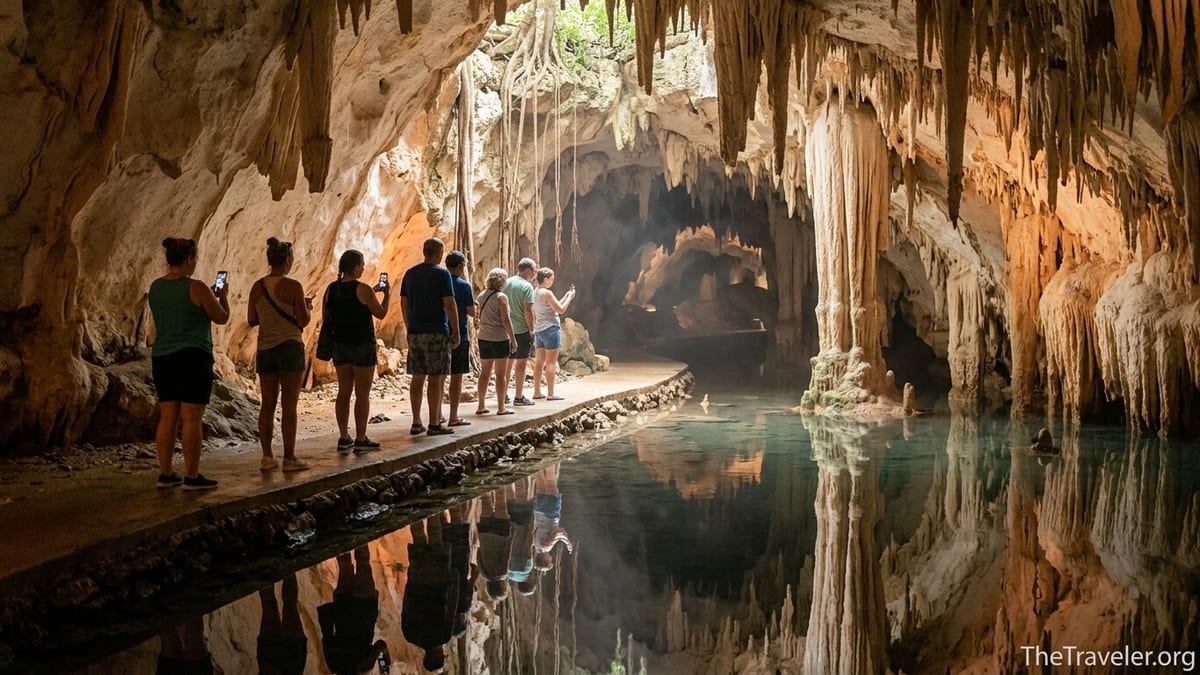
Where the Crystal Caves Are and What You Will See
Cayman Crystal Caves sit inland on Grand Cayman’s quiet North Side, near the small community of Old Man Bay. It is roughly a 45 to 50 minute drive from the resorts of Seven Mile Beach and about 35 minutes from George Town in normal traffic. The caves are tucked off North Side Road down a signed entrance that leads first to a shaded reception area and then deeper into the forest.
The attraction is made up of three main show caves: the open-ceiling cave, the roots cave, and the lake cave. Each one showcases a different side of the island’s limestone geology. Visitors follow a series of well-maintained paths and steps that wind between stalactites, stalagmites, columns and other formations that have taken thousands of years to form. Lighting is discreet but effective, illuminating the shapes and colors without feeling artificial.
Above ground, the property includes a short nature trail and a raised viewing deck looking over the surrounding dry forest. There is a small snack bar and a gift shop where you can pick up cold drinks, locally themed souvenirs and simple necessities such as insect repellent or a spare hat if you forgot yours. This combination of curated facilities and wild landscape makes the Crystal Caves approachable even for visitors who do not normally go caving.
The overall feel is quiet and uncrowded compared with the main resort areas. Because only guided groups are taken into the caves and tours are staggered throughout the day, the experience inside remains surprisingly calm. Even at busier times of year you are likely to have moments in each chamber where it feels as though your group has the place to itself.
How the Guided Tours Work
All visits to Cayman Crystal Caves are on guided tours, and independent exploration is not allowed. Tours typically last about 90 minutes in total. They run on the hour throughout the day, usually from 9 a.m. to around 4 p.m., with some seasonal variation. On arrival, you check in at the main reception building, where staff confirm your reservation time, take payment if needed and direct you to wait under the shaded pavilion.
Once your time slot is called, your group boards an open-sided shuttle truck or van that carries you a short distance down an unpaved road deeper into the forest. This ride takes only a few minutes, but it immediately feels more remote as the sound of the main road drops away. At the trailhead, your guide gives a short safety briefing, explains the order of the route and outlines any temporary restrictions, such as avoiding contact with certain formations or staying on specific platforms near bat roosts.
The walking sections are broken up by frequent stops. You might spend ten to fifteen minutes in the open-ceiling cave, where sunlight beams in from above through a collapsed roof, then another stretch in deeper, darker sections of the roots cave where tree roots dangle down in curtain-like tangles. Guides tend to weave in geology, ecology and local history, such as how pirates and early settlers used the caves as shelter and water sources.
Tours conclude with the lake cave, often considered the highlight. Here, crystal-clear water reflects the stalactites in near perfect symmetry, and visitors have time to take photos and simply stand in the hush of the chamber. After exiting, the guide leads the group back along the forest path to the shuttle, and you are returned to the main reception building with about 10 to 15 minutes of free time to browse the gift shop or sit with a cold drink before you depart.
Underground Pools, Bats and Wildlife
The lake cave’s underground pool is one of the most memorable features at Cayman Crystal Caves. The water is extremely clear, with a glassy surface that mirrors the ceiling above. You can usually see small mineral deposits and subtle color bands in the rock along the waterline. Swimming is not permitted, and visitors are asked not to touch the water both for safety and to preserve its clarity. Children in particular are often fascinated to see that the water seems much shallower than it actually is because of the perfect reflections.
Bats are another key part of the experience. Several species roost in the higher reaches of the caves, and you are likely to see them hanging quietly in small groups or occasionally fluttering deeper into the darkness if disturbed by light or movement. Guides explain how crucial bats are for insect control on the island and outline efforts to protect them, including limiting noise and flash photography in certain chambers. In most cases, the bats keep their distance and are more of a point of interest than a concern.
In the surrounding forest, it is common to see lizards, land crabs during wetter months, and a range of birds that favor the North Side’s remaining dry woodland. Before or after the cave sequence, your guide may point out native trees such as silver thatch or gumbo-limbo, explaining how local people traditionally used them for building and basket weaving. On humid days you can often hear a steady chorus of tree frogs in the background.
Because both the wildlife and the mineral formations are sensitive, visitors are asked to follow simple low-impact rules such as not touching the stalactites or stalagmites, staying inside marked boundaries and using trash cans provided near the reception area. Following these guidelines helps keep the caves in good condition while still allowing a close look at a fragile environment.
Tickets, Reservations and Transportation
Ticket prices for Cayman Crystal Caves can vary slightly by season and package, but adults should expect to pay in the general range often charged for popular island attractions, with discounts available for children. There are sometimes combined options that include round-trip transportation from the western hotel districts or bundle the caves with other island tours sold by local operators. Because the caves have fixed group sizes and limited daily capacity, advance reservations are strongly recommended, particularly between December and April and on days when multiple cruise ships are in port.
Reservations can usually be made directly with Cayman Crystal Caves or through your hotel concierge and larger tour companies based along Seven Mile Beach. Many visitors staying at major resorts choose to rent a car for the day rather than rely on tour transport. A basic sedan from a well-known local rental agency at Owen Roberts International Airport or near Seven Mile Beach is often reasonably priced for a 24-hour period, and the drive out along the coastal East End and North Side roads is straightforward.
Driving from Seven Mile Beach, you can plan roughly 50 minutes to reach the caves, leaving extra time if you want to stop at viewpoints such as the East End blowholes or grab a coffee in Bodden Town along the way. Visitor reports consistently note that the public bus system becomes unreliable in the North Side area, with long waits and no direct drop-off at the cave entrance, so relying on a bus from George Town or West Bay is not generally advised unless you are very flexible with timing. Organized shuttles that include your cave ticket remove this uncertainty and work well for cruise passengers with limited hours ashore.
If you are arriving by cruise ship, pay close attention to your all-aboard time. The round-trip journey from George Town, combined with the 90-minute tour and possible traffic, means you will want a confirmed reservation on a morning or early afternoon tour slot. Cruise lines sometimes sell Crystal Caves excursions directly; these typically include guaranteed return to the pier, which can reduce stress for first-time visitors who prefer not to navigate on their own.
What to Wear, Pack and Know About Photography
Inside the caves the temperature is cooler than on the surface but still humid, so light, breathable clothing is recommended. Many visitors find that athletic shorts or lightweight long pants paired with a quick-dry T-shirt are comfortable. Closed-toe shoes with good grip, such as trainers or light hiking shoes, are strongly preferred because some stairs and rocks can be damp or slightly slippery. Sandals with secure straps can work if they have non-slip soles, but flip-flops are best avoided.
Because there is a short but exposed walk between the reception area and the shuttle and along the forest path, a hat, sunscreen and insect repellent are practical additions. Bringing a small day pack with a refillable water bottle is useful, although you will be asked not to drink inside the cave chambers themselves. If you are traveling with children, consider a compact handheld fan or a small towel, as the humidity can feel intense, especially for those not used to tropical climates.
Photography is welcomed on the tour, but with some reasonable limitations. Tripods and large lighting setups are typically not allowed, and flash may be restricted around bat roosts or in particularly sensitive sections. Most visitors rely on a smartphone in night mode or a compact mirrorless camera with image stabilization. A lens in the 24 to 35 millimeter range works well for capturing wider cave scenes, while a slightly longer focal length helps isolate details in the formations without needing to step off the designated path.
If you want shots without many people in them, position yourself near the front or back of your group and pause briefly when the guide moves others onward, taking care not to hold up the tour. Guides are generally happy to point out the spots that photograph best, such as vantage points looking across the underground lake or angles that line up tree roots with distant openings to the sky.
Nearby Attractions and How to Build a North Side Day
Visiting the caves naturally pairs with several low-key attractions on Grand Cayman’s North Side and East End. Only a short drive away, the Mastic Reserve offers a longer, more rugged experience of the island’s interior forest on the historic Mastic Trail. This out-and-back path is several miles long and better suited to early-morning hikers, but even a shorter section gives a sense of what the island looked like before development along Seven Mile Beach.
Along the nearby coastline, you can stop at small public beaches and roadside pull-outs looking over the reef line. Simple local eateries on this side of the island serve dishes such as fried fish, conch fritters and jerk chicken, often at more relaxed prices than in the main resort corridor. Many visitors build their day so that they take a morning Crystal Caves tour, have lunch at a North Side restaurant, then continue onwards to beach areas such as Rum Point or Starfish Point for swimming and sunset.
Chisholm’s Grocery, a long-standing small store a short drive from the caves, is a convenient place to pick up drinks and snacks if you are self-driving between stops. For those interested in birds and native plants, the broader North Side and East End region is also known for endemic species, and you may spot parrots, Caribbean doves or herons as you move between the caves and the coast.
If you prefer organized arrangements, several tour companies offer full-day North Side excursions that combine the Crystal Caves with optional snorkeling, beach time and stops at scenic blowholes. These packages are appealing for travelers who do not want to rent a car and are comfortable following a set schedule that maximizes what they see in a single day.
Practical Tips for First-Time Visitors
For a smoother first visit, aim to book a morning tour time, especially between January and March when midday heat and humidity peak. Starting earlier in the day generally means cooler conditions in the forest and fewer cumulative delays from traffic on the roads. If you are planning multiple excursions during your stay, you might choose a slightly overcast day for the caves and save clear days for snorkeling and beach time, since the underground experience is less weather dependent.
Arrive at least 20 to 30 minutes before your scheduled departure to allow time for check-in, a restroom stop and a quick browse of the small exhibits around the reception area. Late arrivals may be moved to a later tour if space allows, which can disrupt the rest of your plans. If you are driving, remember that traffic can slow near Bodden Town and around school opening and closing times, so build in a buffer.
Families with young children usually find the tour manageable. The walking distance is modest, and there are frequent pauses where guides share stories and facts to keep younger visitors engaged. However, children should be comfortable with low-light environments and the idea of bats overhead. Bringing a small flashlight for a child, to use only when the guide approves, can make the experience feel more adventurous and less intimidating.
Finally, consider combining your visit with a quiet afternoon swim or early dinner on the North Side rather than rushing straight back to Seven Mile Beach. The contrast between the bustling west coast and the slower pace near the caves is one of Grand Cayman’s charms, and treating the Crystal Caves as the centerpiece of a full-day exploration rather than a quick side trip often results in a more relaxed and memorable experience.
The Takeaway
For first-time visitors to Grand Cayman, the Crystal Caves offer a vivid change of scene from the island’s famous beaches. Within a relatively compact and well-managed site, you can experience dense tropical forest, impressive underground formations, a mirrorlike subterranean pool and close but respectful encounters with bats and other wildlife. The guided format keeps the experience accessible, even for travelers who have never set foot in a cave before.
Thoughtful planning goes a long way: reserve your tour in advance, choose transport that matches your schedule and comfort level, wear shoes and clothing suited to humid conditions, and bring a camera capable of handling low light. With those basics in place, the caves become a highlight that balances the sun and sand of Seven Mile Beach with a glimpse into the slower, quieter forces that shaped the island itself.
Whether you fold the Crystal Caves into a broader North Side day with local food and coastal stops, or visit them as a stand-alone excursion from a cruise ship, they reward the effort of getting off the main resort strip. The combination of natural drama, calm pacing and helpful guiding makes this one of Grand Cayman’s most reliable and distinctive outings for first-time travelers.
FAQ
Q1. How long does a visit to Cayman Crystal Caves take from Seven Mile Beach?
Most visitors should allow around three to four hours door to door from Seven Mile Beach, including a 45 to 50 minute drive each way and a 90 minute guided tour.
Q2. Do I need to book my Crystal Caves tour in advance?
Advance reservations are strongly recommended, especially during the winter high season and on busy cruise ship days, because group sizes are limited and tours can sell out.
Q3. Is the tour suitable for young children and older adults?
Yes, the walking distance is modest and the pace is gentle, but there are steps and uneven surfaces, so visitors should be steady on their feet and comfortable with low light.
Q4. Can I get to the Crystal Caves by public bus?
In theory, public buses run toward the North Side, but service is infrequent and does not stop directly at the entrance, so most visitors either rent a car or join a tour with transport included.
Q5. What should I wear inside the caves?
Light, breathable clothing and closed-toe shoes with good grip work best, as the environment is humid and some pathways and steps can be damp or slightly slippery.
Q6. Are there bats in the Crystal Caves, and are they dangerous?
Several bat species roost high in the caves, but they generally keep their distance from visitors and are not considered dangerous when tours follow the established guidelines.
Q7. Can I swim in the underground lake?
No, swimming is not allowed. The underground pool in the lake cave is for viewing only, to protect both visitor safety and the clarity of the water.
Q8. Are tripods and professional camera gear allowed?
Small cameras and smartphones are fine, but tripods and large lighting setups are typically not permitted for safety and to avoid blocking narrow pathways.
Q9. Is the Crystal Caves tour accessible for visitors with mobility challenges?
The route includes stairs, uneven ground and narrow sections, so it may not be suitable for all mobility levels, and there is currently limited wheelchair access inside the caves.
Q10. What other attractions can I combine with a Crystal Caves visit?
Popular combinations include hiking part of the nearby Mastic Trail, visiting coastal viewpoints on the North Side and East End, and enjoying beach time at Rum Point or Starfish Point later in the day.