


More news on this day
Greater Anglia, one of the main rail operators in eastern England, is entering summer 2026 with a new identity under Great British Railways, a series of timetable changes and some of the strongest punctuality scores in the country, placing the region at the centre of the United Kingdom’s ongoing rail reforms.
Get the latest news straight to your inbox!
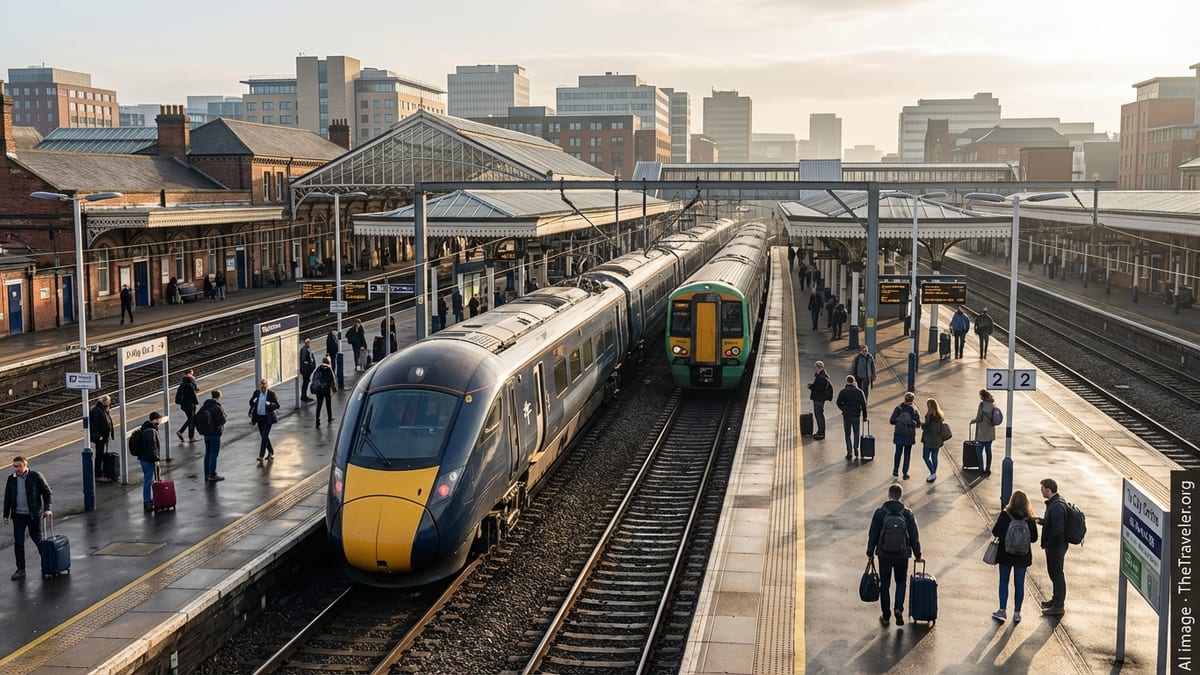
From franchised operator to state-owned GBR Anglia
Greater Anglia, which runs commuter and intercity services from London Liverpool Street across Essex, Suffolk, Norfolk and parts of Hertfordshire and Cambridgeshire, has completed its transition from a conventional franchise to a state-owned operator within the emerging Great British Railways structure. Publicly available information shows that GA Trains Limited is now government owned, reflecting a wider policy of bringing passenger rail services back under public control.
Rail industry commentary indicates that the operator is increasingly being referred to as “GBR Anglia” in branding and public-facing material, aligning it with new regional identities being developed for the future Great British Railways framework. Network maps circulated in recent weeks show Greater Anglia’s routes presented alongside the Essex commuter network traditionally served by c2c, signalling a gradual integration of operations and marketing in the East of England.
Regulatory reports from the Office of Rail and Road describe Greater Anglia as one of several train companies that have moved into public ownership over the last year, alongside operators in other parts of the country. The move formalises arrangements that had already seen the Department for Transport exercising a high level of control over key decisions on timetables, rolling stock and investment priorities.
For passengers, the structural changes are largely behind the scenes. Trains, staffing and ticketing continue to operate under the familiar Greater Anglia name on the ground, but the shift is shaping long-term planning for services, funding and integration with other operators under the GBR umbrella.
Summer 2026 timetables bring incremental changes
Greater Anglia introduced a new timetable on 17 May 2026, part of the regular national schedule change that affects services across Britain. Timetables published by the company show a series of fine-tuning alterations rather than wholesale redesigns, with small changes to departure times, stopping patterns and connections on a number of routes.
Coverage by regional transport campaign groups reports that the most significant adjustments are focused on busy corridors into London and regional links around Norwich, Ipswich and Cambridge. Some services have been retimed to reflect longer station dwell times and growing passenger numbers, while others have been adjusted to mesh with new services at developing hubs such as Cambridge South, which is reshaping rail flows in the area.
Passenger feedback shared on public forums since the start of the year suggests that journey times on certain commuter services have lengthened by a few minutes, particularly on peak trains into London. While these changes can make connections tighter or require travellers to adjust their routines, operators and regulators argue that the tweaks are intended to improve overall reliability and reduce knock-on delays during busy periods.
Advocacy groups in East Anglia continue to call for further enhancements, including additional frequencies on routes such as Hertford East, faster intercity timings on the Great Eastern Main Line and better evening and weekend connections to coastal destinations. The May 2026 timetable has been described by campaigners as an incremental step, with expectations that more substantial changes could follow in future national timetable reviews.
Industry-leading punctuality strengthens regional rail credentials
While timetable changes attract close attention from commuters, Greater Anglia’s performance figures are drawing wider interest across the rail industry. Company statistics for the 12 months to 31 March 2026 show that the operator achieved around 92 percent punctuality on the demanding “Time to 3” metric, which measures the arrival of every train at every station it serves within three minutes of the scheduled time.
According to published performance data, Greater Anglia has consistently been among the top-performing operators in Britain since 2023, with annual punctuality using traditional public performance measures hovering in the low to mid-90 percent range. Recent figures released by the company indicate that GA has topped national league tables on several metrics over multiple years, reflecting sustained improvements following the introduction of a new fleet of trains and operational changes on key routes.
The operator’s reliability record has translated into a string of industry awards. Trade press coverage notes that Greater Anglia has repeatedly been named Passenger Operator of the Year and Train Operator of the Year at major rail industry events, as well as securing multiple Golden Whistles awards for punctuality in both commuter and long-distance categories. Analysts point to this recognition as evidence that the East Anglia network is outperforming many counterparts facing similar infrastructure and weather-related challenges.
Data from the Office of Rail and Road, which tracks delay minutes and punctuality by operator, broadly supports the company’s claims. While no operator is immune from disruption caused by infrastructure failures, extreme weather or external incidents, Greater Anglia’s delay statistics over the 2025 to 2026 rail year place it at the stronger end of the national spectrum, reinforcing its reputation as one of Britain’s most reliable train companies.
Nationalisation reshapes investment, branding and passenger expectations
The transformation of Greater Anglia into a state-owned operator under the GBR model is part of a broader reshaping of Britain’s railways following years of debate over franchising, performance and public accountability. Policy statements from government and commentary from transport analysts suggest that the intention is to simplify decision-making, create more consistent standards and reduce fragmentation between operators.
In practice, the changes in East Anglia mean that decisions on investment in rolling stock, stations and infrastructure are increasingly aligned with a single national strategy rather than negotiated through periodic franchise competitions. Greater Anglia’s introduction of a uniform fleet of modern electric and bi-mode trains in recent years is now being seen as a foundation for further enhancements in capacity, accessibility and energy efficiency under public ownership.
Branding is also evolving. While the Greater Anglia name remains widely used, discussion among rail enthusiasts and campaign groups reflects growing expectations that services will eventually carry a standardised GBR regional identity. Recent references to “GBR Anglia” in public-facing material and network diagrams that show c2c routes alongside Greater Anglia lines are seen as early indicators of how the new structure will look to passengers.
For travellers, the key questions centre on fares, reliability and service quality. With the operator already delivering strong punctuality, attention is turning to whether nationalisation and the GBR framework can deliver better value, clearer information and more seamless connections across regions. The experience of Greater Anglia over the next few years is likely to be an important test case for how the government’s rail reform agenda translates into day-to-day journeys.
Outlook for East of England rail as demand returns
As passenger numbers continue to recover from the pandemic and leisure travel remains strong, Greater Anglia faces the challenge of matching capacity to fluctuating demand across a diverse network that serves commuter towns, university cities and coastal resorts. Industry observers note that the operator’s current punctuality performance has been achieved while managing growing ridership and occasional pressure on peak services into London.
The May 2026 timetable adjustments suggest a cautious approach, prioritising reliability and integration with national services ahead of major frequency increases. Transport campaigners in East Anglia are pressing for further investment to unlock additional paths on busy routes and to improve links to new economic and residential developments across the region.
In the shorter term, attention will focus on how the GBR Anglia brand develops and how quickly the integration with neighbouring operators such as c2c is reflected in through-ticketing, coordinated timetables and consistent passenger information. Observers expect additional announcements in the coming months as Great British Railways refines its regional structures and prepares for wider changes across the national network.
For now, passengers using Greater Anglia services this summer are likely to notice modest timetable tweaks, consistent branding and, more importantly, a level of punctuality that continues to set a high bar for the rest of the industry, reinforcing the East of England’s role as a bellwether for Britain’s new era of publicly controlled rail.