


More news on this day
The United States has issued a fresh warning against travel to Iran and is urging American citizens already in the country to leave as soon as it is safely possible, as a widening conflict with Tehran and heightened tensions across West Asia raise the risk of sudden airspace closures, flight cancellations, and rapidly shifting security conditions.
Get the latest news straight to your inbox!
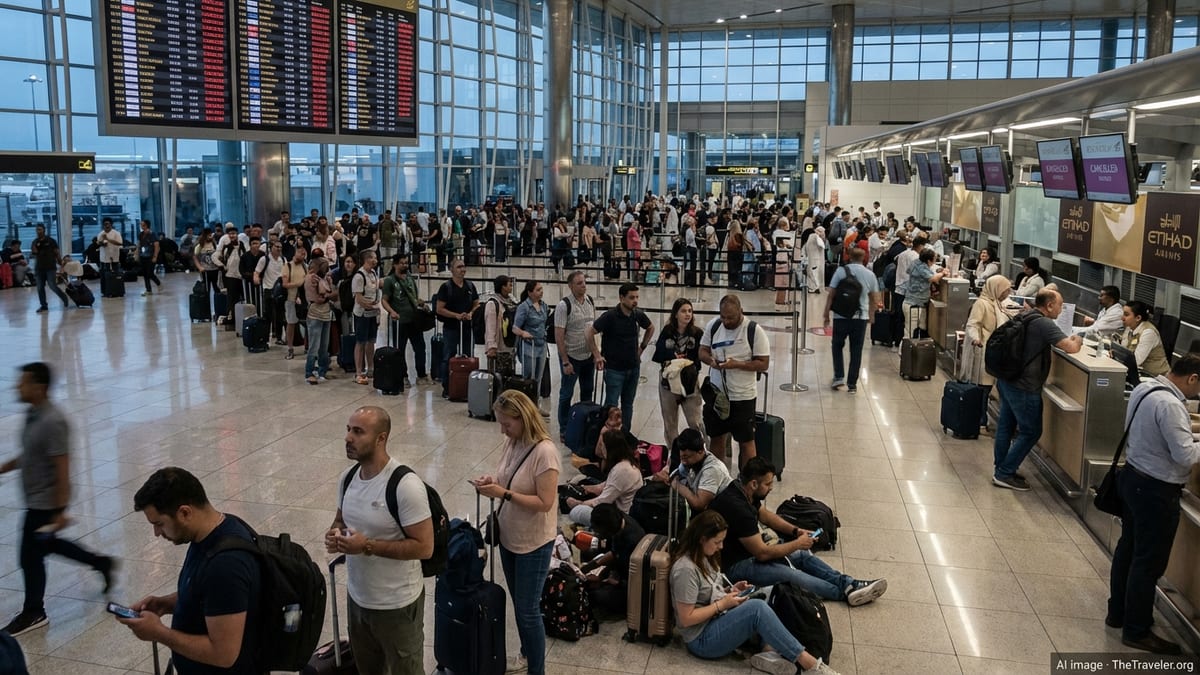
Fresh alert reinforces long-standing ‘Do Not Travel’ advisory
According to publicly available information on the US Department of State’s travel advisory portal, Iran remains under a Level 4 “Do Not Travel” warning citing risks including terrorism, civil unrest, kidnapping, arbitrary detention of US citizens, and wrongful detention. The long-standing advisory was updated in late 2025 and has been repeatedly underscored through regional security alerts issued in 2026 as tensions with Tehran have intensified.
Recent coverage in international media and security-focused outlets indicates that US authorities have now paired that advisory with more urgent language, telling Americans not to travel to Iran “for any reason” and calling on those already in the country to depart immediately. Reports describe the move as a response to the possibility of further military escalation involving Iran and the United States, as well as the risk that commercial air links could be disrupted with little warning.
Publicly available notices from the US Virtual Embassy for Iran, which provides online consular information in the absence of a physical diplomatic mission, have also highlighted concerns about arbitrary detention and limited consular access. These notices emphasize that the US government’s ability to assist citizens in Iran is extremely constrained and that individuals should have their own contingency plans for departure in an emergency.
The renewed warning comes against the backdrop of the 2026 Iran conflict, which has already prompted evacuation efforts and a wave of travel advisories from multiple countries earlier in the year. Analysts note that the latest language suggests Washington sees a heightened risk of further confrontation capable of affecting civilian travel and logistics across West Asia.
Rising tensions across West Asia and regional spillover risks
Published reporting on the broader security picture in West Asia points to an increasingly complex conflict environment encompassing Iran, the Gulf region, Israel, and multiple non-state actors. Since hostilities between the United States and Iran escalated in early 2026, there have been repeated accounts of missile and drone attacks targeting energy facilities, transport infrastructure, and military positions in and around the Gulf.
Recent advisories for neighboring states, including Saudi Arabia, refer openly to the threat of drone and missile strikes linked to the confrontation with Iran and warn that attacks could occur with little or no warning near cities, airports, military bases, and energy infrastructure. This has reinforced concerns that a localized clash could quickly expand into wider regional disruption affecting aviation routes, maritime corridors, and tourism flows far beyond Iran itself.
Regional media coverage in recent weeks has also highlighted the risk of renewed flare-ups around key maritime chokepoints such as the Strait of Hormuz and the Red Sea, where security alerts have warned of threats to commercial shipping and potential changes to routing. Any serious disruption in these corridors would have a direct impact on long-haul passenger and cargo flights linking Europe, Asia, and Africa, many of which rely on West Asian airspace and refueling hubs.
In this context, the sharpened US warning on Iran is being interpreted by travel and risk consultancies as part of a broader message urging Americans across the Middle East to be prepared for rapid changes in the security environment. Public statements referenced in open-source reporting urge travelers in the region to review departure options, monitor airline communications closely, and avoid nonessential movement through high-risk corridors.
What the new warning means for travelers and flight operations
For US citizens currently in Iran, the latest messaging has a clear practical implication: leave while commercial options remain available and it is safe to do so. Reports summarizing the advisory note that Americans are being encouraged to depart on commercial flights or via land borders where feasible, with a particular emphasis on not waiting until routes are curtailed or closed. Earlier security alerts this year have documented periods when land crossings to neighboring countries became more restricted for US citizens during spikes in tension.
At the same time, public travel alerts for the wider Middle East have warned of the possibility of sudden flight cancellations, diversions, or airspace closures. Embassy notices cited in recent coverage advise travelers to stay in direct contact with airlines, maintain flexible itineraries, and avoid tight connections through regional hubs that could be affected by airspace restrictions or heightened security checks.
Several international carriers have already adjusted routings around parts of Iranian airspace since the conflict escalated, according to aviation tracking data and industry reporting. While many long-haul passenger flights between Europe and Asia continue to operate, airlines have factored in additional fuel and time to skirt higher-risk zones, increasing costs and reducing schedule resilience in the event of further disruption.
For travelers still planning journeys that transit the region without entering Iran, travel risk firms are advising closer scrutiny of routing, airline choice, and potential alternative connections. Publicly available guidance stresses the importance of purchasing flexible tickets, considering travel insurance that covers political unrest and war-related disruptions, and registering trip details with national consular services where possible.
Impact on regional tourism and on-the-ground mobility
The latest US warning on Iran comes at an already difficult moment for West Asia’s tourism sector. Many destinations that had been working to rebuild visitor numbers after the pandemic now face an environment shaped by conflict headlines, shifting risk assessments, and fluctuating air connectivity. Countries such as Saudi Arabia, the United Arab Emirates, Qatar, and Oman have continued to host large numbers of international visitors, but advisory levels for several of these states have been raised or reaffirmed at “Reconsider Travel” in recent security updates.
Travel industry reporting suggests that tour operators offering multi-country itineraries that once included Iran have largely suspended those segments, redirecting clients to other cultural and historical destinations in the region or beyond. Specialist operators that previously marketed small-group cultural tours to cities such as Tehran, Isfahan, Shiraz, and Yazd have scaled back or paused operations, citing insurance limitations and the logistical uncertainty created by sanctions and flight changes.
Within Iran itself, open-source accounts indicate that domestic transport remains functional in many areas, with internal flights and long-distance buses still operating between major cities when security conditions permit. However, the lack of a resident US diplomatic presence, limited ability to provide consular support, and the potential for communications outages all contribute to a risk environment that is substantially higher for foreign visitors, especially those from countries engaged in the current conflict.
Local tourism businesses, from guesthouses and heritage guides to craft markets, have been affected by a sustained downturn in international arrivals since the beginning of the year. While some regional travelers continue to visit, global tourism demand remains extremely sensitive to news of missile exchanges, cyber incidents, or other escalatory events that could further curtail connectivity.
Practical steps and planning considerations for US citizens
For US citizens currently in Iran, publicly available guidance from government and travel-risk sources converges on several immediate steps. These include keeping travel documents up to date with ample validity, ensuring access to sufficient funds for unexpected purchases of tickets or overland transport, and identifying more than one route out of the country, whether by air or via neighboring states whose borders are open.
Travelers are also urged in public advisories to minimize their visibility, avoid large gatherings and political demonstrations, and monitor trusted international and local media for updates on security developments. Many risk-management providers recommend keeping mobile devices charged, maintaining printed copies of key documents, and sharing itineraries and contact details with family or trusted contacts outside the region.
For Americans outside Iran but considering travel to or through West Asia, the current environment calls for a conservative approach. Open-source advisories suggest reviewing the latest country-specific guidance for every stop on an itinerary, being prepared to adjust plans at short notice, and being realistic about the possibility that a rapid escalation could make some routes temporarily unusable. Those with nonessential trips are being encouraged by some travel and security analysts to consider postponement until the trajectory of the conflict becomes clearer.
Across the region, many airports, airlines, and tourism boards continue to emphasize that they are operating and welcoming travelers. Yet the renewed US warning on Iran and broader alerts for the Middle East underline how quickly conditions can change. For American travelers and residents alike, careful monitoring of official advisories and media reporting, coupled with flexible planning, has become a central part of navigating West Asia’s evolving travel landscape in late 2026.