


More news on this day
The U.S. government is urging travelers to reconsider nonessential trips across much of the Middle East after issuing a regional security alert that highlights a rapidly evolving threat environment and the potential for sudden disruption to air travel and consular services.
Get the latest news straight to your inbox!
What the new advisory covers
According to publicly available information from the U.S. Department of State’s Bureau of Consular Affairs, a worldwide caution notice updated in late July 2026 advises that Americans outside the Middle East should reconsider travel to and through the region in light of heightened tensions and the potential for unforeseen escalation.
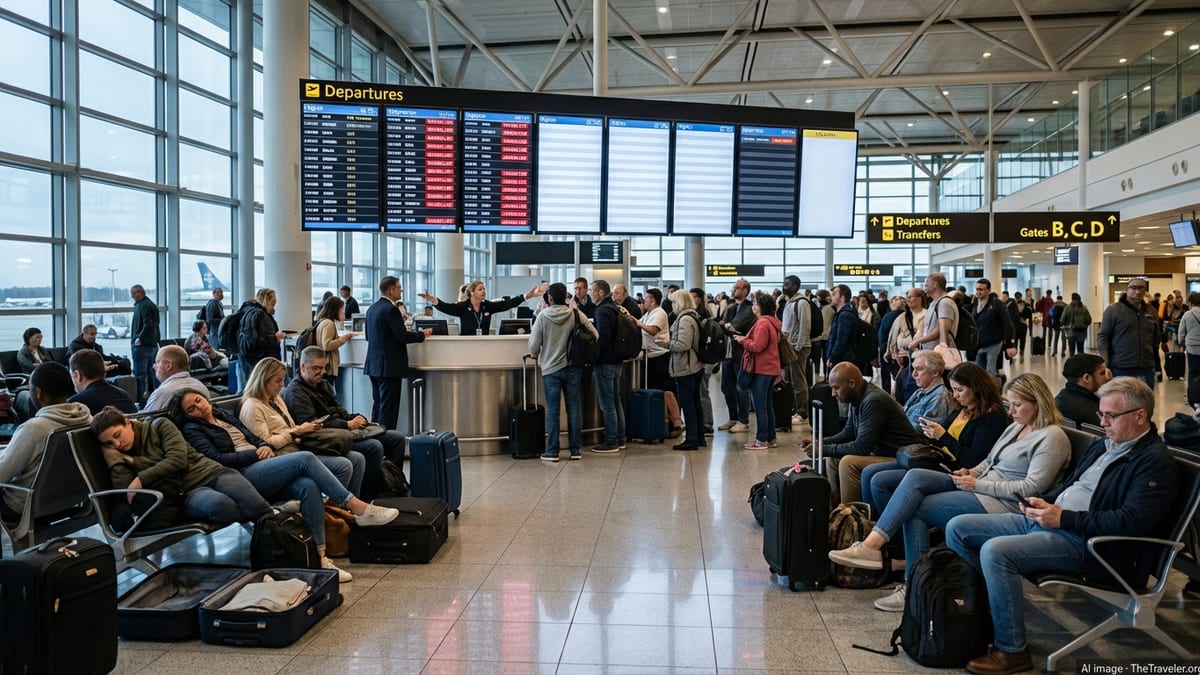
The security alert describes a complex environment in which airlines may cancel flights with little notice, airspace closures are possible, and U.S.-linked facilities and businesses could face elevated risk. It notes that some carriers in the region have postponed earlier plans to restore full schedules, while others have suspended selected routes.
In parallel with the global notice, individual country advisories show that many key Middle Eastern destinations remain at Level 3, the State Department’s “Reconsider Travel” tier. These include Bahrain, Israel, Jordan, Kuwait, Oman, Qatar, Saudi Arabia and the United Arab Emirates, where existing alerts already cite ongoing terrorism threats, missile and drone risks, and the potential for localized conflict.
The current messaging stops short of a global “Do Not Travel” warning, but it does extend the reconsider-travel guidance across an entire region that is central to long-haul aviation networks, religious tourism and business travel, affecting both point-to-point trips and itineraries that use Gulf hubs for transit.
How Level 3 advisories work
U.S. government travel advisories use a four-tier scale that ranges from Level 1, “Exercise Normal Precautions,” to Level 4, “Do Not Travel.” A Level 3 designation signals serious safety and security risks and urges travelers to reconsider plans to visit the affected destination. Government materials describing the system explain that Level 3 areas may see volatile conditions and that the U.S. government’s ability to provide emergency assistance can be constrained.
Official guidance notes that an overall country may be rated at one level while specific regions inside it carry higher or lower categories. In practice, however, a Level 3 advisory applied broadly across multiple neighboring states has an effect similar to a regional warning, signaling that route planning, insurance coverage and contingency arrangements deserve closer scrutiny.
Recent State Department advisories have cited a mix of terrorism, civil unrest, crime, kidnapping risk, and in some cases active armed conflict as reasons for Level 3 or Level 4 designations. For travelers, this can translate into curfews imposed with little notice, checkpoints on major roads, restrictions on movement by local authorities, and intermittent disruption to telecommunications or internet access.
The U.S. advisory framework is distinct from, but often considered alongside, alerts issued by other governments and by international organizations. While thresholds and wording differ, the convergence of multiple warnings on the same region typically reinforces airlines’ own risk assessments and may influence decisions on whether to maintain or reroute services.
Impact on flights, transit hubs and itineraries
Middle Eastern hubs such as Dubai, Abu Dhabi and Doha play a key role in connecting travelers between North America, Europe, Africa and Asia. The current U.S. guidance highlights that even those simply transiting major airports in the region should be prepared for sudden changes, including flight cancellations, rerouting, or temporary closure of airspace corridors.
Public advisories state that some carriers have already reduced frequencies or postponed the resumption of routes that were expected to return to pre-crisis levels. Travelers relying on tight same-day connections through Gulf or Levant hubs face a higher likelihood of missed links if upstream or downstream flights are delayed or rerouted around restricted airspace.
Airlines’ rebooking and refund rules vary by carrier and fare class, and are often adjusted during periods of instability. Industry coverage indicates that several major Middle Eastern and European airlines have introduced flexible change policies on itineraries touching the region during specific windows, but these waivers are time-limited and subject to revision as conditions evolve.
Travel insurers are also updating their approach. Policies that include “cancel for any reason” benefits offer broader leeway for those seeking to change plans preemptively, but standard trip-cancellation products typically respond only to defined triggers such as a significant schedule change, documented security incident, or an official order that makes travel impossible. Many insurers exclude losses resulting from traveling against the highest-level government advisories, which makes careful review of policy terms and current advisory levels an important step before departure.
Key considerations for travelers with existing plans
For U.S. citizens who already hold tickets into or through the Middle East, the latest guidance places particular emphasis on monitoring airline operations and being ready to adjust plans. Travelers are encouraged, through official materials and industry advisories, to verify the status of both outbound and return flights in the days leading up to departure and again on the day of travel.
Reports indicate that airport operations in several regional hubs remain functional, but with heightened security postures that can lengthen processing times at check in, immigration and security screening. Travelers connecting through the region are advised to allow longer layovers where possible and to keep essential items in carry-on baggage in case checked luggage is delayed on multi-leg journeys.
Those traveling for business, religious observances or family visits may also need to prepare for local restrictions that affect ground movements. Recent country advisories reference the possibility of roadblocks, temporary closures of border crossings, and local rules limiting large gatherings. U.S. government information notes that consular services can sometimes be reduced or temporarily relocated when a security posture changes.
Travelers who decide to continue with their trips are advised, in publicly available guidance, to maintain a low profile, stay alert in public places frequented by foreigners, and familiarize themselves with the locations of shelters or secure areas identified by local authorities or facility management.
Alternatives and longer-term outlook
The broad reconsider-travel message for the Middle East is already prompting some travelers to explore alternative routings, such as transatlantic connections through European hubs or transpacific routes via East Asia for journeys between North America, Africa and South or Southeast Asia. These options can increase overall travel time and cost but may help avoid last-minute disruption if conditions deteriorate further in the region.
Tourism boards and industry analysts note that the impact on leisure demand is likely to be uneven. Destinations heavily reliant on religious tourism or regional visitors may see sharper declines than those whose international markets can more easily substitute overland or short-haul trips. At the same time, business travel tied to energy, logistics and defense sectors may prove more resilient, as companies weigh security concerns against the need to maintain on-the-ground operations.
Historically, extended periods of elevated travel advisories have reshaped global route networks, with airlines shifting capacity toward markets perceived as more stable. If current tensions persist, the Middle East could see a longer-term rebalancing of traffic flows, even as carriers maintain a core set of strategic routes to preserve connectivity.
For now, the U.S. government’s message is that conditions are fluid and that travelers should build flexibility into their plans, stay closely informed through official channels and reputable news outlets, and be prepared to reconsider itineraries that involve nonessential travel into or through the region if security trends worsen.