


More news on this day
British holidaymakers travelling to Eastern Europe are being urged to review official safety advice after new guidance highlighted the risk of Russian explosive drones straying into the airspace and coastal waters of NATO member states popular with UK tourists.
Get the latest news straight to your inbox!
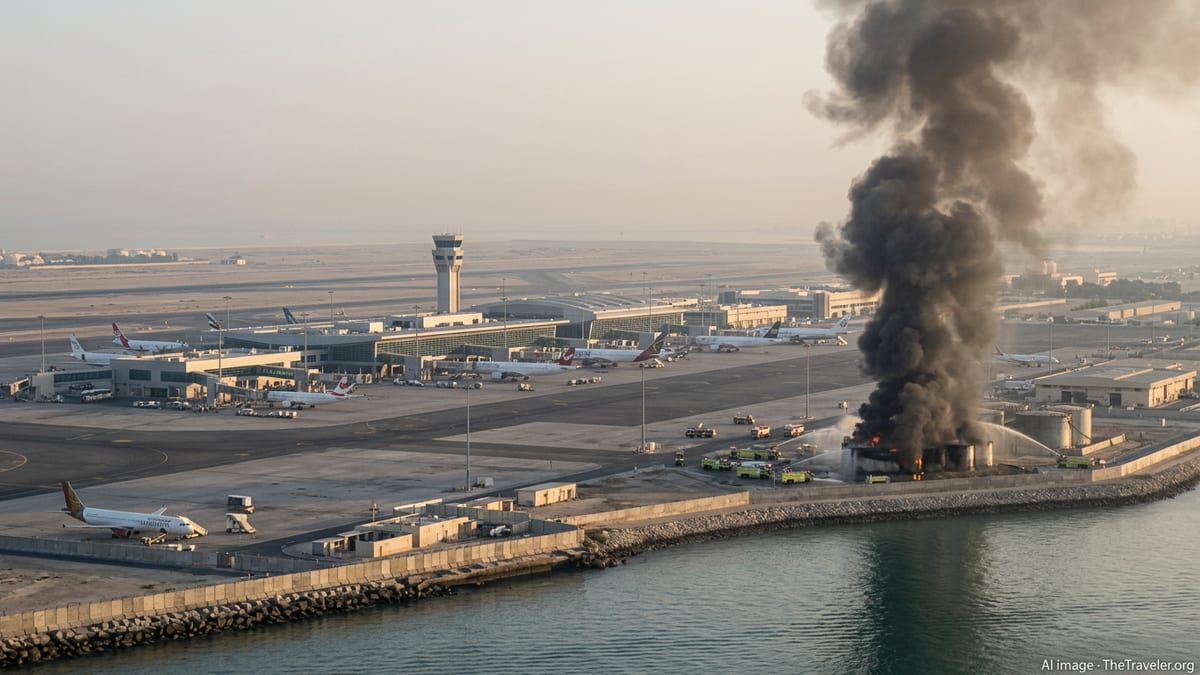
Updated UK travel advice for Romania and nearby NATO states
Publicly available travel guidance from the UK government now draws specific attention to widespread military activity around Romania, as Russia’s war in Ukraine increasingly affects territory close to the Danube and the Black Sea. The advice notes that drones used in the conflict have on several occasions crossed into Romanian airspace and territorial waters, including incidents where devices carrying explosives have landed or washed ashore.
Recent reporting in British media indicates that these changes are aimed particularly at UK nationals flying to Romanian cities such as Bucharest, Constanța and Iași, or visiting the country’s Black Sea resorts and Danube Delta. The guidance does not advise against travel but urges visitors to stay alert to official alerts, including emergency notifications sent through Romania’s RO-Alert mobile warning system during drone activity.
The developments come after a series of cross-border incidents along NATO’s eastern flank, as Russian strikes on Ukrainian ports and infrastructure near the Danube and Black Sea have brought military hardware and debris closer to Romanian territory. Publicly available information shows that airspace incursions and falling drone fragments have become a recurring concern for border communities.
For British travellers, the main practical implication is a clearer acknowledgement that military drones involved in the Ukraine conflict can reach Romanian territory, even though tourism, flights and day-to-day life in the country continue to operate normally.
Drone incidents near Romania and Bulgaria’s shared border
Attention on the region intensified in August 2026 after an unidentified drone crossed from Romania into Bulgarian airspace and exploded near the Trans-Balkan gas pipeline, a key piece of energy infrastructure that links Turkey, Bulgaria, Romania and onward to Ukraine. According to official statements published by the Bulgarian government, the device detonated shortly after entering Bulgarian territory, without causing casualties or structural damage, but close to compressor stations on both sides of the border.
Bulgarian authorities reported that the unmanned aerial vehicle was not detected by national radar systems, Romanian monitoring, or NATO’s regional air operations centre before it exploded in a field near the border. Publicly released information from Sofia described the blast as involving a substantial amount of explosive material, underlining concerns that such drones can pose a serious risk if they stray close to populated areas or critical infrastructure.
In parallel, Romanian and international media have documented previous cases of drones, including Iranian-designed Shahed models used by Russian forces, entering or crashing in Romanian territory after attacks on Ukrainian targets along the Danube. Some of these incidents have occurred close to port towns that sit opposite Ukraine’s river and Black Sea infrastructure, prompting temporary security cordons and forensic checks of debris.
These events have strengthened the perception that both Romania and Bulgaria, despite being inside NATO and the European Union, are exposed to the spillover effects of the conflict next door. The incidents also add a new dimension to standard travel risk assessments for tourists who might previously have viewed the region primarily through the lens of beach holidays, historic city breaks or nature tourism.
NATO response and wider regional security picture
NATO has publicly condemned a series of recent airspace violations involving drones and other military hardware over member states on the alliance’s eastern flank, including Romania and Poland. Statements from the alliance describe these incursions as dangerous, unacceptable and indicative of a growing tolerance for risk in Russia’s conduct of the war against Ukraine.
In response, NATO countries have been reinforcing air and missile defence assets from the Baltic to the Black Sea. According to alliance updates, additional radars, fighter aircraft, surface-to-air systems and surveillance platforms have been deployed in stages since 2022, with further adjustments following this summer’s drone incidents near the Romanian and Bulgarian borders.
Bulgarian government publications indicate that national authorities have stepped up monitoring of the airspace along the Danube and Black Sea coastline, redeploying personnel and equipment to cover the frontier with Romania and to secure energy infrastructure, ports and other strategic sites. Bulgarian defence officials have also acknowledged that detecting and identifying small drones at long range remains a technical challenge, and have outlined efforts to accelerate investment in modern three-dimensional radar systems and counter-drone technologies.
Across the region, local media reports point to a pattern of washed-up drone fragments on Bulgarian beaches, some of which have been examined and found to carry no explosives. Defence officials in Sofia nevertheless advise residents and visitors to avoid approaching any suspected drone wreckage and to report sightings to local emergency services so that specialist teams can inspect and remove the objects safely.
What the warnings mean for British holidaymakers
Despite rising concern over drone activity, Romania and Bulgaria remain open and functioning as established tourist destinations, with airlines, hotels and tour operators continuing normal operations. The updated travel language is framed as precautionary guidance rather than a restriction, and there is currently no blanket advice from the UK government against visiting either country for leisure.
Travel industry briefings suggest that British visitors are most likely to encounter the new security reality in the form of occasional air-raid sirens across the border in Ukraine that can sometimes be heard in Romanian river towns, visible military aircraft overhead, or temporary access restrictions if authorities secure an area after an incident. In coastal regions, there may be short-lived cordons if suspicious debris is found on beaches or in shallow waters.
Tourists are encouraged, through publicly accessible guidance, to monitor official announcements, stay informed via reputable news outlets, and follow local instructions if alerts are issued. In Romania, this includes paying attention to RO-Alert messages, while in Bulgaria visitors are advised to respect any police tapes or closures around sections of coastline or farmland where military investigators are working.
For most British travellers, the changes are expected to amount to heightened situational awareness rather than dramatic disruption to holiday itineraries. Travel insurers and tour companies are monitoring developments but have not reported widespread cancellations linked directly to drone activity.
Practical safety considerations for trips to the Black Sea
Safety experts and official advisories emphasise that British nationals planning trips to Romania or Bulgaria should treat drone-related risks as one component of a broader security picture rather than a reason to avoid the region altogether. The main recommendations focus on preparation and awareness, including checking the latest travel advice shortly before departure and registering contact details with airlines or tour operators for rapid updates.
Holidaymakers are also encouraged to keep mobile phones switched on and capable of receiving local emergency notifications, to stay informed through local news channels in hotels or airports, and to familiarise themselves with basic emergency instructions for their accommodation and surrounding area. On beaches or coastal walks, travellers are advised not to touch unidentified debris or drone remnants and to keep a safe distance while notifying local staff or emergency numbers.
For trips near border areas or along the Danube, visitors may encounter a visible security presence, including patrols, radar installations or military aircraft. Publicly available guidance frames this as part of a wider defensive posture by NATO and its member states, designed to deter further escalation and to manage incidents quickly if they occur.
As the conflict in Ukraine enters its third year with no clear end in sight, the latest warnings illustrate how its effects increasingly shape the travel landscape in neighbouring NATO countries. For British tourists, understanding this evolving context and following official advice before and during travel has become an important part of planning a safe and informed holiday in the region.