


More news on this day
Rail passengers in southern England face major disruption after a gas leak near Didcot Parkway in Oxfordshire forced the closure of a key section of the Great Western Main Line, prompting a rare “do not travel” warning and widespread train cancellations between Reading and Swindon on Wednesday 23 September 2026.
Get the latest news straight to your inbox!
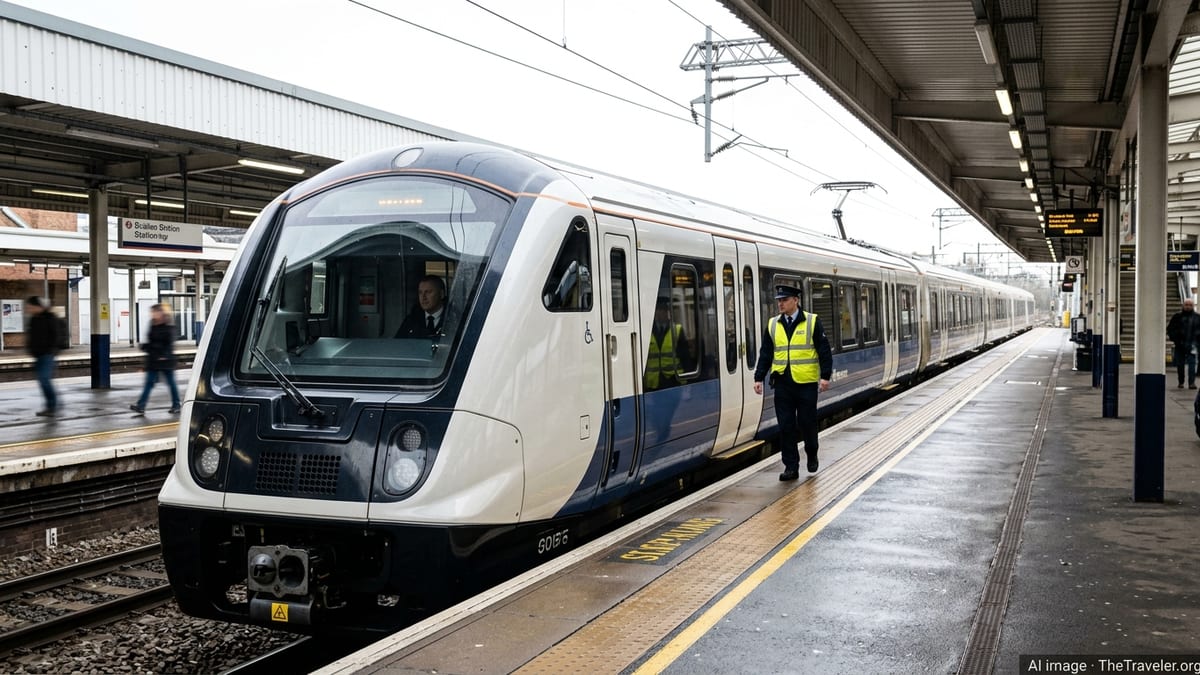
Major gas leak halts services on Great Western Main Line
Publicly available information from Network Rail and Great Western Railway indicates that a gas leak close to the railway near Didcot has led to the closure of all lines through the area, affecting both long distance and local services across the Great Western network. The safety cordon established around the leak includes the railway, meaning trains are unable to operate through the affected section until gas engineers make the area safe.
Great Western Railway’s live network updates and dedicated disruption page state that trains are not running through Didcot between Reading and Swindon, with knock-on effects for services towards Oxford, the Cotswolds, South Wales and the West Country. Real-time journey planners for Reading and Didcot show multiple services cancelled or terminating short, with disruption expected for the whole day on 23 September 2026.
According to information published by Network Rail’s Wales and Western route, engineers from gas distribution company SGN are working on site to repair the leak. Until restrictions are lifted, passenger and freight trains that would normally use this busy corridor are either cancelled, diverted where possible, or run only on sections of their usual route, contributing to significant disruption across the wider timetable.
‘Do not travel’ warning between Reading and Swindon
Both Network Rail and Great Western Railway have issued clear “do not travel” advice for passengers planning to use the Reading to Swindon corridor on Wednesday. The message appears prominently on GWR’s service updates, advising customers not to attempt journeys that require travel through the affected section of line because very few trains can operate and any alternatives are expected to be extremely busy.
Journey information published through GWR’s JourneyCheck service explains that trains between Reading and Didcot Parkway, and on towards Swindon, are cancelled or heavily revised. Services that can run on either side of the closure, such as local stopping trains in the Thames Valley or services west of Swindon, are expected to experience crowding and delays as operators attempt to keep some level of service moving for essential journeys.
National rail travel news reports highlight that “do not travel” alerts remain relatively rare and are typically reserved for situations where the network is severely constrained, such as major infrastructure failures, extreme weather or safety incidents. The current warning reflects the importance of the Didcot corridor as a junction for routes linking London Paddington with Oxford, the Midlands, South Wales and the South West.
Impact on key routes and typical journeys
Information published by Great Western Railway shows that intercity services between London Paddington and destinations including Bristol, Cardiff, Swansea and further into Devon and Cornwall are being heavily affected, as many of these trains would normally pass through the Didcot area. Some long-distance services are diverted where the network allows, but journey planners indicate extended travel times and a risk of late-notice alterations.
Commuter and regional passengers are also significantly impacted. Trains between Reading and Oxford, as well as services connecting intermediate stations such as Didcot Parkway and Swindon, are disrupted by the line closure. Local media in Berkshire and Oxfordshire report that passengers who rely on these routes for work and education are being advised to consider postponing journeys or using alternative modes of transport where possible.
The disruption is not limited to direct Reading to Swindon journeys. Because Didcot acts as a key junction, journeys starting or finishing at Reading and continuing west or north, including to Oxford, the Cotswolds and Worcester, are also subject to cancellation or substantial revision. Some rail operators are indicating that replacement road transport is limited, reflecting the scale of the safety cordon and the practical difficulties of moving large numbers of passengers by bus at short notice.
What affected passengers can do today
Rail operators are directing passengers to check their journeys using official journey planners and operator websites before setting out, as timetables are changing frequently in response to the evolving situation. Disruption summaries indicate that services may be cancelled at short notice, start or terminate at different stations, or run with significantly extended journey times throughout the day.
Based on standard UK rail industry practice and examples set out in published passenger charters, customers who choose not to travel when a “do not travel” warning is in place are generally entitled to a refund or compensation. Specific arrangements depend on the ticket type and retailer, and passengers are being encouraged in public information to retain their tickets and claim via the train operator or point of purchase once they are able to do so.
Travel advice issued by GWR also notes that tickets dated for 23 September may be accepted on alternative days or on different routes once the line has reopened, subject to capacity. Passengers with time‑critical journeys, including airport connections and onward international travel, are advised in publicly available guidance to seek alternative routes that avoid the Didcot area altogether, or to postpone their trip if that is an option.
Outlook for services and information sources
Network Rail’s latest statements indicate that disruption is expected to last throughout Wednesday 23 September 2026, with no firm time yet published for a full reopening of the route. The duration of the closure will depend on how quickly gas engineers can locate, isolate and repair the leak, and when safety checks confirm it is possible to lift the exclusion zone around the affected section of railway.
Until a clearer repair timeframe is known, operators are planning timetables on the assumption that the line will remain closed for the rest of the day. Evening peak services are therefore likely to be especially busy on any alternative routes that remain open, and journey planners may show residual disruption even after the line eventually reopens as trains and staff return to their normal positions.
Passengers who must travel are being encouraged, through published travel updates, to check information as close as possible to their departure time and to allow significantly more time than usual for their journeys. Once the immediate emergency is resolved, rail industry sources are expected to provide further updates on service recovery and on any follow‑up work required on the affected infrastructure.