


More news on this day
The United States has elevated its safety guidance for travelers across much of the Middle East, urging citizens to reconsider nonessential trips as security concerns and the risk of wider hostilities continue to unsettle the region ahead of the 2026–27 peak travel season.
Get the latest news straight to your inbox!
Regionwide caution amid heightened security concerns
Publicly available information from the U.S. Department of State shows that many destinations across the Middle East are currently classified at Level 3, the tier labeled “Reconsider Travel” in the government’s four-step advisory system. The terminology signals serious safety and security risks and advises travelers to avoid or defer trips where possible.
Travel advisories are updated individually for each country, but recent security alerts outline concerns that apply to the broader region, including the possibility of missile or drone attacks, cross-border incidents and sudden outbreaks of civil unrest. A global security alert in July 2026 specifically urged Americans outside active conflict zones to carefully reconsider transit to and through Middle Eastern hubs in light of tensions linked to the war between the United States and Iran.
The advisory posture follows an earlier worldwide message in March 2026 that encouraged Americans everywhere to exercise increased caution. The regional guidance for the Middle East builds on that message, with destination-specific pages describing particular risks such as terrorism, armed conflict, landmines, kidnapping and arbitrary detention.
Travel industry analyses prepared in June 2026 describe the Middle East as one of the regions most affected by the current security climate. Executive briefings circulated within the corporate travel sector note that U.S. guidance effectively discourages nonessential trips across a swath of countries, while allowing only limited, risk-managed travel for critical business or humanitarian purposes.
What a Level 3 ‘reconsider travel’ advisory really means
The State Department’s four-level scheme ranges from Level 1, “Exercise normal precautions,” to Level 4, “Do not travel.” Level 3, “Reconsider travel,” is reserved for destinations where the government assesses a combination of threats significant enough that trips should be deferred unless absolutely necessary.
Explanatory material published by the Bureau of Consular Affairs describes Level 3 as guidance to avoid travel when there are serious risks to safety and security, while acknowledging that some travel may still occur when it is essential. Color-coded charts used in official handouts depict Level 3 in orange, one step below the red of Level 4, which is reserved for acute, often life-threatening conditions.
Within the Middle East, advisory pages often distinguish between areas where Level 3 applies and zones that reach Level 4. Land border regions, areas close to active front lines and locations with significant militant activity are more likely to be classified at the highest level. Even where the overall country rating is Level 3, some cities or provinces are explicitly described as “Do not travel” because of landmines, armed clashes or the risk of detention.
Separately, the State Department maintains a standing “Worldwide Caution” notice that outlines persistent global threats such as terrorism and political unrest. The current regional pattern of Level 3 advisories operates alongside that broader alert, signaling that U.S. authorities view the Middle East as facing particularly elevated, and in some cases rapidly changing, risks.
Countries and corridors most affected for U.S. travelers
The exact combination of countries at Level 3 shifts as advisories are updated, but recent security alerts and regional briefings point to a wide arc of affected destinations. Coverage in policy and travel-industry reports highlights Bahrain, Israel, the West Bank, Jordan, Kuwait, Oman, Qatar, Saudi Arabia and the United Arab Emirates among countries currently designated at Level 3 under the U.S. system, reflecting concerns over potential spillover from regional conflict and the possibility of targeted or opportunistic attacks.
Other Middle Eastern and adjacent countries, including parts of Iraq, Syria, Lebanon and Yemen, have long carried some of the highest advisory levels due to ongoing conflict and terrorism. In many of these cases, Level 4 “Do not travel” ratings apply to substantial portions of national territory, with Level 3 guidance covering the remainder. These layered advisories aim to recognize differences between relatively stable urban centers and peripheral regions where armed groups remain active.
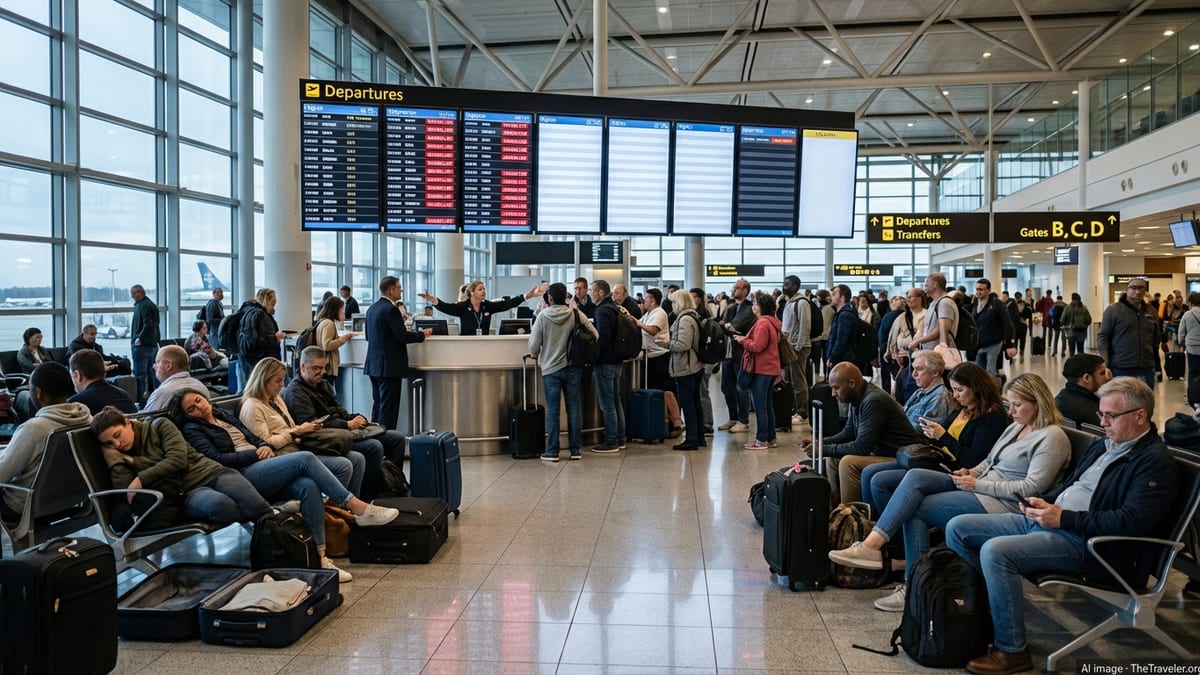
Regional infrastructure hubs are a particular focus. Major air-transit gateways handling long-haul connections between North America, Europe, Asia and Africa are frequently cited in security alerts that urge travelers to consider alternative routings where feasible. While commercial flights continue to operate, travelers are advised through public material to monitor route changes, airspace restrictions and schedule disruptions that may occur with limited notice.
The advisory environment also intersects with existing travel guidance for nearby states. For example, updated notices for countries such as Pakistan and Azerbaijan, both currently listed at Level 3, cite armed conflict, terrorism and the presence of unexploded ordnance in certain areas. Although these destinations lie outside the core Middle East corridor, they form part of a wider belt of heightened security concern stretching from the eastern Mediterranean through the Caucasus and into South and Central Asia.
Impact on fall and winter travel plans
The regionwide Level 3 posture arrives just as airlines, tour operators and travelers finalize itineraries for the late 2026 and early 2027 travel seasons. Industry analyses published since June indicate that many corporate travel programs have placed additional approvals or outright suspensions on nonessential trips to countries under Level 3 advisories, particularly where organizations lack robust local security support.
Leisure travel is also being reshaped. Large travel agencies and booking platforms are reporting softer demand for multi-country Middle East itineraries that involve overland crossings or extended stays, while interest has shifted toward destinations perceived as more stable in Europe, East Asia and parts of Latin America. Some operators that specialize in religious tourism and cultural tours have begun consolidating departures, adjusting routes to avoid higher-risk zones, or offering credits to customers who prefer to reroute to alternative destinations.
Air connectivity remains available across the region, but schedules have become more fluid. According to recent airline timetable updates, carriers have modified flight paths, adjusted frequencies and, in a few cases, temporarily paused service on particular routes in response to airspace restrictions or insurance constraints. Travelers passing through regional hubs are being encouraged via public advisories and carrier notices to leave additional time for security screening and to remain prepared for gate or terminal changes.
Travel insurance providers are reacting as well. Policy documents marketed in the U.S. now frequently highlight coverage limitations for destinations rated at Level 3 or Level 4, especially where conflict or government travel warnings are involved. Travelers who proceed with plans to the region are being urged in publicly available guidance to review policy fine print, including exclusions for war-related events and requirements for trip cancellation benefits tied to official advisory changes.
How travelers can respond to the advisory shift
For Americans with existing bookings to the Middle East, the Level 3 landscape does not automatically invalidate travel, but it does alter the risk calculation. Public information from U.S. agencies and travel-industry bodies encourages travelers to review the specific advisory page for each country on their itinerary, paying close attention to maps, regional breakdowns and any sections labeled “Do not travel.” It is common for governments to advise against overland journeys near borders or in rural areas while still permitting carefully planned visits to major cities.
Experts quoted in open-source industry briefings recommend building contingencies into any trip that proceeds, including flexible tickets, accommodation that can be modified or canceled without heavy penalties and clear communication plans with family or colleagues at home. Enrolling in traveler enrollment systems, carrying copies of identity and travel documents and identifying nearby medical facilities and safe shelter locations are among the practical steps repeatedly highlighted in non-governmental security guidance.
Alternative routing is another consideration. Some travelers are choosing to reach final destinations via Europe or non-Middle Eastern hubs to reduce time spent transiting the region, while others are postponing trips altogether until the advisory picture stabilizes. Publicly accessible planning tools and regional risk maps can help travelers understand which air corridors, border crossings and internal routes currently carry the greatest restrictions or operational challenges.
Ultimately, the regionwide “reconsider travel” message serves as a strong signal that conditions remain fluid and that new incidents or policy changes could alter the situation quickly. Travelers contemplating journeys to or through the Middle East in late 2026 are being advised, through a range of open sources, to keep plans flexible, stay closely informed and be prepared to adjust itineraries if individual country advisories are raised to the more restrictive “Do not travel” level.