


More news on this day
Turkey remains one of the Mediterranean’s most popular holiday destinations, but updated guidance from the UK Foreign Office and other governments in September 2026 underlines a complex security picture that travelers are being urged to assess before they fly.
Get the latest news straight to your inbox!
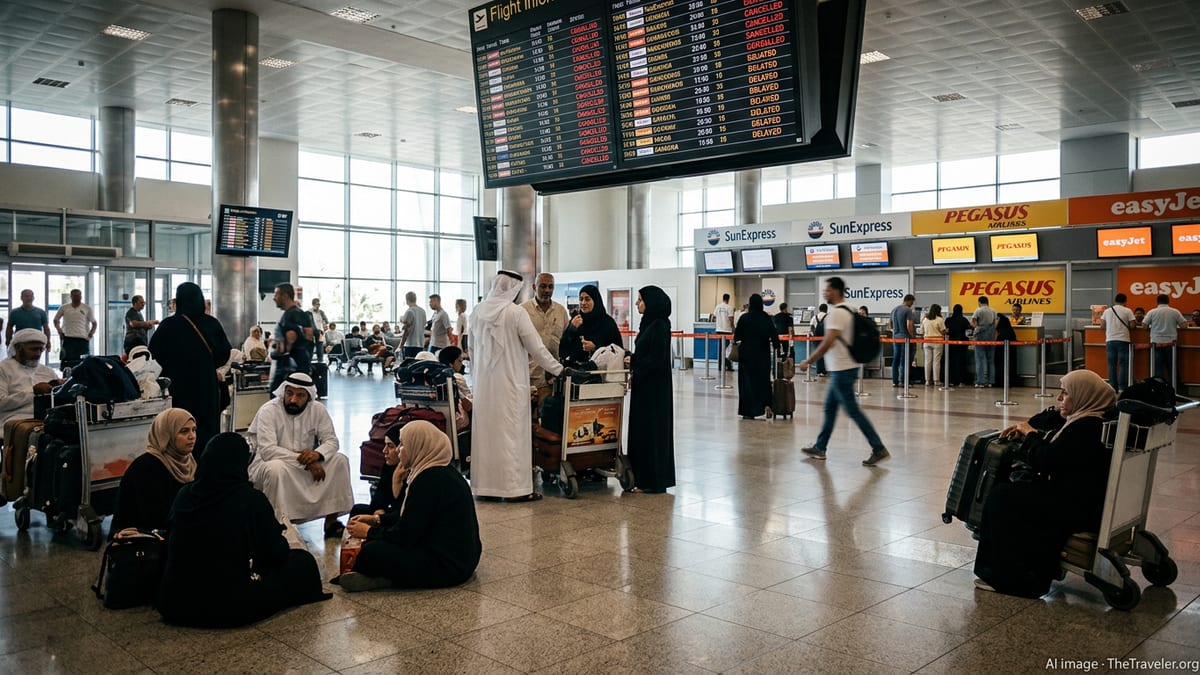
What the latest Foreign Office update says
The UK Foreign, Commonwealth and Development Office (FCDO) continues to advise against all travel to areas within 10 kilometres of Turkey’s border with Syria, citing ongoing fighting and an elevated risk of terrorism in the region. The core Turkey travel advice page was updated again on 23 September 2026, signalling that officials are closely monitoring the situation along the frontier as well as broader security trends across the country.
Beyond the Syrian border strip, the FCDO also advises against all but essential travel to some parts of southeastern Turkey. These areas have experienced periodic security incidents over recent years linked to regional tensions. Holidaymakers heading for the classic tourism hubs on the Aegean and Mediterranean coasts or to Istanbul are not covered by these stronger warnings, but are urged to remain aware of the nationwide terrorism threat.
The UK guidance notes that terrorist groups continue to call for attacks in Turkey and lists crowded public places, transport hubs, diplomatic premises, places of worship and popular tourist sites among locations that could be targeted. Travelers are advised to stay alert in busy areas, follow local security announcements where available and be prepared for visible security measures such as bag checks and an armed police presence, particularly in major cities.
Despite these cautions, the advisory does not discourage leisure travel to the country’s main resort regions or to Istanbul, Cappadocia and other established tourist centres. Instead, it frames Turkey as a destination where extra vigilance and sensible route planning are recommended, especially when itineraries extend beyond the main visitor corridors.
How Turkey is rated by other governments
The United States currently lists Turkey as a Level 2 destination, meaning “exercise increased caution,” in a travel advisory most recently updated on 9 June 2026. The notice highlights the risk of terrorism and refers to specific concerns in parts of the southeast, particularly near the borders with Syria and Iraq, as well as periodic demonstrations in major urban centres.
The US advisory, like the UK’s, distinguishes between the high-risk border areas and the rest of the country. For much of Turkey, including Istanbul, Ankara and the major coastal resort provinces, the recommendation remains that visitors can travel provided they keep informed about local conditions, avoid large political gatherings and cooperate with security screening at airports and other transport hubs.
Other European governments broadly align with this picture, generally allowing tourism to proceed to most of Turkey while underlining that the terrorism threat, though not new, persists. Where advisories differ is in the precise boundaries of areas near Syria and parts of the southeast that are flagged as unsuitable for non-essential travel. Prospective visitors are being urged to check the latest notice for their own country since wording and maps can change with short notice.
For tour operators and airlines serving Turkey from Europe and North America, these Level 2 or equivalent advisories typically mean that flights and package holidays continue to operate as scheduled, but with contractual small print pointing customers back to their national travel advice pages for the latest security information.
Tourism hotspots: resorts, Istanbul and Cappadocia
Turkey’s core tourism infrastructure, including coastal resorts along the Aegean and Mediterranean and the urban magnet of Istanbul, remains fully open. Publicly available booking and industry reports show strong demand into late 2026, especially for Antalya, Bodrum, Dalaman and Izmir, where large hotel complexes, marinas and family-focused resorts dominate the visitor landscape.
In Istanbul, visitors continue to concentrate in historic districts such as Sultanahmet and Beyoğlu, as well as along the Bosphorus. The city has long operated with heightened security around major monuments, public squares and transport interchanges, and this visible presence continues. Travelers may encounter routine bag checks at the entrances to shopping malls, museums and metro stations, and should factor a little extra time into their movements as a result.
Central Anatolia’s Cappadocia region also continues to welcome international tourists for hot-air balloon flights, hiking and heritage visits. The area is geographically far from both the Syrian border and the southeastern provinces that appear prominently in current risk assessments. Operators there have worked in recent seasons to reassure visitors by highlighting distance from conflict zones and by publishing practical information on local safety and emergency arrangements.
Industry data and recent tourism research focusing on the aftermath of the February 2023 earthquakes indicate that international arrivals to the main tourist regions recovered strongly in 2024 and 2025, and that demand in 2026 is tracking close to or above pre-pandemic levels. Analysts note that for the majority of visitors who stick to established routes, the main impact of the security environment is the need for awareness rather than a change in basic holiday plans.
Earthquake risk and rebuilding in affected regions
Turkey sits on major fault lines and experiences frequent seismic activity, a point reiterated in multiple academic studies assessing the impact of the February 2023 earthquakes centered in Kahramanmaraş. Those quakes caused extensive damage across 11 southern provinces, with the World Bank and OECD later estimating billions of dollars in reconstruction costs and a significant short-term impact on regional economies, including tourism.
Tourism research published since then notes that while overall visitor numbers to Turkey recovered, destinations inside the earthquake zone have faced a slower return, partly because infrastructure in some cities remains under repair and partly because of a lingering perception of risk. Reconstruction efforts in places such as Hatay and Kahramanmaraş continue, with projects aimed at rebuilding housing, transport links and cultural sites.
Current government travel advisories do not treat seismic risk alone as a reason to avoid Turkey’s principal tourist centres, many of which are located hundreds of kilometres from the most heavily affected provinces. However, travelers are reminded that earthquakes can occur without warning and are encouraged to familiarise themselves with basic safety steps, such as identifying exits and assembly points in hotels and public buildings.
Specialist assessments suggest that new construction and some rebuilt structures are increasingly subject to updated building codes developed in response to past earthquakes. At the same time, analysts highlight that not all older buildings across the country have been retrofitted, and that resilience can vary between regions and property types, which is another reason for visitors to pay attention to accommodation standards when making bookings.
Practical advice for visitors considering Turkey
For most travellers from the UK, EU and many other countries, Turkey continues to allow visa-free short stays or streamlined e-visa processes, though exact entry rules vary by nationality. The UK’s official guidance notes that British visitors must hold a passport valid for at least six months on arrival and may be asked to show proof of onward travel and accommodation when they pass through border control.
Given the layered security picture, travel insurers increasingly refer customers to their national foreign ministry advice pages when determining whether cover applies. Many policies exclude claims arising from trips taken into areas where governments advise against all or all but essential travel, which makes it important for anyone planning journeys into southeastern or border provinces to study maps in the latest official bulletins before departure.
Within the main tourism belt, standard urban safety precautions continue to apply. Visitors are encouraged by public information campaigns to keep valuables secure in crowded places, be cautious with late-night transport, and monitor local news or reputable international outlets for updates on protests, large events or rare but high-impact security incidents that could affect movement.
Ultimately, current government guidance frames Turkey as a country where leisure travel is still possible for millions of people each year, provided they remain informed and plan routes with care. Those sticking to well-known resort areas and city-break destinations are generally considered to face a lower level of risk than travellers venturing close to conflict-adjacent border regions, where official advice remains more restrictive.