


More news on this day
Greece is preparing to turn the August full moon into a nationwide open-air celebration just as Europe counts down to a rare total solar eclipse, setting up a remarkable month for sky-driven travel across the continent.
Get the latest news straight to your inbox!
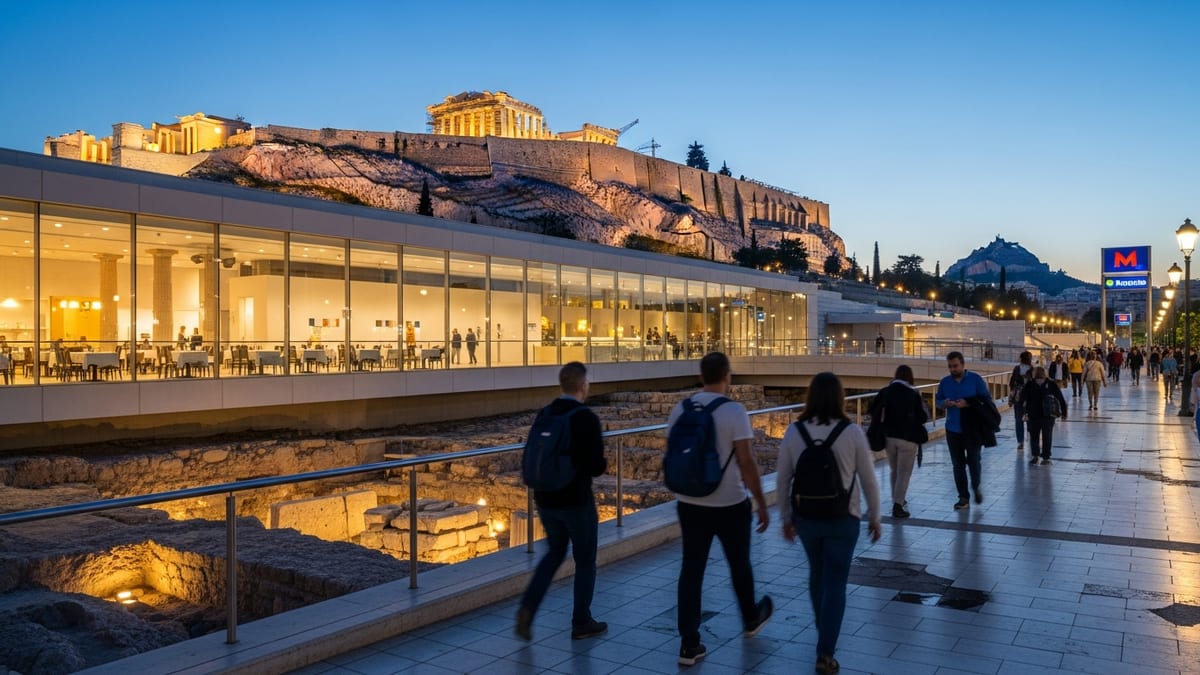
Moonlit Nights Transform Greece’s Ancient Landmarks
Across Greece, the August full moon has become one of the most atmospheric nights of the tourism season, with archaeological sites, ancient theaters and historic museums extending opening hours into the small hours. Publicly available information from the Greek Ministry of Culture indicates that more than a hundred sites will again participate in 2026, offering free entry, live music and curated night tours under the bright summer moon.
The August full moon, often called the Sturgeon Moon in international almanacs, reliably draws visitors beyond the usual beach and island circuit. In destinations such as Athens, Thessaloniki, Delphi and Knossos, travelers plan stays specifically to experience temples, fortresses and hilltop citadels illuminated by moonlight rather than floodlights. The combination of warm weather, clear skies and extended hours often leads to late-night queues outside some of the country’s best-known ruins.
Regional tourism calendars for 2026 already highlight moon-themed cultural programs on islands such as Crete and in coastal regions of the Peloponnese. The events typically include classical and contemporary concerts, dance performances, outdoor cinema and guided astronomy sessions explaining the constellations visible from Greek latitudes in mid to late summer. For inland regions that rely on short seasonal windows, the full-moon night is increasingly treated as a signature occasion to showcase local culture.
Travel planners note that the August full moon has become an important “shoulder” event in an already busy high season, encouraging visitors to spend an extra night or two in major archaeological destinations. Hotel operators in key hubs report that rooms facing historic skylines, such as the Acropolis in Athens or the medieval city walls of Rhodes, see particularly strong demand on full-moon dates, as visitors look to pair city breaks with skywatching.
Europe Counts Down to the August 12 Total Solar Eclipse
Just days before the August full moon, attention across Europe will shift to daylight skies when a total solar eclipse sweeps across parts of the northern hemisphere on 12 August 2026. Data from NASA and European space agencies shows that the path of totality will cross eastern Greenland and western Iceland before reaching northern Spain and a small corner of northeastern Portugal, while most of Europe will see a significant partial eclipse.
A total solar eclipse occurs when the Moon passes directly between the Sun and Earth, casting a narrow shadow that plunges locations along its track into twilight for a few minutes. Published maps for the 2026 event indicate that cities in northern Spain, including coastal and inland hubs, will experience totality in the early evening, close to sunset. For much of the rest of Europe, including France, Germany, Italy, the Balkans and Greece, the event will appear as a dramatic partial eclipse as the Sun sinks lower in the western sky.
Space-focused outlets describe the 12 August eclipse as the most significant such event for mainland Europe since the late 1990s, and one of the few of the 21st century to cast totality across widely visited parts of the continent. Travel industry analysts expect a surge of interest from dedicated “eclipse chasers,” who plan holidays years in advance around the brief minutes when the solar corona becomes visible.
For travelers based in Greece, flight schedules and ferry links make it relatively straightforward to combine an Aegean or Ionian holiday with a side trip to Spain, Iceland or Portugal to reach the path of totality. Tourism boards in several countries along the route have begun highlighting potential viewing areas in coastal resorts and inland national parks, positioning the eclipse as a centerpiece of late-summer travel marketing.
Tourism Hotspots Position for an Astronomy-Focused August
Across Europe, destinations from Arctic islands to Iberian beach towns are framing August 2026 as a month centered on the sky, with the total solar eclipse as its headline event. According to published coverage from astronomy organizations, the eclipse will be visible in some form from northern North America, much of Europe and parts of North and West Africa, creating opportunities for multi-country itineraries that track the movement of the Moon’s shadow.
In Iceland, local tourism information channels highlight western coastal areas as prime spots for the afternoon eclipse, while emphasizing the need for travelers to plan around limited road capacity and variable weather. In Spain, regional planning documents and media reports point to northern coastal provinces and the Balearic Islands as key vantage points, where the Sun is expected to darken shortly before sunset.
For countries such as France, Italy, Greece and Croatia, which will experience only a partial eclipse, the event is still being framed as a rare visual spectacle that can be safely enjoyed with proper eye protection. Travel advisors suggest that city rooftops, hilltop villages and coastal promenades will become informal gathering points, with hotels and tour operators likely to add short educational segments or rooftop viewing opportunities to existing summer programs.
Industry observers note that the timing of the eclipse in mid-August, when schools in parts of Europe are already on holiday and coastal resorts are at or near capacity, could magnify its tourism impact. Airlines and rail operators serving Spain and Iceland are expected to see additional demand in the days surrounding 12 August, particularly from travelers routing through major hubs in London, Paris, Frankfurt and Athens.
Greece Bridges Full Moon Traditions and Eclipse Fever
While Greece will not lie in the path of totality, domestic tourism planners are working to connect the country’s long-running August full moon traditions with broader European interest in the eclipse. Cultural schedules published by regional authorities suggest that astronomy-themed talks, planetarium programs and star parties will be added around mid-August in cities such as Athens, Thessaloniki and Heraklion, giving visitors context for both the eclipse and the subsequent lunar phase.
Local event calendars indicate that some island destinations are experimenting with multi-night “sky festivals” that span the week of the eclipse and the full moon. These programs combine guided stargazing, photography workshops, coastal hikes timed for moonrise, and boat excursions designed to show the Moon reflecting on calm seas. The goal is to position Greece as a base camp for travelers who might fly to Spain or Iceland for the eclipse, then return to the Aegean for quieter, moonlit nights.
Travel agencies are also promoting twin-center itineraries that link Greek islands with cities inside the eclipse path. Sample routes pair Athens or Santorini with Barcelona, Bilbao or Reykjavik, allowing travelers to spend a few days in each location while minimizing long-haul flight times. Industry forecasts suggest that such combinations may appeal to visitors from North America and Asia seeking to maximize once-in-a-generation sky events within a single European trip.
For domestic travelers, the emphasis is shifting toward encouraging safe, accessible ways to observe the partial eclipse from Greek soil, followed by evening cultural events under bright moonlight later in the month. Public information campaigns are expected to highlight the need for proper eclipse glasses and the dangers of viewing the Sun without certified filters, a message that has become familiar across Europe following recent high-profile eclipses.
What Travelers Should Know Before Booking
Travel specialists recommend that visitors planning trips around the August 12 eclipse and the August full moon consider logistics as carefully as the astronomy. Accommodation in the path of totality, especially in smaller Spanish coastal towns and parts of western Iceland, is already reported to be tightening, with some hotels setting minimum-stay requirements during the eclipse period.
For Greece, demand around the August full moon typically peaks at heritage-rich destinations and islands with well-known archaeological sites. Advisors suggest booking flexible rates where possible, paying close attention to cancellation policies, and allowing extra travel time around ferry ports and major highways that are prone to congestion in mid-August.
Weather is another critical factor. Historical climate data for northern Spain and Iceland in August points to generally mild temperatures but a realistic chance of cloud cover at eclipse time. In contrast, Greece’s clear, dry late-summer skies offer more predictable conditions for full-moon photography and stargazing, adding weight to the idea of combining destinations to balance risk and reward.
With one of the decade’s most anticipated eclipses and a nationwide program of moonlit cultural nights unfolding within the same month, August 2026 is emerging as a standout moment for astronomy-focused travel. For visitors willing to plan ahead and look up, Greece and the wider European region are poised to offer a rare blend of celestial drama and cultural depth.