


More news on this day
Passenger services on the Midland Main Line near Bedford have resumed following last week’s fatal collision between two East Midlands Railway trains, restoring a key corridor for commuters and long-distance travelers after days of severe disruption.
Get the latest news straight to your inbox!
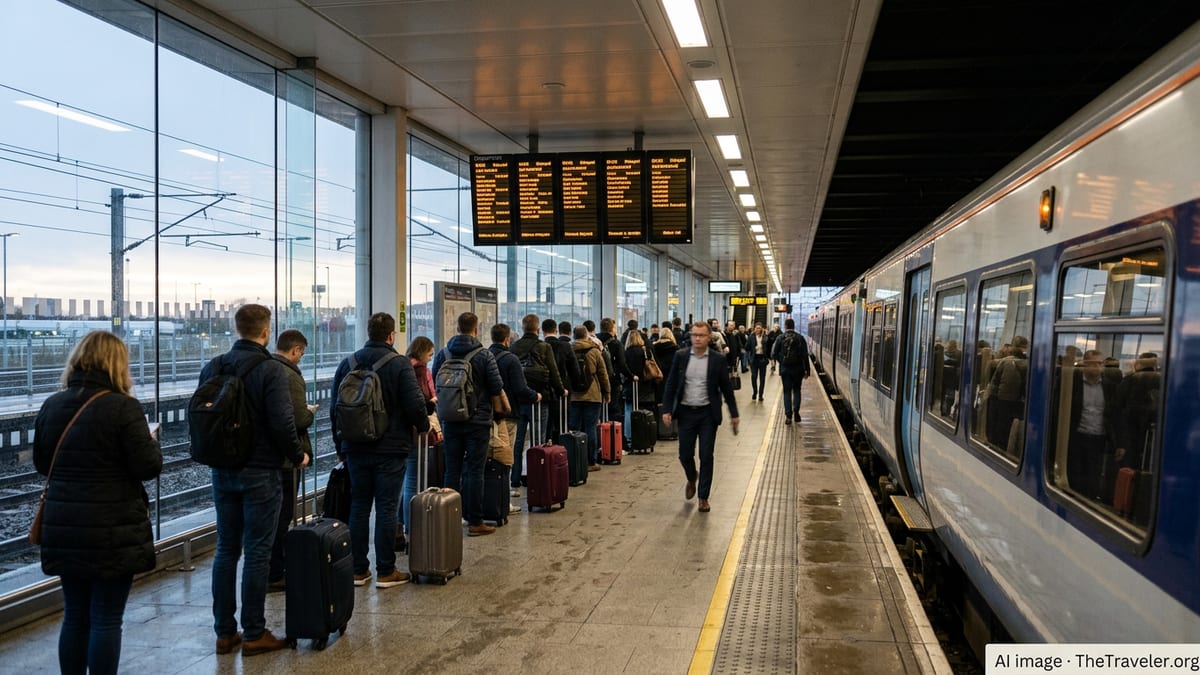
Services restart after extensive recovery and repair work
Published information indicates that trains are running again between Bedford and London St Pancras after the completion of complex recovery operations at the crash site near Elstow. Network operators have removed damaged rolling stock, lifted carriages using heavy cranes and cleared debris from one of the busiest stretches of track in the region.
According to widely reported updates, engineers spent much of the week following the 19 June collision inspecting rails, sleepers, overhead line equipment and signalling infrastructure. Repairs focused on restoring safe line speeds and ensuring that no residual damage from the impact or recovery process remained.
Service patterns are returning largely to their pre-collision timetable, although rail planners are advising that some minor alterations and crowding may continue in the short term as operators balance rolling stock availability and staff rescheduling. Rail replacement buses that had been running between Bedford and Luton over the past week are being scaled back as more trains re-enter service.
The restart of passenger operations marks a significant logistical milestone after a period in which many journeys were either cancelled or re-routed via alternative main lines. For many travelers in the East Midlands and along the Thameslink and East Midlands Railway networks, the reopening restores a primary link to the capital.
Background: a rare and serious mainline collision
The resumption comes just days after the collision itself, which occurred on the evening of Friday 19 June south of Bedford. Published coverage describes a rear-end impact between two southbound East Midlands Railway services, the 15:50 departure from Nottingham and the 16:40 departure from Corby, both bound for London St Pancras.
Reports indicate that the crash resulted in the death of one train driver and injuries to around 100 people, with a significant number taken to hospital and several initially described as being in critical condition. Emergency response involved multiple fire and rescue crews, paramedics and police units working into the night to evacuate passengers along the embankment and treat injuries on site.
Rail commentators note that the incident is one of the most serious collisions involving passenger trains on Britain’s mainline network in many years. Publicly available information highlights that, prior to this event, there had been a long period without a fatal rear-end collision between passenger services on a UK main line, underscoring the exceptional nature of the Bedford crash.
Early summaries from rail safety specialists and industry analysts point to a combination of operational and signalling factors that will be examined in depth by investigators. While preliminary attention has focused on the circumstances under which one train apparently passed a signal at danger, formal conclusions are expected only after a full technical and operational review.
Investigations continue alongside returning traffic
Even as trains begin running again through the affected section, dedicated investigations into the causes and circumstances of the collision are continuing. Publicly available information shows that the Rail Accident Investigation Branch has launched a detailed inquiry, supported by data from on-train recorders, signalling logs and communications systems.
Specialist teams are expected to examine braking performance, driver workload, the configuration and visibility of signals, and the interaction between new and existing rolling stock on the Midland Main Line. Industry analysis suggests that the presence of recently introduced trains on the route, including new intercity units, may draw particular scrutiny in terms of crashworthiness and cab protection, even though no systemic design concerns have yet been identified.
Published coverage also indicates that regulators and infrastructure managers will review how quickly following services were slowed or stopped once the leading train came to a standstill, and whether additional layers of automatic train protection could have reduced the severity of the impact. Any recommendations arising from this work are likely to influence both local operating procedures and national standards.
For passengers, the continuation of the investigation means that occasional operational changes, such as temporary speed restrictions or altered stopping patterns, may remain in place around Bedford while data is gathered and assessed.
What travelers can expect on the Midland Main Line
With the line reopened, most intercity and regional services through Bedford are expected to operate, but journey planners and rail operators are advising travelers to check schedules on the day of travel. Residual engineering work, including final checks to signalling and overhead power systems, may still lead to short-notice amendments.
According to recent timetable information, East Midlands Railway services between the East Midlands and London are gradually returning to their usual frequency, supplemented by Thameslink and other regional operators on the shared corridor. However, some peak services may be busier than normal as passengers who had diverted to alternative routes shift back to the Midland Main Line.
Travelers can also expect ongoing visible works near the crash site, including the presence of technical teams conducting surveys, as well as periodic access by investigators. While these activities are not expected to halt services, they may require occasional pauses or slower running through the immediate area.
Accommodation providers and local tourism businesses in and around Bedford, Luton and the East Midlands are anticipating a gradual normalization of bookings after a week in which disrupted rail links complicated both leisure and business travel. With trains once again connecting regional towns to London, short-break itineraries and day trips that rely on the route are becoming feasible again.
Safety reassurances and the outlook for rail travelers
In the aftermath of such a high-profile incident, many passengers are looking for reassurance about the safety of rail travel on the route. Publicly available information from regulators and rail infrastructure managers reiterates that mainline rail in Britain remains one of the safest forms of transport by distance traveled, and that serious collisions involving passenger trains are rare.
Analysts point out that the intense scrutiny now being applied to the Bedford collision may ultimately lead to further safety enhancements across the network, including refinements to signalling, train protection systems and staff training. Past investigations into major rail incidents have often prompted changes that reduced risk in subsequent years.
For international visitors and domestic travelers planning trips that depend on the Midland Main Line, the key practical change this week is the restoration of through services after the completion of major recovery and repair works. The line’s reopening reconnects a central route between the East Midlands, key commuter towns and the capital, just as the summer travel period begins to gather pace.
As the investigation proceeds, the Bedford crash is likely to remain a reference point in discussions about rail safety and investment. For now, with trains once again passing the fields south of Bedford, the focus for passengers is on monitoring travel updates, allowing extra time for connections and returning, cautiously but steadily, to familiar rail journeys.