


More news on this day
Government travel advisories for the United Arab Emirates have softened in recent weeks, but shifting guidance on regional security has exposed a widening gap between official risk assessments and what many travel insurance policies will actually cover.
Get the latest news straight to your inbox!
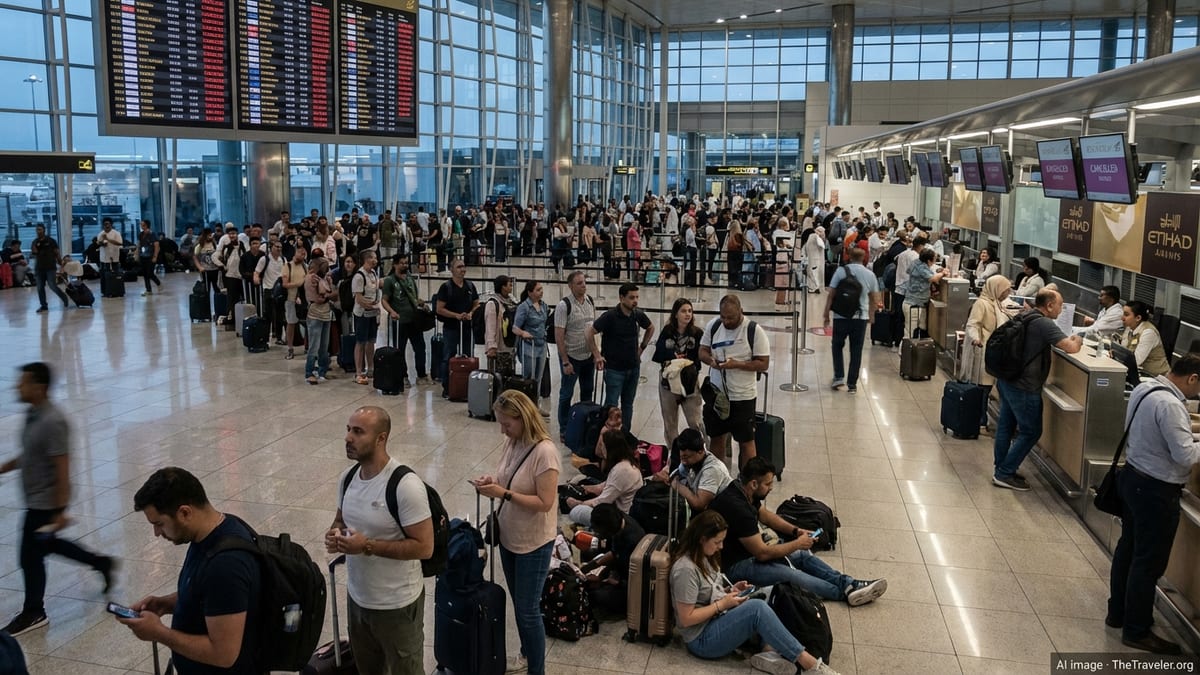
Advisory level shifts reshape risk map for UAE trips
Publicly available information from the United States shows that the UAE remains under a Level 3 “Reconsider travel” advisory, most recently updated on August 29, 2026, due to terrorism and wider regional tensions. That level is lower than the most severe “Do not travel” notices in place for several neighboring states, and recent changes now allow accompanying family members of U.S. government staff to return to postings in the Emirates, a signal that the perceived immediate risk has eased.
The United Kingdom’s Foreign, Commonwealth and Development Office retains specific warnings linked to Iranian strikes and retaliatory attacks elsewhere in the region, but its latest online update for the UAE focuses on monitoring regional airspace closures and advising travelers to follow local news. The tone marks a shift from earlier phases of the crisis, when European and Asian governments strengthened language on essential-only travel across parts of the Gulf.
Despite these adjustments, the UAE’s proximity to ongoing conflict zones and its role as a major aviation hub keep it squarely in the spotlight whenever tensions flare. Industry research highlights that tourism accounts for a substantial share of the country’s output, and analysts warn that any renewed escalation involving Iran or Israel could again disrupt flight paths and visitor numbers across the Gulf’s busiest airports.
The result is a complex picture for travelers: official warnings have moderated from their most severe point, yet they still frame the UAE within a broader regional security crisis that can change quickly and affect both direct travel and multi-stop itineraries using Dubai or Abu Dhabi as transit hubs.
War exclusions limit standard travel insurance protection
Even as headline travel warnings for the UAE ease, key global insurers continue to flag the Middle East conflict as a live event with special coverage rules. Coverage alerts from major brands indicate that Bahrain, Egypt, Israel, Jordan, Qatar, Saudi Arabia, the UAE and other states in the region are grouped together as “impacted countries” for the purposes of war and civil unrest exclusions.
These alerts consistently note that most plans sold to residents of North America and Europe do not cover losses that arise directly or indirectly from war, declared or undeclared, or from government travel warnings, airspace closures and fear of travel. Travel insurance industry guidance describes the conflict as a known event, which means new policies often exclude claims connected to it, even when travelers are flying to relatively stable hubs such as Dubai.
Separate travel insurer advisories and consumer finance coverage in the UK and Europe underline that traveling against foreign ministry advice can invalidate a policy outright. When advisories fall from “all but essential travel” to a lower warning level, some exclusions may no longer apply, but travelers cannot assume that a downgraded advisory automatically restores full benefits, especially where war risk clauses are written broadly.
Specialist documents from regional and Asian insurers also show how general exclusions for war and war-like operations can apply to all sections of a policy, from medical costs and evacuation to trip cancellation and baggage claims. In some cases, companies have temporarily suspended the sale of new cover for trips to the UAE and neighboring states, highlighting the challenge of pricing risk in a rapidly changing security environment.
Airline policies evolve faster than insurance contracts
For many visitors, airlines rather than insurers have been the first line of support when tensions have spiked. Reporting on the Iran conflict notes that leading Gulf carriers based in Dubai, Abu Dhabi and Doha temporarily rerouted or suspended selected services after regional airspace closures earlier this year, while continuing to operate their core long haul networks where safe corridors remained available.
Coverage in travel and business media indicates that the UAE has stepped in at times to fund accommodation and hosting costs for passengers stranded by war-related disruptions, easing the immediate burden on travelers and reducing the need for insurance claims. That assistance, however, has been discretionary and focused on specific events, rather than a blanket guarantee tied to any future crisis.
By contrast, many travel insurers have maintained a narrow reading of their contracts. Consumer and financial press reports describe cases in which customers with policies purchased before the latest escalation have still seen claims rejected on the grounds that war exclusions apply, or that the disruption was considered an operational decision by an airline rather than an insured peril.
This divergence leaves travelers relying heavily on airline flexibility, voluntary government support measures and package travel regulations, especially in Europe and the UK, for refunds and rerouting. Insurance often becomes a backstop only for standard risks such as illness, injury, lost baggage or non-conflict-related cancellations, even when the original disruption was triggered by regional hostilities.
New products test demand for conflict-related coverage
Faced with persistent demand for trips to and through the UAE, some companies are experimenting with more expansive cover. In June 2026, Dubai-based Emirates announced what it described as a comprehensive travel cover product, positioned as an industry-first offer that bundles medical protection, disruption benefits and hotel accommodation, including limited medical cover for conflict-related incidents, into a single option for eligible customers.
According to the airline’s public materials, the product is administered by third party insurers and subject to detailed terms and conditions that vary by market. The wording indicates that cover for conflict-related events is carefully defined, with caps and exclusions that sit alongside more familiar benefits such as emergency medical treatment, trip interruption and delayed baggage protection.
Specialist reports from local UAE media suggest that regional insurers continue to keep base travel insurance premiums largely stable, while signaling that underwriting tolerance for conflict exposure is narrow. Executives quoted in that coverage highlight that war and political violence are typically carved out of standard policies, and that any move to incorporate such risks comprehensively would require higher premiums and tighter controls on routes and dates.
At the same time, guidance from global risk managers and institutional travel programs points to the growing use of stand alone war risk and political evacuation cover for staff and students traveling through high-risk hubs. These niche products are often arranged through corporate channels rather than sold directly to leisure travelers, leaving most holidaymakers to navigate a patchwork of conventional travel insurance and airline-led protections.
What travelers should verify before booking UAE trips
With the official tone around UAE travel softening but regional conflict still active, publicly available guidance from insurers, consumer advocates and foreign ministries converges on a few key checks for prospective visitors. First, travelers are urged to confirm the exact wording of any government advisory for both their destination and any transit points, and to save a copy of the notice in force at the time they purchase insurance and tickets.
Second, specialists advise reading the war, terrorism, civil unrest and government warning sections of any policy in full, paying particular attention to how the contract treats known events. Many plans state that if a conflict has already begun when the policy is bought, trip cancellation or interruption claims related to that event will not be covered, even if flights are later canceled or rerouted.
Third, there is growing emphasis on understanding what is and is not covered by so called cancel for any reason upgrades. Industry examples show that while these add ons can offer partial reimbursement if a traveler chooses not to go, they often have lower payout percentages and strict purchase deadlines relative to the initial booking, and still may not override exclusions for war in every scenario.
Finally, travelers are encouraged to distinguish between the relative stability within the UAE itself and its position inside a wider conflict-affected region. While current advisories no longer treat the Emirates with the same severity as active war zones, insurance contracts frequently group the country together with its neighbors for the purpose of exclusions. Until policy language evolves to reflect a more granular risk picture, a lowered travel warning will not automatically translate into comprehensive coverage for every trip routed through Dubai or Abu Dhabi.