


More news on this day
Train passengers in southern England are facing severe disruption on Wednesday 23 September as a gas leak near Didcot Parkway has closed all lines between Oxford, Didcot and Reading, triggering widespread cancellations and a strong do-not-travel warning for key Great Western Railway routes.
Get the latest news straight to your inbox!
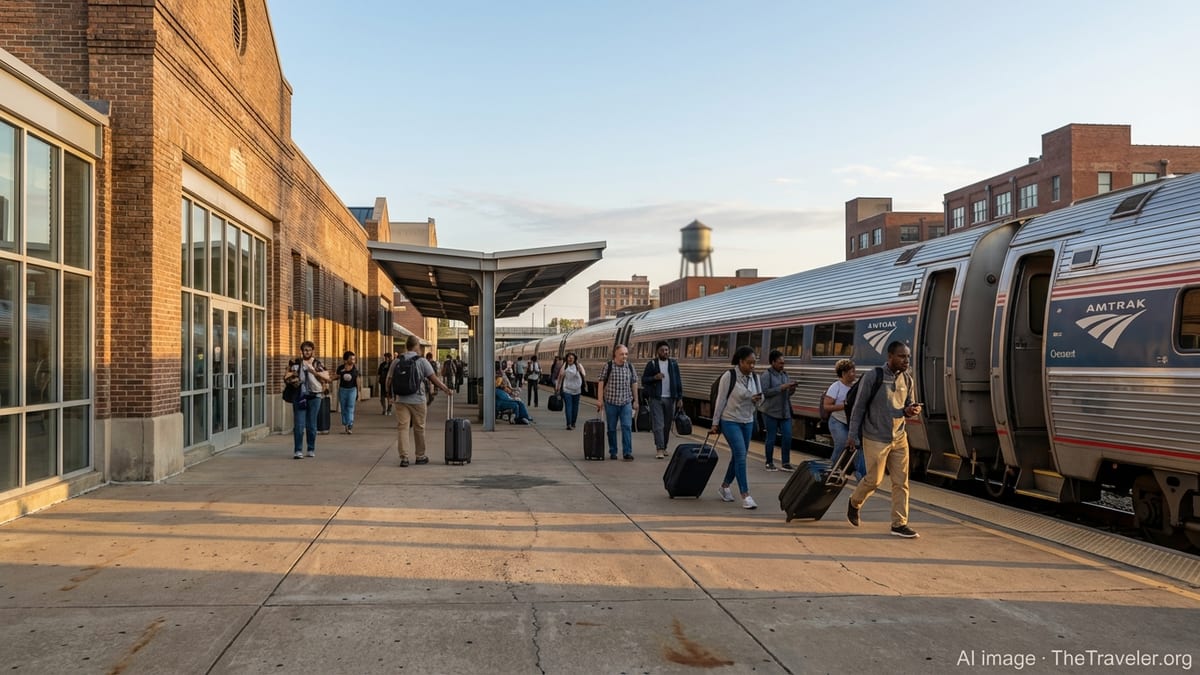
Major rail artery shut after leak near Didcot Parkway
Publicly available information from Great Western Railway and National Rail shows that a gas leak close to the tracks in the Didcot Parkway area was first reported early on Tuesday evening, 22 September 2026. The incident has led to the closure of all lines between Oxford or Didcot Parkway and Reading, cutting one of the most heavily used stretches of main line in the Great Western network.
Journey updates state that no trains are able to run through the affected section while engineers and gas specialists work at the scene. Services that normally pass through Didcot are being cancelled outright or diverted, and in many cases are operating only over part of their usual route. Network updates indicate that major disruption is expected to continue until at least the end of the day on Wednesday 23 September.
National Rail’s disruption summary for the Didcot Parkway incident describes the situation as a complete suspension of services between Oxford or Didcot and Reading. This reflects the need to maintain a safety cordon around the leak, which prevents trains from using all tracks in the area until the gas supply is made safe.
Routes and operators most affected
According to live updates published by Great Western Railway, services on several flagship intercity and regional routes are being significantly affected. Trains between London Paddington and Oxford, Worcester and Hereford are among those disrupted, along with London Paddington services to Cheltenham Spa, Cardiff Central, Swansea, Bristol Temple Meads and local stopping trains to Didcot Parkway.
Timetables on the operator’s journey-check pages show multiple long-distance trains either cancelled or revised to start and finish short of their normal destination. For example, some London-bound services from South Wales and the West of England are terminating at Swindon or Oxford rather than continuing through Didcot and on to Reading and London Paddington. Other trains that would normally stop at Didcot Parkway are running non-stop between Swindon and Reading, missing the closed section entirely.
The disruption is not limited to Great Western Railway. National Rail’s incident notice explains that CrossCountry and other operators using the corridor between Oxford, Didcot and Reading are also affected, with trains diverted where possible or unable to run. Passengers who rely on these services to connect with long-distance journeys across the Midlands and North of England are advised to check carefully before travelling.
While some services continue to operate on parts of their routes away from the Didcot area, the closure of the central section means that many familiar direct journeys are not available. Travellers who would normally use Didcot as an interchange between London, the Cotswolds, the South West and South Wales are among those facing the greatest disruption.
Strong do-not-travel message for key corridors
In an unusually clear message for a single infrastructure incident, Great Western Railway’s live network update for Wednesday advises customers that anyone intending to travel between Oxford or Didcot Parkway and Reading, or on routes that rely on that section, should not travel. The notice explains that with all lines closed, there is severely limited capacity for diversions and that crowding on any trains that are able to run is likely to be significant.
The do-not-travel warning applies in particular to journeys between Reading and Swindon, as well as those between London Paddington and Oxford or South Wales that would usually use the Reading to Didcot corridor. Published information notes that while some alternative routes exist via other lines, these are already heavily used and cannot absorb normal volumes of long-distance traffic.
National Rail’s incident page echoes the severity of the disruption, indicating that major disruption is expected until at least the end of service on Wednesday. For passengers, this means that the problem is not confined to the morning peak but is expected to affect travel plans throughout the day and into the evening.
For those who do travel despite the advice, journey planners show that arrival times may be significantly later than usual, with knock-on delays caused by rerouted trains, altered stopping patterns and reduced capacity through unaffected parts of the network.
Ticket acceptance, refunds and what passengers can do
To help stranded travellers, publicly available customer advice from Great Western Railway sets out several options. Tickets dated for travel on Tuesday 22 or Wednesday 23 September are being accepted for travel on later days, allowing passengers to postpone their journey without penalty. In addition, tickets are being accepted on certain alternative rail routes operated by other companies, including services between London Marylebone and Oxford run by Chiltern Railways, subject to capacity.
Where trains are cancelled, information pages explain that passengers may use their ticket on one of the two services before or after their originally booked train on Great Western Railway, if those trains are able to run. This flexibility is intended to give travellers more options as services are re-planned around the closure.
For those who decide not to travel at all, standard refund and compensation policies apply. The operator’s guidance confirms that passengers whose journeys are cancelled or significantly delayed are entitled to claim compensation under its Delay Repay scheme, provided they keep their tickets and submit a claim once the journey would have taken place. National Rail’s summary also points travellers towards the usual channels for refunds on unused tickets.
Despite the scale of the disruption, reports indicate that no dedicated replacement bus network is in operation along the full length of the closed route. Travellers needing to move between Reading, Didcot and Oxford may therefore have to consider local bus services, road transport or completely re-routing their journeys via alternative rail corridors where available.
What this means for travelers heading to London and beyond
The closure of the lines through Didcot Parkway has implications well beyond the immediate area, particularly for domestic and international travelers heading to or from London. The affected corridor is a primary route for trains connecting Heathrow and central London with Oxford, the Cotswolds, South Wales and the South West of England, and is frequently used by visitors making rail transfers to and from intercity and airport services.
With many Paddington services curtailed, diverted or missing key stops, journey planners on Wednesday morning show reduced options and longer travel times for trips into London from cities such as Cardiff, Bristol and Worcester. Some services are still reaching London via alternative routings, but often with extended journey times and altered stopping patterns that may affect connections.
Travel industry observers note that the timing during a weekday exacerbates the impact, as commuters, students and business travelers share already busy trains with leisure passengers. Given the do-not-travel message, many regular users of the route appear to be postponing non-essential journeys or working remotely where possible.
For anyone with fixed travel plans on 23 September, the most up to date advice from public rail information sources is to check live departure boards and journey planners right up to the time of travel, consider alternative routes that avoid the Oxford, Didcot and Reading corridor, and be prepared for extended journey times if travel cannot be deferred.