


São Paulo’s Guarulhos International Airport (GRU) is Brazil’s busiest air hub, and for many travelers the first question after landing is simple: how do I get an Uber from here without confusion or stress? Over the last few years the airport and rideshare companies have reorganized pickup zones, added dedicated app-car areas and totems, and refined safety procedures. This practical guide walks you through exactly how Uber pickup works at Terminals 2 and 3, what to expect from the Uber totems and waiting areas, how surge pricing plays out in real life, and when a traditional taxi is simply the smarter option.
Get the latest updates straight to your inbox!
Understanding Guarulhos Airport Layout and Ground Transport Basics
Guarulhos International Airport sits about 25 kilometers northeast of central São Paulo and is organized into three passenger terminals: 1, 2 and 3. Most international long-haul flights from North America and Europe arrive at Terminal 3, while Terminal 2 handles a large share of domestic traffic and some regional international services. The terminals are connected by internal walkways and shuttle options, so you can move between them if needed for a different pickup point.
For rideshare users, the most important detail is that official app-based pickups like Uber, 99 and others are concentrated around Terminal 2’s dedicated pickup plaza and the marked rideshare zones on the arrivals levels. If you arrive at Terminal 3 but your driver is closer to Terminal 2, it is usually feasible to walk between T3 and T2 in roughly 7 to 10 minutes with carry-on luggage. Travelers with heavy checked bags or mobility issues may prefer to stay at their own terminal and select the exact pickup point indicated in the Uber app instead of walking.
Since 2025 and into 2026, GRU Airport has expanded infrastructure for app-based cars at Terminal 2, including a new area referred to locally as the “praça” or pickup plaza for ride apps. This has shifted many drivers toward a more organized holding and pickup area, which typically makes it easier to meet your Uber at T2 than it was just a few years ago, when drivers circled multiple lanes and informal curbsides.
Guarulhos is a 24-hour airport and late-night arrivals are common, especially at Terminal 3 for international flights. Uber operates around the clock, but the exact wait time can vary widely with traffic and weather. In practice, you might wait only 3 to 5 minutes for an UberX mid-afternoon on a weekday, but 15 to 20 minutes or more after a wave of late-evening arrivals or during heavy rain. Understanding where to stand and what the totems are will make that wait safer and less stressful.
How Uber Pickup Works at Terminal 2
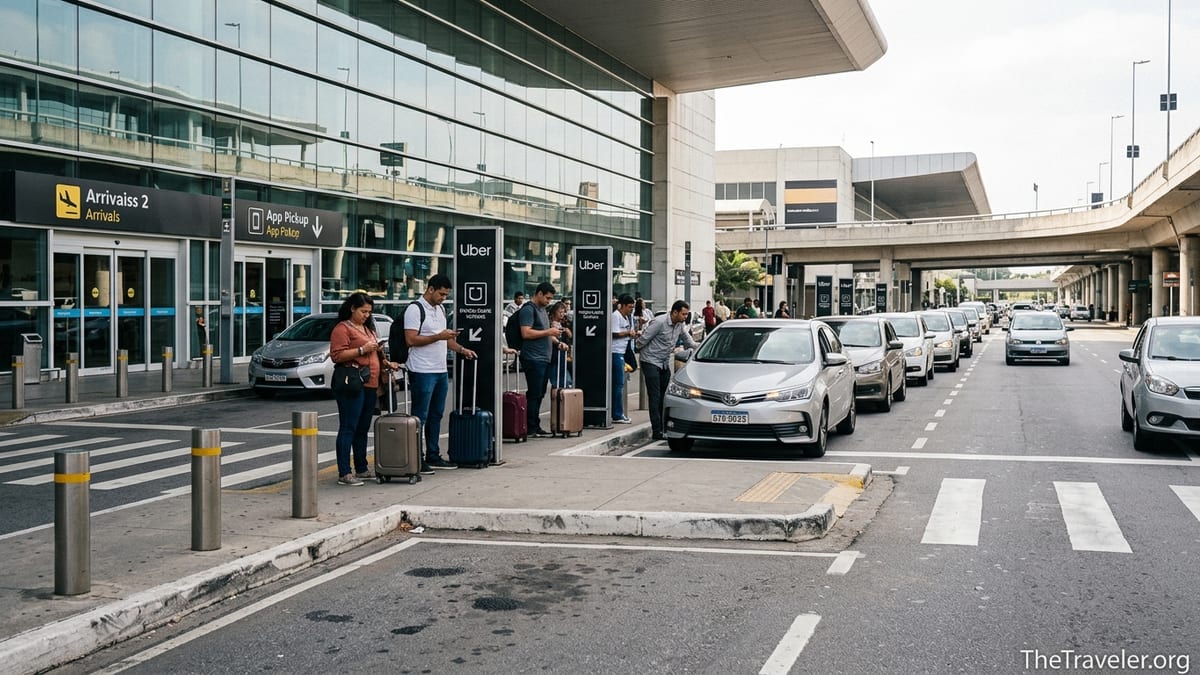
Terminal 2 is currently the main hub for rideshare pickups at Guarulhos, largely thanks to the dedicated pickup plaza just outside the arrivals area. When you exit baggage claim at T2, you will follow signs for “Aplicativos,” “App cars,” or similar wording that points toward the rideshare pickup region. In many cases, this involves crossing one or more traffic lanes via marked crosswalks to reach a central island where Uber and other apps have designated zones.
When you open the Uber app inside Terminal 2, it typically prompts you to confirm you are at GRU Airport and then asks you to choose a pickup point. These points are usually labeled with a combination of letters and numbers, such as a specific sector or island on the arrivals curb. In the app you might see something like “Terminal 2 – App pickup plaza” or be asked to choose a door or zone. Selecting precisely what you see on the physical signage outside, instead of dragging the pin manually, is crucial. It tells the driver exactly which totem or sector to approach.
Since April 2026, Uber has introduced a special boarding code feature for Uber Black at Terminal 2. In practice, this works similarly to coded pickup systems in other large airports. Instead of matching license plates in a crowded lane, a rider receives a short code in the app, walks to the designated Uber Black boarding area at T2, and gives that code to the next available Uber Black driver. This can significantly reduce confusion when many black sedans are waiting in the same place. If you are booking a premium ride to a São Paulo business district hotel after a long international flight, this code-based system can be more efficient than waiting for a specific driver to navigate the curb.
For regular UberX and Uber Comfort rides at T2, the process remains the standard one-to-one match. After requesting, you will see the driver’s name, car model, color and license plate. Many travelers report that drivers text via the app asking for your exact position, for example “Estou no ponto de aplicativo, setor B” or “I am at the app pickup plaza, near Uber sign.” Reply in simple English or Portuguese if you can, referencing whatever totem or sign number you see near you so the driver can pull in quickly.
Uber Pickup at Terminal 3: International Arrivals
Terminal 3 is the modern international terminal used by airlines such as LATAM, American Airlines, Delta, United, Lufthansa, Emirates and others for long-haul and intercontinental flights. After you clear immigration and customs and walk out into the public arrivals hall, you will see the usual mix of greeters, hotel desks, currency exchange booths and taxi counters. The Uber pickup area is not directly inside the hall but on the arrivals curb outside, similar to many other large airports.
Once you are ready, open the Uber app and confirm the airport as your pickup location. The app will normally show “Terminal 3” and several pickup options. For most travelers, the correct choice is the rideshare zone on the arrivals level, often identified in the app by a lettered or numbered post, such as a central curbside area with signage for app-based vehicles. Follow any on-screen guidance, which may say something like “Exit the terminal, cross to the central island and wait at the app pickup sign.” Look for Uber logos and the word “Aplicativos” on overhead signs or totems.
If the curb at Terminal 3 is especially congested, drivers may prefer to pick up slightly farther along the lane, so do not hesitate to message your driver in the app. A typical exchange might involve the driver saying they are “na ilha central, próximo ao posto D6,” meaning on the central island near a specific post. Compare that with the closest physical marker to where you are standing and walk along the island rather than forcing the driver to reverse or stop illegally in moving traffic.
Some travelers choose to walk or take an internal shuttle from T3 to the better-developed rideshare plaza at T2, especially during peak hours or heavy storms when pickups at T3 can be chaotic. The walk is usually under 10 minutes for a reasonably fit traveler with rolling luggage, and signage in the secure and public areas makes it straightforward to follow the path between terminals. This option can be useful if you are traveling with a local who is familiar with the airport and wants to meet their Uber driver at the T2 app plaza instead of competing with dozens of cars at T3’s curb.
Understanding Uber Totems, Pickup Plazas and Waiting Areas
In the context of Guarulhos, “Uber totems” generally refer to the physical posts or pillars at the rideshare pickup areas that display app logos and identify a specific point such as “A,” “B,” or a numbered bay. These totems are the airport’s way of turning a chaotic curb into a series of mini meeting points. At Terminal 2’s dedicated pickup plaza, multiple totems line the central island, each marking where riders for Uber and other apps should stand. Your Uber app uses these zones to direct both you and the driver.
When you request a ride, pay attention if the app states a particular zone, for example “Meet your driver at Uber totem C in the app pickup plaza.” In practice, that means you should physically walk to the totem with the letter “C” and wait right next to it, not near the terminal exits or at a generic curb elsewhere. Drivers at GRU have grown increasingly accustomed to this system, and if you wait at the wrong totem you risk your car circling several times or canceling altogether.
The waiting areas also serve a safety function. They are usually well-lit, monitored by airport security cameras, and busy with other travelers who are also calling app-based cars. Late at night around midnight or after, you may see a steady crowd of people clustered around the totems at both T2 and T3, each checking car plates and app details. This environment, with many other passengers present, is typically safer than stepping into a quiet side street or hotel back entrance to meet a rideshare.
It is important to distinguish the Uber totems and pickup plaza from regular taxi lines and bus bays. Traditional airport taxis are often queued closer to the terminal doors, sometimes with branded counters inside the arrivals hall. Buses and intercity coaches use a separate area, especially at Terminal 2 where there is also a bus terminal for routes to São Paulo and other cities. Make sure you are in the “Aplicativos” or “App cars” zone if your plan is to meet an Uber, rather than accidentally standing in a taxi queue that expects riders to pay fixed fares at the counter.
Realistic Prices, Surge Scenarios and How to Save Money
Uber pricing at Guarulhos is dynamic and influenced by traffic, time of day, and demand spikes. For a sense of scale, a typical non-surge UberX ride from GRU to Avenida Paulista or Jardins might cost in the range of 80 to 140 Brazilian reais, depending on the hour and congestion. To the historic downtown region around Praça da Sé or República, you might see similar figures. During quieter times, such as late morning on a weekday with light traffic, some travelers report fares closer to the lower end of that range.
Surge pricing can change that picture quickly. During thunderstorms, peak evening rush hours, or when multiple long-haul flights land within a short window, the app may show significantly higher fares, sometimes double or more. A ride that would normally be around 100 reais to central São Paulo might jump to 200 reais or higher during a strong surge period. This can be particularly common on Friday evenings, holiday periods, or when major events are happening in the city such as large concerts or football matches.
One practical strategy is to check approximate prices before you reach the pickup area. While still inside the terminal, connected to airport Wi-Fi, open the Uber app and plug in your destination to see the estimated range for UberX, Comfort and Black. If you see a high multiplier or unusually expensive quotes, wait 10 to 15 minutes before confirming. Surge often softens once the first wave of passengers is absorbed by available drivers. Some travelers also compare Uber prices with fixed-fare airport taxis at the same time. In certain high-surge moments, a traditional taxi may be cheaper or roughly on par, and has the advantage of leaving immediately from the taxi stand.
Another money-saving tactic is to combine modes. If you are traveling light and arrive during daytime hours, you might take the airport train and people mover to a central São Paulo station and then hail a short Uber ride from there, which can be substantially cheaper than a direct airport-to-downtown Uber. For example, instead of paying around 120 reais from GRU to downtown in heavy traffic, you may pay only a fraction of that for a local Uber from a central station to your hotel. This approach is popular with solo travelers and students who prioritize budget and are comfortable managing luggage on public transport.
Staying Safe with Uber and Taxis at GRU
Safety is a key concern for many first-time visitors to Brazil, and Guarulhos is no exception. The primary rule when using Uber at GRU is to never accept a ride from a person approaching you inside the terminal offering “Uber” or “app car” verbally. These individuals are usually informal drivers or touts who may overcharge, drive unregistered vehicles, or bypass the normal app protections. Always request your ride directly through the official Uber app and confirm that the license plate, car model and driver name match exactly before you step into the vehicle.
At the pickup plaza or curbside totems, have your phone ready with the car details displayed. Many cars in São Paulo are similar colors and models, so double-check the plate rather than relying on a quick glance. If anything feels off, such as the driver asking you to cancel the trip so you can “pay cash cheaper,” say no and request another ride. Keeping your luggage close to you while you wait and avoiding leaving bags unattended will also reduce the risk of opportunistic theft in the busy pickup zones.
Late-night arrivals add another layer of consideration. If you land after midnight, particularly if you are alone and unfamiliar with Portuguese, you may prefer a more structured option such as a licensed airport taxi. In Terminal 3, for instance, you can find official taxi desks just outside the customs exit on the right side, where staff can quote a fixed fare to your hotel in advance. Paying at the counter, then walking with a receipt to a marked taxi lane, can feel more straightforward for a fatigued traveler than waiting on a crowded curb trying to identify one Uber sedan among many.
On the other hand, experienced travelers who regularly use Uber in Brazil often feel comfortable with the app’s security features, especially since it records the entire route, shares trip details with contacts, and allows quick emergency reporting. A reasonable compromise is to choose Uber Comfort or Uber Black at night, since these categories tend to attract more professional drivers with newer vehicles. Although more expensive than UberX, the price difference for a 30 to 40 minute airport ride may be justified if it improves your sense of safety and comfort.
When a Traditional Taxi May Be Easier than Uber
There are several situations where choosing a regular taxi from Guarulhos can be easier than calling an Uber, despite Uber often being the cheaper option. The first is when you arrive with a large family group or oversized luggage such as surfboards or multiple large suitcases. While UberXL and similar categories do exist, the availability at GRU can be inconsistent. In contrast, the taxi stand often has larger sedans or minivans queued and ready to load, and staff can quickly assign the best vehicle type for your group.
Another case is heavy rain or sudden storms. São Paulo’s traffic can slow dramatically, and app drivers at the airport may become scarce, leading to long wait times and steep surge pricing. In those moments, the fixed-fare airport taxi desks at Terminals 2 and 3 can provide immediate service at a known price. For example, if Uber is quoting 220 reais in a surge for a ride to Avenida Faria Lima while a taxi booth quotes 190 reais for a similar route, many travelers will opt for the taxi to avoid waiting outside under the rain for a driver who might still cancel.
Limited mobile data or phone battery is another factor. If your international roaming is not working or you land with your phone near 5 percent battery, relying on the Uber app for both pickup and navigation is risky. Airport taxi counters do not require an app, and some accept credit cards directly at the desk. Once you have the printed receipt, the driver knows your destination and you can relax without needing to keep a screen on to coordinate the meeting point.
Finally, if you are arriving unusually late and are anxious about navigating in Portuguese, the human assistance at a taxi desk can be reassuring. Staff typically speak at least basic English and are used to writing down addresses and hotel names. They can also confirm that the fare you pay at the counter is all-inclusive except perhaps tolls, which helps avoid misunderstandings. In short, Uber is a powerful tool from GRU, but part of a smart strategy is recognizing when the simpler, more old-fashioned taxi solution makes more sense.
Practical Step-by-Step Examples for Common Routes
Consider a traveler landing at Terminal 3 on an evening flight from New York, heading to a hotel on Avenida Paulista. After clearing immigration and customs around 8:30 p.m., they exit to the arrivals hall, connect to airport Wi-Fi, and open Uber. The app shows an UberX estimate of around 120 to 150 reais and a 7-minute wait. They select “Terminal 3 – arrivals app pickup zone,” confirm the ride, then follow on-screen instructions to walk outside and cross to the central island. Standing by the totem indicated in the app, they double-check the plate of a silver sedan that arrives 6 minutes later and complete a 45-minute ride into the city in moderate traffic.
Another example is a Brazilian family returning to São Paulo via Terminal 2 on a Sunday afternoon, planning to go straight to Santos on the coast. Because the distance to Santos is considerable, Uber quotes more than 300 reais for the trip, with Comfort and Black even higher. The family compares this with an intercity bus from the terminal bus station at T2 and decides on a hybrid solution: they purchase bus tickets to Santos and use a short Uber trip from their house in São Paulo to the bus terminal in the city. In this case, trying to rely on a single long Uber ride from GRU would be convenient but far more expensive than necessary.
A solo traveler arriving after midnight on a weekday might face a different reality. After landing at Terminal 3 at 00:30 and exiting customs by 01:10, they open Uber to find surge pricing and an estimated fare of 200 reais to a downtown hostel, with a 15-minute wait. Feeling uneasy about standing outside alone, they walk to the official taxi counter just outside arrivals. The clerk quotes 190 reais with payment by credit card. The traveler accepts, receives a receipt, and is escorted to a marked taxi a short walk away. While they might have saved a bit with Uber if demand dropped, the taxi’s immediacy and simplicity outweighed the small cost difference.
Finally, imagine a business traveler arriving mid-morning at Terminal 2 with a meeting in the Berrini business district. They book an Uber Black using the new boarding code feature. After collecting luggage, they follow signs to the T2 Uber Black boarding area, show their code at the curb, and are matched with the next available driver without having to study plates in a long line of black sedans. Ten minutes later they are in the back seat, using the ride time and car’s quiet environment to rehearse for their meeting, which may make the premium over UberX worth every real.
The Takeaway
Using Uber at Guarulhos International Airport has become much more structured as the airport and rideshare platforms have added dedicated pickup plazas, totems and, at Terminal 2, even boarding codes for premium rides. If you understand the layout of Terminals 2 and 3, follow the signs for app pickups, and wait by the correct totem indicated in your Uber app, meeting your driver is usually straightforward.
At the same time, real-world factors like surge pricing, late-night safety considerations, weather and luggage volume may make a traditional taxi the better choice in certain situations. A flexible mindset is key. Check both Uber and taxi options before leaving the secure area, compare estimated prices, and choose the one that offers the best combination of cost, convenience and peace of mind for your specific circumstances.
Above all, rely on the official Uber app rather than unsolicited offers, verify license plates carefully, and stay within well-lit, busy pickup areas until you are safely in your vehicle. With a bit of preparation and awareness, getting from Guarulhos Airport to São Paulo or beyond can be a smooth, predictable start or finish to your trip.
FAQ
Q1. Where exactly does Uber pick up at Guarulhos Terminal 2?
At Terminal 2, Uber pickups are centered around the dedicated app-car plaza on the arrivals level. Follow signs for “Aplicativos” or “App cars,” then select the matching pickup point in the Uber app and wait beside the indicated totem or sector marker.
Q2. How do I find my Uber at Terminal 3 after an international flight?
After customs at Terminal 3, exit to the public arrivals area and then outside to the curb. Open the Uber app, choose Terminal 3 arrivals as your pickup point, and follow on-screen instructions to a specific curbside zone or central island totem where your driver will meet you.
Q3. Are the Uber totems the same as taxi stands?
No. Uber totems mark pickup points for app-based services like Uber and 99, usually on central islands or dedicated plazas. Taxi stands are separate, closer to terminal exits, often with counters inside the arrivals hall and a different queue system.
Q4. Is Uber cheaper than a taxi from GRU to central São Paulo?
Often UberX is somewhat cheaper, with typical non-surge fares to central areas in a broad range around 80 to 140 reais. During surge periods or bad traffic, however, airport taxis with fixed fares can be similar in price or occasionally better value.
Q5. What should I do if Uber prices are very high because of surge?
If you see unusually high estimates, wait 10 to 15 minutes to see if surge eases, compare with taxi desk quotes, or consider a mixed trip using airport train or bus plus a shorter Uber ride within the city.
Q6. Is it safe to take Uber late at night from Guarulhos?
Many people use Uber safely at night, especially from the busy, well-lit pickup areas with cameras and airport security. However, if you are alone, very tired or uneasy, an official taxi from the airport taxi desk can feel simpler and more reassuring.
Q7. How can I make sure I get into the right Uber car?
Check the license plate, car model and color in your app and match them exactly before getting in. Stand by the totem the app specifies and ignore anyone asking you to cancel the trip and pay cash outside the app.
Q8. What if my phone battery is low when I land?
If your battery is critically low, consider using an airport taxi instead of relying entirely on the Uber app. Alternatively, charge your phone at a terminal charging point before requesting, so you can communicate clearly with your driver and confirm details.
Q9. Can I use Uber for long trips from GRU, like to Santos or Campinas?
Yes, many drivers accept longer trips, but prices can be high for these distances. Always compare with intercity buses or private transfer services first, especially for coastal cities or other states, to avoid sticker shock.
Q10. Should I choose UberX, Comfort or Black from Guarulhos?
UberX is usually the most economical and sufficient for solo travelers or couples with modest luggage. Comfort offers a bit more space and newer cars, while Black adds premium vehicles and, at Terminal 2, can use the boarding code system that streamlines pickup.