


I visited Guavate’s famous Ruta del Lechón on a late Sunday morning in February, driving myself from San Juan with the firm intention of “just having lunch” and being back before dark. I left the Condado area at around 10:15 a.m., reached the Cayey mountains a little after 11, and did not roll back into the city until almost 6 p.m. What I expected was a row of rustic roast-pork restaurants where you pick a plate and sit down. What I found instead was an all-day mountain party built around lechón, where the food is only half the story and the rest is music, traffic, families, weather, and the small mistakes that can make or break your day.
Get the latest updates straight to your inbox!
Getting to Guavate: The Climb Into the Cayey Mountains
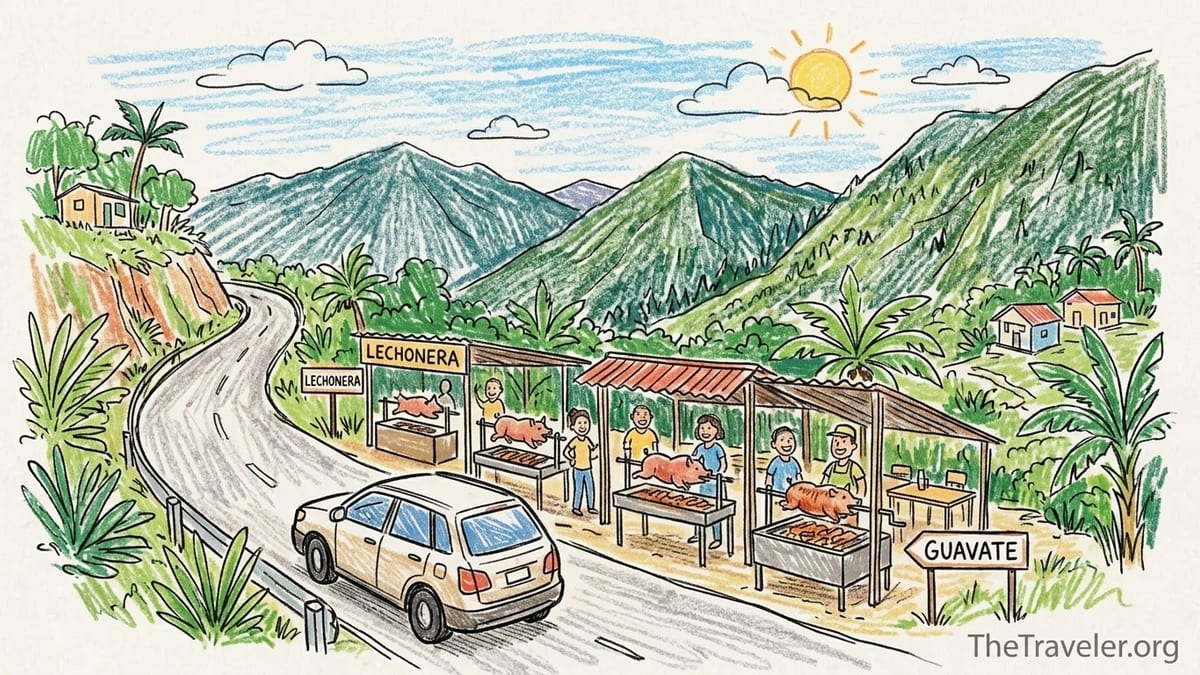
Guavate is a rural barrio of Cayey in Puerto Rico’s central mountains, about 45 minutes to 1 hour south of San Juan by car when traffic is light. The heart of the action is a short, winding stretch of Puerto Rico Highway 184, locally known as the Ruta del Lechón, where several dozen lechoneras line the road over a few miles. To get there from San Juan, most visitors take PR-52 toward Ponce, then exit near Cayey and follow the signs for Guavate and PR-184 uphill into the Sierra de Cayey. The last section is narrow and curvy, but it is fully paved and manageable for confident drivers.
On my visit, I underestimated how quickly the day ramps up. Leaving San Juan after 10 a.m. meant I reached the base of the mountain just as the Sunday crowd began to build. Traffic slowed to a crawl at the turnoff onto PR-184, where vendors had already set up coolers and tents on the roadside, selling everything from cold Medalla beer to bags of chicharrones. What should have been a 10-minute climb became closer to half an hour as cars inched uphill behind delivery trucks and people looking for parking.
The change in atmosphere from the coastal expressway to the interior mountains is immediate. As PR-52 climbs, the temperature drops a few degrees and the air feels noticeably fresher. By the time you turn onto PR-184, you are driving under a canopy of green, with glimpses of steep river valleys and houses perched on the hillsides. It felt less like a quick lunch stop and more like entering a separate weekend world, one calibrated around slow food, loud music, and long afternoons.
There is no convenient public transportation to Guavate, and ride-hailing coverage can be inconsistent once you leave the San Juan metro area. Realistically, you need a rental car or a private driver to visit. If you are staying in San Juan, expect to pay standard rental-car rates plus highway tolls, or negotiate a flat rate with a local driver. The independence of driving yourself is valuable, but as I discovered after a few medallas and rum punches, it also requires planning ahead for who will stay sober on the return journey.
First Impressions: Smoke, Sound Systems, and Roadside Lechoneras
What strikes you first in Guavate is not the sight of food but the smell and the sound. Even with the windows rolled up, the smoke from roasting pigs seeps into the car, thick with garlic, oregano, and charcoal. Every few hundred feet, another lechonera appears on the right or left: open-air pavilions with long counters piled high with trays of food, whole pigs turning on spits in glass-fronted roasting boxes, and giant speakers blasting salsa, merengue, or reggaetón.
Names repeat as you climb: Los Pinos, El Rancho Original, El Nuevo Rancho, Los Amigos, El Mojito, Doctor Lechón, and several smaller spots clinging to the slope. Some are little more than a counter and a few plastic tables under a metal roof. Others feel like full-scale event venues, with dance floors, multiple bars, elevated decks, and parking attendants in bright vests waving you into tight spots. It is a dense, slightly chaotic strip, but it never feels unsafe. Instead, it feels like a series of overlapping family parties open to anyone who shows up hungry.
I had expected something more obviously touristy, like a food court for visitors, but the crowd was overwhelmingly local. Multi-generational families arrived in caravans of cars and pickup trucks, older couples in guayaberas sat at corner tables, and groups of friends in Jerserys and beachwear flowed between lechoneras with plastic cups in hand. English was spoken here and there, but the soundtrack of the day was almost entirely Spanish: shouted greetings, orders at the counter, and lyrics from classic salsa tracks.
Even early in the day, the energy was high. At one of the larger lechoneras near the top of the strip, a live band tuned up around noon, and kids darted between tables with inflatable toys bought from roving vendors. The whole road buzzed with small movements: cars squeezing past delivery vans, someone unloading sacks of charcoal, a cook taking a machete to a freshly roasted pig. It was immediately clear this was not only about eating; it was about spending the whole afternoon in a place built for lingering.
Ordering Lechón: Prices, Portions, and My First Big Mistake
Food at the lechoneras is ordered cafeteria-style. You walk up to the counter, scan a long row of stainless-steel trays, and point to what you want. The star, of course, is lechón asado by the pound. At well-known spots like Lechonera Los Pinos and El Rancho Original, recent posted prices for roast pork hover around 7 to 10 US dollars per pound, with combination plates including pork and sides starting in the 10 to 20 dollar range depending on portion size and accompaniments. Other meats might include ribs, pork chops, chicken, or turkey prepared in the same style.
Sides are classic Puerto Rican comfort food: arroz con gandules, yuca al mojo, tostones, amarillos, morcilla, and potato salad. It is easy to end up with a very full tray and a higher bill than expected. On my first stop, I ordered close to a pound of lechón with rice and pigeon peas, yuca, and a slice of morcilla, plus two soft drinks, which came to a little over 20 dollars. For two people sharing, a pound of meat and two or three sides is usually plenty, especially if you are planning to stop at more than one lechonera.
My first mistake was treating that first plate as if it were the main event of the day. By noon, I was already several bites past comfortably full. That limited my appetite at later stops, where I would have preferred to try smaller portions of different styles of pork and sides. Regulars pace themselves much more strategically, splitting one plate four ways, or ordering only cuerito and a side of rice at one place, then moving on for more at the next.
Another practical detail is payment. While some of the bigger lechoneras now accept credit or debit cards, several counters and bar kiosks still operate cash-first. Discover Puerto Rico has recently highlighted that visitors should bring cash because not every lechonera has fully modernized payment systems, and that matched my experience. At my first stop, I was able to pay by card, but the next bar I walked up to for a beer was cash-only. An ATM was available, but it had a line and an additional fee. Bringing enough cash in small bills can save you time and mild stress on a busy weekend.
The Weekend Crowd: Traffic, Parking, and Moving Between Lechoneras
By early afternoon, the Ruta del Lechón transforms from a busy roadside into something closer to a slow-moving street festival. Cars, pedestrians, vendors, and music all merge into one long, noisy corridor. This is where the timing of your arrival really matters. Both Discover Puerto Rico and local guides now explicitly recommend getting to Guavate before noon on weekends, ideally by 11 a.m., to avoid the worst traffic and to find a parking spot closer to the lechoneras.
Arriving around 11:15 a.m., I initially found parking at a medium-sized lot beside one of the central lechoneras for a modest fee. By 1 p.m., however, that lot had a queue of cars waiting for spaces, and the main road was congested enough that walking often became faster than driving. Some visitors park lower on PR-184 and walk uphill, which can easily mean a 10 to 20 minute climb on a hot day. Others squeeze roadside into improvised spaces that require careful maneuvering when it is time to leave.
Moving between lechoneras on foot is straightforward, but the narrowness of the road demands attention. There are no continuous sidewalks, so you often walk along the edge of the asphalt, stepping into gravel or onto small shoulders when cars pass. It felt safe enough in daylight, with drivers moving slowly, but families with small children held hands tightly, and groups sometimes walked single file. Comfortable shoes are essential; this is not a flip-flop-friendly stroll, especially after a rain when patches can be slick.
The upside of the congestion is that it makes wandering easier. You can hear the difference in each spot before you see it: one lechonera dominated by trombones and salsa classics, another pumping reggaetón, another leaning into bachata covers. Crossing from one to the other is as simple as following your ears until a particular rhythm draws you in. This is what gives Guavate its chinchorreo feel: you are not committing to a single restaurant but to a moving, multi-stop afternoon where each lechonera is another chapter.
Atmosphere and Music: From Quiet Lunch to Mountain Block Party
When I first arrived, the air was cool for the tropics, with a soft breeze and patches of cloud drifting over the mountains. Temperatures in Cayey’s higher elevations often sit a few degrees lower than coastal San Juan, and you can feel it when you step out of the car. By late morning it was warm but not oppressive, and some families chose tables closer to the open railings to catch more of the mountain air. Vendors at one lechonera joked about needing a light jacket in December evenings, something you would rarely consider nearer sea level.
As the day pushed past noon, the atmosphere shifted noticeably. Recorded music at lunch-hour volume gave way to live bands and DJ sets. At El Rancho Original, a full band took the stage: congas, brass, and a singer urging everyone onto the dance floor. Within minutes, couples who had been quietly eating were up dancing salsa between the tables, while kids twirled around them with cotton candy. A few older men stood off to the side, nodding their heads, plastic cups of rum and Coke in hand.
The social side of Guavate is what makes it feel so different from simply going out for roast pork elsewhere on the island. Eating is the anchor, but much of the experience is standing around, talking, watching people dance, and soaking in the music. It felt overwhelmingly local in tone. Extended families occupied long tables for hours, grandparents looking after toddlers while younger adults moved between the bar, the band, and friends who had just arrived. Occasional tour groups appeared briefly, but they blended into a crowd that clearly considered this their regular weekend hangout.
By mid-afternoon, the road itself felt like the second dance floor. Groups lingered at the entrances of lechoneras, leaning on railings as they watched the traffic and the constant arrivals. Motorcycles revved, someone cheered as a familiar song kicked in, and vendors passed by with trays of sweets. The rhythm of the day became: a little food, some dancing, a drink, a walk to the next spot, repeat. If you are looking for a quiet, contemplative meal, Sunday afternoon in Guavate is not it. If you want a full immersion into Puerto Rican weekend culture, this is exactly the point.
Practical Lessons: Cash, Designated Drivers, and Other Mistakes
Beyond arriving later than ideal and overeating early, I made a few other mistakes that shaped the day. The biggest was underestimating how long I would want to stay. I had mentally framed Guavate as a two-hour lunch stop, but once the music started and the crowds built, leaving felt like walking out of a party just as it was getting good. Each time I thought about going, another band started, or friends suggested one more drink, or a platter of perfectly crispy cuerito appeared at the next table.
That led to the second problem: drinking while planning to drive. On the mountain strip, the default drink at many tables is either local beer or simple rum cocktails. It is easy to say yes to another when you are dancing and not looking at the time. By mid-afternoon, I found myself calculating exactly how much I had consumed and how long I would need to wait before safely driving back to San Juan. If you know you want to enjoy beers or rum freely, it is worth considering hiring a private driver for the day or designating one person in your group to stay completely sober.
Cash flow was another friction point. With some lechoneras and bar stands still preferring cash, I burned through what I had brought faster than expected: a parking lot fee, a couple of plates of food, a cash-only bar, and small tips for live musicians passing a hat. When I went to get more, the only nearby ATM had a steady line and charged a service fee on top of my bank’s. On a return visit, I would bring more cash than I think I need, in denominations of 5s, 10s, and 20s for speed at the counter.
Finally, I underestimated the slow return trip. Leaving around 4:30 p.m. on a Sunday, it took nearly 40 minutes just to clear the most congested part of PR-184 and merge back onto PR-52, partly due to cars backing out of tight spaces and waves of pedestrians crossing the road. Sunset comes early in the mountains, and the curves feel sharper after a long day. If you are not comfortable driving winding roads after dark, plan to start heading downhill by mid-afternoon, especially on busy weekends or holidays.
Did Guavate Live Up to the Hype?
Guavate’s reputation as Puerto Rico’s roast-pork capital sets expectations very high. In my experience, it did live up to its billing, but not in the way I expected. The lechón I tasted was excellent, with crisp skin and tender, flavorful meat, but I have also had very good lechón elsewhere on the island. What sets Guavate apart is the concentration of lechoneras in one place and the social atmosphere that builds around them on weekends. It feels less like choosing a single restaurant and more like visiting a food-focused neighborhood festival that happens every Saturday and Sunday.
There is a tourist element. You will hear English, see rental cars, and occasionally spot organized groups snapping photos of entire pigs on spits. Prices for some items are aligned with the destination’s fame, especially on combination plates and drinks. Yet at its core, Guavate remains a place where Puerto Rican families gather with clear routines: they know exactly which lechonera they prefer for food, which for music, and which has the best parking for a quick escape. The mood, the jokes, the song choices, and the conversations around me all felt primarily geared to locals, with visitors welcomed into an existing scene rather than the other way around.
How easy is it to move between lechoneras? Logistically, it takes some patience, but it is manageable. In one afternoon, I ate at one, shared a snack at another, and spent long stretches just standing with a drink at two more, watching bands and people. The distances between major lechoneras are short enough that you can treat the whole strip as walkable, as long as you are comfortable sharing the roadside with traffic. The more time you allow, the richer that hopping-around experience becomes.
In the end, perhaps only half of my time in Guavate was spent actively eating. The rest was absorbed by conversation, dancing, watching kids play, and noticing how the cool mountain air gradually turned humid and smoky as the cooking fires ran all day. If you arrive expecting a quick, efficient meal and photo, you may feel the place is over-hyped or too crowded. If you come ready for an unhurried, social day trip rooted in food but not limited to it, Guavate delivers on its legendary status.
Who Guavate Is Best For and How I Would Visit Next Time
Guavate is particularly rewarding for travelers who enjoy food as a gateway into local culture. If you are the kind of person who wants to sit where locals sit, listen to live salsa, and are comfortable with a bit of mess and noise, this is an essential stop. It works especially well for small groups of friends or families who can share plates and rotate designated-driver duties. For solo travelers who like people-watching and are comfortable navigating driving and crowds alone, it can also be a memorable day trip from San Juan.
It may be less appealing if you dislike loud music, prefer plated fine dining over cafeteria-style lines, or feel anxious in heavy traffic and improvised parking situations. Vegetarians will find sides and perhaps some grilled vegetables, but the entire experience is unapologetically built around pork. Very young children can enjoy the music and open spaces, but parents need to keep a close eye on them near the roadside and within crowded pavilions.
If I were planning a second visit, especially on a weekend, I would leave San Juan no later than 9:30 a.m. to be comfortably parked in Guavate by 10:30 or 11. I would bring ample cash, choose one main lechonera for an early, moderate lunch, and then treat the others as places for small tastings, drinks, and music. I would also decide in advance whether I planned to drink at all and, if so, arrange either a driver or a plan to stay in the general Cayey area overnight and return the next morning.
I would also leave room for nearby nature. The same mountain corridor that hosts the lechoneras is a gateway toward the Carite State Forest and river pools, which some visitors combine with Guavate as a swim-and-eat day. Weather can shift quickly in the mountains, so I would pack a light rain jacket in addition to the usual sun protection. Above all, I would block out the whole day, not just a lunch slot, and let the place dictate the pace rather than my original schedule.
The Takeaway
Guavate’s Ruta del Lechón is more than a string of roast-pork restaurants. It is a living weekend ritual for Puerto Ricans, set along a narrow mountain road where smoke, music, and conversation mix into something much larger than the sum of its parts. Going there only for the food risks missing what makes it special. The best way to experience it is to arrive early, stay late, wander between lechoneras, and allow yourself to become part of the crowd instead of just an observer.
For travelers with time for only one big day trip from San Juan centered around food and music, Guavate deserves serious consideration. It offers a concentrated, authentic slice of island life that manages to accommodate visitors without losing its local soul. With the right planning around timing, cash, and transportation, it is a destination that can easily become a highlight of a Puerto Rico itinerary and, for many, a reason to return.
FAQ
Q1. Where exactly is Guavate and how long does it take to get there from San Juan?
Guavate is a mountain barrio of Cayey in central Puerto Rico, along Highway 184. By car, it usually takes about 45 minutes to 1 hour from San Juan in light traffic, or longer on busy weekends and holidays.
Q2. Do I need a car to visit the Ruta del Lechón in Guavate?
In practice, yes. There is no convenient public transportation that drops you at the lechoneras, and ride-hailing services are not guaranteed once you leave the metro area. Most visitors either rent a car or hire a private driver.
Q3. What is the best time and day to visit Guavate?
For the full lively atmosphere with music and big crowds, weekends are best, especially Saturdays and Sundays. Official tourism advice and local experience both suggest arriving before noon on weekends, ideally by 11 a.m., to avoid heavy traffic and to find a good parking spot.
Q4. How much should I expect to spend on food in Guavate?
Prices vary by lechonera, but recent menus show roast pork by the pound in the general range of about 7 to 10 US dollars per pound. Combination plates with lechón and traditional sides often fall between roughly 10 and 20 dollars, depending on serving size and extras. Sharing plates between two or more people keeps costs and portions reasonable.
Q5. Do lechoneras in Guavate accept credit cards, or is it cash-only?
Some of the larger lechoneras and bars accept cards, but several still prefer or only accept cash, especially for drinks and small purchases. Tourism information and recent visitor reports both recommend bringing plenty of cash in small bills so you are not dependent on a single ATM or card terminal.
Q6. Is Guavate suitable for children and families?
Yes, many local families visit with children and grandparents. There is live music, open-air seating, and plenty of space to move around. Parents should be prepared for loud environments and keep a close watch near the roadside and within crowded pavilions, especially on busy Sundays.
Q7. How easy is it to move between different lechoneras?
The main cluster of lechoneras sits along a short stretch of Highway 184, so walking between them is feasible and part of the experience. The road is narrow and shared with cars, so you will often walk on the roadside shoulder. Allow time, wear comfortable shoes, and be cautious around traffic.
Q8. Is Guavate very touristy, or does it still feel local?
Guavate attracts both visitors and locals, but on weekends the atmosphere still feels strongly local, with Puerto Rican families making up much of the crowd. You will see some tour groups and rental cars, yet the music, conversations, and social routines remain rooted in local culture rather than catering exclusively to tourists.
Q9. Can I visit Guavate if I do not eat pork?
You can, but options are limited. Most lechoneras specialize in roast pork and other meats, though some offer chicken, turkey, and various side dishes like rice, yuca, and plantains. The experience is very centered on pork, so non-meat eaters may find more enjoyment in the music and atmosphere than in the food.
Q10. How should I plan my visit if I want to drink but not drive?
If you plan to enjoy beer or rum freely, arrange a sober driver in your group, hire a private driver for the day, or consider staying overnight in or near Cayey and returning to San Juan the next morning. The roads into Guavate are winding mountain routes, and planning transportation ahead of time is the safest way to enjoy the full experience.