


Guayama, on Puerto Rico’s south coast, offers a mix of historic streets, shady plazas, mangrove-lined coastline and casual food stops that can work very well for families if you plan the day around children’s ages and attention spans. This guide focuses on realistic family experiences in and around Guayama, including the Jobos Bay National Estuarine Research Reserve, with practical details on heat, transport, food and safety so parents can decide what is right for their kids.
Get the latest updates straight to your inbox!
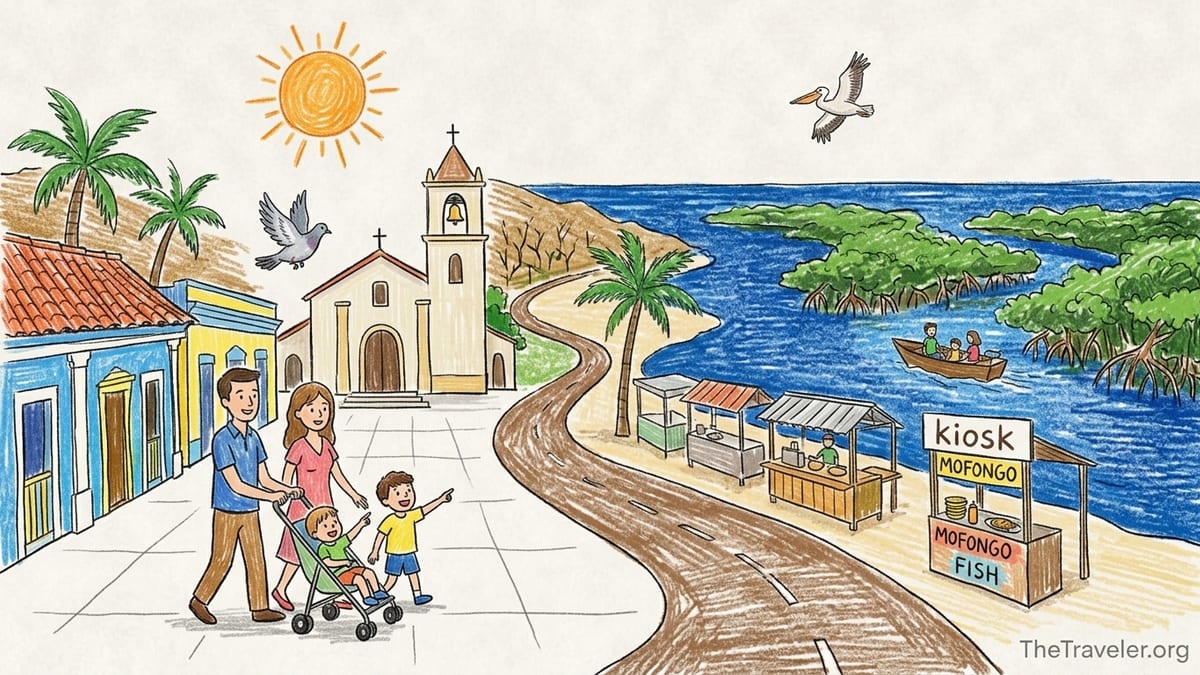
Getting Oriented: Guayama And Jobos Bay With Kids
Guayama sits on Puerto Rico’s southern coast about 45 to 60 minutes’ drive from San Juan, depending on traffic, using the PR-52 toll highway most of the way. Families usually combine time in the compact historic center with a drive to the coastal area near Aguirre and Jobos Bay. Jobos Bay is Puerto Rico’s second-largest estuary and part of the U.S. National Estuarine Research Reserve System, protected for long-term research, monitoring and education. NOAA notes that the reserve covers thousands of acres of mangroves, seagrass beds, lagoons and dry forest between Guayama and Salinas, with habitat for species such as brown pelicans, hawksbill sea turtles and West Indian manatees. Daily management is led by Puerto Rico’s Department of Natural and Environmental Resources, often referred to locally as DRNA.
For a family, this means Guayama is less a single big attraction and more a cluster of short stops: a plaza and church for younger kids to stretch their legs, a simple museum visit if open, a coastal drive with roadside kiosks serving fried fish and mofongo, and optional nature time around Jobos Bay. Guayama is not a purpose-built resort town; bathrooms and shaded play areas are scattered rather than concentrated, and many nature experiences work best with a local guide or advance planning. That slower, more local rhythm can be a positive for families who prefer flexible, low-pressure days rather than rigid schedules of ticketed attractions.
Heat and sun are major factors on this coast. The south of Puerto Rico is typically hotter and drier than San Juan or the central mountains, with midday temperatures in the high 80s to low 90s Fahrenheit for much of the year and strong sun reflecting off concrete and water. Most families will be more comfortable planning plaza walking or short town explorations before 11 a.m. or after 4 p.m., and keeping midday for shaded restaurant lunches, naps or a quiet drive along the coastal route in air conditioning.
Planning Basics: Getting There, Moving Around And Safety
Reaching Guayama almost always requires a car, whether rental or private transfer. Public transport options on this part of the island are limited, infrequent and not practical for a family day that includes both the historic center and the coastal zone. From San Juan, most visitors follow PR-52 south past Caguas and exit near Cayey or Salinas toward Guayama, with toll charges that are modest by U.S. mainland standards but will add a few dollars each way. From Ponce, Guayama is roughly an hour’s drive east on PR-52 or the coastal PR-3 route.
Parents should assume that U.S.-style child restraint rules apply in practice, even if enforcement feels relaxed in some rural areas. Puerto Rico law requires children under 8 years old to use a car seat or booster appropriate to their size, and children under 4 must use a car seat in the back seat. In reality, police occasionally conduct highway checks, and rental companies at San Juan and Ponce airports do stock compliant seats for an extra daily fee that is often in the range of other U.S. territories. Bringing your own familiar car seat from home generally offers the best fit and avoids last-minute shortages during holiday periods.
Heat, hydration and sun protection drive many decisions here. Families should travel with refillable water bottles, apply a high-SPF, reef-safe sunscreen before leaving the hotel, and carry lightweight long-sleeve layers or rash guards for kids who burn easily. Hats that secure under the chin help in breezier coastal spots. On the mosquito side, the mangroves and low-lying coastal wetlands around Jobos Bay and Aguirre can have intense insect activity at dawn, dusk and after rain. A child-safe insect repellent, light-coloured clothing that covers ankles and wrists, and awareness that sunset kayaking may mean more bites are all important. Closing car doors quickly and shaking out daypacks before putting them back on small shoulders can reduce surprises.
Historic Center: Plaza, Church And Quick Culture For Short Attention Spans
Guayama’s historic center is compact and manageable for families, with a central plaza, church and surrounding streets that represent a classic small-town Puerto Rican layout. Young children often enjoy simply running on the open paved areas, watching pigeons, and tasting a piragua, the traditional shaved-ice cone flavored with syrups like tamarind or cherry from roaming vendors when they are operating. Parents can sit on shaded benches while kids move around without the traffic intensity found in San Juan’s Old Town. Because the plaza is mostly open, however, it can feel extremely hot by early afternoon, especially on windless days.
A realistic time limit for toddlers and preschoolers in the historic center is about 60 to 90 minutes, including a drink or snack stop. That might include a quick look inside the main church if there is no service in progress, a few photos of the façades, and a walk around one or two surrounding blocks to see colorful houses. Families with elementary-age kids who are interested in history can extend this to two hours by adding a simple storytelling circuit about the town’s sugar and railway past or pointing out architectural details while still building in a sit-down break.
Bathrooms in the plaza area are typically in cafes or restaurants rather than in public facilities. It helps to plan a stop at a bakery or small restaurant near the square, order something small like a café con leche and a pastry or empanadilla, and use their restroom before heading back to the car. Baby changing tables are not guaranteed even in sit-down places, so families with infants may want a portable changing pad and a plan to change diapers discreetly in the car if needed. For strollers, sidewalks can be uneven, with occasional broken tiles or high curbs, so an all-terrain or mid-size stroller is easier to handle than a tiny travel model with small wheels.
Coastal Food Stops: Ruta Gastronómica And Easy Seaside Time
The biggest immediate reward for driving to Guayama with kids is often food along the coast. Discover Puerto Rico highlights Guayama’s Ruta Gastronómica de la Costa and the Sendero Gastronómico Costero, a coastal food route lined with seafood spots, roadside kiosks and casual open-air restaurants between the mangrove fringes of Jobos Bay and the Caribbean Sea. Families can expect menus centered on fried red snapper, mofongo stuffed with shrimp or octopus, rice and beans, tostones, simple grilled meats and kid-friendly basics like plain rice, fries or chicken strips in some places. Many of these businesses are locally owned, informal and busiest on weekends and holidays.
For parents, the main questions are timing and comfort. On weekdays outside local holidays, some kiosks may open closer to midday and close by late afternoon, while weekends can stretch later into the evening with music and a livelier scene. With young children, aim for an early lunch around 11:30 a.m. to beat both the strongest sun and any crowds. Many spots are open-air terraces with ceiling fans but no air conditioning, so it is wise to choose a table in the shade and keep sunhats on children who like to dart in and out. Bringing your own silicone bibs, wipes and even lightweight reusable cups with lids can make the meal easier if your kids are still in the spilling-everything phase.
Restaurants along the route usually have bathrooms for customers, though they may be basic. Before ordering, a quick check that there is a usable toilet and space for a child to wash hands is worthwhile, especially if someone in the family is prone to stomach issues. Hand sanitizer is useful where soap supplies are unreliable. Because food portions in Puerto Rico are often quite large, families can share plates: one whole fried fish and a mofongo plus a side of rice and beans may easily feed two adults and one or two small children, reducing waste and cost. Asking whether seafood is local and how long the wait will be during busy times gives you more control over kids’ hunger and boredom.
Jobos Bay: Ecology, Education And Age-Appropriate Nature Time
Jobos Bay National Estuarine Research Reserve is the ecological heart of this area and a significant site in U.S. coastal conservation. NOAA describes the reserve as one of 30 protected estuarine areas in its research system, emphasizing long-term monitoring, water quality studies, habitat protection and education. The reserve includes mangrove islands, tidal channels, lagoons, seagrass beds and dry coastal forest. Habitat here supports endangered and threatened species such as the brown pelican, hawksbill sea turtle and several coral species, and it provides feeding and nursery grounds for fish that support both commercial and recreational fishing.
For families, the most accessible parts of Jobos Bay are educational trails, viewpoints and visitor areas overseen by DRNA, sometimes with interpretive signs in Spanish and limited English. Availability of guided tours and visitor center opening hours can change with staffing and budgets. Before committing the day, it is wise to confirm by phone or through local tourism offices whether any education programs or ranger-led walks are running during your visit, especially if your kids are older and curious about ecology. When activities are operating, they often focus on explaining mangrove types, the role of seagrass in protecting coasts, and the way estuaries serve as nurseries for marine life.
Younger children with short attention spans generally do best with a single short boardwalk or viewpoint plus a simple hands-on activity like looking for crabs from a safe distance or spotting birds with a shared pair of binoculars, keeping the stop under an hour. Older children and tweens can handle a bit more structured learning, such as reading information panels about the reserve’s role in monitoring climate-related changes, trying to identify different mangrove species, or discussing how sea level rise could affect low-lying coastal communities. Regardless of age, insect protection is non-negotiable here, particularly during the hour after sunrise and the hour before sunset when mosquitoes and no-see-ums are active in mangrove areas.
Aguirre Forest And Trails: Why Not Every Path Is Child-Friendly
The Aguirre State Forest, or Bosque Estatal Aguirre, borders parts of Jobos Bay and is identified by Discover Puerto Rico as a mangrove forest with bird-watching spots and walking paths. This sounds perfect for families at first glance, but parents should approach with realistic expectations. The current Discover Puerto Rico hiking guidance for the broader island notes that some coastal routes in this region can be wild, with sections that require bushwhacking or confident navigation skills rather than simply following a wide, signed path. Erosion, seasonal flooding and limited maintenance can change trail conditions from one year to the next.
Because of that, Aguirre cannot be universally described as an easy, stroller-friendly place to wander with small children. Some side paths may be narrow, rooty or muddy, and there may be boardwalk sections in variable repair. Families traveling with toddlers or anyone unsteady on their feet should stick to clearly established, short trails that begin near the main access or camping area of the forest and avoid unmarked side tracks that head deeper into mangroves. When in doubt, ask DRNA staff or a reputable local guide on the day which routes are currently appropriate for your group’s age mix.
For birding enthusiasts with older kids or teens, an early-morning visit to the clearer sections of Aguirre can be rewarding. Mangrove and coastal birds may include herons, egrets, pelicans and ospreys, and the quieter, more atmospheric sections of forest can spark good conservation conversations with adolescents. However, this kind of outing suits families willing to wear closed shoes, long pants, and carry enough water for a hot, buggy couple of hours. It is not a spontaneous “let the kids run ahead in sandals” park. If conditions look questionable or recent heavy rain has left standing water on trails, it is safer with children to skip Aguirre and focus on Jobos Bay educational areas and the coastal food route instead.
Water, Kayaking, Birding And Golf For Older Kids And Teens
Families with older children who are comfortable in and around water can look into guided kayaking or small-boat outings in the Jobos Bay area, often operated from the nearby municipality of Salinas but accessing the same estuarine system. These trips usually require children to be at least 6 or 8 years old to paddle in a tandem kayak or sit safely in a small boat with life jackets. They can include daylight mangrove channels, shallow areas where seagrass and juvenile fish are visible, and opportunities to spot birds resting on mangrove branches. Because opening and closing patterns for small operators change frequently, parents should contact outfitters in advance, confirm minimum ages, and ask explicitly about water conditions, sun exposure and bathroom access at the launch site.
Birding is another age-dependent activity. Younger children may only manage 20 or 30 minutes of looking through binoculars at herons before attention wanders, especially in the heat. Teens who are already interested in nature or photography may willingly get up early to be on site around sunrise, when bird activity is highest and temperatures are lower. In both cases, quiet behavior, slow walking and staying on established paths matter to avoid disturbing wildlife in this protected research reserve.
Golf enters the picture for families with tweens and teens who like sports or want to try a new activity. The south coast of Puerto Rico includes golf courses within a reasonable driving distance of Guayama, some of which offer driving ranges or short-game practice areas that welcome juniors. A practical way to incorporate this into a family day is to let one parent take a teen to hit balls for an hour at the end of the day while the other parent occupies younger siblings at a playground or in a shaded café. Renting clubs on site avoids hauling gear, and lightweight sports clothing that already doubles as sun protection for Jobos Bay works equally well on the course.
Designing The Day: Sample Easy, Moderate And Adventurous Family Plans
For families with toddlers or preschoolers, an easy Guayama day might begin with a morning drive from San Juan or Ponce, arriving in town between 9 and 10 a.m. Spend about an hour in the historic plaza area, including a snack break in a café and a quick look inside the church, then head toward the coastal food route before noon. Choose a casual seaside restaurant with shade where children can watch boats or waves while waiting for food, then let everyone rest in the car on the return drive during the hottest part of the day. This version avoids long walks, complicated logistics and late hours, while still giving young children a sense of a different Puerto Rican town and the sea.
With school-age children, a moderate day could layer in more learning without overloading them. Arrive earlier, around 8:30 or 9 a.m., head straight to a Jobos Bay visitor area or short interpretive trail for about 60 to 90 minutes while it is relatively cool, then drive back toward Guayama’s center for a plaza stroll and light lunch. In the afternoon, continue along the Ruta Gastronómica to explore one or two additional viewpoints or ice cream stops by car, limiting any outdoor walking to 20 minutes at a time. This gives kids exposure to the estuary, town life and coastal eating, with multiple bathroom and water breaks built in.
Families with teens and a taste for more adventure might plan an early start from their base, reaching the Jobos Bay area shortly after sunrise for an organized kayaking or boat-based nature tour, then recovering over a mid-morning brunch at a coastal kiosk. After a rest in the car, they could add a carefully chosen walk in Aguirre forest if trail conditions are confirmed safe and suitable, or alternatively devote the afternoon to a visit to a nearby golf facility or longer birding session. This kind of day demands close attention to hydration, sun and insect protection, and a willingness to adjust or cancel the more rugged segment if heat or trail reports make it unwise. Teens can share more responsibility, carrying their own water and repellent and helping to read maps or interpretive materials.
The Takeaway
Guayama and Jobos Bay are not a theme park; they are working landscapes of town streets, mangrove channels and coastal roads that reward families who plan realistically and stay flexible. Instead of a checklist of major attractions, parents will find small moments that add up over the day: a child’s first bite of freshly fried fish under a tin roof facing the Caribbean, a pelican dive-bombing for food in the bay, the quiet of a nearly empty plaza in late afternoon light. Younger children will remember running in the square and feeding pigeons, older kids may remember the strange roots of red mangroves or the feeling of paddling a kayak along a calm channel.
Success here depends less on seeing everything and more on matching activities to age and energy. Keep town visits short for the smallest travelers, time meals early, protect against heat and mosquitoes, and treat Aguirre’s wilder paths with respect rather than assuming every trail is a family stroll. If you do, a day in Guayama can be a gentle, grounded window into Puerto Rico’s south coast, balancing history, nature, local food and just enough adventure for the kids you actually have, not the ones in glossy brochures.
FAQ
Q1. Is Guayama a good day trip with toddlers or very young children?
Guayama can work well with toddlers if you keep expectations modest. Plan for a short walk around the main plaza in the morning, a stop at a café for snacks and bathrooms, and an early lunch at a shaded coastal restaurant where kids can watch the sea. Avoid long nature walks in Aguirre with very small children because trails can be uneven and hot.
Q2. How long should we expect young children to tolerate the historic center?
For most toddlers and preschoolers, 60 to 90 minutes in the historic center is realistic, including time to sit for a drink or snack. Sidewalks can be uneven and there is limited shade in the open plaza by midday, so it is best to visit before 11 a.m. and then retreat to air conditioning or the coast.
Q3. What age is appropriate for visiting Jobos Bay National Estuarine Research Reserve?
Children of any age can visit viewpoints or short interpretive areas at Jobos Bay, but organized ecology activities and kayaking are best for school-age kids and up. Younger children do better with very short walks, simple wildlife spotting and plenty of breaks, while older kids can absorb more about mangroves, seagrass and conservation.
Q4. Are mosquitoes and insects a serious issue around Jobos Bay and Aguirre?
Yes, mosquitoes can be intense in mangrove and wetland areas, especially at dawn, dusk and after rain. Families should use child-safe repellent, dress in light-colored long sleeves and pants when possible, and consider visiting nature areas in the mid-morning when insects are usually less active, while still carrying protection.
Q5. Can we treat Aguirre forest trails as easy family hikes?
No, not automatically. Some paths in Aguirre are relatively gentle, but current coastal hiking guidance for the region notes that certain routes can be overgrown or require navigation and light bushwhacking. With children, stick to clearly marked, short trails near main access points and avoid venturing onto unmaintained paths unless a local ranger or guide confirms they are suitable.
Q6. What should we know about car seats and driving to Guayama?
Puerto Rico law requires appropriate child restraints for kids under 8 years old, with car seats in the back seat for under 4s. Highways to Guayama are similar to mainland U.S. interstates, but local roads can be narrow with speed bumps. Bringing your own familiar car seat or booking one with your rental ahead of time is the safest option for a family drive.
Q7. Are there reliable bathrooms and changing facilities for families?
Public bathrooms in Guayama’s plaza area are limited, so families usually rely on restrooms in cafés and restaurants. Coastal eateries along the Ruta Gastronómica generally have basic facilities for customers, though baby changing tables are not guaranteed. A portable changing pad and extra wipes are very helpful if you are traveling with infants.
Q8. How should we time meals with kids during a Guayama day trip?
Because of the heat and the way local restaurants operate, it is smart to aim for an early lunch around 11:30 a.m. at a coastal spot. This keeps kids out of the strongest midday sun, avoids the busiest period at popular kiosks, and reduces long waits that can be hard for hungry children. Carry snacks in case a particular restaurant opens later than expected.
Q9. Is guided kayaking in the Jobos Bay area safe for children?
Guided kayaking can be safe for older children who are comfortable around water and can follow instructions. Operators in the Jobos Bay area typically set minimum ages, provide life jackets and choose sheltered routes, but parents should confirm age limits, route length, sun exposure and bathroom access before booking to ensure it matches their child’s abilities.
Q10. What should we pack for a family day in Guayama and Jobos Bay?
Essentials include reef-safe sunscreen, hats, refillable water bottles, child-safe insect repellent, light long-sleeve layers, comfortable closed-toe shoes for any trails, a portable changing pad for babies and basic car-seat needs. Adding binoculars for bird spotting and a simple field notebook or drawing pad can help older kids engage more with the Jobos Bay environment.