


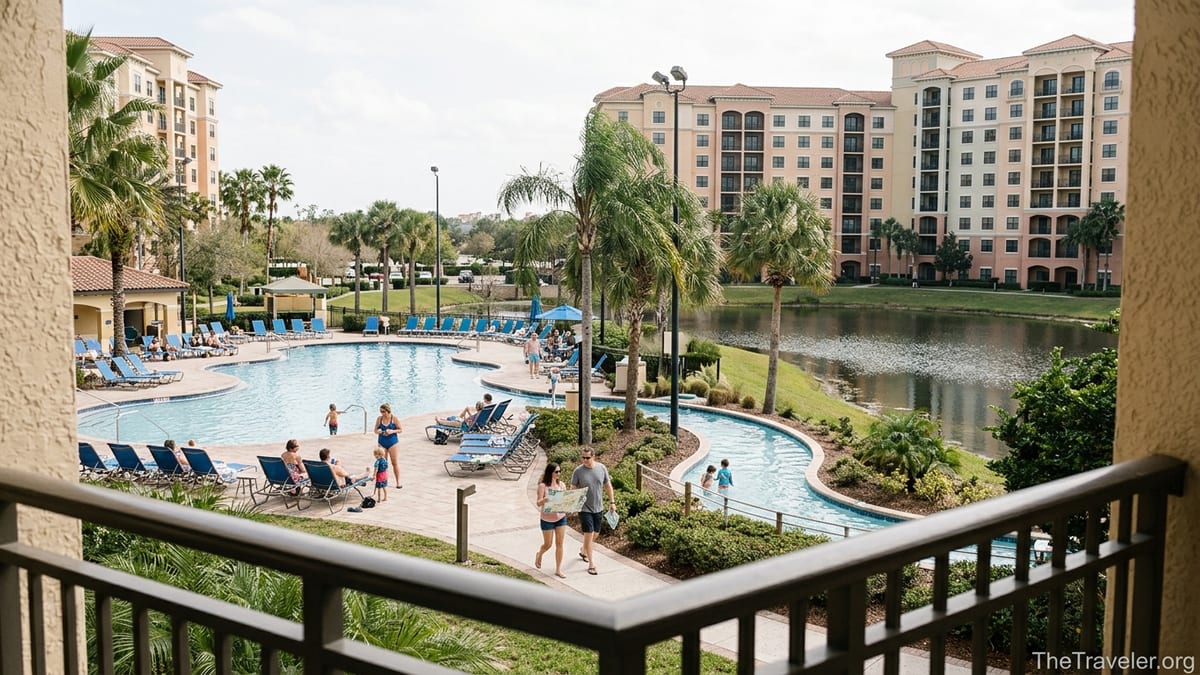
Club Wyndham Bonnet Creek is one of the most popular off-site resorts near Walt Disney World, with spacious condo-style suites, lazy rivers, and a location tucked inside the Bonnet Creek Resort area just beyond Disney’s official hotel zone. Along with the pools and fireworks views, many guests also encounter invitations to attend a Club Wyndham vacation ownership presentation. The offers can sound tempting: free nights, gift cards, or attraction discounts in exchange for “90 minutes” of your time. Before you say yes, it helps to understand exactly what you are walking into, what Wyndham is selling, and how to decide if the deal makes sense for your travel style and budget.
Get the latest updates straight to your inbox!
How Wyndham Vacation Ownership Works in Practice
Club Wyndham, including the Bonnet Creek resort, operates on a points-based vacation ownership system rather than old-style fixed-week timeshares. Instead of buying a specific week in a specific condo, owners purchase an annual allotment of Club Wyndham points that function as vacation currency. Those points can be used to book stays at participating resorts, with the number of points required varying by resort, unit size, season, and length of stay. For example, a one-bedroom suite at Club Wyndham Bonnet Creek in early September might require far fewer points than a three-bedroom unit over Christmas week, when demand is at its peak.
New buyers typically pay a substantial upfront purchase price plus yearly maintenance fees. Exact numbers vary by offer and promotions, but it is common for first-time packages to run into the tens of thousands of dollars when purchased directly from Wyndham, with annual fees that can easily exceed a few thousand dollars for higher point levels. Those yearly assessments help cover property upkeep, staffing, and operations at resorts such as Bonnet Creek, which has multiple towers, pools, and resort amenities that must be maintained regardless of how often any given owner travels.
From Wyndham’s perspective, the Bonnet Creek timeshare presentation is the primary channel to sell that ownership. Sales representatives walk guests through how the points system works, how often they say typical families travel to Orlando or other destinations, and how much hotel rooms might cost in comparison. They often position ownership as a way to “lock in tomorrow’s vacations at today’s rates” and emphasize flexibility, including the ability to book at other Club Wyndham resorts or sister brands under the broader Travel + Leisure Co. umbrella.
In real life, the value proposition depends entirely on your travel habits and finances. Families that reliably vacation in condo-style resorts every year and who have predictable schedules may find the structure appealing, especially if they place a premium on space and kitchens. Others who prefer last-minute weekend trips, boutique hotels, or low-cost rentals may find that a long-term financial commitment to a single system does not align with how they actually travel.
What Really Happens at a Bonnet Creek Presentation
When you accept an invitation at Club Wyndham Bonnet Creek, you are usually scheduled for a morning or early afternoon slot, often with breakfast or snacks included. Many guests are told the session will last 90 minutes or perhaps two hours. In practice, reports from recent attendees suggest the actual experience can stretch closer to two and a half or even three hours from arrival to walking out, especially if you sit through the full sales pitch and a manager’s follow-up offer.
The process often starts with check-in at a sales center on the resort grounds or at a nearby building, where staff verify your identification and eligibility. You may be asked for a credit card for incidentals or to confirm that you meet certain demographic criteria, such as minimum income, age, and marital or cohabiting status. Then you are paired with an individual sales representative who escorts you to a table, lounge area, or model unit. At Bonnet Creek, this can involve a short walk or golf cart ride through the property, which also serves as a live demonstration of the resort’s amenities.
The initial conversation is usually friendly and informal, focusing on your past vacations, how often you visit Orlando, and what you like about Bonnet Creek. Your representative will likely sketch out comparison scenarios on a notepad, such as “If you keep paying $250 per night for hotels over the next 20 years, you could spend X dollars, but if you buy into Club Wyndham today, you pay Y upfront plus annual fees and get guaranteed vacation options.” They may show sample points charts, highlighting how many points you would need to book a two-bedroom unit at Bonnet Creek during school holidays versus quieter weeks.
Near the end of the session, if you decline to buy, you can expect a handoff to a “closer” or manager who presents a revised offer. This might be a lower-price starter package with fewer points, a lower down payment, or a special promotion only available “today.” Some guests report being asked multiple times to justify their decision, while others describe a more straightforward wrap-up once they clearly say no. In all cases, you will eventually be escorted to a separate desk to collect your promised gift cards, voucher, or incentive once the sales team notes that you have completed the required time.
Perks and Incentives: What You Might Be Offered
The main reason many travelers agree to a Bonnet Creek presentation is the incentives. These offers vary by promotion and season, but in recent years guests have reported packages such as a discounted three or four-night stay at Bonnet Creek plus a prepaid gift card in exchange for attending a 90 to 120 minute pitch. For example, a phone offer might include a long weekend in Orlando for a few hundred dollars plus a gift card valued around the same amount, making the lodging effectively free if you would have traveled anyway.
On-property, the concierge or “guest services” desk at Club Wyndham Bonnet Creek may approach you with smaller but still attractive perks. Real-world examples include offers of a $100 prepaid card and attraction or restaurant discounts, or bonus Wyndham Rewards points, in exchange for one morning of your vacation. In some cases, guests have been promised future travel vouchers such as a two or three-night stay at another Club Wyndham property or a promotional cruise certificate, although such vouchers often come with restrictions, blackout dates, booking windows, and additional fees or taxes that reduce their practical value.
It is essential to get the specifics of any offer in writing before you commit your time. Ask exactly what you will receive, in what form, and when. For instance, clarify whether a gift card will be a physical card handed to you immediately after the presentation or an electronic card emailed later that day. Confirm whether any “free nights” are truly free or whether you must pay resort fees, taxes, or a separate booking charge. Some guests have reported confusion when a promised 3-night stay turned out to require paying higher-than-expected nightly rates to unlock the deal, or when they discovered that their cruise certificate covered only the base fare, not the taxes, port charges, or gratuities.
Finally, remember that these incentives are funded by the sales operation. A multi-hour presentation with well-trained staff, glossy materials, and follow-up calls costs Wyndham money, so the perks are designed to tip the scales just enough to persuade a percentage of attendees to buy. If you go in viewing the offer as a way to slightly subsidize a trip you already planned and can maintain firm boundaries, the incentives can feel like a win. If the promise of tickets, hotel nights, or a cruise seduces you into making a big financial decision under pressure, the value evaporates quickly.
High-Pressure Tactics and How to Handle Them
Timeshare presentations, including at Club Wyndham Bonnet Creek, have a long-standing reputation for being high pressure. While individual experiences vary widely, recent guest reports from Orlando and other Wyndham resorts describe aggressive sales tactics once it is clear the visitor is hesitant to buy. These can include repeated attempts to reframe your budget, statements implying that you are making a mistake by waiting, or emotional appeals about creating memories with children and grandchildren.
One common strategy is to emphasize that the offer in front of you is for “today only,” suggesting that if you walk out, you will never again see this combination of points, price, and incentives. Another is to pivot from a full-price package to a stripped-down “trial” product that still requires a sizable down payment, but is framed as low-risk or temporary. Some guests describe a friendly tone turning noticeably cooler once they give a firm no, with perks quickly processed but smiles fading. Others, however, report that their representatives were polite and respectful throughout, even when they declined.
The key to navigating this environment is preparation and clarity. Before you go, decide as a household whether purchasing a timeshare is even on the table. If the honest answer is no, commit to that and remind each other of your decision if emotions start to rise. Setting a time boundary can also help. For example, agree that if the session passes the promised 90 minutes by more than half an hour, you will politely but firmly say that you must leave, regardless of whether the manager has arrived.
If at any point you feel uncomfortable or misled, you are allowed to walk away. In Florida, as in many U.S. states, there are also legal rescission periods giving buyers a set number of days to cancel a timeshare purchase contract after signing, although exercising that right can require prompt written action. Understanding that you do not have to decide on the spot can reduce the sense of intimidation during the pitch. But the easiest path is simply to avoid signing anything during the presentation, take any paperwork back to your room, and review it later without a salesperson at your elbow.
Pros and Cons of Wyndham Ownership in the Real World
Stripped of sales theatrics, Club Wyndham ownership at Bonnet Creek or other resorts does offer some genuine advantages for certain travelers. Owners often praise the extra space compared with standard hotel rooms, especially in Orlando where multi-bedroom suites with full kitchens make it easier to travel with extended family. If you consistently vacation during peak school holidays in high-demand locations like Disney-area resorts, locking in access through a points system can provide peace of mind, even if it is not always the cheapest option in pure dollar terms.
Another potential benefit is access to a network of resorts. Club Wyndham owners can, subject to availability and booking rules, use their points at properties around North America and beyond. For someone who frequently travels to places like the Smoky Mountains, Hawaii, or popular beach destinations, the ability to stay in a familiar condo-style environment each year has real value. Owners who rise into higher VIP tiers may also receive perks such as housekeeping discounts, unit upgrades where available, or early check-in privileges, although those rewards typically require owning a substantial number of points.
On the downside, the financial commitment is significant and inflexible. Even if you later change your travel habits, face job loss, or encounter health issues, annual maintenance fees continue and tend to increase over time. Resale markets for timeshares, including Wyndham, often show that contracts originally sold for tens of thousands of dollars can be difficult to unload, sometimes changing hands for very modest prices plus transfer fees. That gap between developer pricing and resale value is a strong signal that most of the upfront cost represents sales and marketing overhead, not underlying real estate value.
Another con is the complexity of the system itself. Understanding booking windows, points charts, reservation priorities, and exchange options requires a level of engagement that not all travelers want to maintain. If you prefer spontaneous trips or heavily use last-minute deals, you may find yourself leaving points unused or scrambling to make reservations far in advance to get desirable dates. In short, ownership can work well for planners who enjoy optimizing a system, but may frustrate those who simply want to book whatever looks good a month before departure.
Is It Worth Accepting a Bonnet Creek Presentation Offer?
Whether it is worth sitting through a Club Wyndham Bonnet Creek presentation depends largely on your temperament, your time, and your financial discipline. If you are the kind of traveler who does not mind saying no repeatedly, treats the sales pitch as a mildly annoying but manageable part of the day, and can firmly resist impulse purchases, then the math can favor accepting a well-structured offer. For instance, if you were already planning a long weekend in Orlando and the promotion effectively reduces your lodging cost by a couple of hundred dollars through gift cards or bonus nights, trading two hours of your time may feel like a reasonable exchange.
On the other hand, if you dislike confrontation, are easily swayed by persuasive arguments, or find it difficult to walk away from “today only” deals, the experience may leave you stressed and potentially committed to a contract you later regret. Families traveling with small children may also find the logistics tricky, as long presentations can be exhausting for kids and parents alike. While some sales centers provide activity rooms or child care, children eventually become restless, which can add pressure precisely when you most need clear thinking.
Also consider the opportunity cost. A two or three-hour block at Bonnet Creek is time you could otherwise spend at the pool complex, at Disney Springs, or in the theme parks themselves. If you are on a short trip, sacrificing a half-day of vacation to sit in a sales room can feel like a poor trade, even for a decent incentive. Guests on longer stays, such as a week-long visit, often find it easier to spare a morning than those squeezing a full Disney itinerary into three or four days.
One practical approach is to evaluate the offer in cash terms before you say yes. Estimate the total real value of the perks after accounting for any fees or restrictions, then divide by the number of hours you realistically expect to spend in the presentation, including check-in and post-pitch processing. If the net benefit equates to an hourly rate you are comfortable with, and you trust yourself to decline firmly, then the offer might be worth accepting. If not, you can politely turn down the invitation and enjoy your vacation on your own terms.
The Takeaway
Club Wyndham Bonnet Creek is, on its own merits, a well-regarded resort choice for travelers who want condo-style accommodations close to Walt Disney World without paying on-site Disney hotel prices. The timeshare presentations associated with the property are a separate experience, designed to sell long-term vacation ownership rather than simply to inform. While the invitations often highlight attractive perks, from gift cards to discounted stays and cruise certificates, those benefits exist to support a sophisticated, high-pressure sales operation.
If you choose to attend, go in with your eyes open. Understand how Wyndham’s points system works, what ownership actually costs over time, and how it compares with your real travel habits. Be prepared for a pitch that may run longer than advertised and for sales staff who are trained to overcome objections. Decide in advance whether you are even open to buying, and if not, treat the presentation purely as a transaction: your time in exchange for clearly defined incentives.
Ultimately, the right decision is personal. For some travelers, particularly those who enjoy spacious suites, plan vacations far in advance, and consistently return to Wyndham destinations, ownership can be a lifestyle choice they are happy with despite the cost. For many others, the flexibility of paying as you go for hotels, vacation rentals, and alternative accommodations will be a better fit. Either way, knowing what to expect at a Club Wyndham Bonnet Creek timeshare presentation will help you protect both your vacation time and your long-term financial well-being.
FAQ
Q1. Do I have to attend a timeshare presentation to stay at Club Wyndham Bonnet Creek?
Guests who book standard reservations through regular channels are not required to attend a presentation. Presentations are tied to specific promotional offers or may be pitched by the on-site concierge, but you can decline and still enjoy full resort access.
Q2. How long does the Club Wyndham Bonnet Creek presentation really last?
While it is commonly advertised as 90 minutes, many recent attendees report spending closer to two to three hours by the time they check in, meet with a salesperson, speak to a manager, and collect their incentives.
Q3. What kind of perks can I expect for attending a presentation?
Incentives vary, but travelers frequently report offers such as prepaid gift cards, discounted or promotional three or four-night stays, bonus Wyndham points, attraction discounts, or certificates for future stays or cruises. Always confirm the exact terms and any fees in writing.
Q4. Can I say no to buying without losing my promised incentive?
Yes. As long as you meet the eligibility requirements and complete the full presentation time, you are entitled to the incentive even if you do not purchase. That said, some guests describe staff becoming less friendly after a firm refusal, but the perks are still provided.
Q5. Is Club Wyndham ownership at Bonnet Creek a good financial investment?
Timeshares are generally not strong financial investments in the resale sense. They are best viewed as a lifestyle purchase. If you vacation frequently in condo-style resorts and value the structure, it might suit you, but it is rarely the cheapest way to travel compared with flexible hotel or rental deals.
Q6. What are the main risks of buying during a presentation?
The biggest risks are making a high-cost, long-term commitment under pressure, underestimating rising annual maintenance fees, and later finding that your travel habits change. Reselling a timeshare contract can be difficult and often recoups far less than the original purchase price.
Q7. Can I attend with children, and is there child care during the pitch?
Policies vary by location and promotion. Some Wyndham sales centers provide a small play area or limited supervised activities, while others expect children to stay with parents. Long sessions can be tiring for kids, so consider whether this is realistic for your family.
Q8. Are the “today only” deals really only available that day?
Sales staff often frame offers as one-day opportunities, but similar or alternative promotions are commonly available later. It is safer to assume you can find another deal in the future than to sign a contract you are unsure about just to lock in a supposed deadline.
Q9. What should I do if I sign and then get buyer’s remorse?
Act quickly. Many jurisdictions, including Florida, provide a brief rescission window that allows you to cancel a timeshare contract within a set number of days. You will need to follow the written cancellation instructions in your paperwork precisely and keep copies for your records.
Q10. Is it ever better to buy Wyndham points on the resale market instead of from the presentation?
Some experienced timeshare users choose to buy resale contracts, which often cost far less than buying directly from Wyndham, though they may come with fewer benefits or elite-status perks. If you are serious about ownership, it is wise to research both direct and resale options before making a decision.