


More news on this day
Passengers on the busy Muscat–Bahrain corridor are facing mounting disruption after Gulf Air cancelled three key services linking Oman with its Bahrain hub, stranding travelers and complicating onward journeys across the Middle East and beyond.
Get the latest news straight to your inbox!
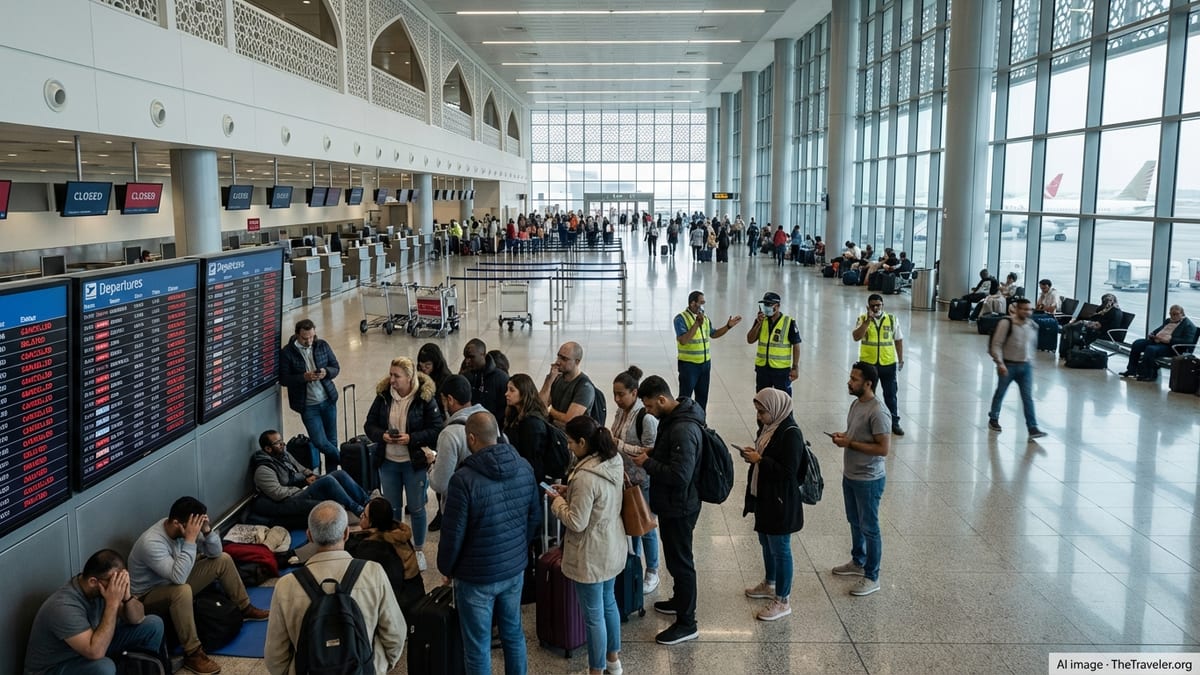
Three Gulf Air Services Scrapped on Muscat–Bahrain Route
Recent schedule changes show that Gulf Air has withdrawn at least three core flights touching Muscat, including rotations that connected Oman’s capital with Bahrain as well as onward routes to major transit points such as Doha, Cairo, and Luxembourg. Published coverage indicates that the cancellations took effect in late March, coinciding with a wider wave of operational cuts across Gulf hubs as carriers reworked networks and sought to avoid newly volatile airspace.
The affected Muscat–Bahrain services had been important for business and leisure travelers using Bahrain International Airport as a transfer point to Europe and North Africa. With these flights removed from the timetable, passengers who had planned same‑day connections via Bahrain are being forced to rebook through other Gulf hubs or accept lengthy detours and overnight layovers. For many, the cancellations have turned what were once straightforward trips into multi‑day journeys.
Reports shared by travelers show that some ticket holders first received schedule change notices, followed by full cancellations as Bahrain’s airspace restrictions dragged on. In several cases, passengers described losing both their Muscat–Bahrain sector and their onward leg on a single booking, leaving them uncertain whether they would be rebooked automatically or required to secure alternative arrangements on their own.
Gulf Air has publicly allowed greater flexibility on its network during the current crisis period, with information circulating that passengers booked to travel up to mid‑April can request refunds or modify itineraries without standard penalties. However, travelers on later-dated tickets indicate that they are still waiting for formal cancellation notices before claiming refunds or compensation, adding to the sense of uncertainty along the Muscat–Bahrain corridor.
Stranded Passengers in Oman as Regional Crisis Deepens
The cancellation of Muscat–Bahrain services is unfolding against the backdrop of a broader aviation crisis in the Gulf region. A conflict involving Iran and several neighboring states has triggered waves of missile and drone activity and led to partial or full airspace closures in multiple countries, including Bahrain and parts of the wider Gulf. Travel advisories and analytical briefings describe a patchwork of suspensions, diversions, and rolling last‑minute changes that have left passengers scrambling for scarce seats out of the region.
Muscat International Airport has remained operational, but the loss of key connections via Bahrain has left some travelers effectively stranded in Oman. Accounts shared in regional and international coverage describe passengers who routed to Muscat specifically to bypass more heavily affected hubs, only to find that their onward Gulf Air links through Bahrain were no longer operating. With other major carriers also trimming services, options for rapid onward travel have narrowed.
At the same time, Muscat has become an unofficial pressure‑release valve within the Gulf network, taking on additional traffic from airlines that can no longer rely on hubs affected by airspace closures. This has increased congestion at check‑in counters and transit areas, and has made it more difficult for stranded passengers to secure last‑minute seats. Advisory notes directed at travelers crossing into Oman by land already urge them to arrive many hours before departure to cope with heavy demand and security procedures.
Regional observers note that the strain on Muscat’s facilities is compounded by surging demand from travelers trying to reposition from other Gulf states. With Bahrain remaining one of the more severely disrupted aviation markets, Gulf Air’s curtailed operations have removed a critical link in the chain for anyone attempting to exit the region using its network.
Knock‑On Effects for Gulf and Long‑Haul Connections
The Muscat–Bahrain cancellations are having consequences well beyond the short flight between the two cities. Gulf Air’s Bahrain hub typically offers onward links to Europe, North Africa, South Asia, and select destinations in the Americas. With three core Muscat‑linked services removed, passengers who relied on those connections are being pushed onto already crowded alternatives through Doha, Dubai, Abu Dhabi, Jeddah, and other nodes, assuming those hubs are operating on any given day.
Analysis of flight tracking data and regional aviation reports highlights that the entire Gulf network is under stress. Thousands of flights across the wider Middle East have been cancelled or delayed since the conflict escalated, leading to millions of disrupted passenger journeys. Oman’s own flag carrier has cancelled or temporarily suspended services to a list of regional destinations, including Bahrain, to protect crews and aircraft, which further constrains the pool of options available to travelers starting or ending their journeys in Muscat.
In practical terms, this means that a traveler from Muscat who once flew to Europe via Bahrain on Gulf Air may now need to piece together a complex itinerary, perhaps flying first to a still‑operational regional hub and then onward on a different carrier. This kind of forced re‑routing often requires multiple separate tickets, exposing passengers to extra risk if one sector is disrupted, and tends to drive up costs substantially compared with a single through‑ticket.
Business travelers and tour operators serving Oman report that these complexities are making it harder to guarantee arrival times and to maintain reliable schedules for conferences, group tours, and cruise connections. With schedules in flux and some carriers releasing seats only to priority passengers or those already holding tickets, Muscat’s role as a dependable gateway has been put under unusual pressure.
How Airlines and Airports Are Managing Passenger Welfare
As cancellations mounted in March, regional media and specialist travel outlets documented efforts by airlines at Muscat International Airport to provide at least basic care for stranded passengers. Coverage of disruption at Seeb airport indicated that affected travelers on certain carriers, including Gulf Air partner services, were offered meal vouchers, hotel stays, or airport‑hotel transfers when overnight delays became unavoidable.
Passenger experiences, however, appear to vary widely depending on the specific ticket, route, and timing of cancellations. Some travelers reported prompt rebooking onto alternative Gulf Air departures or interline connections when available, while others described long waits at customer service desks and limited clarity over whether they would receive hotel accommodation or simply be rebooked days later. Notices posted by airlines and airports often emphasize that travelers should not go to the airport until they receive confirmed departure times, underlining how quickly schedules can change.
Industry guidance circulating in the region stresses that travelers whose itineraries have been cancelled should familiarize themselves with airline policies on rebooking and refunds, and keep detailed records of expenses incurred while stranded. Consumer advocates point out that in complex crisis situations, passenger protections can differ depending on the point of origin, the operating carrier, and any relevant national regulations, making it particularly important for travelers to monitor official airline channels for updates.
Meanwhile, Muscat International Airport continues to operate under heightened security and with a strong focus on crowd management. Travelers passing through the terminal report longer lines at immigration and security screening, and in some cases extended waiting times at baggage claim as ground handlers balance irregular operations with routine traffic. Airport authorities are encouraging passengers to arrive early and to build additional buffer time into travel plans, especially when relying on tight connections that could be affected by last‑minute changes.
Outlook for the Muscat–Bahrain Corridor
Looking ahead, the prospects for a rapid restoration of Gulf Air’s full Muscat–Bahrain schedule remain uncertain. Aviation risk assessments issued in recent days continue to flag Bahrain among the Gulf locations where flight operations are described as severely disrupted, with the pace of normalization tied closely to security developments and airspace decisions made by regional authorities.
Airlines typically seek to restore high‑demand routes as soon as conditions allow, and the Muscat–Bahrain corridor historically falls into that category given its importance for business travel and regional connectivity. For now, however, publicly available timetables and advisory notes suggest that carriers are prioritizing operational flexibility over network breadth, trimming or combining services in response to rapidly shifting risk profiles and crew‑duty constraints.
Travel planners in Oman are therefore urging passengers with near‑term trips that rely on Bahrain connections to prepare contingency plans, including the possibility of routing via alternative hubs or adjusting travel dates. With some carriers in the region offering more generous rebooking windows and refund options for travel originally scheduled through mid‑April, passengers are being encouraged to act early rather than wait until the last moment to seek changes.
Until the security environment stabilizes and Bahrain’s aviation sector can operate without heavy restrictions, travelers on the Muscat–Bahrain route are likely to face ongoing uncertainty. For many of those currently stranded in Oman because of the three key Gulf Air cancellations, the priority remains simply finding a way out, even if that means taking longer, more expensive routes that would have seemed unthinkable just weeks ago.