


More news on this day
Fresh turbulence in Middle East airspace is reverberating through the region’s biggest aviation hubs in July 2026, with data from industry trackers and local reports indicating at least 265 flight cancellations and more than 1,100 delays across Dubai, Doha and key Saudi airports as carriers reroute, trim schedules and react to fast‑changing security advisories.
Get the latest news straight to your inbox!
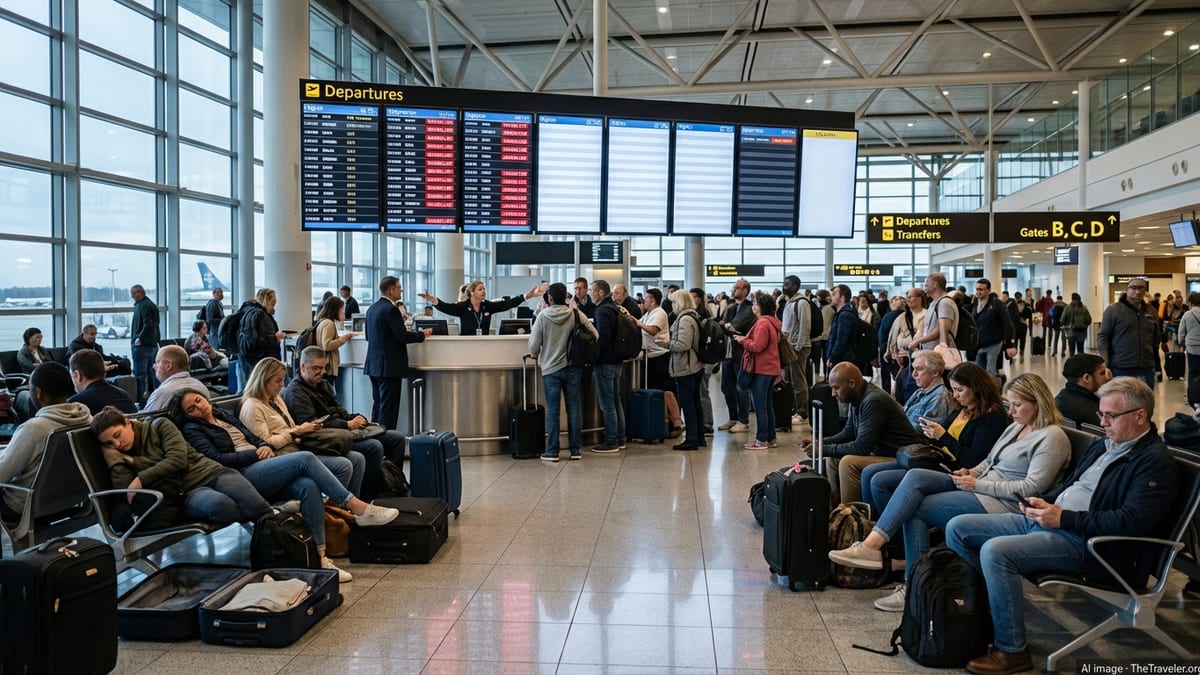
Evolving Airspace Warnings Tighten Over the Gulf
The latest wave of disruption is rooted in a tightening web of airspace advisories issued after renewed hostilities involving Iran and Western forces, which have elevated perceived risks for overflight in parts of the Gulf. Publicly available notices and regional coverage describe a patchwork of restrictions and risk assessments affecting the United Arab Emirates, Qatar, Bahrain and neighbouring states, particularly for airlines operating long haul corridors between Europe and Asia.
European safety regulators have urged carriers based in the bloc to avoid several Gulf flight information regions through late July, prompting schedule adjustments, longer routings and in some cases outright cancellations on services that would normally pass through Dubai and Doha. Travel advisories highlight the potential for missile and drone activity near heavily used corridors, as well as the danger that military operations could inadvertently intersect with civilian traffic.
Industry analysts note that even when airports themselves remain open, conservative risk policies at individual airlines can lead to substantial thinning of daily schedules. Rerouted flights absorb additional flight time and fuel, reducing network resilience and leaving less capacity to recover from knock‑on delays. The result is a steadily accumulating tally of late arrivals and missed connections that is now visible in July statistics for the main Gulf hubs.
Dubai: Hub Operations Strained by Cumulative Cancellations
Dubai International remains one of the world’s busiest intercontinental transit hubs, but July’s airspace turbulence is adding further strain to a network already reshaped by the conflict that escalated earlier in 2026. Aviation data consulted by regional outlets shows that across the first half of July, services touching Dubai accounted for a significant share of the at least 265 cancellations recorded in the wider Gulf, with many more flights arriving behind schedule.
Local business media report that long haul carriers from North America, Europe and Asia have selectively suspended or reduced Dubai services through the end of the summer season, citing the regional security climate and constrained routings. Some non‑Gulf airlines have pulled back entirely from the Dubai market for the coming months, forcing passengers to rebook through alternative hubs or postpone travel.
Operationally, Dubai’s dual airport system has allowed a partial redistribution of traffic, but the combined hub has still experienced several days where arrival and departure banks have been heavily disrupted. Ground handling teams have faced alternating surges and lulls as delayed aircraft arrive out of sequence, while hotels and transport providers around the city report short‑notice spikes in demand from passengers forced into overnight stays.
The disrupted pattern is particularly visible on high frequency routes linking Dubai with Saudi Arabia and other Gulf Cooperation Council states. These sectors, which usually provide reliable shuttle‑style connectivity for business and leisure travellers, have seen clusters of cancellations as airlines trim frequencies on days when airspace constraints or security events raise operational risk.
Doha and Saudi Hubs Juggle Security, Connectivity and Capacity
In Doha, Hamad International Airport continues to function as a critical link between Asia, Europe and Africa, yet the same airspace advisories affecting Dubai are imposing a visible drag on punctuality and capacity. Published schedule data and local coverage indicate that a number of foreign carriers have reduced frequencies to Doha or shifted departure times to avoid peak congestion in restricted corridors, contributing to the regional total of more than 1,100 delays tallied this month.
Qatar’s national carrier has also adjusted its future schedules, filing reductions for the coming winter season on several routes. While these changes are officially framed as capacity optimisation, analysts point out that they come against a backdrop of tighter airspace options and heightened geopolitical risk that complicate planning for a traditionally hub‑and‑spoke network.
Saudi Arabia’s major international gateways, including Riyadh and Jeddah, are confronting their own set of pressures. Reports emerging from Riyadh in early July describe multi‑day operational instability at King Khalid International Airport, where dozens of flights were scrubbed over a short period, many of them linking the Saudi capital with nearby Gulf hubs. Additional disruptions have been traced to attacks on southern Saudi airports, which triggered waves of cancellations to and from the UAE.
The combined effect is a network in which point‑to‑point Saudi services and regional connectors through Doha and Dubai are more vulnerable to sudden schedule changes. Travellers whose journeys depend on tight connections in the Gulf are encountering an elevated risk of missed links, particularly when inbound aircraft are delayed by rerouting around restricted airspace.
International Carriers Cut Back Middle East Operations
The ripple effects of July’s airspace disruption extend well beyond Gulf‑based airlines. A growing list of international carriers has opted to curtail or suspend Middle East operations, reshaping the traffic mix at Dubai, Doha and Saudi hubs. Updated travel advisories show that several European and North American airlines have extended suspensions on flights to Dubai into the autumn, while maintaining service to other parts of their global networks.
In Asia, prominent full‑service and low‑cost airlines have likewise announced cancellations affecting Dubai and key Saudi destinations. Some carriers have suspended certain routes for weeks or months, while others are operating at reduced frequencies with more circuitous flight paths. These decisions reflect both direct security considerations and the commercial impact of increased fuel burn and longer block times on routes that were already operationally demanding.
For passengers, the practical outcome is a thinner set of options when planning trips that involve Middle Eastern hubs. It has become common for itineraries that once offered multiple daily choices to be reduced to a handful of departures, often clustered at times that best fit revised airspace windows. As a result, when irregular operations occur, there are fewer backup flights available on the same day, amplifying the impact of each cancellation or long delay.
Airlines that continue to serve the region are emphasizing schedule flexibility, publishing rolling advisories that encourage travellers to monitor bookings closely. Carriers are also making targeted use of rebooking and waiver policies, though these vary by airline and are sometimes limited to specific dates or routes most exposed to airspace constraints.
Travellers Face Longer Journeys and Persistent Uncertainty
For travellers transiting Dubai, Doha or Saudi hubs in July 2026, the headline numbers of 265 cancellations and over 1,100 delays translate into practical challenges that begin well before arrival at the airport. Public guidance from aviation regulators and airlines now routinely recommends verifying flight status on the day of travel and allowing additional time for connections through the Gulf.
Long haul passengers are increasingly encountering extended airborne detours as flights skirt sensitive zones, adding an hour or more to itineraries between Europe and parts of Asia or Africa. In many cases, this extra time erodes planned minimum connection windows at the major Gulf hubs, causing missed onward flights even when the originating service technically operates as scheduled but arrives behind its timetable.
On the ground, airport operators and local tourism bodies are promoting flexible arrangements to accommodate disrupted travellers, from short‑stay hotel packages to streamlined procedures for those needing temporary visas while rebooked. At the same time, travel advisors are encouraging passengers with fixed‑date commitments to consider alternative routings through secondary hubs in Europe or Asia, or to build in overnight buffers when itineraries rely on the most affected Middle Eastern gateways.
With airspace advisories currently in effect through the end of July and some airline suspensions already extended into the autumn, industry observers expect a continued period of elevated disruption for Gulf hubs. The experience of July 2026 suggests that even relatively brief escalations in regional tension can quickly echo through the complex webs of global connectivity that converge on Dubai, Doha and Saudi Arabia’s international gateways, leaving passengers to navigate a landscape of longer journeys and persistent uncertainty.