


More news on this day
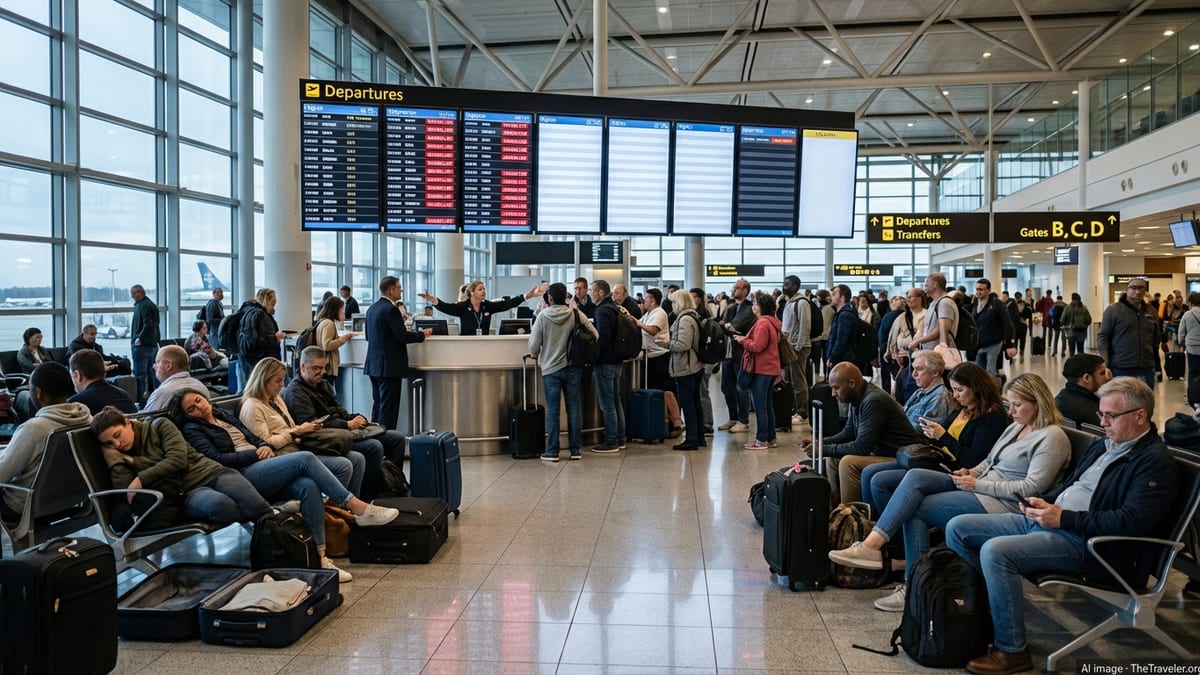
Ben Gurion International Airport is facing an unprecedented squeeze on capacity in the middle of the 2026 peak travel season, as the continued presence of a sizeable United States Air Force aerial refueling fleet raises the risk of as many as 50,000 commercial flight tickets being canceled or rescheduled.
Get the latest news straight to your inbox!
Military Deployment Collides With Peak Travel Season
Ben Gurion, Israel’s main international gateway near Tel Aviv, has hosted a large contingent of US air-to-air refueling tankers since early 2026 as part of a broader American military buildup in the Middle East. Publicly available information indicates that dozens of KC-135 and KC-46 aircraft were positioned at the airport from late February, in support of joint US-Israeli operations and heightened tensions with Iran.
Reports from Israeli and international media describe long rows of US tanker aircraft occupying parking stands and service areas normally used for civilian traffic. Aviation data cited in published coverage shows that at various points in the spring, the airport was operating at around one-third of its usual capacity, with the refueling fleet displacing commercial airliners and constraining gate availability.
The strain on infrastructure is arriving just as outbound holiday travel from Israel rebounds, with airlines rebuilding networks and adding seasonal routes. Airport planners had counted on using all available stands and taxi areas to handle the summer surge, but the extended military deployment has sharply reduced the number of aircraft that can be processed at any given time.
Industry observers note that major hub airports are finely balanced systems, where ground congestion at a few critical stands can quickly cascade into systemwide delays. At Ben Gurion, the unusual overlay of a large forward-deployed tanker force on top of civilian operations has created a level of sustained pressure not seen in previous regional crises.
Warnings of up to 50,000 At-Risk Tickets
In recent days, the Israel Airports Authority has issued increasingly stark assessments of the potential fallout if additional tanker aircraft are not relocated to military fields. According to multiple news reports summarizing the authority’s analysis, as many as 50,000 flight tickets could be at risk of cancellation or significant schedule changes over the core summer months of 2026.
Those figures reflect a combination of factors: limited aircraft parking, restricted access to jet bridges and remote stands, and tighter safety margins for taxi and towing operations around bulky military tankers. With the airport already running close to maximum utilization during peak hours, even modest reductions in available capacity could force airlines to trim frequencies or consolidate flights.
Local media have described scenarios in which up to ten flights a day might need to be canceled or shifted if the tanker presence remains at current levels through the end of July. Aviation planners are understood to be modeling knock-on impacts into the autumn high holidays, when traffic traditionally spikes again on routes between Israel, Europe, and North America.
For passengers, the headline number of 50,000 at-risk tickets translates into a heightened likelihood of last-minute schedule adjustments, reroutings through secondary airports, or changes to travel dates. Carriers serving Tel Aviv have already warned customers to monitor itineraries closely and expect less flexibility on preferred departure times.
Shuttle Diplomacy Over Tanker Numbers and Locations
The capacity crunch has triggered an intense round of behind-the-scenes discussions over how many US aircraft can remain at Ben Gurion and where they should be based. According to published coverage in Israeli outlets, earlier understandings envisioned capping the number of American refueling planes parked at the airport at around 20, with additional aircraft shifting to dedicated military airfields elsewhere in the country.
However, as regional security tensions persisted into mid-2026, US planners sought to maintain a larger footprint at the commercial hub, arguing that proximity to established logistics, maintenance, and command infrastructure offered operational advantages. That stance, reported in foreign and local media, set up a direct clash with civil aviation managers focused on restoring full passenger capacity.
In the past week, reports indicate that Israeli transportation officials announced a partial compromise, with most refueling planes slated to depart Ben Gurion while a reduced contingent remains. At the same time, other accounts suggest US tankers continue to receive clearance to land and stage at the field when required, reflecting the difficulty of fully disentangling military needs from civilian operations during an ongoing regional security crisis.
The evolving arrangements underscore a broader tension between national security priorities and the economic importance of keeping Israel’s primary air gateway running smoothly. While all sides have publicly signaled an interest in avoiding mass cancellations, aviation planners caution that any renewed influx of tanker aircraft could quickly erase the gains from gradual drawdowns.
Economic and Operational Fallout for Airlines and Travelers
Beyond the immediate risk to 50,000 individual itineraries, the tanker congestion at Ben Gurion is reverberating through Israel’s broader aviation ecosystem. Airlines face higher operational costs as they rely more heavily on remote parking positions, longer towing movements, and extended turnaround times, with those expenses likely to filter through into fares and ancillary charges.
Carriers have also had to adjust fleet and crew planning around the uncertainty at Tel Aviv. Some have reportedly reduced overnighting of aircraft at Ben Gurion, preferring to base planes in less constrained regional hubs and operate early-morning inbound services instead. This shift can narrow schedule options for passengers, particularly on short-haul business routes that depend on high-frequency service.
Tourism and outbound leisure travel are especially vulnerable. Tour operators packaging summer holidays have to manage the possibility that flights could be retimed or rebooked at short notice, increasing insurance costs and complicating hotel and ground-transport contracts. For inbound visitors, the perception of an overburdened hub caught between civilian and military priorities may weigh on travel decisions, even if most flights ultimately operate.
Airport-side businesses, from ground handlers and caterers to retail concessions inside the terminal, are contending with unpredictable passenger flows. While overall traffic is recovering from the lows seen earlier in the year, the ceiling imposed by the tanker presence limits the upside for companies that rely on high throughput on peak travel days.
Longer-Term Questions on Shared Civil–Military Infrastructure
The dispute at Ben Gurion is also sharpening debate about the long-term implications of heavily relying on a civilian airport to host large-scale foreign military operations. Analysts point out that many countries segment high-intensity military activity to dedicated bases, in order to shield commercial hubs from exactly the kind of congestion now facing Israel’s primary gateway.
In the Israeli context, however, geographic constraints and the concentration of infrastructure around Tel Aviv have made Ben Gurion an attractive platform for allied air operations. The events of 2026 are prompting renewed discussion about whether additional investment in alternative fields, taxiway expansions, or purpose-built aprons for foreign aircraft might reduce the risk of future bottlenecks.
Published government planning documents already envision upgrades to screening systems and support complexes at Ben Gurion, though these projects are primarily oriented toward passenger processing and commercial growth rather than large, long-term military deployments. The current situation suggests that future infrastructure plans may need to account more explicitly for the possibility of extended joint operations.
For international travelers and airlines, the episode serves as a reminder that geopolitics can intrude directly into the mechanics of global mobility. As the 2026 summer season unfolds, the degree to which US tanker fleets remain visible on the tarmac at Ben Gurion will continue to be a bellwether for both regional security dynamics and the reliability of one of the Middle East’s most important aviation hubs.