


More news on this day
Fresh rounds of flight cancellations involving Gulf Air, Qatar Airways and several regional carriers are disrupting a clutch of key routes from Singapore, severing or thinning links to Bahrain, Doha and Manila and forcing thousands of travelers into last minute rebookings and lengthy detours.
Get the latest news straight to your inbox!
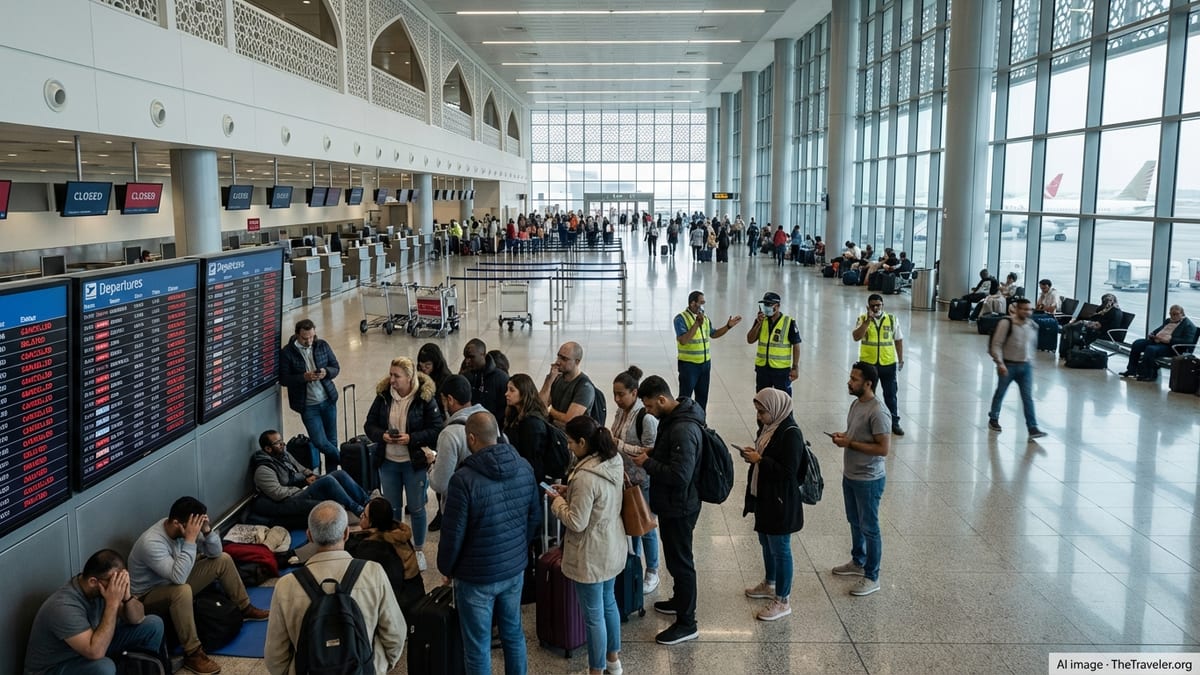
Seven High-Impact Flights Pulled From Changi Schedules
Publicly available flight data and recent operational updates indicate that at least seven regularly scheduled services touching Singapore have been withdrawn or are operating on a rolling cancellation basis. The most visible gaps affect Gulf Air connections between Singapore and Bahrain, Qatar Airways services linking Singapore with Doha and onward to Manila, and a mix of regional flights that connect Changi to the Philippine capital.
Tracking platforms show repeated cancellations of Gulf Air’s Singapore link, including its Bahrain route that typically operates via flights such as GF165 and GF166. These services form the backbone of Bahrain–Singapore connectivity and are widely used by passengers transiting between Southeast Asia, the Gulf and Europe. Their removal from schedules in recent weeks has sharply reduced nonstop and one-stop options for these flows.
On the Doha side, Qatar Airways has trimmed parts of its network during the current period of Middle East airspace disruption, and information from route maps and timetable summaries shows that Singapore frequencies have been subject to short-notice adjustments. While some QR-operated flights between Doha and Singapore remain, intermittent cancellations and retimings are complicating onward links to Manila for passengers who normally use Doha as a hub.
Further pressure comes from adjustments to Manila-linked services from Singapore by other airlines, including regional and Philippine carriers. These changes, when combined with Gulf network cuts, mean that a single cancellation on a long-haul leg can cascade into multiple broken connections across Bahrain, Doha and Manila for travelers starting or ending their journeys at Changi.
Regional Airspace Tensions Ripple Into Singapore
The latest wave of cancellations is closely tied to broader operational turbulence across Gulf airspace that began intensifying in late February and March 2026. Published airline updates and regional media coverage describe temporary airspace closures and capacity restrictions affecting Bahrain and Qatar, leading to widespread schedule thinning and the suspension of certain routes.
Gulf Air has been among the hardest hit, with its primary hub at Bahrain International Airport facing extended disruption. Reports focused on Bahrain indicate that dozens of Gulf Air flights were removed from daily departure boards over several weeks, including services to Asian gateways such as Singapore and Dhaka. For Changi, this translated into a loss not only of point-to-point connectivity to Bahrain but also of an important transfer bridge for travelers moving between South Asia, Southeast Asia and Europe.
Qatar Airways, which operates the major hub at Hamad International Airport in Doha, has also adapted its schedule in response to the same regional dynamics. Travel alerts and timetable notices highlight a period of limited operations on selected routes, with passengers advised to monitor bookings closely as individual flights are consolidated or cancelled. Even where the Doha–Singapore trunk route remains on the timetable, recurrent retimings have added uncertainty for those relying on tight connecting windows onward to Manila and beyond.
These airspace issues have reverberated far beyond the Gulf. With Bahrain and Doha both serving as critical east–west junctions, disruptions there have spilled into hubs from Dubai and Abu Dhabi to Kuala Lumpur and Singapore. The result is a patchwork of cancellations and reroutings that can shift from day to day, particularly on routes where yields are lower or aircraft are urgently needed elsewhere in the network.
Traveler Impact: Lost Connections, Long Detours and Higher Costs
The immediate effect for passengers using Singapore as a gateway has been a rise in missed connections, enforced stopovers and extended travel times. Accounts shared across public forums describe itineraries such as Singapore–Bahrain–Europe or Singapore–Doha–Manila being cancelled outright, often more than once, before a viable alternative could be secured. In some cases, travelers reported being routed back to their origin city instead of reaching their intended destination when no timely replacement flight was available.
With Gulf Air and Qatar Airways trimming capacity at their hubs, many affected passengers have turned to rival carriers in Dubai, Abu Dhabi or other Asian hubs. This has produced itineraries that add six to twelve hours of extra travel time compared with the original Gulf hub routings. Those unable to secure rebookings within airline policies have resorted to purchasing completely new tickets on other airlines, sometimes at substantial last minute fares that may or may not be recoverable under standard compensation or refund rules.
Families and migrant workers have been particularly exposed on Bahrain and Manila corridors, where travel often hinges on specific holiday windows or employment-related deadlines. For them, a cancelled Singapore–Gulf–Manila or Singapore–Gulf–Europe ticket can mean disrupted work schedules, lost income or missed school terms. Travel advocates and legal commentators have noted growing interest in whether international frameworks, including the Montreal Convention and various regional compensation regimes, apply to these complex, multi-leg disruptions.
The uncertainty has also affected those with future bookings who have not yet experienced a cancellation but are worried about the risk. Potential travelers holding Qatar Airways tickets via Doha or Gulf Air tickets via Bahrain for trips later in May and June have taken to online forums to weigh whether to wait, rebook voluntarily or cancel proactively, often balancing substantial change fees against the possibility that their flights may be altered closer to departure.
Airlines Adjust Networks While Keeping Limited Links Alive
Despite the high profile cancellations, neither Gulf Air nor Qatar Airways has withdrawn entirely from the Singapore market. Airline booking engines and schedule summaries indicate that both carriers continue to list selected services linking Singapore with their respective hubs, albeit on curtailed or variably timed schedules. In some cases, frequencies have been reduced, and certain flight numbers have disappeared from near term timetables while others remain active.
Gulf Air’s long haul Singapore operation appears particularly vulnerable to further adjustment, with observers noting that its Bahrain–Singapore route has already endured multiple rounds of cuts in prior years. Analysts following the carrier suggest that, in the current environment, limited widebody capacity and the need to prioritize core regional routes out of Bahrain have made marginal long haul services more likely candidates for suspension.
Qatar Airways, by contrast, continues to emphasize its role as a global mega-hub carrier out of Doha, with public information pointing to plans to operate an expanded summer schedule across more than 160 destinations later in 2026. Within that broader strategy, Singapore remains an important Asia Pacific node, but the airline’s immediate priority appears to be managing disruptions safely and gradually restoring full connectivity as airspace conditions normalize.
Other airlines serving the Singapore–Manila market, including Philippine and regional low cost carriers, have likewise made tactical adjustments, pulling certain frequencies while preserving core daily links. Industry watchers note that these carriers may absorb some of the displaced demand from Gulf routings, but capacity constraints and higher fares mean they cannot fully replace the connectivity once provided by the now cancelled Singapore–Bahrain and Singapore–Doha services.
What Passengers Should Do If Their Singapore–Gulf Flight Is Affected
For travelers booked on upcoming journeys between Singapore and Bahrain, Doha or Manila that involve Gulf Air, Qatar Airways or partner airlines, the most important step is to verify the status of every flight segment. Publicly available information suggests that schedule changes are sometimes loaded only a few days before departure, and in some cases, a single leg within a multi-stop itinerary may be altered while others remain unchanged.
Passengers are being advised through general travel guidance to use official airline channels and reputable flight tracking platforms to monitor their bookings, instead of relying solely on third party agencies or static e-ticket PDFs. Where a cancellation has occurred, airline policies commonly provide options such as free date changes within a specified window, rerouting via an alternative hub, or refunds for unused portions of the ticket, though specific entitlements depend on the fare type and governing jurisdiction.
Travel planners also recommend building additional buffer time into any itinerary that still uses Bahrain or Doha as a transit point, especially when connecting onward to Manila or other time sensitive destinations. Allowing longer layovers can reduce the risk that a short delay or retiming will break the connection, though it may still mean extended hours in transit if the upstream Gulf flight faces schedule disruption.
Finally, consumer advocates point to the value of comprehensive travel insurance that explicitly covers airline cancellations and missed connections, particularly on complex routings through disruption prone regions. Policies differ significantly in how they treat airspace closures and operational shocks, so travelers are encouraged to scrutinize terms carefully and retain documentation of all communications, cancellations and receipts in case reimbursement claims become necessary later.