


More news on this day
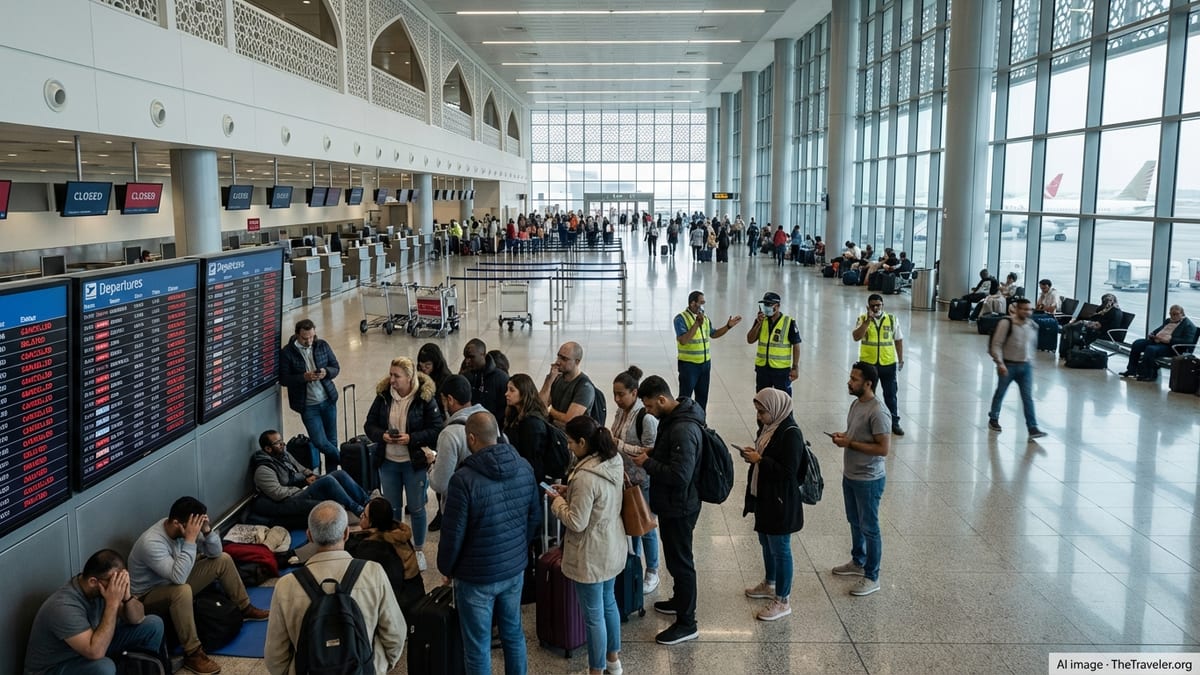
Hundreds of passengers across the Middle East and beyond faced fresh disruption this week as airlines in Bahrain, the United Arab Emirates, Oman, Qatar and neighboring states cancelled dozens of flights and delayed more than a hundred services, snarling connections on carriers such as Gulf Air, Flydubai and Saudia and stranding travelers from Seeb and Sharjah to London and Oslo.
Get the latest news straight to your inbox!
Regional Airspace Tensions Trigger New Wave of Cancellations
Operational updates from carriers and aviation data providers indicate that a new round of airspace restrictions in parts of the Middle East has led to targeted cancellations and rolling delays on routes linking Gulf hubs with Europe and Asia. While overall traffic has partially recovered from earlier shutdowns, the latest adjustments include 39 flight cancellations and 137 delays affecting a mix of regional and international airlines.
Publicly available information shows that Bahrain, the UAE, Oman and Qatar remain among the most exposed markets, with Bahrain International Airport and major airports in Dubai, Sharjah, Muscat and Doha all reporting disrupted schedules at various points in recent weeks. Airports and airlines are continuing to adapt by trimming frequencies, rerouting around sensitive airspace and consolidating services on high-demand trunk routes.
Industry trackers highlight that the new disruptions are layered on top of earlier mass cancellations tied to airspace closures around key Gulf corridors. This has created a stop-start pattern for passengers, where flights may operate normally for several days before another cluster of cancellations or long delays ripples through the network.
Aviation analysts note that the pattern of targeted cancellations and significant delays is consistent with efforts to keep core routes active while minimizing exposure to congested or restricted airspace. That strategy, while maintaining some connectivity, has concentrated disruption on specific days and flights, leaving many travelers with limited same-day alternatives.
Gulf Air, Flydubai, Saudia and Others Cut and Reroute Services
Among the carriers affected, Gulf Air continues to feature prominently, reflecting the central role of Bahrain as both a national hub and a transit point between Asia and Europe. Recent operational updates point to a mix of suspended services on some days and reduced frequencies on others, as the airline works within evolving airspace constraints and available flight corridors.
Flydubai, based in the UAE, has also adjusted its network, particularly on routes connecting Dubai and secondary Gulf gateways, as well as select services into Europe. Earlier advisories from the airline already highlighted longer flight durations on some routes due to rerouting, and the latest cancellations and delays are adding further pressure on its point-to-point and connecting traffic.
Saudia, which had previously restricted or suspended flights into several Gulf destinations during peaks in regional tension, continues to face knock-on schedule challenges. Public information from aviation and logistics bulletins suggests that services to and from hubs such as Dubai, Abu Dhabi, Sharjah, Doha, Bahrain and Kuwait remain more vulnerable to late-notice changes, with some departures cancelled outright and others pushed back significantly.
Other regional and international airlines, including low-cost and European carriers operating into Doha, Dubai and Muscat, are also adjusting timetables. Changes range from seasonal route withdrawals brought forward earlier than planned, to one-off cancellations and extended ground holds while airlines seek alternative routings and slots.
Airports from Seeb and Sharjah to London and Oslo Feel the Impact
The disruption is not confined to Gulf departure points. Airports across Europe and Asia that depend on Middle East hubs for onward connectivity have registered delayed arrivals and missed connections as the ripple effects spread outward. Published travel advisories highlight particular challenges at European gateways such as London and Oslo, where reduced schedules from Gulf carriers have narrowed connection options for long-haul travelers.
In Oman, Muscat International Airport at Seeb has seen intermittent schedule changes, with services to Dubai, Bahrain, Doha and other Gulf cities periodically curtailed or rescheduled. Travelers connecting through Muscat to South and Southeast Asia have reported longer layovers and, in some cases, overnight stays when missed connections could not be accommodated on the same day.
Sharjah, home base for several regional and low-cost operators, has also experienced waves of cancellations and delays, particularly on days when nearby airspace restrictions tighten or when carriers preemptively thin out schedules. This has complicated travel plans for passengers using Sharjah as a lower-cost alternative to Dubai International, especially those heading onward to South Asia and North Africa.
Farther afield, airports such as London Heathrow and Oslo Gardermoen have recorded arrival and departure disruptions on flights that typically route via Gulf hubs. Passengers on Europe to Asia itineraries that rely on one-stop connections through Doha, Dubai or Bahrain have faced rebookings, extra stops through alternative hubs like Singapore or Bangkok, and extended travel times.
Passengers Confront Long Delays, Limited Rebooking Options
For individual travelers, the latest wave of 39 cancellations and 137 delays has translated into extended airport waits, rearranged itineraries and crowded rebooking queues. With many airlines already operating trimmed schedules, available seats on alternative departures are limited, particularly on popular corridors linking the Gulf to major European and Asian cities.
Consumer travel platforms and advisory sites report that passengers are encountering a mix of automatic rebooking and manual reissue processes, depending on the airline and point of purchase. In several cases, travelers have been offered rerouting through secondary hubs or different alliance partners, often adding multiple hours of journey time and additional stops.
Publicly available guidance from travel intermediaries emphasizes the importance of travelers checking flight status frequently and avoiding trips to the airport before receiving confirmation that their flight is operating. Some advisories also suggest that travelers consider flexible routing options that bypass the most heavily affected airspaces, even if that means backtracking through alternate regions for a limited period.
While many airlines are waiving certain change fees and fare differences for impacted passengers, reports indicate that policies vary widely between carriers and ticket types. Travelers holding separate tickets or promotional fares may find that options are more restricted, increasing the likelihood of out-of-pocket expenses for additional nights, meals or onward transport.
What to Watch as Middle East Aviation Adjusts
Looking ahead, aviation observers are watching for further announcements from airlines and regional aviation authorities that could either ease or extend the current pattern of disruption. Any change in regional security dynamics or airspace access is likely to be reflected quickly in updated schedules, particularly for flights crossing or approaching sensitive areas.
Travel industry coverage suggests that airlines will continue to prioritize high-demand routes between major hubs while trimming thinner services and night-time frequencies. That could mean more predictable operations on core city pairs such as Dubai to London or Doha to key European capitals, but fewer options for secondary destinations and off-peak departures.
Passengers planning trips through Bahrain, the UAE, Oman or Qatar in the coming days are being encouraged by travel information services to build in longer connection times and to consider booking on a single ticket where possible, to secure stronger protections in case of disruption. Monitoring airline apps and airport information channels closely in the 24 hours before departure remains critical, given the potential for short-notice changes.
As Gulf carriers and airports adapt to shifting conditions, the combination of 39 cancellations and 137 delays across the region illustrates how quickly regional tensions can reverberate through global air travel. With key hubs in Bahrain, Dubai, Sharjah, Muscat and Doha still under operational strain, travelers connecting between Europe, Asia and Africa via the Gulf can expect a period of elevated uncertainty in the weeks ahead.