


More news on this day
Africa is on the cusp of a tourism boom, with international arrivals nearing pre-pandemic levels and travel’s share of regional GDP rising, yet analysts warn that inadequate infrastructure, restrictive visa regimes and fragmented policies are putting the continent’s untapped potential at risk.
Get the latest news straight to your inbox!
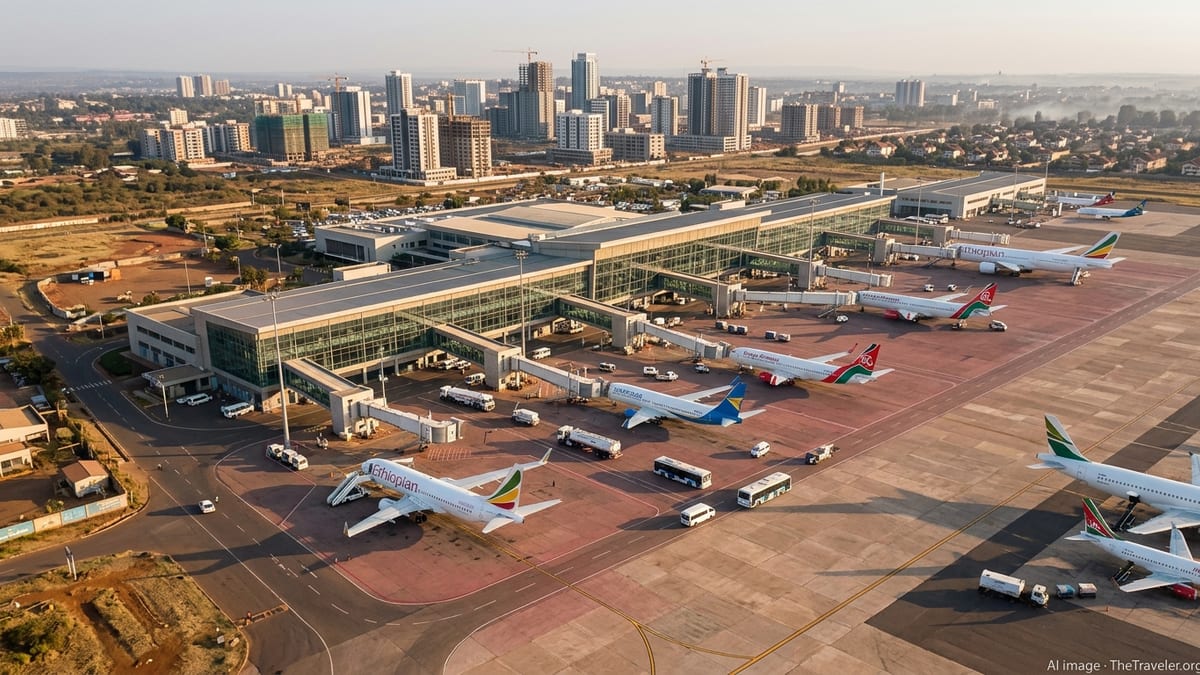
Tourism Surge Masks Structural Weaknesses
Recent data from international tourism bodies indicates that Africa welcomed more than 75 million international visitors in 2024, reflecting one of the fastest recoveries of any region and underscoring the continent’s growing appeal to leisure and business travelers. Industry assessments suggest that travel and tourism now account for close to 8 percent of Africa’s total economic output, placing the sector among the continent’s most important engines of growth.
Forecasts from global travel and tourism research groups point to even greater gains ahead. Projections for the coming decade estimate that tourism could add well over 150 billion dollars to African GDP and support tens of millions of additional jobs if investment and reforms keep pace. In some leading destinations, such as Morocco and South Africa, arrivals and sectoral GDP contributions have already surpassed or are approaching record levels, offering a glimpse of what the wider continent could achieve.
Beneath that headline growth, however, regional assessments by organizations such as the World Economic Forum describe a sector constrained by structural weaknesses. Africa scores highly on natural resources and price competitiveness but lags on transport, tourism infrastructure and policy prioritization. Analysts caution that without faster progress on these foundations, the current recovery could plateau before the continent fully converts its natural and cultural assets into sustainable prosperity.
Tourism’s role as a jobs multiplier heightens the stakes. World Bank work with travel and tourism employment data indicates that each direct job in the sector can generate more than one additional position in related services, from agriculture and construction to digital and creative industries. In a region where youth unemployment remains persistently high, losing momentum in tourism would mean missing one of the most promising pathways to inclusive growth.
Air, Road and Digital Gaps Limit Access
Transport and connectivity are emerging as central fault lines in Africa’s tourism landscape. Aviation studies released in late 2025 highlight that many African airlines still focus primarily on home markets, with limited cross border route networks and relatively high ticket prices compared with income levels. Researchers note that this pattern reduces intra African connectivity, hampers multi country itineraries and leaves tourists reliant on indirect routings through non African hubs.
Efforts such as the Single African Air Transport Market, backed by the African Union, are designed to address these bottlenecks by liberalizing skies and encouraging more competition and cooperation among carriers. A growing number of states have signed up to the framework, and some regional hubs, notably in Ethiopia and the Gulf region, are expanding African route networks. Yet implementation has been uneven, and industry observers say that regulatory inertia continues to limit the full benefits of open skies for tourism.
On the ground, major transcontinental projects like the Trans African Highways aim to knit together key corridors between North, West, Central and Southern Africa. Sections of the Trans Sahara Highway and other routes are already improving access to remote landscapes and heritage sites, but large stretches remain incomplete or in poor condition. Academic case studies from regions such as Namibia’s Zambezi area show that paved roads can unlock new tourism circuits and community based ventures, yet also warn that benefits are not automatic without careful planning and local participation.
Digital infrastructure forms a quieter but increasingly decisive part of the picture. Tourism competitiveness rankings emphasize that reliable mobile and broadband coverage supports everything from online marketing to digital payments and real time safety information. While many African destinations have leapfrogged into mobile based travel services, coverage gaps in rural and protected areas, along with high data costs, still complicate efforts to spread tourism beyond established urban and coastal hubs.
Visa Reform Emerges as a Game Changer
Visa policies are another critical lever for unlocking Africa’s tourism potential. International tourism barometers note that regions adopting simplified or unified visas often see rapid growth in arrivals, as travelers respond to lower administrative hurdles and the ability to visit multiple countries on a single trip. In Africa, however, many borders still require advance visas, in person applications or complex documentation, which can discourage both long haul and intra African travel.
There are signs of momentum. According to published coverage and regional policy trackers, the African Union’s free movement initiatives and the broader vision of a visa free continent have gained political visibility. A number of countries have introduced visa on arrival or e visa systems, especially for African and Caribbean nationals, while others have unilaterally waived visas for selected regions to stimulate tourism and trade. Kenya and Rwanda are frequently cited as examples where recent visa facilitation measures are being paired with aggressive marketing campaigns to expand arrivals targets.
Subregional groupings are also experimenting with freer movement. The Borderless Africa Alliance, involving Botswana, Namibia and Zambia, has framed simplified cross border travel as a tool to boost tourism and investment in shared conservation landscapes. In West Africa, the ECOWAS free movement regime and tourism focused Ecotour strategy seek to reduce border frictions and standardize accommodation norms, in part to attract more regional visitors.
Analysts argue that scaling these initiatives into interoperable, continent wide systems could be transformative. A common or mutually recognized tourist visa, backed by robust security and data sharing, would allow travelers to book multi destination African trips with the same ease as journeys across Europe or parts of Southeast Asia. Without such reform, the continent risks ceding market share to regions where policy coordination has already lowered barriers to entry.
Regional Collaboration Holds the Key
Beyond individual reforms, experts increasingly point to regional collaboration as the decisive factor that will determine whether Africa’s tourism boom is fully realized or stalls. Frameworks such as the African Continental Free Trade Area are often discussed in trade terms, but they also provide an institutional platform for harmonizing standards in services, including tourism, transport, finance and digital ecosystems.
Publicly available information on AfCFTA negotiations highlights that tourism is gradually entering discussions on services liberalization, investment and mutual recognition of professional qualifications. Bringing hospitality, guiding, aviation and creative industries into a more integrated continental market could lower costs, raise service quality and make it easier for African entrepreneurs to build cross border brands.
Regional development banks and multilateral funds are likewise channeling more resources into cross border infrastructure that benefits tourism. Support for airports, rail links, power interconnections and conservation corridors is increasingly framed in terms of both trade facilitation and visitor access. Observers note that when such projects are planned jointly, they can connect multiple destinations and spread benefits across borders instead of concentrating traffic in a handful of gateway cities.
However, governance and coordination challenges remain acute. Divergent tax regimes, airline protectionism, uneven safety and security standards, and fragmented marketing efforts all dilute the continent’s global competitiveness. Analysts suggest that African states that pool resources in joint marketing platforms, share data on visitor flows and coordinate investment around regional tourism circuits are more likely to capture high value segments and withstand external shocks.
Balancing Growth With Sustainability and Inclusion
As African tourism accelerates, balancing rapid growth with environmental sustainability and social inclusion is emerging as a central policy test. The continent’s strongest tourism assets include wildlife, coastlines, mountains and cultural landscapes that are highly sensitive to overdevelopment and climate stress. International aviation and tourism reports underline that extreme weather, water scarcity and biodiversity loss could erode Africa’s comparative advantage if development is not carefully managed.
Continental blueprints such as the African Union’s Agenda 2063 present sustainable tourism as a pillar of economic diversification, emphasizing community participation and conservation. Development organizations and regional tourism bodies are promoting models that link visitor spending to local livelihoods through community conservancies, cultural tourism enterprises and local supply chains. These approaches aim to ensure that the jobs generated by tourism are not only numerous but also offer pathways out of poverty and into more stable employment.
Equity considerations are equally prominent. Studies tracking tourism employment across Africa between 2019 and 2023 show that the sector can provide a relatively high share of formal, higher wage opportunities compared with many other service industries, especially for women and young people. Yet these gains are uneven, with remote and fragile regions struggling to attract investment without parallel improvements in infrastructure, education and governance.
Analysts warn that if infrastructure gaps, restrictive visas and fragmented collaboration persist, Africa may miss a rare window in which global tourism demand, demographic trends and policy innovation are aligned. Closing that gap, they argue, will depend on whether governments and regional institutions can convert high level commitments on connectivity, mobility and integration into concrete projects that make travel across the continent cheaper, easier and more rewarding for visitors and host communities alike.