


More news on this day
Guyana is emerging as a rare bright spot in Latin American aviation, with Cheddi Jagan International Airport expanding capacity just as a regional congestion crunch collides with the country’s oil-fueled travel boom.
Get the latest news straight to your inbox!
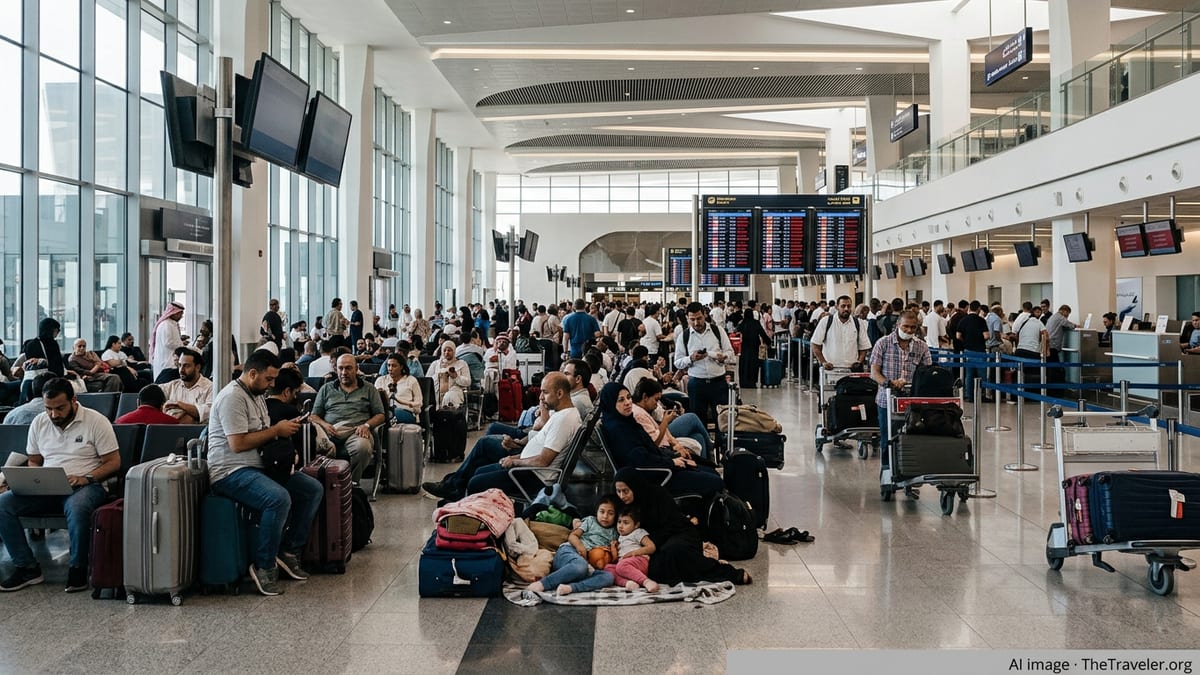
Regional Airports Strain While Guyana Stays Ahead
Across Latin America and the Caribbean, aviation bodies and industry groups are warning that airport crowding and infrastructure bottlenecks are putting a brake on air travel growth. Major hubs such as São Paulo, Mexico City, Bogotá, Lima and Cancún have been singled out in recent coverage for stretched terminals, runway constraints and policy-driven cost pressures that risk turning away demand rather than capturing it.
In contrast, publicly available information shows that Guyana has so far avoided the worst of these constraints. Recent reporting on the eve of the International Air Transport Association’s latest regional gathering highlighted that Guyana did not appear on the growing list of saturated airports, despite rapid increases in passenger numbers linked to offshore oil production, construction and services activity.
This divergence is notable because Guyana is one of the fastest growing economies in the world, driven by a series of large oil discoveries that have pushed output and export earnings sharply higher. Analysts at energy and economic research institutions describe the country as a new petro-state in the Americas, with oil expected to dominate export revenues and underpin a decade of elevated growth.
That combination of surging demand and still-manageable airport loads is positioning Cheddi Jagan International Airport, located south of Georgetown, as a regional outlier. While its peers struggle to retrofit overburdened infrastructure, Guyana is using the early years of its boom to rework terminals, airfield systems and landside access before constraints begin to bite.
Expanded Terminals, Longer Runway and New Control Tower
Cheddi Jagan International Airport has been undergoing phased expansion for more than a decade, anchored by a modernization program valued at around 150 million US dollars. According to publicly accessible planning documents, the airport extended its runway to roughly 10,500 feet and added a new arrivals terminal with multiple boarding bridges, elevators and upgraded security and surveillance systems. That package was substantially completed in late 2018, giving the airport widebody-capable infrastructure just as oil development accelerated offshore.
Government reports on resilient infrastructure and development strategies indicate that Guyana subsequently signed contracts with Chinese contractors for additional runway and terminal works. These initiatives focused on strengthening and lengthening the runway, improving taxiway layouts and backfilling land for future terminal expansion. Together they are designed to lift the airport’s declared capacity and give operators more flexibility to schedule peak-time movements.
The latest upgrade wave is centered on airside control rather than passenger halls. Local media coverage in May 2026 reported that a new air traffic control tower is being commissioned at Cheddi Jagan International Airport. The structure is described as creating more physical space for further terminal development while also improving controllers’ visibility and technology, a combination expected to support more aircraft movements and higher traffic densities.
These changes build on a series of smaller enhancements, from refurbished check-in halls and streamlined immigration areas to new parking and roadway layouts. While individual projects are modest by global mega-hub standards, together they amount to a comprehensive effort to keep capacity ahead of demand rather than racing to catch up.
Oil Boom Travel Demand Draws a Broader Airline Mix
The transformation of Guyana’s economy is reshaping its traffic profile. Offshore production has attracted foreign engineers, executives, service providers and financiers, while local businesses ramp up travel for training, procurement and regional networking. Reports from multilateral institutions and think tanks describe oil as supplying the bulk of Guyana’s export earnings and driving one of the world’s highest recent GDP growth rates, trends that are now visible in airport queues and departure boards.
Airlines have responded. Aviation-focused outlets note that Cheddi Jagan International Airport has grown from a handful of scheduled international operators early in the decade to well over a dozen carriers and a significantly larger destination network by 2026. That expansion includes North American low-cost and legacy carriers, regional Caribbean airlines and new entrants from the Dominican Republic and other nearby markets.
For example, a Dominican Republic carrier introduced three weekly services between Santo Domingo and Georgetown in early 2024, adding nearly 100 seats per flight and creating new one-stop links across the Caribbean and into the United States. Around the same time, United States carriers added capacity from key hubs such as New York and Houston, targeting both Guyana’s diaspora market and growing business travel tied to the energy sector.
These route launches layer on top of earlier moves by airlines that entered Guyana ahead of the oil upswing, positioning the country as a niche but increasingly strategic market. With the expanded runway able to handle longer-haul aircraft and the terminal now equipped with multiple jet bridges, Cheddi Jagan International Airport is technically capable of accommodating higher-gauge aircraft and denser schedules than the pre-boom era allowed.
Strategic Location Fuels Hub Ambitions
Industry interviews and conference discussions reported in aviation trade publications reveal that Guyana is pursuing a more ambitious role for its main gateway. The leadership of Cheddi Jagan International Airport has outlined an objective of developing Guyana into a modest hub, leveraging its Atlantic coastline position to connect North America, the Caribbean and parts of South America.
According to that coverage, the airport has seen airlines and destinations multiply several-fold since 2020, with new services reaching deeper into North America and the wider region. The airport’s management has highlighted the possibility of future long-haul routes linking Guyana to the Middle East and Asia, especially as oil companies and service providers deepen their footprint and diversify supply chains.
Geography supports these ambitions. Located on the northeastern shoulder of South America, Guyana sits closer to major hubs on the eastern seaboard of North America than many southern cone cities, while also providing a bridge toward northern Brazil and the wider Caribbean. As carriers look for niche connecting flows that avoid crowded megahubs, a right-sized facility with spare capacity and competitive operating costs becomes more attractive.
Realizing that vision will require continued investment in both airside and landside infrastructure. Highway works already connect Cheddi Jagan International Airport more directly with Georgetown and new bridges across the Demerara River, improving surface access for passengers and freight. Further expansions of cargo facilities and maintenance capacity could strengthen the case for airlines to use Guyana not just as a destination, but as a transfer and technical stop point in the wider network.
Balancing Growth Risks With Infrastructure Headroom
Even as Guyana’s aviation sector appears well positioned compared with some regional peers, the country faces familiar risks associated with rapid resource-driven growth. Economists and commentators have warned that heavy reliance on oil revenue can strain institutions, widen inequalities and create volatility if prices fall or production stumbles. Airport projects that look prudent in an upswing can become burdensome if traffic forecasts prove overly optimistic.
For now, however, Cheddi Jagan International Airport’s strategy of expanding early is helping Guyana sidestep the immediate congestion issues that dominate headlines from larger Latin American markets. With a longer runway, modernized terminal, new control tower and improving ground access, the airport is capturing oil boom travel demand without the chronic delays and space constraints seen elsewhere.
As international bodies track how the region responds to rising air travel, Guyana offers one example of a smaller state betting that infrastructure built ahead of the curve can turn a resource surge into a broader aviation opportunity. Whether that bet pays off over the long term will depend on how successfully the country diversifies its economy and manages its oil windfall, but for now its main gateway is emerging as a relative winner in a crowded regional sky.