


More news on this day
The United States is moving ahead with the termination of Temporary Protected Status for tens of thousands of Haitians even as the State Department reiterates a Level 4 “Do Not Travel” advisory for Haiti, a combination of policies that is drawing fresh scrutiny from immigration advocates, travel analysts, and members of Congress.
Get the latest news straight to your inbox!
TPS revocation takes effect amid legal and political battles
Temporary Protected Status, or TPS, is a humanitarian program that allows nationals of designated countries already in the United States to live and work legally when conditions in their homelands are deemed too dangerous for return. Public records show that Haiti’s TPS designation, first granted after the 2010 earthquake and later expanded in response to political instability and natural disasters, has now been terminated following a notice issued in late 2025 with an effective date of February 3, 2026.
According to federal court filings and advocacy briefs, the termination followed a series of legal clashes in which civil rights groups and several state attorneys general argued that Haiti remains engulfed by gang violence, government paralysis, and humanitarian crisis. A Supreme Court ruling earlier this year limited the ability of lower courts to pause or reverse TPS decisions, clearing the way for the Department of Homeland Security to wind down protections despite ongoing litigation over the policy’s lawfulness.
Immigration-focused publications report that the shift affects well over 300,000 Haitian nationals who have lived in the United States under a patchwork of TPS, parole, and other temporary programs. Community organizations in South Florida, New York, and Boston describe widespread confusion as Haitian workers and employers try to understand when work authorization expires, what options exist for adjustment of status, and how rigorously immigration authorities may pursue deportations to Haiti in the coming months.
Members of Congress from both parties have introduced competing legislative responses, including proposals to re-designate Haiti for TPS and bills that would codify a narrower, more time-limited use of the program. While none has yet cleared both chambers, advocates are using the looming end of status to press for faster action, noting that affected Haitians are heavily represented in U.S. health care, hospitality, and service sectors.
State Department maintains strict Level 4 advisory
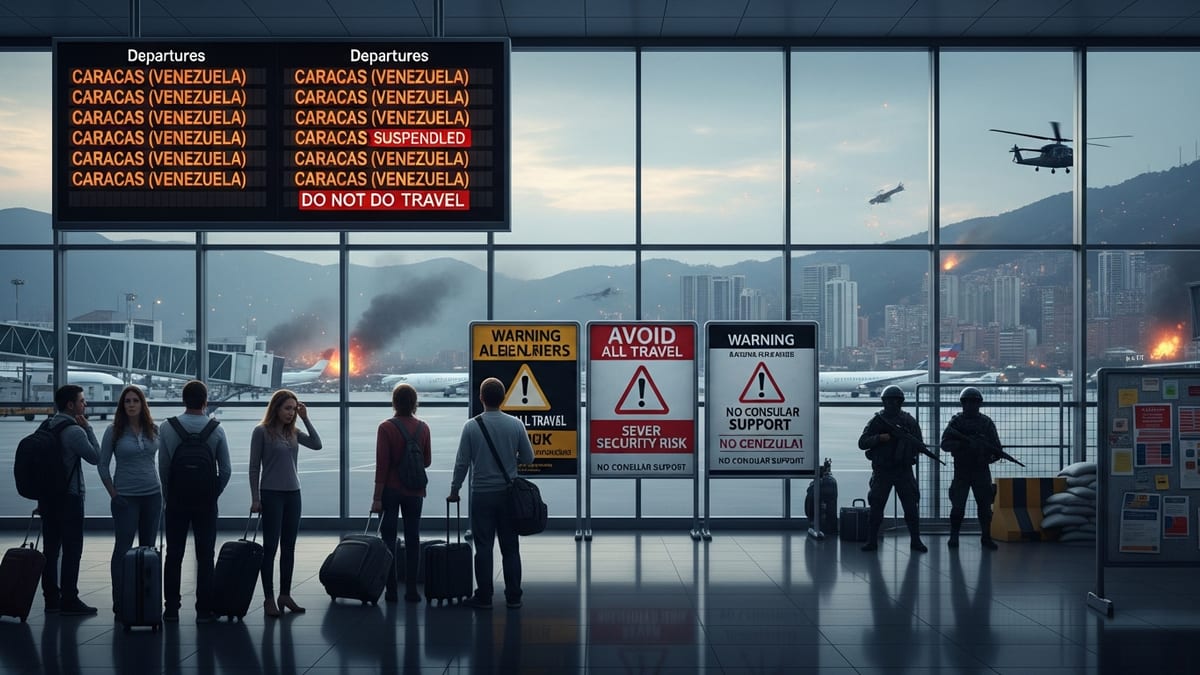
The policy shift on TPS is unfolding against a backdrop of severe U.S. travel warnings for Haiti. The State Department’s travel advisory system currently lists Haiti at Level 4, the highest alert, instructing U.S. citizens not to travel there due to kidnapping, violent crime, civil unrest, terrorism, and limited health care. A fresh advisory update on July 10, 2026, kept Haiti at that level and reiterated that the U.S. government has extremely limited ability to provide emergency assistance inside the country.
Country information pages maintained by the State Department highlight repeated airport closures, frequent roadblocks, and the shuttering or downsizing of foreign embassies in Port au Prince as a consequence of armed gang control over key neighborhoods and routes. The advisory notes that U.S. government personnel in Haiti face strict movement restrictions and are instructed to avoid nonessential travel within the country, underscoring the security challenges even for official staff.
Travel insurance industry summaries reflect the same concerns, listing Haiti among a small group of destinations where travel is broadly discouraged. These summaries emphasize that many standard policies exclude coverage for travel to locations under a Level 4 advisory, and that commercial airlines have sharply reduced or suspended operations to Haitian airports during periods of intense violence.
For American travelers, the consistent message from publicly available government and industry information is that visiting Haiti involves a high risk of being caught up in violence or stranded without reliable consular assistance. This environment heightens the contrast between the treatment of U.S. citizens warned not to enter the country and Haitians in the United States who may be required to return.
Contradictory signals for Haitians facing return
The juxtaposition of TPS termination with a “Do Not Travel” warning has become a focal point in policy debates. Advocacy briefs filed in federal court argue that it is inconsistent to declare Haiti too dangerous for short term visits by American tourists while simultaneously concluding that long term residents with deep ties to the United States can safely be repatriated.
Legal analyses submitted in ongoing cases point out that the State Department’s own materials describe Haiti as lacking effective government control in key regions, with gangs attacking state institutions, infrastructure, and residential areas. Humanitarian organizations have documented large scale internal displacement, chronic fuel shortages, and significant disruptions to food and medical supply chains, conditions that they say raise serious questions about the practicality and ethics of large scale removals.
Public reporting on recent court decisions indicates that the administration has defended its TPS determination by emphasizing statutory criteria and arguing that the law gives the executive broad discretion to assess whether extraordinary and temporary conditions continue to justify protection. Critics counter that the security and humanitarian situation on the ground has, if anything, deteriorated since earlier decisions to extend TPS, and that the legal framework should be interpreted in light of current, not aspirational, conditions.
For Haitian families in the United States, these debates translate into concrete dilemmas: whether to attempt to regularize status through asylum or family based petitions, to relocate to a third country, or to prepare for the possibility of return to a country that many have not seen in more than a decade and that relatives describe as extremely dangerous.
Travel industry and diaspora adjust to prolonged crisis
The continuing Level 4 assessment has effectively frozen most conventional leisure and business travel between the United States and Haiti. Airline route maps, cruise line schedules, and tour operator offerings show Haiti largely absent from Caribbean itineraries that once included stops in Labadee and Port au Prince. Insurance guidance notes that carriers and operators that previously relied on Haiti have shifted capacity to neighboring destinations viewed as more stable.
At the same time, Haiti focused travel by members of the diaspora and humanitarian workers has not ceased entirely. Publicly available accounts describe ad hoc charter flights, sea crossings from the Dominican Republic, and carefully planned trips by Haitians seeking to reunite with family, manage property, or deliver supplies. These travelers face layered obstacles, from security checkpoints to documentation issues linked to Haiti’s struggles to produce passports and maintain functioning consular services.
U.S. based Haitian communities are responding by strengthening local support networks. Reports from community organizations in South Florida and the Northeast highlight expanded legal clinics, mental health services, and mutual aid funds aimed at TPS holders, recent parolees, and relatives still in Haiti. Clergy, business owners, and student groups are organizing informational sessions about travel risks, rights during immigration enforcement actions, and options for those whose work authorization is expiring.
Travel analysts note that the near total loss of mainstream tourism, combined with brain drain and shrinking remittance channels, is likely to deepen Haiti’s economic crisis. That dynamic, they say, may in turn fuel further migration pressures, even as legal pathways narrow and travel dangers mount.
Uncertain path forward for policy and travel
The coming months are expected to be critical for both Haiti related immigration and travel policy. Federal courts are still weighing challenges to the TPS termination and related measures, while Congress continues to debate whether to expand or constrain the program for Haiti and other countries. Meanwhile, the State Department’s advisory system is reviewed regularly, and any change in security conditions could trigger an update, though recent history suggests that a lower risk rating is unlikely in the near term.
For now, publicly available government information sends two clear signals: U.S. citizens are warned not to travel to Haiti, and Haitians who built lives in the United States under TPS and other temporary programs may soon lose the protections that allowed them to remain. How policymakers reconcile those messages, and whether new legal or legislative interventions alter the trajectory, will shape both individual travel decisions and the broader humanitarian landscape for years to come.