


More news on this day
Tokyo’s Haneda Airport has introduced a tighter deadline for checked baggage on most domestic departures, requiring passengers to complete bag drop at least 30 minutes before takeoff as part of a broader push to keep flights running on time.
Get the latest news straight to your inbox!
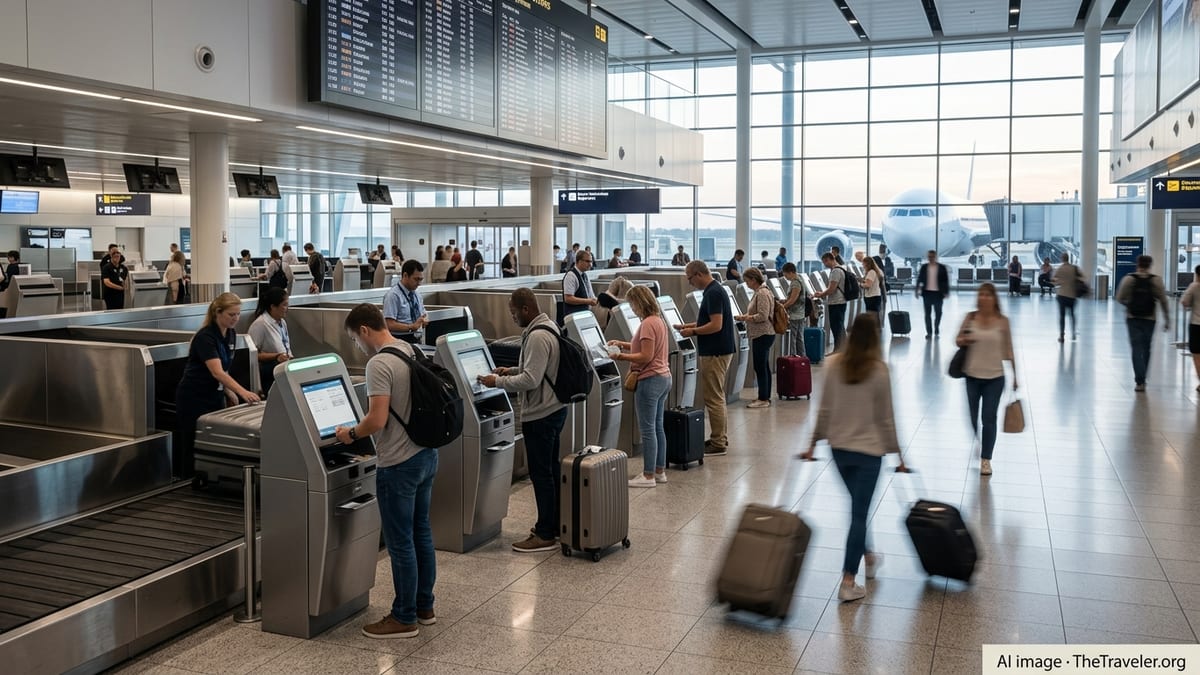
New timing rules for checked luggage at Haneda
Recent updates to airline guidance indicate that domestic passengers at Haneda are now expected to complete checked baggage procedures no later than 30 minutes before scheduled departure on most routes. This represents a clearer and, in practice, stricter cut-off than many travelers have previously assumed, when some carriers placed more emphasis on final check-in or security times.
Airline information pages outline a three-step timeline for domestic flights: checked baggage by 30 minutes before departure, security screening by around 20 minutes before departure, and arrival at the boarding gate roughly 10 minutes prior to pushback. The bag cut-off is emerging as the earliest hard deadline in that sequence, particularly important for passengers rechecking luggage after international arrivals.
The new focus on a 30-minute baggage limit sits alongside earlier changes around security. In past years, major carriers such as All Nippon Airways and Japan Airlines shifted security cut-off times at Haneda’s domestic terminals to 20 minutes before departure, a move framed in public material as necessary to improve punctuality and reduce last-minute rushes at boarding.
Operational pressures and punctuality concerns
Haneda is one of the world’s busiest domestic hubs, handling dense traffic between Tokyo and regional cities across Japan. Publicly available data and airline statements over the last decade point to steady growth in both domestic and international movements, increasing the pressure to keep ground operations tightly coordinated.
Researchers examining airport operations have noted that check-in counter allocation and baggage handling windows are central to maintaining on-time performance at high-volume hubs. Shortening or clarifying cut-off times is one tool carriers use to prevent late baggage from causing loading delays, missed slot times, and gate congestion that can ripple through the daily schedule.
Published coverage after the January 2024 runway collision at Haneda has also highlighted how disruptions at the airport can quickly cascade across the network. While the new baggage timing rule is not presented as a direct response to that event, the emphasis on orderly turnarounds and predictable boarding processes aligns with broader efforts to strengthen resilience at the country’s primary domestic gateway.
For airlines, firmer baggage deadlines also create a clearer threshold for accepting or refusing late-connecting passengers’ checked bags. Once the 30-minute limit is reached, carriers are better positioned to prioritize on-time departure, even if it means transporting a traveler without their luggage on that specific flight.
Impact on domestic and connecting passengers
The tightened baggage window is particularly relevant for travelers linking international and domestic flights at Haneda. Connections that once felt comfortable may now leave less margin if immigration lines, customs processing, or terminal transfers take longer than expected. Travel forums already feature frequent questions from visitors wondering if 90-minute or even two-hour layovers leave enough time to reclaim luggage and recheck it ahead of the 30-minute cut-off.
Public guidance from Japanese carriers suggests that on a single through-ticket, bags are often checked to the final destination, reducing stress for connecting passengers. However, in cases where luggage must be reclaimed at Haneda and rechecked for a domestic segment, missing the bag-drop cut-off can result in being rebooked on a later flight while the itinerary is adjusted.
Domestic-origin passengers are also affected. Many residents of the Tokyo area previously treated Haneda’s domestic departures as relatively relaxed compared with international flights, sometimes arriving less than an hour before departure. With bag drop now concentrated into a firmer pre-departure window, travelers who habitually cut it close may find that minor delays on trains or airport access roads have bigger consequences.
Families, groups, and travelers carrying oversized or special baggage could be among the most impacted, as their check-in interactions often take longer than a simple self-tag and drop. For these passengers, the functional deadline may be earlier than 30 minutes if they want to avoid stress at the counter.
Advice for planning departures from Haneda
Travel experts and frequent flyers commenting in public forums commonly recommend arriving at Haneda at least 60 to 90 minutes before a domestic departure when checking bags, even though the formal baggage cut-off is 30 minutes before takeoff. This buffer allows for potential queues at ticket counters and security screening, as well as unexpected slowdowns on public transport.
Passengers making international-to-domestic connections are often advised to factor in the time needed for immigration, baggage claim, customs, and terminal transfers. While some recent traveler accounts describe completing the full process in about an hour during quiet periods, others report significantly longer waits during peak arrivals. Under a strict 30-minute bag-drop rule, those variations can mean the difference between an easy transfer and a missed flight.
Travelers can reduce risk by checking whether their international and domestic segments are on a single booking with through-checked baggage, using online or mobile check-in where available, and familiarizing themselves in advance with Haneda’s terminal layout. Allowing extra time is especially important during busy holiday seasons, severe weather, or major events when both airport traffic and security lines can swell.
What the change signals for Japan’s domestic aviation
Haneda’s tightened bag check cut-off reflects a broader pattern across Japan’s aviation sector, where incremental procedural changes are being used to protect high levels of punctuality in a constrained operating environment. With limited slots and strong demand on major domestic routes, small delays at departure can have knock-on effects across the country’s network.
The emphasis on earlier baggage deadlines, clearer security cut-offs, and structured boarding times suggests that passenger convenience alone is no longer the sole consideration. Instead, operational reliability and safety margins are being given greater weight, even if that requires travelers to adjust long-standing habits about when to arrive at the airport.
For visitors planning itineraries built around tight connections, the new baggage timing at Haneda serves as a reminder that domestic flights in Japan, while often efficient, still demand careful time management. For residents, the policy underlines that even familiar short hops now come with firmer ground rules designed to keep one of the world’s busiest city airports running on schedule.