


More news on this day
Travelers at Raleigh-Durham International Airport faced unusually long waits at the Terminal 2 security checkpoint today, with early-morning lines reportedly stretching deep into the ticketing area and causing some passengers to miss or nearly miss departing flights.
Get the latest news straight to your inbox!
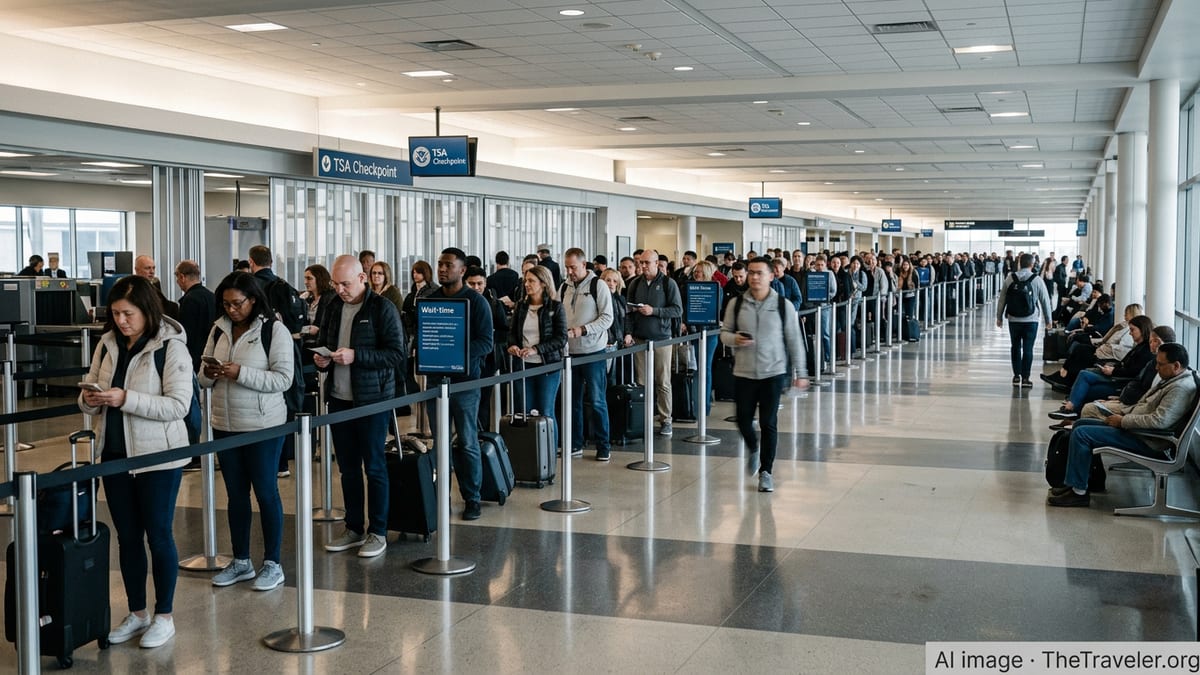
Heavy Morning Crowds Contribute to Long Waits
Reports posted by travelers on social platforms and community forums Thursday described early-morning congestion at Raleigh-Durham International Airport’s Terminal 2, where most major domestic and international carriers operate. Passengers described lines that extended well beyond the standard queuing area and moved more slowly than many have come to expect at RDU.
Several recent posts from regular fliers indicate that security at Terminal 2 is often busiest between 5 a.m. and 7 a.m., when a large share of business and connecting flights depart. On many weekdays, those peak windows now see lines forming even before the checkpoint opens, creating an immediate backlog as soon as screening begins.
While long waits are not constant throughout the day, the combination of early departures, summer travel demand and ongoing construction around Terminal 2 has left some travelers surprised by the length and duration of the queues. Online discussions suggest that passengers who previously relied on RDU’s reputation for relatively quick screening are adjusting their expectations.
Publicly available delay trackers show that, on busy days, departure disruptions at RDU can also ripple through security operations by causing banks of flights to push closer together. When several departures cluster within the same hour, the volume of passengers entering the Terminal 2 checkpoint can spike sharply.
Construction and Terminal 2 Expansion Shape Passenger Flow
The airport is in the midst of a multi-year effort to expand Terminal 2 and relocate a runway, part of a long-range plan to add gates and relieve congestion in key pinch points. Project summaries published by Raleigh-Durham International describe a vision for a larger Terminal 2 with more space for ticketing, security screening and baggage claim, with major elements scheduled to continue into the next decade.
Airport materials emphasize that all existing ticket counters and checkpoint lanes remain open during construction, but acknowledge that staging areas, equipment and work zones can temporarily constrain how passengers move through the building. Narrower passageways, shifting layouts and wayfinding changes can all slow the process of getting travelers from check-in to the security queue, especially during peak travel periods.
Planning documents also highlight a goal of ultimately reducing wait times at the Terminal 2 checkpoint by increasing capacity. In the near term, however, travelers are navigating an active construction environment that can feel more crowded at busy hours. Some comments from passengers in recent weeks connect these conditions with the perception that Terminal 2 is less predictable than in prior years.
Regional planning analyses focused on RDU’s long-term growth note that Terminal 2 was already operating near its practical capacity even before the latest wave of passenger demand. As traffic recovers and grows, the airport’s incremental projects are designed to catch up with that growth, but there is a transition period when pressure on the existing checkpoint remains high.
Advised Arrival Times and Tools to Check Security Waits
Raleigh-Durham International’s published guidance recommends that travelers arrive at least two hours before domestic flights and three hours before international departures from Terminal 2. The airport lists the standard security checkpoint opening time as 4 a.m., with closing times late in the evening, and advises passengers not to assume that off-peak flight times will always mean short lines.
Travel information pages for the airport and major travel-card issuers point travelers to digital tools that estimate TSA wait times at RDU. These include the federal MyTSA app and several third-party platforms that draw on a combination of historical patterns, public data and crowd-sourced reports. Some of these services highlight predictable pressure periods at RDU, identifying early morning and late afternoon as the most congestion-prone windows.
Recent posts in local online communities echo those patterns, noting that security at Terminal 2 is frequently busiest from 5 a.m. to 7 a.m. and again during the late afternoon and early evening departure bank. Users who track their experiences over multiple trips report that mid-day flights often encounter shorter lines, sometimes under 15 minutes, compared with queues that can approach 30 to 45 minutes during peak hours.
Travelers also report that expedited screening products such as TSA PreCheck and CLEAR, both available at RDU Terminal 2, can significantly reduce wait times when lines are long. However, some passengers have noted that when early-morning demand is very heavy, even those shorter lanes can temporarily back up, making early arrival important even for those enrolled in fast-track programs.
Passenger Experiences Highlight Growing Variability
Accounts from frequent RDU flyers over the past several months portray a checkpoint that can feel either remarkably smooth or unexpectedly slow, depending largely on the time of day and the particular travel surge. On some days, travelers have described walking through security at Terminal 2 in just a few minutes, while on others the same checkpoint has produced lines snaking through the terminal.
Several travelers posting about this week’s disruption referenced earlier experiences when similar early-morning delays left them reaching their gates just as boarding ended. Others said that they had grown accustomed to RDU’s relatively efficient screening and were surprised to find lines stretching toward the terminal entrance, even after arriving two hours before their scheduled departure.
Community discussions also capture a sense of uncertainty about how long it will take to clear security on any given day. Some passengers say they now routinely add extra buffer time beyond official recommendations because of the risk of sudden spikes in volume from large tour groups, sports teams or weather-related rebookings that push additional travelers into the same departure window.
At the same time, a subset of reports continues to describe very short waits at Terminal 2 during mid-day and late-evening periods, reinforcing the idea that the checkpoint’s performance is highly time-sensitive. That variability has led experienced travelers to pay closer attention to live data sources and historical patterns when planning their arrival at the airport.
What Travelers Can Do Ahead of Terminal 2 Checkpoint
Travel guidance published by Raleigh-Durham International and federal security agencies stresses the importance of preparation to keep lines moving. Passengers are encouraged to review identification rules, liquid and electronics requirements, and procedures for items such as strollers, medical devices and special baggage before they head to the airport so that they are ready when they reach the front of the line.
Airport advisories recommend that travelers check their airline’s check-in deadlines and factor in time for parking, shuttle transfers or ride-hailing drop-offs, especially during ongoing construction around Terminal 2. For those using general parking, surface lots and garages can add considerable time to the journey if they are nearing capacity, particularly at the height of holiday and summer travel seasons.
Experienced RDU passengers posting in online forums often suggest building in a larger time cushion than in the past, especially for flights departing during the early-morning or late-afternoon peaks. Some recommend that travelers planning to check bags or travel with young children treat the two-hour domestic and three-hour international guidelines as a minimum rather than a maximum when flying from Terminal 2.
With Terminal 2 expansion work set to continue for years, RDU’s security operation is expected to evolve alongside the construction. Until additional capacity comes online, travelers facing long waits at the Terminal 2 checkpoint may find that careful planning, extra time and the use of live wait-time tools provide the best options for navigating periods of heavy congestion.