


More news on this day
Booking a trip in 2026 often feels less like purchasing a simple ticket or room and more like navigating a maze of extras, add-ons and shifting prices that begin long before departure and continue until travelers are back home.
Get the latest news straight to your inbox!
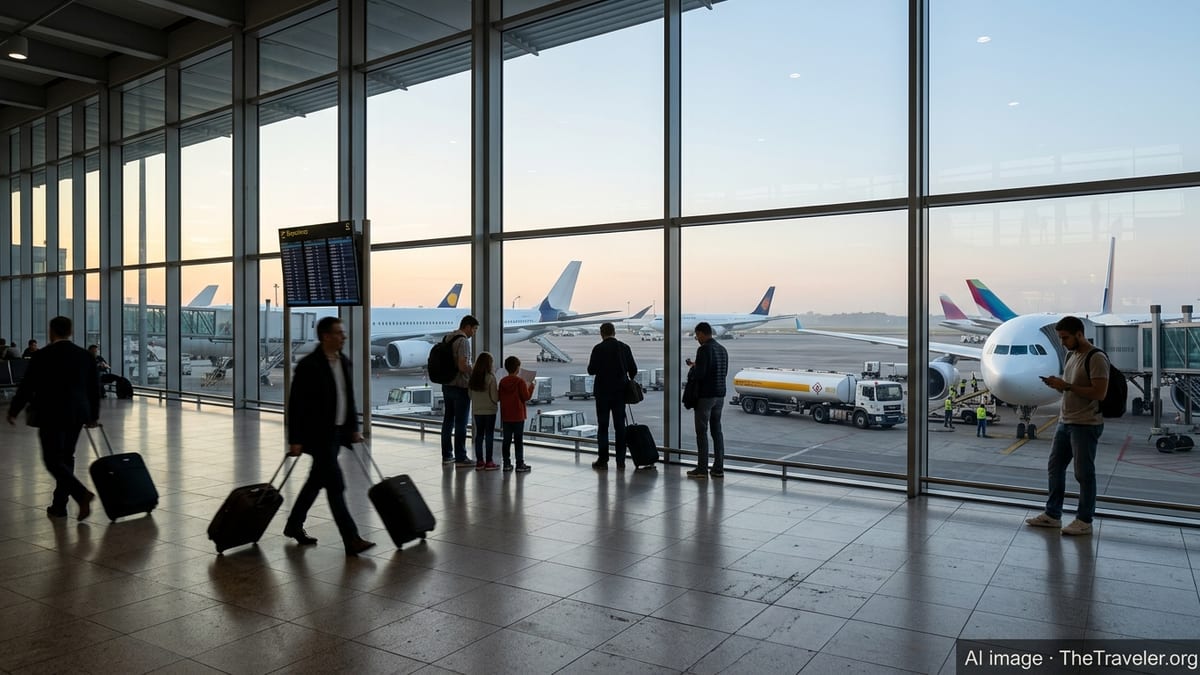
Airlines Turn Ancillary Fees Into a Core Business
Air travel is one of the clearest examples of how upselling has moved from the margins to the center of the business model. Published analyses of airline finances indicate that so-called ancillaries such as checked baggage, seat selection, priority boarding and onboard Wi-Fi have grown from a niche category in the early 2010s into a major global revenue stream worth well over one hundred billion dollars annually. Industry forecasts suggest airlines are now focused less on filling planes at any cost and more on maximizing how much each passenger spends beyond the base fare.
Consulting and payments-industry reports describe a shift toward “retailing” strategies that treat every stage of the journey as a sales opportunity. That can mean algorithms that recommend paid seat upgrades during online check-in, limited-time offers for bundled bags and priority services in airline apps, and personalized emails encouraging passengers to prepay for meals, Wi-Fi or lounge access. Technical papers published in recent years detail increasingly sophisticated dynamic pricing tools designed specifically for ancillaries, using customer data and booking context to test and optimize what travelers will pay.
These practices help airlines keep base fares competitive on comparison sites while relying on extras to restore margins. Academic work and regulatory filings note that without premium cabins and ancillary sales, many carriers would need to raise headline ticket prices, which could dampen demand among price-sensitive travelers. The result is an economic structure that strongly incentivizes carriers to keep expanding the range and visibility of optional or semi-optional services.
At the same time, U.S. regulators are trying to limit the confusion that can arise when core elements of a flight are unbundled. A rule finalized by the Department of Transportation in 2024 requires airlines and ticket agents to disclose passenger-specific fees for key services such as checked and carry-on baggage, change fees and family seating before purchase, with the aim of reducing surprises at the end of the booking process.
Hotels Confront Scrutiny of Resort Fees and Drip Pricing
In accommodation, the upsell debate has centered on so-called resort fees and other mandatory charges that are not always obvious when travelers first search for rooms. Economic analysis commissioned by U.S. regulators has long found that separating mandatory fees from the advertised room rate, a practice known as drip pricing, raises search and cognitive costs for consumers, who must click through several screens before seeing the true cost of a stay.
In response to rising political pressure over “junk fees,” several state attorneys general have pursued settlements with major hotel chains requiring clearer disclosure of resort fees and other mandatory charges. Public statements from state offices describe years of complaints from travelers who discovered additional nightly charges at checkout despite low headline rates during booking. These cases helped set the stage for broader national action.
In late 2024, a new federal rule targeted unfair and deceptive pricing practices across sectors including short-term lodging and ticketing. Publicly available summaries explain that the measure does not ban particular fees outright but requires that the total price, including mandatory charges such as resort or destination fees, be displayed more prominently than any partial rate. The rule, which took effect in 2025, is intended to curb bait-and-switch tactics while leaving hotels free to offer optional extras such as parking, spa access or premium Wi-Fi as separate add-ons.
Hotel groups argue that resort fees can fund amenities ranging from pools to fitness centers and that unbundling allows them to compete on base rates while giving travelers the choice to pay for certain facilities. Consumer advocates counter that if a fee is unavoidable for every guest, it effectively functions as part of the room price and should be included upfront. The tension between these perspectives has turned hotel pricing into a test case for how far regulators will go in reshaping the economics of travel upselling.
Cruise Lines and the Art of Onboard Spending
If airlines pioneered the ancillary revolution and hotels refined drip pricing, cruise companies have elevated onboard upselling into a central pillar of their business. Industry association reports for 2024 show that cruise lines generate tens of billions of dollars in direct spending linked to passenger activity, while financial filings from major operators highlight strong growth in onboard and other revenues compared with ticket sales.
Equity research cited by travel industry coverage estimates that for some of the largest cruise brands, onboard spending on items such as beverages, specialty dining, shore excursions, casinos and spa treatments can account for roughly a third of total revenue. Corporate disclosures describe double-digit percentage increases in these categories, driven in part by higher guest spending and the expansion of pre-cruise packages that encourage passengers to buy drink plans, Wi-Fi bundles or cabana rentals before they ever reach the port.
Cruise companies present this model as beneficial for both sides: relatively accessible base fares make cruising an attractive option, while a wide range of optional purchases allows travelers to tailor their experience. Critics note that the pressure to spend can feel inescapable on ships where many leisure activities and social spaces are linked to bars, shops or fee-based attractions. The push to pre-sell add-ons via apps and email campaigns, often with time-limited discounts, reinforces the perception that cruising is built around continuous upsell opportunities.
Regulators have so far paid less targeted attention to cruise pricing than to airlines or hotels, though general consumer protection and junk-fee rules still apply. Some advocacy groups are watching closely to see whether future enforcement actions will extend to practices such as automatic service charges and complex package pricing.
Dynamic Pricing, Personalization and the Line Between Choice and Confusion
Underlying many of these trends is the rapid spread of dynamic pricing and personalization technology across the travel sector. Academic research and technical white papers describe how airlines, hotel platforms and other providers increasingly rely on machine learning models to adjust prices for seats, rooms and ancillaries in real time, based on factors such as demand levels, booking window, customer history and even browsing behavior.
Supporters argue that these tools allow providers to match prices more closely to what different customers are willing to pay, making it possible to offer low entry-level fares or rates to highly price-sensitive travelers while charging more to those seeking flexibility, comfort or premium services. They point to examples where dynamic offers make it easier to book bundled trips that include flights, hotels, car rentals and activities in one transaction.
On the other side, consumer advocates warn that the complexity of modern pricing structures makes it harder for travelers to compare options or predict the final cost of a trip. Academic work on behavioral economics suggests that when prices are presented in many small increments, people can underestimate the total they will ultimately pay. Complaints highlighted in media coverage, online forums and regulatory reports often mention frustration with opaque service fees, fluctuating prices that change between screens and constant prompts to upgrade or add insurance.
As policymakers debate new rules on junk fees and price transparency, the central question is not whether add-ons should exist at all but how clearly they are disclosed and how much of a trip’s true cost is pushed into optional-sounding charges. For travelers, the practical response has been to spend more time scrutinizing booking pages, reading fine print and using fare and rate trackers to gauge when a deal is genuinely good value.
Travel Providers Test New Models Under Regulatory Pressure
The clampdown on hidden fees and drip pricing is beginning to reshape how travel companies present their offers, even if it has not ended upselling. Under recent federal rules, short-term lodging providers and ticket sellers must now surface total prices earlier in the booking path, prompting online travel agencies and hotel brands to redesign search results to feature all-in nightly costs rather than only base rates. Airlines, meanwhile, are updating customer interfaces to comply with ancillary fee transparency requirements.
Industry analysts note that many providers are experimenting with alternative ways to maintain revenue, from loyalty program restructuring and subscription-style products to more prominent promotion of fully bundled fares. At the same time, some companies are marketing “no hidden fees” or “all-inclusive” options as a differentiator, betting that a segment of travelers is willing to pay a premium to avoid the drip of surprise charges.
For now, the overall picture suggests that travel has not so much become a single upsell as a dense ecosystem of optional and not-so-optional extras shaped by technology, competition and regulation. Whether travelers see that as empowering customization or as a constant sales pitch may depend less on any one fee and more on how transparent the journey feels from the first search to the final bill.