


More news on this day
Prolonged overnight rainfall left large sections of Ghana’s capital, Accra, under water on Monday, June 29, disrupting transport, prompting rescues from stranded vehicles and triggering renewed travel warnings for southern Ghana.
Get the latest news straight to your inbox!
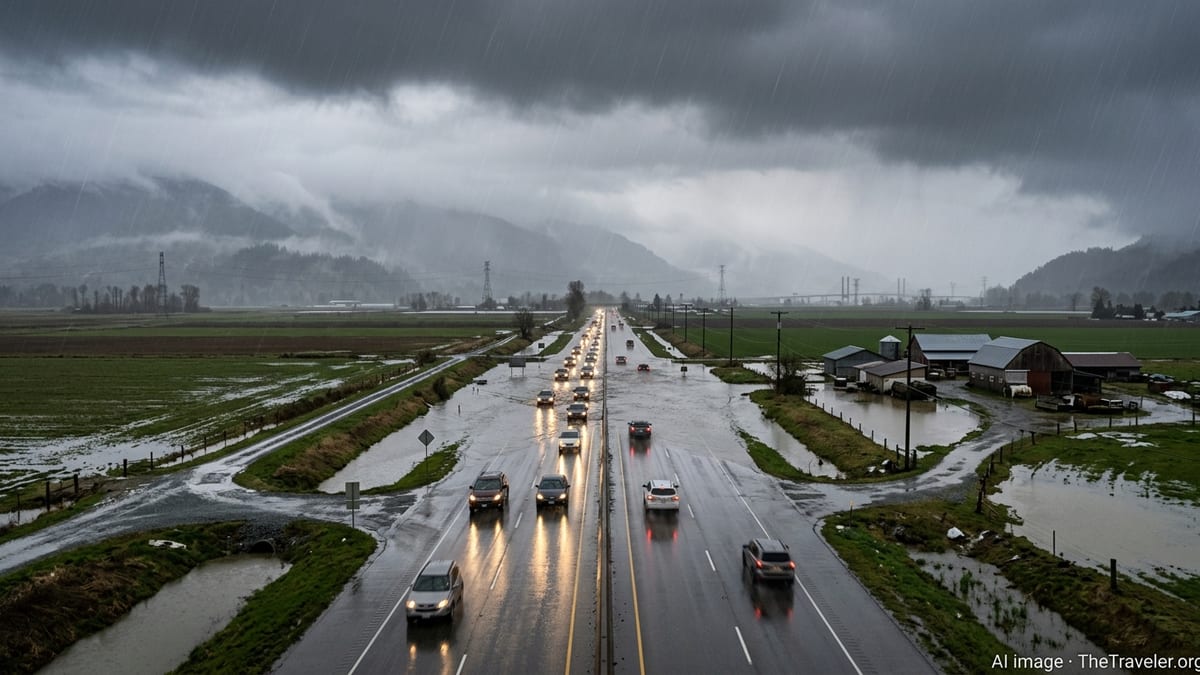
Floodwaters Swamp Major Routes Across the Capital
Reports from Accra on June 29 indicate that heavy rain that began late Sunday and continued into Monday morning flooded multiple neighborhoods and key arterial roads, turning the rush hour commute into a near standstill. Local coverage describes sections of the N1 Highway, the Mallam and Kaneshie areas, Spintex Road and approaches to the central business district as heavily inundated, with vehicles partially submerged and some motorists abandoning cars in rising water.
Photo and video evidence shared by local outlets and commuters show torrents of brown water sweeping through low-lying communities, shopping areas and informal settlements. Residential zones around Adenta, Neoplan, parts of Taifa and sections of the industrial corridor toward Tema were among locations reported to be affected, as storm drains and culverts overflowed after several hours of intense rainfall.
Fire and rescue crews were dispatched to assist people trapped in stalled vehicles and flooded homes, according to publicly available information from Ghana’s emergency services. In some cases, responders used ladders, ropes and improvised flotation devices to reach commuters stranded on traffic islands or on the roofs and hoods of vehicles that had become surrounded by fast-moving water.
Publicly accessible traffic feeds and eyewitness accounts indicate that congestion spread rapidly across the metropolitan area as drivers attempted to reroute through side streets that were themselves partially flooded. Some commuters reported journey times stretching from under one hour to more than four hours as gridlock extended into the late morning.
Universities and Businesses Scale Back Operations
The flooding prompted significant disruption to education and office activity across Accra. According to notices shared on official channels and reported by Ghanaian media, the University of Ghana suspended lectures on Monday, advising students not to attempt travel to campus until rainfall and flooding subsided. The university also encouraged those already on campus to remain indoors and avoid moving through flooded areas.
Other tertiary institutions and several basic and secondary schools in low-lying neighborhoods were also reported to have delayed opening or sent students home early, citing difficulties in reaching school grounds and concerns about student safety. Staff and students shared images of inundated walkways, courtyards and access roads, with water levels in some locations reportedly reaching above knee height.
Business districts experienced similar setbacks. Office workers in areas such as Airport City, Osu and along the Ring Road reported late arrivals, remote-work arrangements and cancellations of in-person meetings. Some companies instructed staff to work from home for the day, pointing to uncertainty over further rainfall and the risk of employees being unable to return home if conditions worsened later in the afternoon.
Retail activity in markets and shopping centers was uneven. While some indoor malls remained open with reduced foot traffic, traders in open-air markets and roadside stalls faced damaged stock, waterlogged premises and slow sales as many residents chose to stay home.
Travel Advisory Issued for Southern Ghana
The widespread disruption in Accra coincided with ongoing weather advisories for the southern belt of Ghana. In recent weeks, the Ghana Meteorological Agency has issued several public bulletins warning of moderate to heavy rainfall and the potential for flash flooding across coastal and forest zones, including the Greater Accra, Central, Western and Volta regions. These advisories have highlighted the likelihood of localized flooding, reduced visibility and difficult driving conditions during intense downpours.
On Monday, disaster management officials and local emergency services amplified guidance urging residents and travelers to avoid driving or walking through floodwaters, especially on familiar routes that may conceal open drains, damaged road surfaces or strong currents. Public announcements also encouraged commuters to postpone non-essential trips, stay updated on conditions via radio and television, and seek higher ground where flooding was reported to be severe.
For travelers transiting through Accra or connecting to other parts of Ghana, the flooding created knock-on delays. Reports from domestic bus terminals and informal transport hubs described late departures, canceled services on some suburban routes and temporary diversions where roads had become impassable. While Kotoka International Airport remained operational, some passengers faced difficulties reaching the terminals due to gridlocked access roads.
Travel industry observers noted that the latest flooding may influence short-term itineraries for visitors planning to move overland between the capital and coastal or inland destinations. Tour operators and hotels in beach towns and historical sites along the coast were reported to be monitoring road conditions closely, with some advising guests to allow additional travel time or to reschedule excursions if heavy rain persisted.
Recurring Flood Risk Heightens Safety Concerns
The scenes in Accra on June 29 have reignited wider concern about recurring flood risk in Ghana’s rapidly growing coastal cities. Historical records and previous media coverage show that the capital has experienced several serious flood events over the past decade during the May to July rainy season, often linked to a combination of intense rainfall, limited drainage capacity and development in flood-prone areas.
Urban planners and civil society groups have long pointed to blocked drains, encroachment on waterways, inadequate waste management and informal construction along flood plains as key factors that magnify the impact of seasonal rains. Public commentary following Monday’s floods echoed these themes, with residents sharing images of plastic waste and debris clogging gutters and storm channels as water levels rose.
Recent climate assessments for the region suggest that episodes of short-duration, high-intensity rainfall could become more frequent as global temperatures rise, increasing the urgency of flood mitigation measures in coastal West African cities. Analysts note that without significant upgrades to drainage networks, stricter enforcement of planning regulations and improved waste collection, communities in low-lying neighborhoods may continue to face annual cycles of damage and disruption.
The June 29 event also underscores the social and economic costs of infrastructure vulnerabilities, particularly for low-income households whose homes and businesses are more likely to be located on marginal land. Repeated flooding can erode livelihoods, disrupt schooling and deepen urban inequality, even when loss of life is limited by timely rescues and public advisories.
Guidance for Residents and Visitors in the Coming Days
With ground conditions saturated and further showers possible as the rainy season continues, safety messages circulating on Monday emphasized a cautious approach for both residents and visitors. Public advisories recommended avoiding unnecessary travel during active downpours, parking vehicles away from low-lying underpasses and rivers, and moving electrical appliances and valuables to higher levels in homes and businesses located in flood-prone areas.
Residents were also encouraged to clear debris from household drains where it is safe to do so, report blocked culverts and downed power lines to relevant service providers, and identify safe routes to schools, workplaces and essential services that avoid chronically flooded streets. Community-level efforts, including neighborhood clean-ups and monitoring of local waterways, were highlighted as practical steps that can reduce localized risk even before larger infrastructure projects are implemented.
For travelers, tourism operators and transport providers recommend building flexibility into itineraries over the coming weeks, particularly for road-based journeys in and out of Accra and along the coast. Early-morning departures, extra buffer time before flights and confirmation of road conditions with local contacts have been advised as measures that can help mitigate the impact of sudden weather-related delays.
While water levels in some parts of the city were expected to recede as rainfall eased later on Monday, officials and commentators alike noted that the underlying drivers of Accra’s flooding remain unresolved. The June 29 floods serve as another reminder that managing travel and safety during Ghana’s rainy season requires both real-time vigilance and sustained long-term investment in resilient urban infrastructure.